

How to Create a New Self Image is not about pretending to be a different person overnight. A self image is the working picture you carry of who you are, what you can handle, how others see you, and what kind of life seems available to you. Changing it takes evidence, repetition, behavior, and time.
This article is general mental wellness education, not therapy or diagnosis. If self-hate, body distress, panic, trauma symptoms, disordered eating, self-harm thoughts, or depression are part of the picture, work with a licensed mental health professional. Seek urgent help if you may hurt yourself.
Name The Old Story
Start by writing the self image you already carry. Be specific: "I am bad with money," "I always quit," "I am awkward," "I am not attractive," "I am too old to change." A vague bad feeling is harder to challenge than a sentence.
Once the sentence is visible, ask where it came from. Family comments, school experiences, relationships, body changes, job loss, illness, or social comparison can leave old labels behind.
Separate Identity From Evidence
A painful self image often turns a pattern into an identity. Missing workouts becomes "I am lazy." Feeling nervous becomes "I am weak." One failed relationship becomes "I am impossible to love." The goal is not fake positivity. The goal is more accurate language.
Mayo Clinic's self-esteem guidance recommends identifying troubling conditions and becoming aware of thoughts and beliefs. That is a grounded place to start.
Choose A Replacement That Is Believable
A new self image should not sound like a slogan you do not believe. If "I am confident" feels false, try "I can practice speaking up," or "I am learning to handle discomfort." A believable sentence is easier to repeat through behavior.
For performance nerves, Livecub's stage fright article and sports tryout nerves guide can help turn identity labels into practice steps.
Collect Small Proof
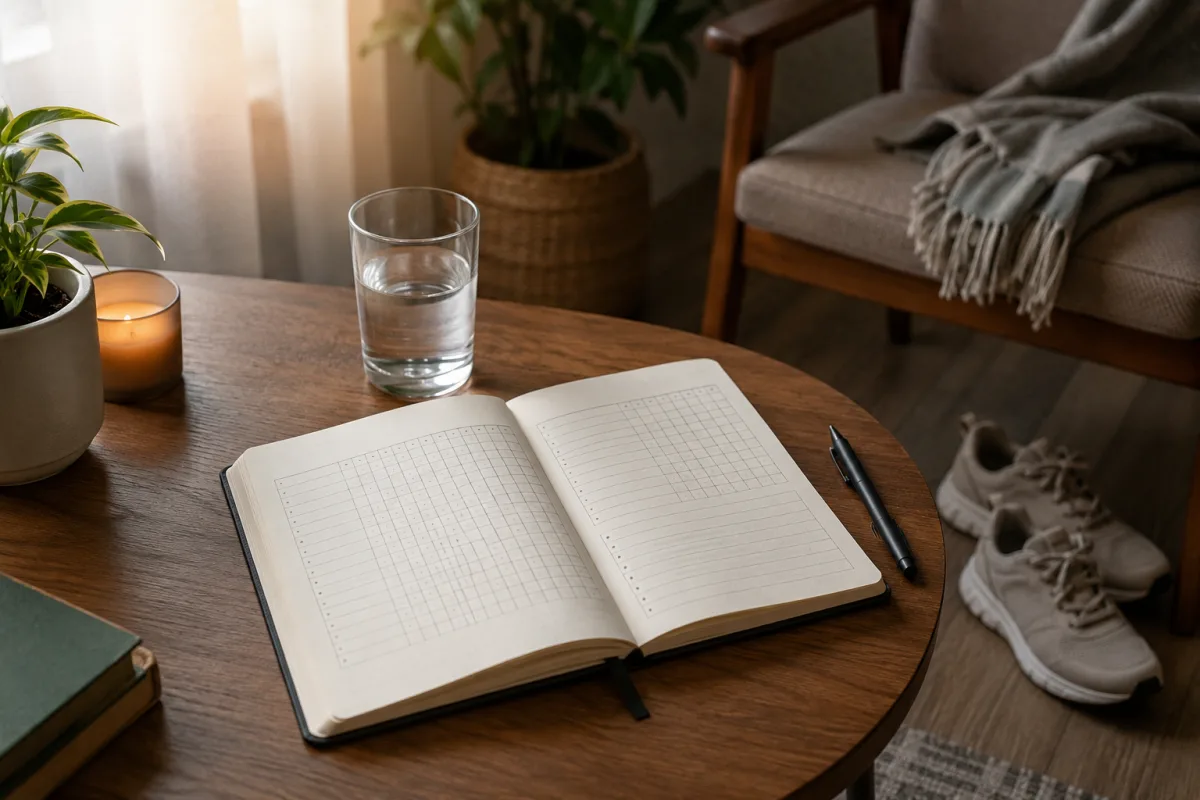
Self image changes when your brain sees proof. Pick one behavior that supports the new identity and repeat it. If you want to see yourself as reliable, show up to one tiny commitment. If you want to see yourself as healthy, prepare one decent meal or walk for ten minutes.
Do not start with a life overhaul. Big plans can collapse and feed the old story. Small proof is quieter, but it is harder for the mind to argue with after weeks of repetition.
Use A Tracking Method Carefully
A short journal can help you notice proof you would otherwise dismiss. Write the old thought, the new action, and what it showed. Keep it brief enough that you do not turn reflection into another job.
Livecub's food journal guide can be adapted into a behavior or mood journal. Track actions, sleep, meals, movement, or social contact only if tracking helps rather than fuels pressure.
Change The Environment

Self image is not only internal. Your room, phone, clothes, calendar, friends, and daily routine may all pull you toward the old version. Remove one friction point and add one cue. Put walking shoes by the door. Put the guitar on a stand. Delete one account that makes you spiral.
The point is to make the new behavior easier to do when motivation is low. Identity work that depends on perfect mood rarely lasts.
Practice In Public Slowly
A new self image needs real-world practice. If you want to be more social, start with a short greeting, then a small conversation, then a planned meetup. If you want to be more assertive, start with a low-stakes preference before a major boundary.
If speaking under pressure is hard, Livecub's selective mutism article may help explain why communication can need gradual support rather than pressure.
Body Image And Self Image
For many people, self image is tied to body image. Weight, aging, disability, pregnancy, hair, skin, scars, or illness can shift the way a person moves through the world. Body neutrality may be more believable than instant body love: "This body is mine, and I can care for it today."
The National Eating Disorders Association's body image resource describes body image as thoughts, perceptions, and attitudes about physical appearance. If food rules, purging, compulsive exercise, or fear of eating are present, seek professional help.
Expect Pushback From Others
People may be used to the old version of you. They may tease, question, or test the change. You do not need to announce a new identity to everyone. Let behavior become the announcement.
If family roles are involved, Livecub's guide to motivating the elderly has a related lesson: dignity and choice often work better than pressure. The same is true when you are changing yourself.
Use Language That Supports Action

Replace global labels with action language. Say "I skipped two workouts" instead of "I am a failure." Say "I felt anxious at the meeting" instead of "I cannot talk to people." This makes the next step visible.
NHS Inform's confidence and self-esteem guidance recommends challenging unkind thoughts and treating yourself with more fairness. Fair language makes change more possible.
Clean Up The Comparison Feed
Your self image is easier to rebuild when your daily inputs stop attacking it. Mute accounts that leave you smaller, angry, ashamed, or obsessed. Follow people who show real practice, ordinary bodies, honest work, and lives that match your values.
You do not need to delete every app. Start by removing the accounts that reliably send you into the old story.
Let Relationships Catch Up
Some relationships support the new self image. Others keep inviting the old role: the over-apologizer, the helper, the quiet one, the unreliable one, the person who absorbs every joke. Notice where you shrink.
Practice small boundaries before dramatic announcements. A new self image becomes stronger when your relationships leave room for the new behavior.
Plan For Slips
Slips are part of changing a self image. You may skip the habit, speak harshly to yourself, avoid a situation, or fall into comparison. Treat the slip as data. What triggered it? What would make the next attempt easier?
The old story will try to use one bad day as proof. Answer with one small repair, not a speech. Restarting is evidence too.
Anchor The Change To Values
A new self image lasts longer when it connects to values rather than mood. You may not feel brave, but you can value honesty. You may not feel athletic, but you can value caring for your body. Values give direction on low-confidence days.
Pick three values and one small behavior for each. This makes the new image practical instead of abstract.
Review Monthly, Not Hourly
Checking your self image every hour can turn growth into pressure. Review once a month. Ask what changed, what still hurts, what proof you collected, and what one behavior should continue.
Monthly review gives enough time for evidence to build. It also keeps one bad afternoon from defining the whole process.
Know When To Get Help
Get professional help if the old self image is tied to trauma, abuse, depression, eating disorder symptoms, panic, compulsions, substance use, or self-harm thoughts. Coaching, journaling, and habit change are not substitutes for mental health care when symptoms are serious.
If the new self image is blocked by intense fear, start with safety and support, not willpower. A therapist can help you work with old beliefs without forcing change too fast.
Frequently Asked Questions
How long does it take to create a new self image?
It varies. Many people need repeated small actions over weeks or months before the new view feels natural.
Can affirmations help?
They can, if they are believable and paired with behavior. Empty slogans often do not last.
What if I keep going back to the old story?
That is common. Return to one small action that gives evidence for the newer story.
Is self image the same as self-esteem?
They overlap. Self image is how you see yourself; self-esteem is how you value yourself.
When should I seek therapy?
Seek therapy if self image is tied to trauma, self-harm, depression, eating issues, panic, or daily impairment.
The New Picture
A new self image grows from accurate language, small proof, supportive surroundings, and repeated behavior. You do not have to believe a new story all at once. You can act in small ways until the evidence becomes easier to trust.
Cashie Evans
Covers parenting and practical household topics with clear steps, safety notes and links to current guidance.




Leave a reply
Replying to