
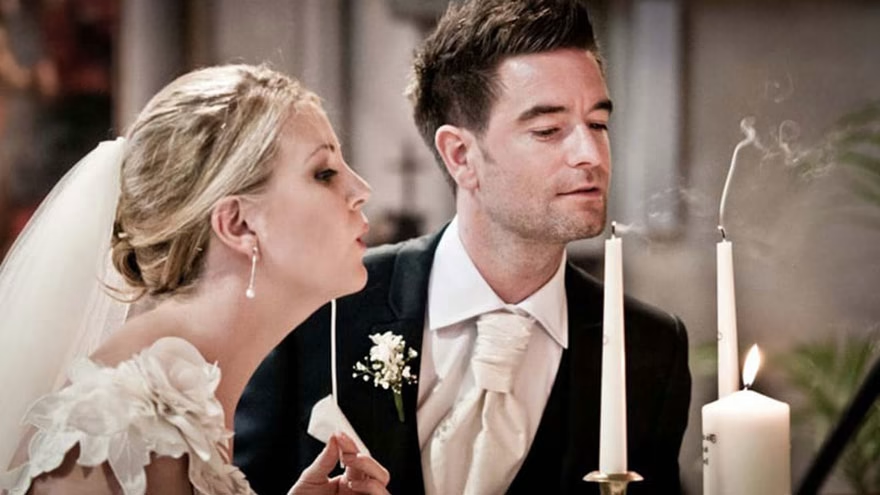
A Christian wedding night should not feel like a test you pass in one evening. It is the first private night of a marriage, often after an exhausting day, with two people carrying faith, nerves, expectations, family pressure, and a body that may simply want sleep. Learning how to have a Christian wedding night means planning for tenderness, consent, prayer, patience, and honest communication rather than trying to perform a perfect script.
This topic deserves plain language without turning sacredness into pressure. Christian teaching treats marriage as a covenant, but covenant does not remove kindness, timing, or mutual care. The best wedding night is one where both spouses feel safe, wanted, respected, and free to slow down.
Start by agreeing that married intimacy is not a race and not a public scoreboard. No parent, pastor, friend, or internet checklist belongs in the room with you. The couple can honor faith and still admit normal human limits: tired feet, nerves, medical concerns, awkward laughter, and the need to learn each other slowly. A gentle beginning often creates more trust than a dramatic one.
What Should A Christian Couple Expect?
Expect tiredness. Many couples arrive at the hotel after a long ceremony, photos, reception, travel, family conversations, and very little food. Focus on the Family advises Christian newlyweds to discuss honeymoon and wedding-night expectations before marriage, including sexual expectations, instead of assuming the night will unfold perfectly on its own.
That conversation should include nervousness, pace, privacy, contraception or family-planning convictions, health concerns, and what each spouse needs to feel comfortable. If you want a soft, nonsexual way to slow the evening down, Livecub's relaxation massage guide can help create quiet connection without making the whole night outcome-driven.
It also helps to name what the night is not required to solve. It does not have to prove spiritual maturity, erase previous fear, or match a romantic story someone else told. Some couples will be physically close right away. Some will talk, pray, sleep, and wake up feeling far more ready. The shared decision is the point. A night shaped by care is still a good wedding night.
How Should Faith Shape The Wedding Night?
Faith should shape the night toward mutual honor, not fear. Bible Gateway's text of 1 Corinthians 7 presents marital intimacy as mutual rather than one-sided, with husband and wife considering each other. That mutuality matters. A Christian wedding night should not be framed as one spouse claiming a right and the other enduring it.
Prayer can be simple. Thank God for the marriage, ask for patience, and ask for the ability to care for each other well. Then stop turning every moment into a spiritual performance. Marriage is lived in ordinary human bodies. Laughing, needing a snack, being nervous, or deciding to sleep first does not make the night a failure.
What Should You Talk About Before The Wedding?

Talk about expectations before the week becomes crowded. Discuss privacy, pace, fears, sexual history if relevant, medical concerns, pain concerns, boundaries, and how you will communicate if something feels uncomfortable. A short conversation a month before the wedding is better than a whispered negotiation at midnight.
Make the conversation specific enough to help under stress. Decide what words mean pause, slow down, keep going, or change plans. Talk about alcohol before the reception, not after it. Discuss whether you want a quiet hotel, a short drive, or a delayed honeymoon. These details may not sound romantic, but they protect romance from confusion and fatigue.
Use concrete language. "If one of us is exhausted, can we decide to rest and be close without pressure?" is more useful than vague promises to be patient. "Can we agree that either of us can pause?" is clearer than assuming consent once and never checking in. For broader communication patterns, Livecub's marriage seminar ideas can help couples practice talking before a high-stakes moment.
How Can You Make The Room Feel Calm?
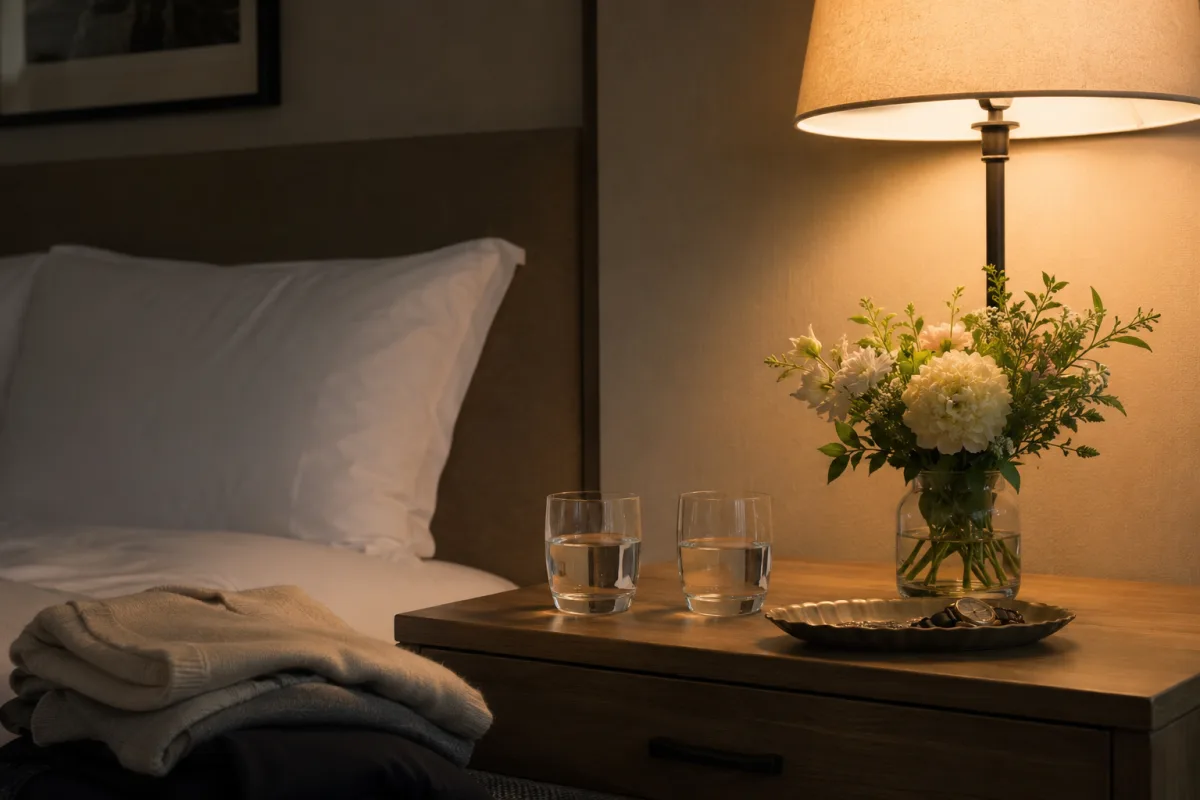
Make the room easy. Pack water, snacks, comfortable clothes, basic toiletries, any medication, and whatever you need for your family-planning convictions. Do not rely on the venue, hotel, or late-night room service. The more practical needs you handle early, the less pressure the room carries.
Keep the first hour slow. Change clothes, eat something, remove pins and makeup, take a shower, and breathe. Put phones away unless you are waiting for an urgent family update. A Christian wedding night can include affection, prayer, laughter, and sleep before it includes anything else.
A modest room setup can feel more intimate than a staged surprise. Low light, clean sheets, water, privacy, and no rushed checkout do more good than elaborate decor that adds another task. If one spouse is self-conscious, agree on lighting and clothing before the moment becomes tense. Comfort is not the opposite of romance; it is often what lets romance show up.
What If One Spouse Is Nervous Or Not Ready?
Slow down. Nervousness is information, not rebellion. If one spouse is anxious, in pain, overwhelmed, or simply exhausted, the loving move is to pause and stay emotionally close. Physical intimacy grows better with trust than with duty performed under pressure.
Do not shame hesitation. Ask what would help: more time, more conversation, less light, sleep, prayer, nonsexual touch, or waiting until morning. If fear, pain, trauma history, or medical concerns are involved, professional help from a clinician or licensed counselor may be wise. A spouse is not a problem to solve; a spouse is a person to love.
The spouse who feels ready has one clear responsibility: stay kind. Readiness is not a moral victory over the other person. It is simply one body and one heart being in a different place that night. Couples who learn to pause without resentment gain a skill they will use many times in marriage, far beyond the honeymoon.
How Do You Keep Romance Without Pressure?
Choose connection over choreography. Write a short note. Say one thing you noticed during the ceremony. Share a favorite moment from the day. Hold hands without immediately turning every touch into a next step. The Gottman Institute often emphasizes small rituals of connection in marriage, and the wedding night is a good place to start that habit.
If you want something playful and low-pressure, Livecub's romantic card games can help newlyweds talk, laugh, and shift from public wedding mode to private marriage mode. Keep the goal modest: not a flawless first night, but a gentle beginning.
How Should The Next Morning Be Handled?

Protect the morning if you can. Do not schedule a packed brunch, early flight, and family goodbye marathon unless unavoidable. Give yourselves time to wake up as married people, talk, eat, and adjust. The wedding night and wedding morning are connected; a calm morning can redeem a chaotic night.
If the first night was awkward, do not panic. Most couples learn each other slowly. Treat the morning as a reset. Ask what felt good, what felt pressured, what should be slower, and what you want to keep private. Marriage gives you time, and the first night should not be asked to carry the whole future.
Keep outside commentary out of it. You do not owe friends a funny story, parents a hint, or social media a honeymoon report. Privacy gives the couple room to become a couple. If the morning is quiet, tender, or even a little clumsy, that can still be a faithful beginning. The goal is not a legend. It is trust.
Frequently Asked Questions
Do Christian couples have to consummate on the wedding night?
No. Many do, but exhaustion, nerves, pain, or mutual choice may mean waiting. The key is mutual care, not a deadline.
Should we pray together before intimacy?
If it feels natural and comforting, yes. Keep it simple. Do not use prayer to pressure a spouse into moving faster.
What if I am scared of sex after waiting?
Talk before the wedding, slow the pace, and seek help if fear is strong. A patient spouse and good counseling can make a real difference.
Can romance include nonsexual touch?
Yes. Holding, kissing, massage, talking, laughing, and resting together can all be part of a loving wedding night.
What should we avoid?
Avoid alcohol-driven decisions, shame, comparison, public pressure, surprise expectations, and treating the night as a performance.
What Is The Best Wedding Night Mindset?
Begin with the promise, not the performance. A Christian wedding night is the first private expression of a marriage that should be marked by patience, mutual honor, and joy. Plan the practical details, speak honestly before the wedding, and let the night be human. Tender is better than impressive.

Linda Fehrman
Edits general wellness and relationship explainers. Health material is educational, avoids diagnosis and links to health-authority guidance.




Leave a reply
Replying to