

How to Keep Yourself From Staying Up Late is not only a willpower problem. Late nights can come from revenge bedtime procrastination, unfinished tasks, stress, light exposure, caffeine, irregular wake times, or a bedroom that makes scrolling too easy.
The goal is not to become a perfect sleeper in one night. The goal is to make going to bed slightly easier than staying awake for one more episode, one more scroll, or one more unfinished chore.
Start With A Fixed Wake Time
A steady wake time gives the body a stronger daily signal than a bedtime that moves around every night. Pick a wake time you can keep most days, then build backward from it.
CDC says good sleep and sleep quality are essential for health and emotional well-being, and it advises talking with a healthcare provider if sleep problems continue: CDC sleep overview.
If you sleep late on weekends, keep the shift modest. A huge weekend catch-up can make Sunday night feel like jet lag.
Make Tomorrow Smaller
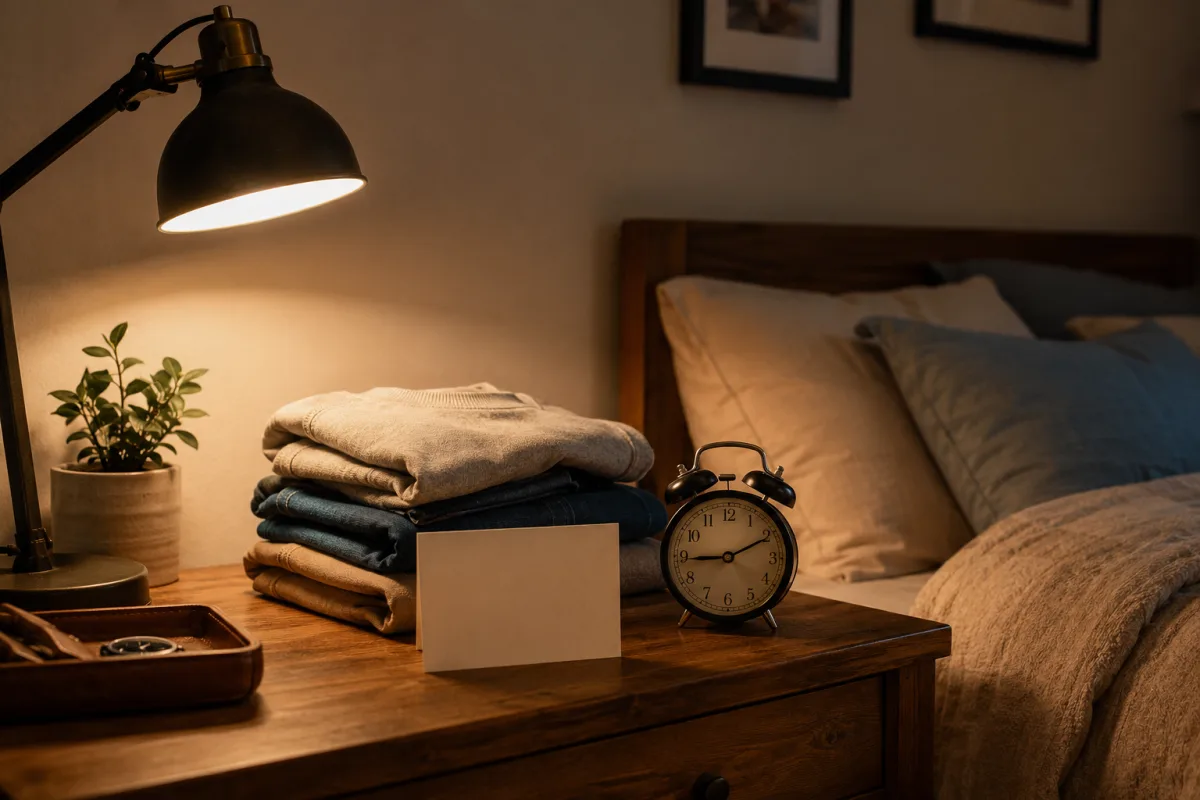
Many people stay up because tomorrow feels too heavy. Before bed, choose one thing to make morning easier: set out clothes, pack a bag, write the first work task, or put breakfast where you can see it.
This works because the brain stops treating bedtime as the last chance to win back control of the day.
If the late-night pull is tied to a stressful event, borrow the same idea used for sports tryout nerves: reduce the unknowns before the event instead of rehearsing fear at midnight.
Move Caffeine Earlier
Caffeine timing matters. Coffee, energy drinks, strong tea, pre-workout supplements, chocolate, and some cold medicines can push bedtime later even when you feel tired.
MedlinePlus recommends avoiding caffeine late in the day, keeping a regular schedule, and creating a sleep-friendly environment: MedlinePlus healthy sleep.
If you do not know your pattern, track caffeine, meals, and bedtime for one week. A simple version of a food journal can work as a sleep trigger log.
Use Light Like A Switch
Bright light in the morning helps signal day. Dimmer light at night helps signal wind-down. The change does not have to be dramatic; lamps, screen brightness, and room lighting all count.
Try a two-step evening light rule: bright enough to move around safely, too dim for work mode. If you keep turning the room back into an office, bedtime has to fight the room.
If you wake during the night, keep lights low. A bright bathroom or phone screen can make the body think the day has restarted.
Build A Shutdown Routine
A shutdown routine should be short enough to repeat on a bad day. Choose three actions: close laptop, wash face, set alarm, put phone away, read two pages, or write tomorrow's first task.
Do the same sequence each night for two weeks. The order becomes the cue, not the mood.
Do not make the routine so fancy that you avoid it. A ten-minute routine you do is better than a forty-minute routine you admire and skip.
Put Screens In A Friction Spot
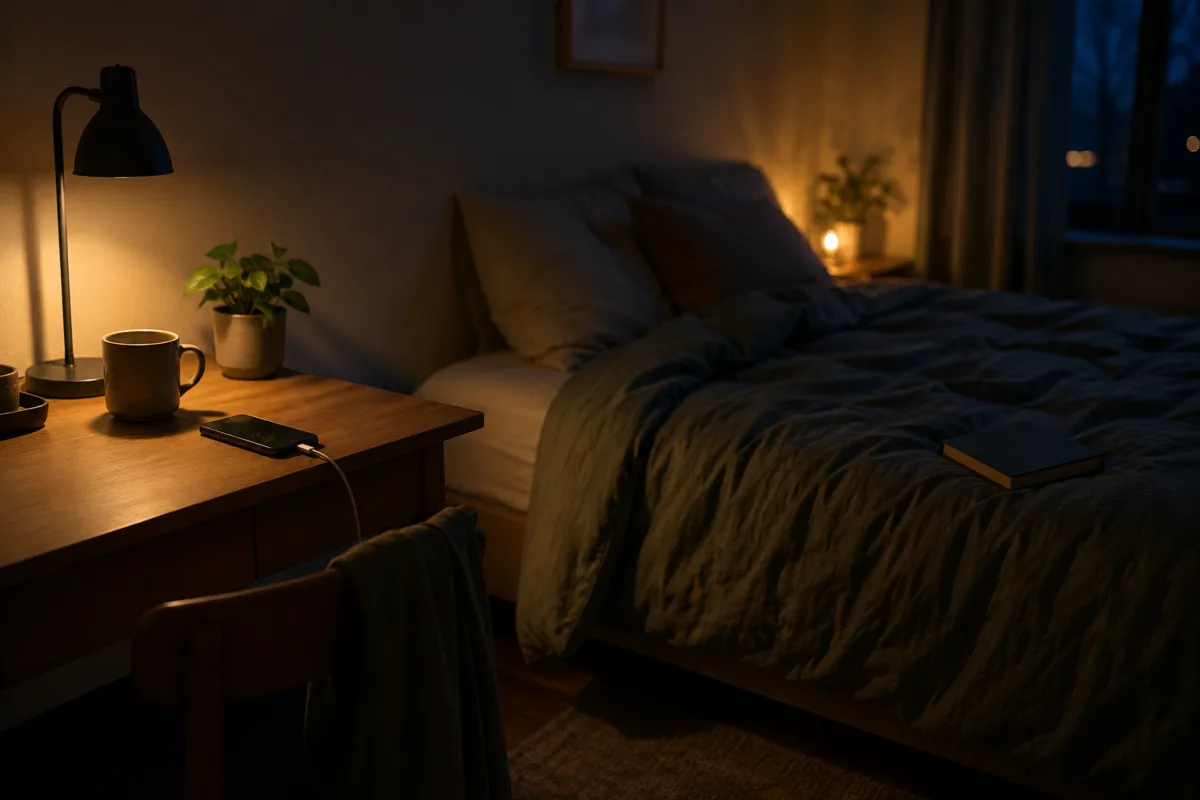
If the phone stays in bed, the phone usually wins. Charge it across the room, in the hallway, or on a desk where standing up is required.
Use app limits if they help, but do not rely on a setting you override every night. Physical distance is harder to negotiate with.
If you need the phone for alarms or safety, keep it reachable but not comfortable. A bedside drawer can be enough friction for some people.
Handle Racing Thoughts

Racing thoughts often get louder in silence. Keep a small notebook near the bed and write the thought as a task, worry, or memory. Then write the next tiny action if there is one.
Mayo Clinic sleep tips include sticking to a schedule, paying attention to food and drink, creating a restful environment, limiting naps, including activity, and managing worries: Mayo Clinic sleep tips.
If the worry is about speaking, performing, or being judged, stage fright coping may help you move worry out of bed and into a daytime plan.
Watch Food, Alcohol, And Exercise
Heavy meals, alcohol near bedtime, late nicotine, and intense late exercise can all disturb sleep for some people. The pattern is personal, so test one change at a time.
Do not turn this into a long list of banned pleasures. Start with the item most likely to be pushing bedtime later, then watch the result for a week.
If hunger wakes you, a small planned snack may be better than lying awake angry at your body.
Make The Bed Less Negotiable
Use the bed mostly for sleep and sex. If the bed becomes the place for work, arguments, scrolling, bills, and news, the body learns that bed is a busy place.
If you cannot sleep after a while, leave the bed for a quiet, dim activity and return when sleepy. Keep it boring. Do not reward wakefulness with the best content of the day.
This is not punishment. It is a way to teach the bed a simpler job.
Plan For The Hard Nights
A good sleep plan includes nights when you miss the plan. Decide in advance what happens after a late night: keep the wake time close, avoid a long nap, get morning light, and reset that evening.
Do not use one bad night as proof that the whole routine failed. Sleep timing often improves through repeated signals, not one heroic bedtime.
If shift work, caregiving, pain, medication, or a sleep disorder is involved, the plan may need medical help and practical support.
Build A Nighttime Stop Point
Choose one stop point before bed: the episode ends, the dishwasher starts, the laptop closes, or the phone moves to the charger. The stop point should be visible and specific.
Do not negotiate with the whole night. Negotiate with the next five minutes. Stand up, turn off one light, and begin the shutdown routine.
If you share a room or home, tell people the stop point. A quiet boundary works better than disappearing mid-conversation and then returning to the screen.
Protect The First Morning Hour
Late nights are easier to repeat when the morning has no anchor. Give the first hour one gentle structure: light, water, bathroom, clothes, and the first task.
Avoid starting the day by reviewing everything you failed to do the night before. That shame often becomes fuel for another late night.
A better morning does not erase a bad night, but it makes the next bedtime less desperate.
Use A One-Line Bedtime Rule
A one-line rule is easier to keep than a long sleep plan. Try: no phone in bed, lights dim after ten, or the laptop closes before brushing teeth.
Pick the rule that changes the moment where you usually lose the night. If the problem is scrolling, make the rule about the phone. If it is work, make the rule about the laptop.
Keep the rule for seven nights before judging it. One awkward night is not enough data.
Know When To Get Help
Talk with a clinician if trouble sleeping lasts for weeks, causes daytime impairment, or comes with loud snoring, breathing pauses, restless legs, panic, depression, pain, or medication concerns.
Also get help if staying up late is tied to feeling unsafe with your thoughts. Sleep advice is not enough during a crisis.
The best bedtime plan is the one that protects health, work, relationships, and the next morning without turning sleep into another source of shame.
Frequently Asked Questions
What is the fastest way to stop staying up late?
Set a steady wake time, move screens away from bed, dim lights, and use a short shutdown routine tonight.
Should I sleep in after a late night?
A small adjustment is fine, but a huge sleep-in can make the next night harder.
Does caffeine really affect bedtime?
Yes, for many people. The dose, timing, and personal sensitivity all matter.
What if I feel tired but do not go to bed?
Make tomorrow smaller, reduce phone access, and look for stress, avoidance, or revenge bedtime patterns.
When should I call a doctor?
Call if insomnia persists, affects daytime life, or comes with breathing pauses, severe mood symptoms, pain, or medication concerns.
This article is for general information only and isn't a substitute for medical or mental health advice. If symptoms affect daily life, talk with a qualified professional.

Timothy Davidson
Edits step-by-step general-interest guides for clarity, realistic limits and source verification.




Leave a reply
Replying to