
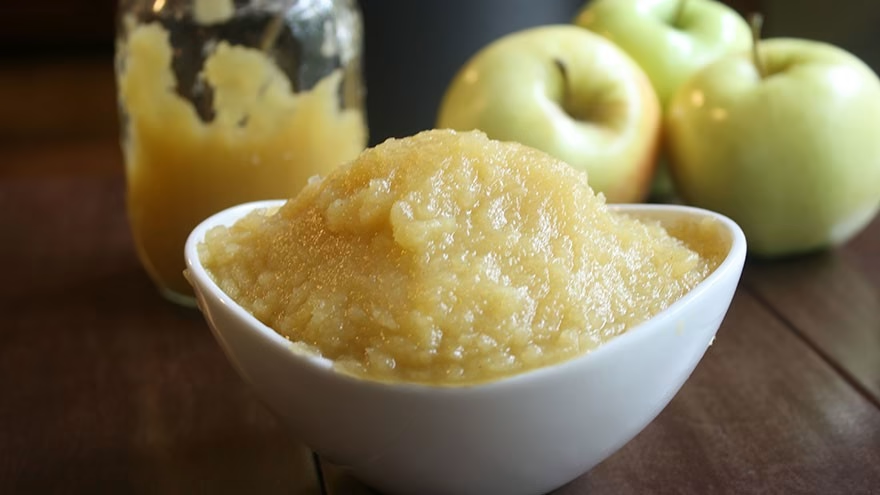
Homemade applesauce is one of those kitchen jobs that feels better when it stays simple. Apples, a little liquid, gentle heat, and a patient mash can give you a bowl that works for breakfast, pork, pancakes, lunch boxes, baking, or a spoon straight from the fridge. This guide on how to make applesauce focuses on apple choice, texture, sweetness, storage, and the safety line between a casual fridge batch and a preserved one.
What apples make good applesauce?
Use apples that taste good raw and soften well when cooked. A mix usually beats a single variety because one apple gives sweetness, another brings tartness, and another helps the sauce break down. Good home batches often include McIntosh, Golden Delicious, Fuji, Gala, Jonagold, Jonathan, Braeburn, or Granny Smith, depending on what is fresh near you.
The National Center for Home Food Preservation gives tested guidance for applesauce processing, and its NCHFP applesauce canning page is a useful source if you plan to preserve jars instead of eating the sauce within a few days.
If you cook fruit and vegetables often, Livecub's guide to cooking greens is a good companion because it treats simple prep as the place where texture is won or lost.
Should you peel the apples?
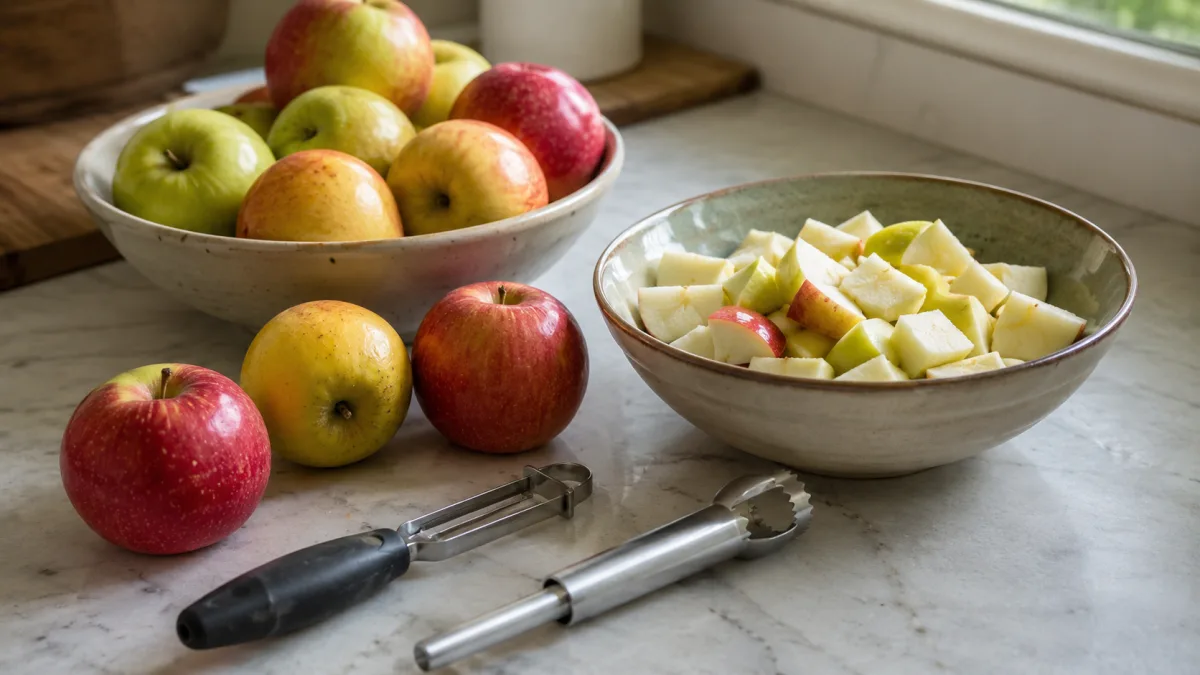
Peeling is a texture choice. Peeled apples make a smoother, lighter sauce with fewer bits. Unpeeled apples give more color, more body, and a rustic finish. If you have a food mill, you can cook the apples with skins on and remove skins after cooking.
Peeled sauce
Peel when you want a soft spoonable sauce for children, baking, or a clean side dish. Peel before coring so the apples are easier to hold.
Unpeeled sauce
Leave skins on when the apples are thin-skinned and clean, or when you plan to blend the sauce. Red skins can give the sauce a pink tone.
Food mill sauce
A food mill lets you cook apple quarters with skins and cores removed, then press the softened fruit into a smoother sauce. It is a good middle path for larger batches.
How do you cook applesauce on the stove?
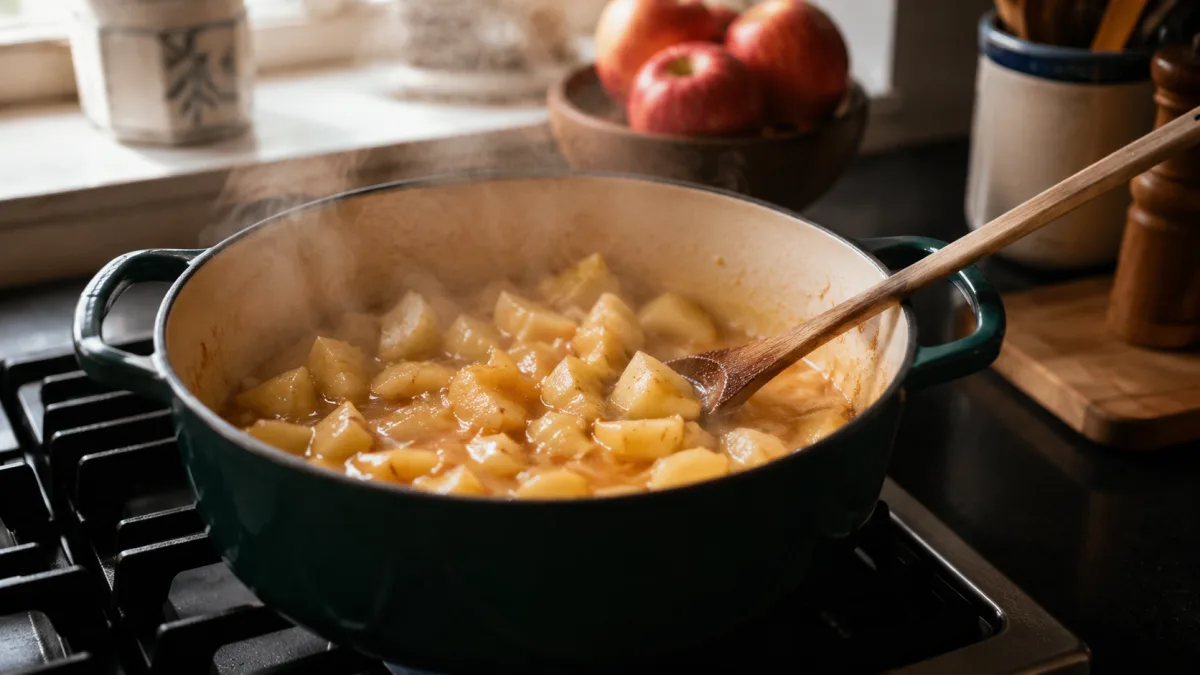
Core the apples, cut them into even chunks, and place them in a heavy pot. Add a small splash of water, cider, or apple juice, just enough to prevent sticking at the beginning. Cover the pot and cook over medium-low heat until the pieces collapse when pressed with a spoon.
Stir now and then, especially near the bottom of the pot. Once the apples soften, remove the lid and cook briefly if the sauce looks watery. Low heat is your friend; scorched apple tastes flat and bitter.
For another kitchen project where timing and moisture matter, Livecub's perfect tiramisu guide shows how texture depends on patience rather than force.
How do you control sweetness and seasoning?
Taste the cooked apples before adding sugar. Many fresh apples need none. If the batch tastes sharp, add sugar, brown sugar, maple syrup, or honey in small amounts, then taste again after a minute of simmering.
Cinnamon is classic, but it is easy to overdo. Start with a pinch. Nutmeg, clove, ginger, lemon zest, or vanilla can work, but the apple should still taste like apple. Season after the fruit softens because cooked apples may become sweeter as moisture leaves the pot.
How should the texture be finished?
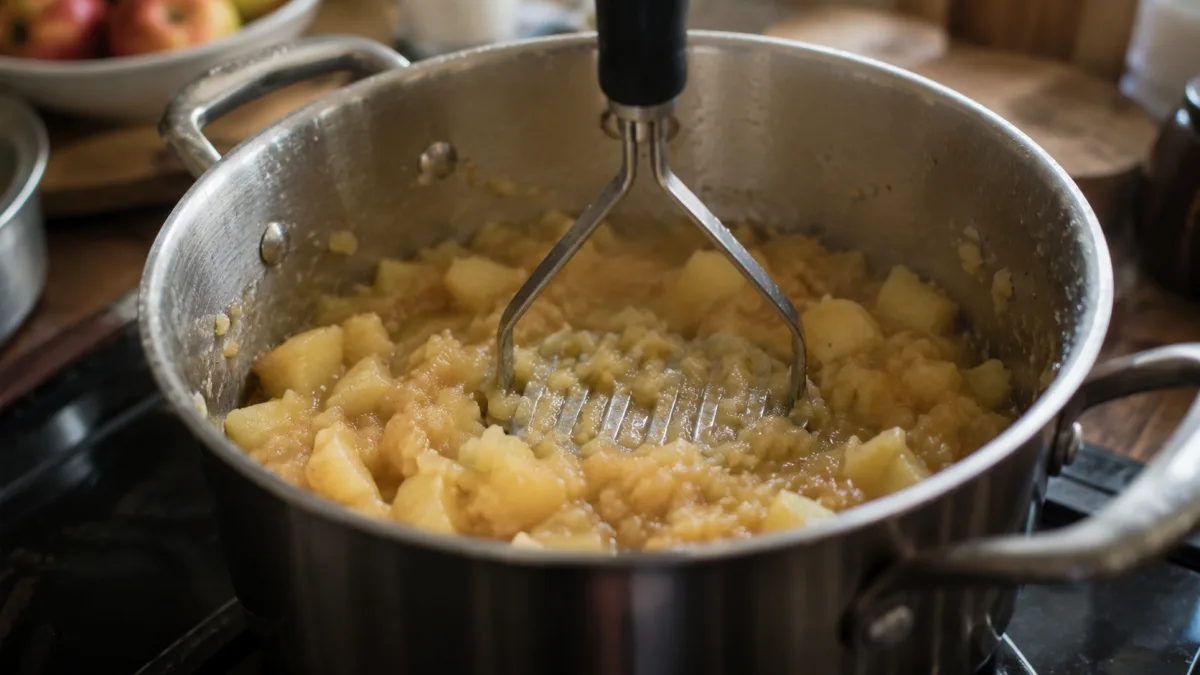
For chunky applesauce, press the fruit with a potato masher until it looks right. For smooth sauce, use an immersion blender in short bursts. If you want baby-food smoothness, blend fully, then loosen with a spoonful of water or cider if needed.
Do not chase perfect smoothness if you like a home-cooked feel. A few soft pieces can make the sauce more interesting. If the batch is too thin, simmer uncovered. If it is too thick, stir in a small splash of liquid.
Texture should match the use. Chunky sauce is good beside roasted meat, smooth sauce is better for baking, and lightly mashed sauce works well over oatmeal.
Can applesauce be made in a slow cooker?
Yes. A slow cooker is useful when you have a lot of apples and do not want to watch the stove closely. Add prepared apple chunks with a small amount of liquid, cover, and cook until soft. Stir once or twice if you are nearby.
The tradeoff is moisture control. A slow cooker traps steam, so the sauce may be looser than a stovetop batch. If it looks watery, move the finished sauce to a pot and simmer briefly, or cook with the lid slightly ajar near the end if your appliance allows it safely.
Use the slow cooker for convenience, not speed. The flavor can be gentle and round, but browning and quick reduction are not the point.
How do you store homemade applesauce?
For refrigerator storage, cool the sauce quickly in shallow containers, cover it, and keep it cold. For freezing, leave headspace because applesauce expands. Small portions thaw faster and are easier to pack into lunches or stir into batter.
Penn State Extension's apple preserving guide gives practical preservation direction, and the Penn State Let's Preserve Apples page is useful when you want to compare freezing, canning, and other apple storage choices.
Livecub's fresh vegetable freezing guide is not about apples, but it is relevant for thinking in small portions, headspace, labeling, and realistic freezer use.
Can applesauce be canned safely?
Yes, but canning is not the same as making a quick bowl for tonight. Use a tested recipe, correct jars, proper headspace, and the processing time for your jar size and altitude. Do not guess, shorten processing, or thicken the sauce outside the recipe.
For a plain family batch, refrigeration or freezing is easier. For shelves of jars, follow tested canning directions exactly. Preserving is a recipe job, not a vibes job.
How can you use applesauce after it is made?
Serve warm applesauce with pork chops, roast chicken, potato pancakes, oatmeal, waffles, yogurt, or cottage cheese. Chill it for lunch boxes or spoon it into small containers for quick snacks. Stir smooth applesauce into muffins, snack cakes, and some quick breads when the recipe is built for it.
Keep a little unsweetened sauce aside before adding cinnamon or sugar. Plain sauce is more flexible for cooking because it can go sweet or savory. Spiced sauce is better for snacks and breakfast bowls.
If you cook for a group, make the sauce one day ahead and adjust texture after chilling. Cold sauce thickens, and that final check keeps you from serving something runny.
For a party bowl, finish with a small knob of butter, a pinch of salt, or a squeeze of lemon only after tasting. Those small changes can make the apple flavor clearer without turning the sauce into dessert filling.
Label any unsweetened freezer portions so they do not get confused with dessert sauce later. A clear label saves you from guessing months later, especially when several apple batches look alike in the freezer. Date the container too. Future breakfast will thank you.
What mistakes ruin applesauce?
The common mistakes are using bland apples, adding too much water, cooking on high heat, dumping in sugar before tasting, and walking away long enough for the bottom to scorch. Another mistake is forcing one texture on every batch. A sauce for pork can stay chunkier than a sauce for muffins.
Presentation matters if you serve applesauce at a party or holiday meal. Livecub's cookie display guide is about sweets, but the same idea applies: small bowls, clean edges, and a simple garnish make homemade food look cared for.
Frequently Asked Questions
Do you need to add sugar to applesauce?
No. Taste the cooked apples first. Sweet apple varieties may need no sugar, especially if the sauce is for breakfast or baking.
Can applesauce be made without peeling?
Yes. Leave skins on for color and body, then mash, blend, or use a food mill if you want a smoother finish.
Why is my applesauce watery?
You may have added too much liquid or covered the pot too long. Simmer uncovered and stir until excess moisture reduces.
Can homemade applesauce be frozen?
Yes. Cool it, pack it in freezer-safe containers with headspace, label it, and freeze in portions you will actually use.
Good applesauce tastes like the apples you chose. Start with fruit you enjoy, cook gently, and adjust sweetness only after the sauce tells you what it needs.

Chiara Bradshaw
Covers education, culture and creative topics with an emphasis on readable explanations and verifiable references.




Leave a reply
Replying to