
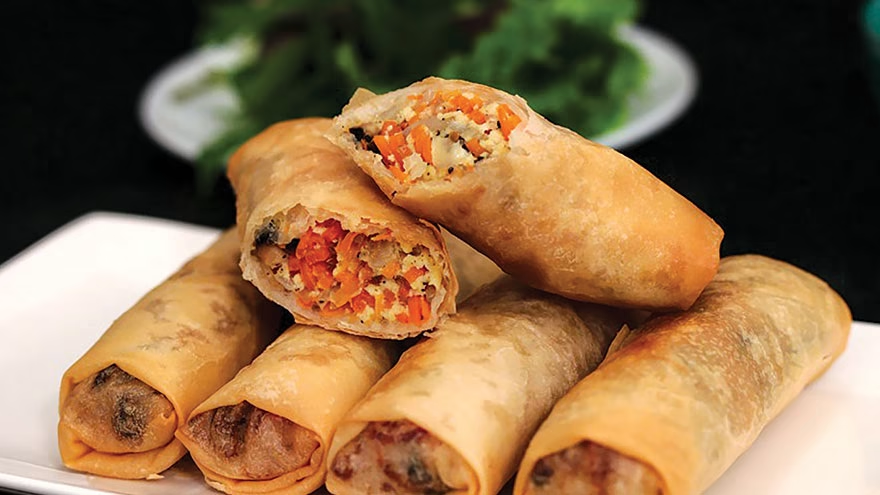
Vietnamese-style egg rolls should be crisp outside, savory inside, and light enough that one more roll sounds reasonable. The trick is not a secret ingredient. It is a dry filling, tight rolling, controlled frying, and a dipping sauce that cuts through the richness. This guide on how to make Vietnamese-style egg rolls keeps the method practical for a home kitchen.
What makes these egg rolls Vietnamese-style?
Many Vietnamese chả giò versions use rice paper, pork, shrimp, noodles, wood ear mushrooms, carrot, onion, and nước chấm-style dipping sauce. Many home cooks also use wheat-based spring roll or lumpia wrappers because they are easier to handle and fry crisp.
The Smithsonian's chả giò recipe article describes a version with ground pork, carrots, onion, bean threads, wood ear mushrooms, rice paper, and deep frying. The Smithsonian chả giò recipe is useful cultural and ingredient context.
For another fried-chicken style technique, Livecub's Chinese fried chicken wings guide is a good comparison for moisture control and hot oil.
What ingredients go in the filling?
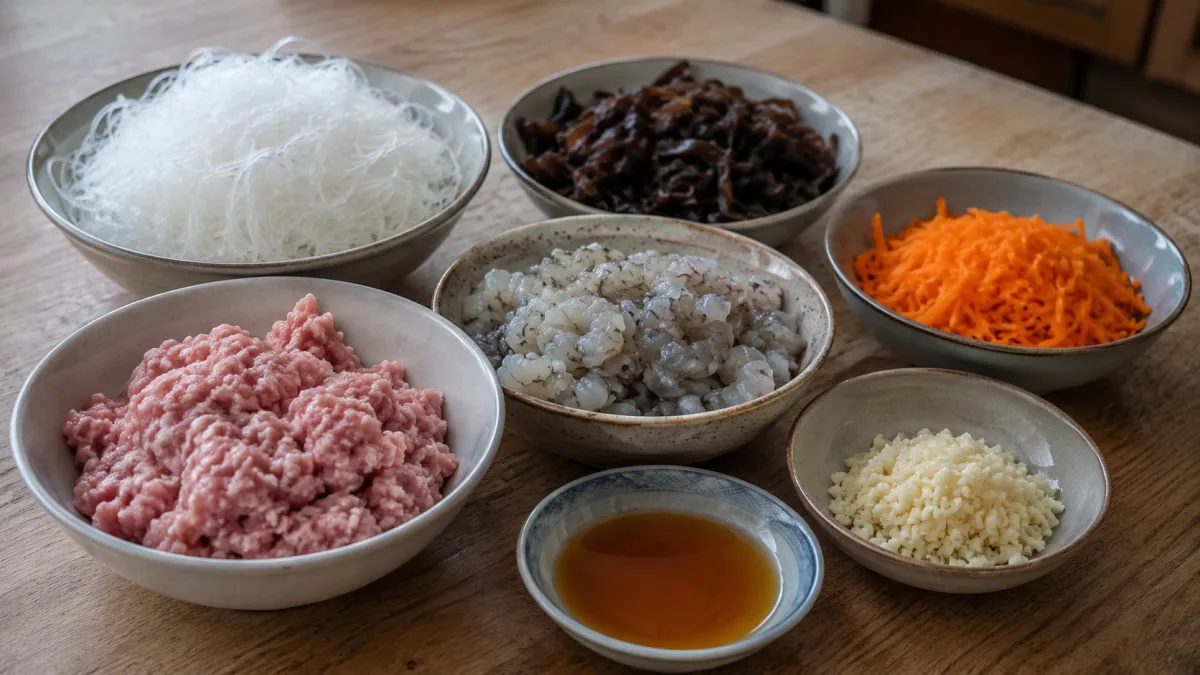
A basic filling can include ground pork, chopped shrimp, soaked glass noodles, wood ear mushrooms, grated carrot, onion or shallot, garlic, fish sauce, pepper, and a little sugar. Keep everything finely cut so the roll is easy to shape and cook through.
Protein
Pork is common, shrimp adds sweetness, and some cooks use crab, chicken, or tofu. Keep the filling balanced so no one ingredient makes the roll wet.
Noodles and mushrooms
Soaked glass noodles and wood ear mushrooms add texture. Drain them well and chop them short so they do not pull out in strings when you bite.
Vegetables
Carrot, onion, and jicama can work, but watery vegetables must be squeezed or drained. Wet filling is one of the main reasons rolls split.
Which wrappers should you use?
Rice paper gives a more traditional Vietnamese texture: delicate, chewy-crisp, and sometimes trickier to fry. Wheat-based spring roll or lumpia wrappers fry more predictably and are often used by Vietnamese cooks too, especially for party batches.
Andrea Nguyen's Viet World Kitchen frying tips explain wrapper choices and frying behavior for chả giò. Her chả giò frying tips are helpful if you are deciding between rice paper and wheat-based skins.
Choose the wrapper you can handle well. A neat roll that fries cleanly is better than a traditional wrapper used badly.
How do you keep the filling from getting wet?
Moisture control starts before mixing. Drain soaked noodles, squeeze grated vegetables if they are watery, pat shrimp dry, and avoid adding too much fish sauce at once. The filling should hold together without leaving liquid in the bowl.
If you are using jicama, onion, or carrot, chop finely and remove excess moisture. If you use mushrooms, drain them and cut them short. Long strands can pull through the wrapper and make rolling messy.
The filling should be seasoned, not soupy. A wet filling makes splitting, splattering, and greasy wrappers more likely.
How do you roll them tightly?
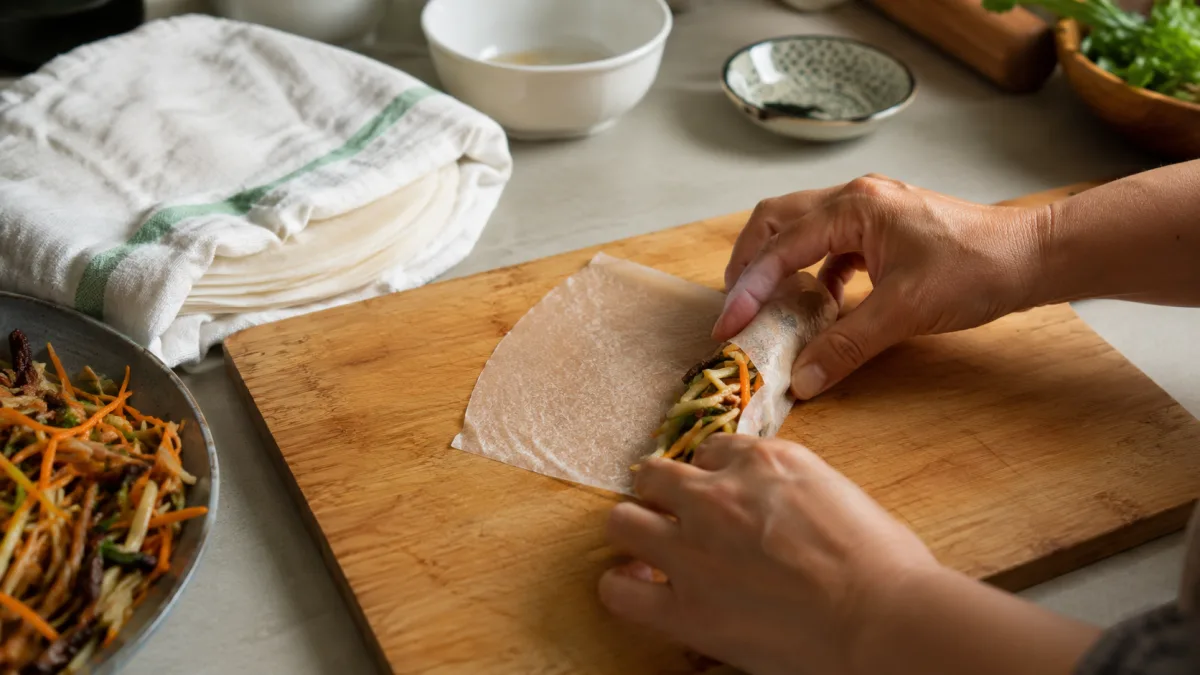
Keep the filling portion small. Place it near the lower third of the wrapper, fold the bottom over, fold in the sides, and roll firmly without squeezing the filling out. Seal according to the wrapper type.
Rice paper needs careful hydration. Too wet and it tears. Too dry and it cracks. Wheat wrappers should stay covered with a towel so they do not dry out while you work.
Livecub's Asian seasoning mix guide can help readers think about salt, aromatics, and balance, even though chả giò filling needs its own seasoning.
How should the rolls be fried?
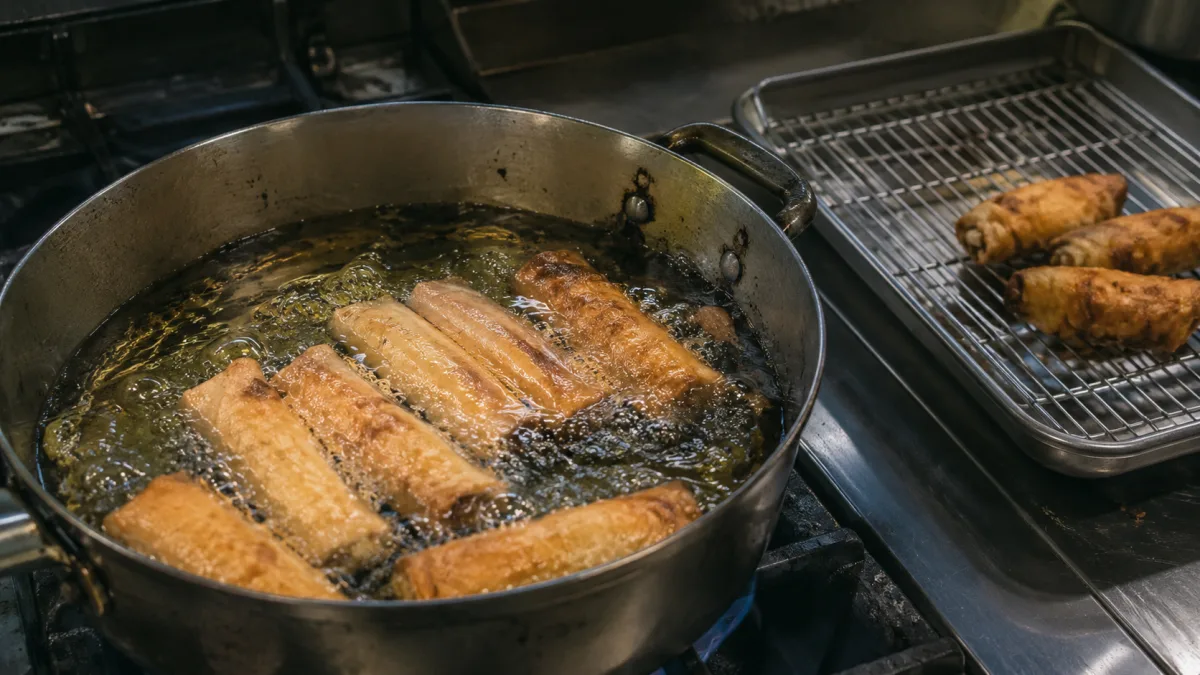
Use enough oil for the rolls to move, heat it steadily, and fry in small batches. Crowding drops the oil temperature and makes the wrappers greasy. Turn the rolls so all sides color evenly.
Drain on a rack rather than a flat paper towel if you want the bottoms to stay crisp. Let the oil recover between batches. Frying is calmer when the tray is ready before the first roll goes in.
Food safety matters because fillings may include pork, shrimp, or poultry. FoodSafety.gov lists safe minimum internal temperatures on its safe minimum internal temperatures chart.
How do you organize frying day?
Set up a clean station before heating oil. Have rolled egg rolls on a tray, a second tray for cooked rolls, a rack for draining, tongs, a thermometer if you use one, and a small bowl for any torn wrappers or scraps.
Keep raw filling tools separate from cooked rolls. Wash hands, boards, and knives after handling pork, shrimp, or poultry. Do not let raw filling sit out while you slowly roll a large batch.
Batch work keeps frying calm. Roll a manageable amount, fry in small batches, and let the oil recover instead of chasing speed.
What dipping sauce works best?
A simple nước chấm-style sauce usually includes fish sauce, lime juice or vinegar, water, sugar, garlic, and chile. Taste for salty, sweet, sour, and heat. The sauce should brighten the fried roll, not bury it.
Serve with lettuce, herbs, cucumber, pickled vegetables, or rice noodles if you want a fresher plate. The crisp roll tastes better when there is something cool and sharp beside it.
Make the sauce early enough for sugar to dissolve and garlic to mellow. If the sauce tastes too strong, add a little water. If it tastes flat, add acid first, then salt. Taste it with a small piece of fried wrapper if you can, because the roll changes the balance once it is hot and crisp from the oil. Adjust lightly.
How should the rolls be served?
Serve hot rolls with lettuce leaves, mint, cilantro, Thai basil if available, cucumber, pickled carrot, or rice noodles. Diners can wrap a roll in lettuce and herbs, then dip. That fresh bite balances the fried wrapper.
For a party, serve in smaller batches so the first tray does not steam itself soft. Keep the dipping sauce in a shallow bowl and give people enough napkins. Crisp food becomes less fun when the table is not ready.
Can you freeze Vietnamese-style egg rolls?
Yes, but freeze them in a single layer before bagging so they do not stick together. Some cooks freeze uncooked rolls, while others fry first and reheat later. The best choice depends on wrapper type and your comfort with frying from frozen.
Label the bag with filling and date. Reheat cooked rolls in an oven or air fryer so they crisp again. Microwaving is faster but usually softens the wrapper.
For another wrapped appetizer idea, Livecub's asparagus rolls recipe gives a different way to think about prep, rolling, and serving.
What mistakes cause splitting or greasiness?
The common mistakes are wet filling, overfilling, loose rolling, wrappers that are too wet or dry, oil that is too cool, and frying too many at once. Another mistake is stacking hot rolls before steam has escaped.
Livecub's Philippines corned beef recipe is a different dish, but it is a useful reminder that canned or moist fillings need heat and moisture control to taste good.
Crisp rolls start before the oil. Drain, chop, portion, roll, and stage everything before frying begins.
How can leftovers be reheated?
Cool leftover rolls, refrigerate them, and reheat in an oven, toaster oven, or air fryer until hot and crisp again. A skillet can work if you use moderate heat and turn them often. Microwaving is fine for speed but softens the wrapper.
Store sauce separately. Lettuce and herbs should be fresh, not packed with hot rolls. If you freeze cooked rolls, use a single layer first so they do not become one block.
Frequently Asked Questions
Are Vietnamese egg rolls the same as Chinese egg rolls?
No. They can share frying and wrapper ideas, but Vietnamese-style rolls often use different fillings, dipping sauce, herbs, and serving style.
Can I use rice paper?
Yes, but it is trickier to hydrate and fry. Wheat-based spring roll or lumpia wrappers are easier for many home cooks.
Why did my egg rolls split?
The filling may have been too wet, the roll too full, the wrapper too soft, or the oil temperature unstable.
Can I make the filling ahead?
Yes, but keep it cold, drain extra moisture, and roll close enough to frying that the wrappers stay in good shape.
Vietnamese-style egg rolls reward setup. Dry filling, neat rolling, steady oil, and a bright dipping sauce make the difference.

Chiara Bradshaw
Covers education, culture and creative topics with an emphasis on readable explanations and verifiable references.

Leave a reply
Replying to