How to Practice Mindfulness When You Hate Meditating
Ever felt that pressure? The one that whispers, "You *should* be meditating. Everyone says it's amazing. Why can't you just sit still and clear your mind?" Maybe you’ve tried. You've downloaded the apps, followed the soothing voices, closed your eyes, and then... nothing. Or worse, your mind decided to run a marathon, a mental to-do list, or a replay of that awkward conversation from yesterday. You opened your eyes feeling more frustrated than peaceful, wondering if you're just broken, if mindfulness just isn't *for* you. Trust me, I get it. For years, the idea of traditional seated meditation felt like a punishment, not a path to peace. My brain just wouldn't cooperate, and the pressure to achieve some zen-like state only made me more antsy. But here's the thing: mindfulness isn't about perfectly still meditation. It's about bringing awareness to the present moment, and you absolutely can cultivate that, even if the thought of sitting cross-legged for twenty minutes makes you want to scream.Why This Matters
Life today moves at a breakneck pace, doesn't it? We're constantly bombarded with notifications, deadlines, social media feeds, and the endless mental chatter that comes with trying to juggle it all. It’s easy to feel like you’re living on autopilot, rushing from one thing to the next without truly experiencing any of it. This isn't just exhausting; it takes a real toll on our mental and physical health. Stress levels skyrocket, sleep becomes elusive, and our ability to focus dwindles. That's where mindfulness steps in. It’s not some mystical, unattainable state; it’s a practical tool for everyday life. When you're mindful, you're more present, more engaged, and surprisingly, more productive. You start to notice the small joys, handle stress with greater ease, and even improve your relationships because you're actually *listening*. What I've found in my own life is that incorporating even tiny moments of presence throughout my day helps me feel more grounded, less reactive, and generally happier. It's like pressing a reset button, allowing you to show up more fully for whatever's in front of you, whether it's a work project, a conversation with a loved one, or simply enjoying your morning coffee. We all deserve to feel more connected to our lives, to step off the hamster wheel, and mindfulness offers a gentle, effective way to do just that – no lotus pose required.Mindfulness in Motion: Engaging Your Senses
If sitting still feels like torture, let's get moving! Or at least, let's engage our bodies and senses in a way that anchors us to the present. For me, the biggest barrier to traditional meditation was the feeling that I *had* to stop thinking. But what if we could use our thoughts, or rather, our sensory input, as a way to focus and become present? This approach is all about taking everyday activities and elevating them into mindful experiences. It’s about noticing, truly noticing, what’s happening around and within you. This isn't about doing things slower all the time – who has time for that? – but about intentionally dedicating small pockets of time to just *be*.Turn Your Everyday Routine into a Mindful Journey
- The Mindful Walk: Forget power walking or speed walking to hit your step count. This is about pure sensory immersion. The next time you walk, whether it's to your car, around your block, or through a park, commit to really *feeling* it. Notice the sensation of your feet hitting the ground – the heel first, then the ball, then the toes. How does your body shift? What do you hear? The rustle of leaves, distant traffic, birdsong? What do you smell? Freshly cut grass, exhaust fumes, rain? Look around you. What colors do you see? What textures? Even if it's a mundane path you've walked a thousand times, try to find something new. I've found that even a five-minute mindful walk can completely shift my mood and bring me back to center. It's like a mini-reset button for your brain, and it's perfect for when you're feeling overwhelmed or creatively blocked.
- The Taste Test: When was the last time you truly *tasted* your food? Not just inhaled it between emails or while scrolling, but actually focused on every bite? This is one of my favorites, and it's surprisingly powerful. Pick a single item – a piece of fruit, a bite of chocolate, even just a cracker. Before you put it in your mouth, notice its appearance, its color, its texture. What does it smell like? Then, take a small bite. Don't chew immediately. Let it sit on your tongue. What does it feel like? *Then* begin to chew, slowly. Notice the flavors that emerge, how they change. Pay attention to the texture transforming. How does your body react? This isn't about making every meal an hour-long ordeal, but choosing one meal or even one bite a day to practice this can be incredibly grounding. You'll likely discover flavors and sensations you never knew existed in food you eat all the time.
- The Shower Reset: This is a daily ritual for most of us, so why not make it a mindful one? Instead of letting your mind wander to your to-do list, bring your attention fully to the experience of showering. Feel the warmth of the water on your skin, the steam rising around you. Notice the scent of your soap or shampoo – that's often a lovely, grounding aroma. Feel the texture of the lather, the brush of the washcloth. Hear the sound of the water spraying and draining. What are the subtle sensations? This practice is fantastic for literally washing away stress and starting your day with clarity, or winding down in the evening. It’s a dedicated moment for yourself, a sensory oasis, and it doesn't add any extra time to your already busy schedule.
Mindfulness for the Restless Mind: Engaging with Focus
My brain is always buzzing. It’s like a perpetually overcaffeinated squirrel, darting from thought to thought. If you can relate, then the idea of just *observing* your thoughts can feel like trying to herd cats. Instead, let's give that active mind something specific to latch onto. This isn't about clearing your mind, but about intentionally directing your attention and cultivating a state of focused engagement, which is, at its heart, what mindfulness is all about. It’s a shift from passive observation to active, present participation. This can be especially helpful for creative types, those in tech, or anyone whose work demands deep concentration.Cultivating Presence Through Focused Activities
- Single-Tasking Sprint: In our multi-tasking world, single-tasking feels almost radical, doesn't it? But here’s a secret: multi-tasking is largely a myth. We don't actually do multiple things simultaneously; we rapidly switch between them, which is incredibly inefficient and stressful. For a few minutes each day, pick *one* task and give it your absolute, undivided attention. Turn off notifications. Close unnecessary tabs. Put your phone in another room. Whether it's answering a single email, folding laundry, making a cup of tea, or writing a paragraph, focus solely on that one thing until it’s done. Notice every detail, every step. What does it feel like to dedicate your full mental energy to just one item? I’ve found that even five minutes of deep, focused work can feel more productive and less draining than an hour of fractured attention. It builds your mental muscle for concentration and shows you what true focus feels like.
- Active Listening: This one is a game-changer for relationships, and it's a powerful mindfulness practice. How often do we listen to respond, rather than to understand? The next time you're in a conversation, whether with a colleague, a friend, or a partner, make a conscious effort to truly *hear* them. Don't formulate your reply while they're still talking. Instead, focus on their words, their tone of voice, their body language. What emotions are they conveying? What's the unspoken message? Try to suspend judgment and simply absorb what they're saying. You'll be amazed at how much more you pick up, how much deeper your connection becomes, and how much more present you feel. It's not just polite; it's a profound way to practice being fully in the moment with another human being.
- Creative Flow (or Deep Work): Have you ever lost yourself completely in an activity? Whether it's painting, playing a musical instrument, writing, coding, gardening, or even solving a complex puzzle? That state of complete immersion, where time seems to disappear and your entire being is focused on the task at hand, is often called "flow." And guess what? It's a deeply mindful state. When you're in flow, you're not thinking about the past or the future; you're entirely present. Find an activity that allows you to tap into this. It doesn't have to be traditionally "creative." It could be meticulously organizing your wardrobe, learning a new language, or even working on a particularly engaging project at work. The key is that it's challenging enough to require your full attention but not so difficult that it causes frustration. Schedule time for these activities. What I love about this practice is that it harnesses your active energy and transforms it into a powerful tool for presence, leaving you feeling invigorated and accomplished.
Tech-Assisted Mindfulness (No Apps Required!)
Okay, so we're talking about mindfulness for people who hate meditating, and now we're throwing "tech" into the mix? Bear with me here. The "Tech" aspect of LiveCub.com isn't just about gadgets; it's about how we interact with technology and how it shapes our lives. We often think of technology as the *opposite* of mindfulness, a constant source of distraction. And that's often true! But what if we could use technology, or our intentional *avoidance* of it, to foster greater presence? This section isn't about meditation apps (which you probably hate anyway!), but about leveraging our digital world in ways that encourage awareness, focus, and intentional living.Leveraging Technology for a More Present You
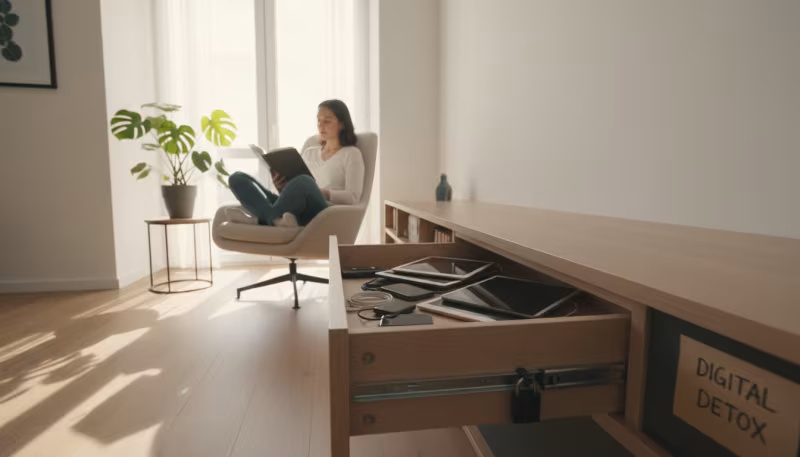
- The Intentional Screen Break: This isn't just about turning off your phone; it's about what you *do* during that time. Our phones and screens are designed to hook us, to pull us into a constant stream of information and notifications. To combat this, schedule regular, intentional screen breaks. Maybe it’s 30 minutes before bed, or an hour after dinner, or even a full Sunday morning. The "tech" part here is using a timer (maybe even a physical one!) or a "Do Not Disturb" setting to enforce this break. But the mindfulness comes in *how* you fill that time. Instead of just staring blankly, use it for one of the other mindful activities we've talked about: a mindful walk, deep conversation, engaging in a creative hobby, or simply sitting and enjoying the quiet. I've implemented a "no phone in the bedroom" rule for the past year, and it’s been a total game-changer for my sleep quality and my ability to decompress in the evenings. It creates a sacred space for quiet, allowing my mind to truly unwind.
- Mindful Photography/Videography: With powerful cameras in our pockets, it's easy to snap hundreds of photos without really *seeing* anything. Mindful photography isn't about quantity; it's about quality of attention. The next time you pick up your phone or camera to capture something, pause. Instead of just pointing and shooting, take a moment to really observe your subject. What is the light like? What details do you notice? How is it composed in the frame? What emotions does it evoke? Move around, change your perspective. Try to capture the *essence* of the moment, rather than just a visual record. This practice forces you to slow down, engage your visual senses, and appreciate the beauty around you. It's a wonderful way to cultivate an "artist's eye" in everyday life, transforming a quick snapshot into a deeply present moment of appreciation. This is particularly relevant to the "Fashion" and "Lifestyle" categories too, as it encourages you to notice details in your environment, outfits, and daily aesthetics.
- Audio Landscapes & Smart Devices: While traditional meditation apps might not be your thing, modern technology offers other auditory tools that can foster mindfulness. Think smart speakers, high-quality headphones, or even just a decent sound system. Instead of listening to music or podcasts that engage your cognitive processes, try ambient soundscapes. These could be nature sounds (rain, ocean waves, forest sounds), white noise, binaural beats, or even specially designed ambient music that's non-intrusive. The goal isn't to meditate, but to create an environment that encourages focus, calm, or a gentle transition. For example, playing forest sounds while you're working can help block out distractions and create a more serene workspace, allowing you to focus more deeply. Or, using a "sleep story" (not a guided meditation!) to gently lull your mind into rest can be incredibly helpful. I’ve found that using my smart speaker to play gentle rain sounds while I read in the evenings helps me stay present with my book and less likely to reach for my phone. It's about using tech to *support* your desired state of mind, rather than dictate it.
Common Mistakes to Avoid
Even when you're steering clear of traditional meditation, it's easy to fall into certain traps that can sabotage your mindfulness journey. This isn't about perfection; it’s about recognizing these pitfalls and being kind to yourself when you encounter them.- Expecting Instant Zen: Mindfulness isn't a magic pill. You won't do a mindful walk once and suddenly be enlightened. It's a practice, a skill that develops over time. Don't expect dramatic shifts overnight. The benefits are subtle at first, like a gentle hum rather than a booming symphony. Be patient, consistent, and celebrate the small moments of presence you do achieve.
- Judging Yourself for Distraction: Your mind *will* wander. That's what minds do! The goal of mindfulness isn't to stop thinking; it's to notice when your mind has wandered and gently bring your attention back to the present moment, without judgment. If you find yourself thinking about your grocery list during a mindful shower, don't beat yourself up. Just acknowledge the thought, say "Oh, there's the grocery list," and refocus on the water, the scent, the sensation. It's a continuous process of returning.
- Making it Another Chore: If mindfulness starts to feel like just another thing on your never-ending to-do list, you're missing the point. It should be a source of calm, not stress. Choose practices that genuinely appeal to you. If mindful eating feels forced, try mindful walking. If tech-free blocks are too hard right now, focus on active listening. The goal is integration, not obligation. It’s about cultivating joy and presence, not adding another burden.
- Comparing Your Journey: Social media often presents a polished, perfect version of mindfulness – serene individuals in beautiful settings. Your journey is unique. Don't compare your messy, human experience of mindfulness to someone else's highlight reel. What works for your friend might not work for you, and that's perfectly okay. Focus on what feels authentic and beneficial to *you*.
Expert Tips
Once you've dipped your toes into these non-meditative mindfulness practices and found a few that resonate, you might be ready to deepen your experience. These "expert tips" aren't about becoming a guru, but about integrating mindfulness more seamlessly and powerfully into your daily life. They build on the foundation of awareness we've already discussed.- The Micro-Mindful Check-in: This is a powerful little trick for busy people. Set an hourly alarm (a gentle one!) or just pick three random times throughout your day. When it goes off, or when the moment strikes, pause for just 30-60 seconds. What do you notice? How does your body feel? What sounds are present? What emotions are you experiencing? Is your jaw clenched? Are your shoulders tense? This brief check-in helps you break out of autopilot and re-center, preventing stress from building up unnoticed. It's like a tiny, secret superpower for staying present.
- Mindful Movement Beyond Walking: We touched on mindful walking, but you can extend this to any form of movement you enjoy. Yoga, stretching, dancing, tai chi, or even just conscious stretching at your desk. The key is to connect your breath to your movement and pay attention to the sensations in your body. How does your body feel as you stretch? Where do you feel tension, and where do you feel ease? What's the quality of your breath? This isn't about performing perfectly; it's about inhabiting your body fully and using movement as an anchor to the present moment. I've found a quick five-minute stretch session can do wonders for my mental clarity, especially in the afternoon slump.
- Practicing Intentional Gratitude: Gratitude is a powerful emotion, and when practiced mindfully, it can significantly shift your perspective. Beyond just thinking "I'm grateful for my coffee," take a moment to *feel* that gratitude. What specific aspects of the coffee are you grateful for? The warmth of the cup, the rich aroma, the energy it provides? Where do you feel that gratitude in your body? Try to pinpoint at least three specific things each day – big or small – and really lean into the feeling of appreciation. You can write them down, say them aloud, or simply reflect on them. This deliberate practice helps train your brain to notice the good, fostering a more positive and present outlook.
-
"WOOP" Method for Intentional Action: This clever little technique helps you approach goals and challenges with a mindful, realistic perspective. WOOP stands for Wish, Outcome, Obstacle, Plan.
- Wish: What's something you truly want to achieve or improve (e.g., be more present during family dinner)?
- Outcome: What's the best possible feeling or result if your wish comes true (e.g., feeling connected, joyful, less distracted)?
- Obstacle: What's *your biggest internal obstacle* to achieving this (e.g., my phone is too tempting, I get anxious about work)?
- Plan: What's your specific "if-then" plan to overcome that obstacle (e.g., "IF I sit down for dinner, THEN I will put my phone on silent in another room.")?
Final Thoughts
So, if you’re someone who squirms at the thought of meditating, please know you’re not alone, and you’re absolutely not excluded from the profound benefits of mindfulness. It's not about being perfectly still or emptying your mind; it's about cultivating a gentle, non-judgmental awareness of the present moment, whatever that moment holds. It's about finding small, accessible ways to reconnect with yourself and the world around you, even amidst the chaos of daily life. What I've learned on my own journey is that the most effective mindfulness practices are the ones you'll actually *do*. Start small. Pick one thing from this list – a mindful walk, an intentional screen break, or even just truly tasting your next bite of food – and give it a try. Don't worry about doing it "right." Just show up, notice what happens, and be kind to yourself when your mind inevitably wanders. Every moment you choose to be present is a victory. So, tell me, what's one simple, non-meditative mindfulness practice you're going to experiment with today? I'm rooting for you to discover the power of presence, on your own terms.Save for later
Found this helpful?
Pin this article to your Pinterest board and come back to it whenever you need a reminder.
Save to Pinterest