
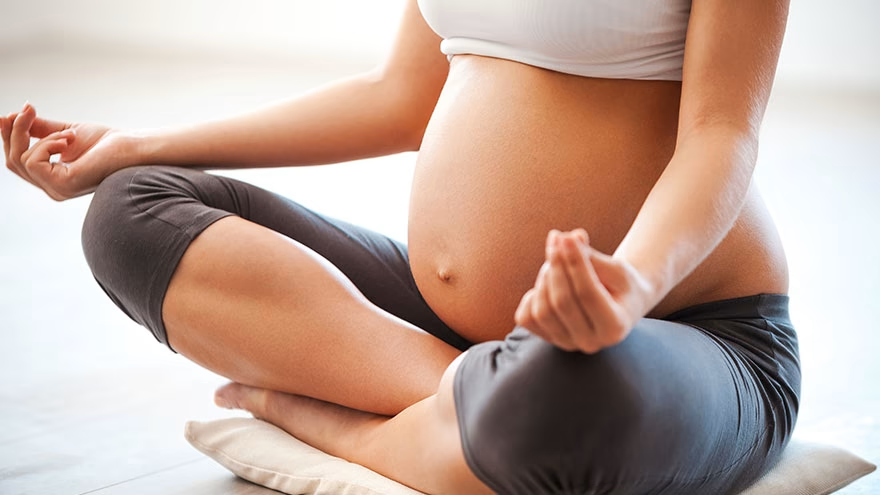
Toning your arms and upper chest during pregnancy should feel like support work, not a challenge to prove anything. The best exercises are steady, breathable, and easy to stop.
Think wall pushups, bands, light weights, and posture. Skip the breath-holding heroics.
Get Clearance For Strength Work
ACOG says physical activity is safe for most pregnant patients and does not increase risk of miscarriage, low birth weight, or early delivery in uncomplicated pregnancies: ACOG exercise during pregnancy FAQ. Still, ask your obstetric care team about your own limits before starting or changing strength training.
Arms and upper chest work should feel controlled, not breathless. Pregnancy is not the time to chase a personal record.
Use Light Resistance And Higher Control
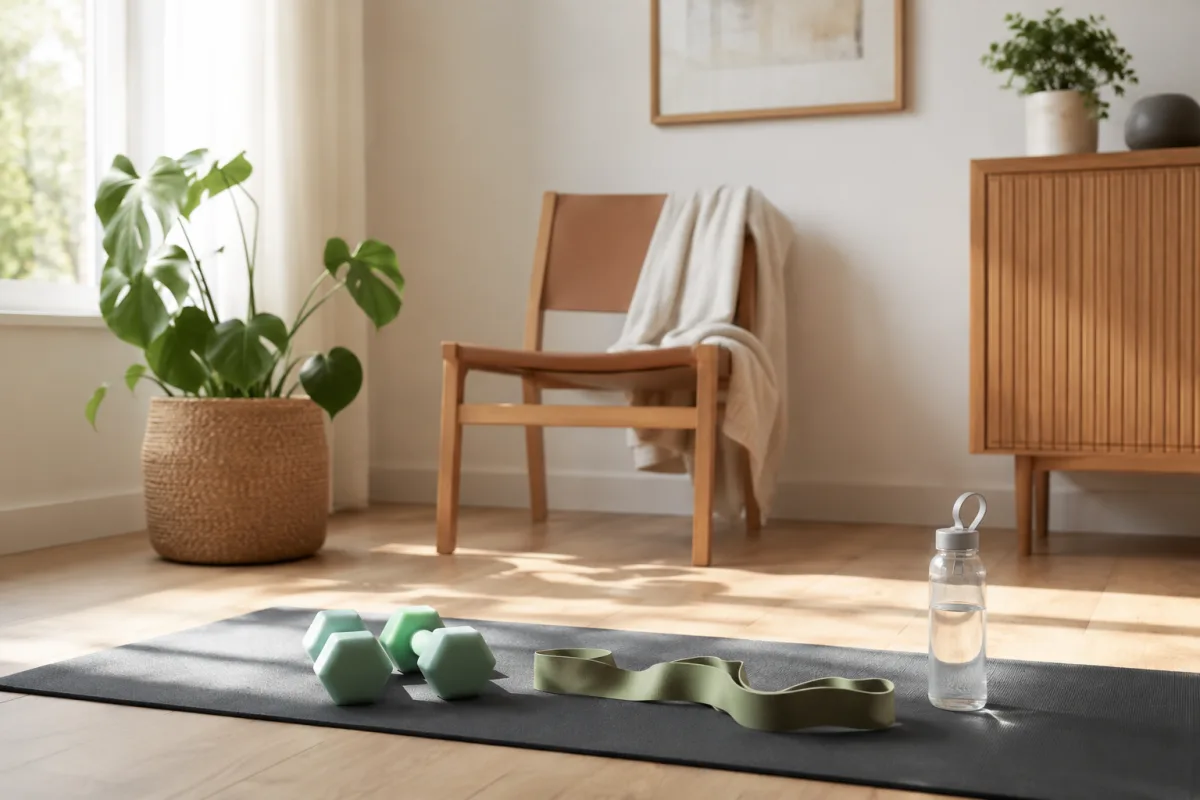
Resistance bands, light dumbbells, wall pushups, incline pushups, and seated rows can train the upper body without heavy strain. Move slowly enough that you can stop at any point.
The goal is posture, daily strength, and comfort. If you have to hold your breath to finish a rep, the load is too heavy.
Avoid Long Flat-On-Back Sets
Office on Women's Health advises avoiding exercise on your back after the first trimester because it can put pressure on a major vein and reduce blood flow: Office on Women’s Health pregnancy safety. Choose incline or seated chest work instead.
A bench set at an incline, wall, or chair can keep the chest angle comfortable while still training pushing muscles.
Try Wall Pushups
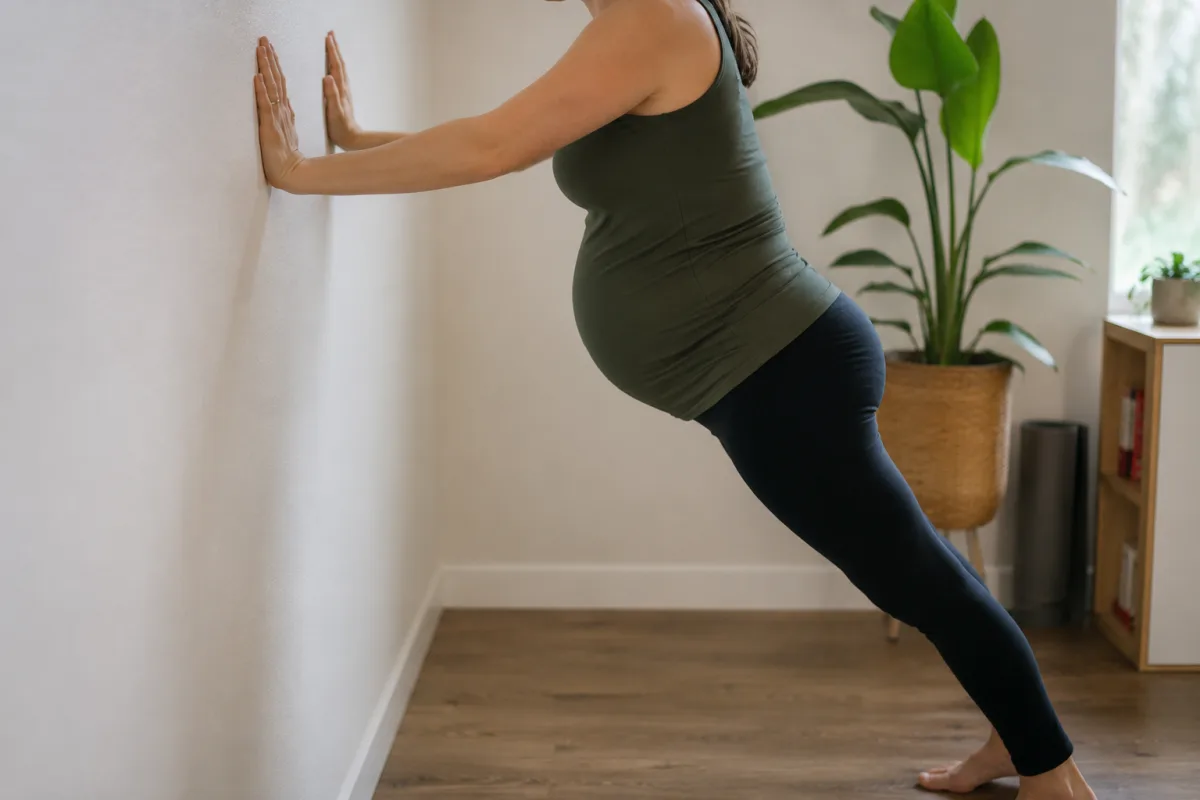
Stand arm's length from a wall, hands at chest height. Bend elbows until the chest moves toward the wall, then press away. Keep ribs stacked over hips rather than letting the low back arch.
Start with a small set. Add reps only if wrists, shoulders, belly, and breathing all feel fine.
Add Band Rows For Balance
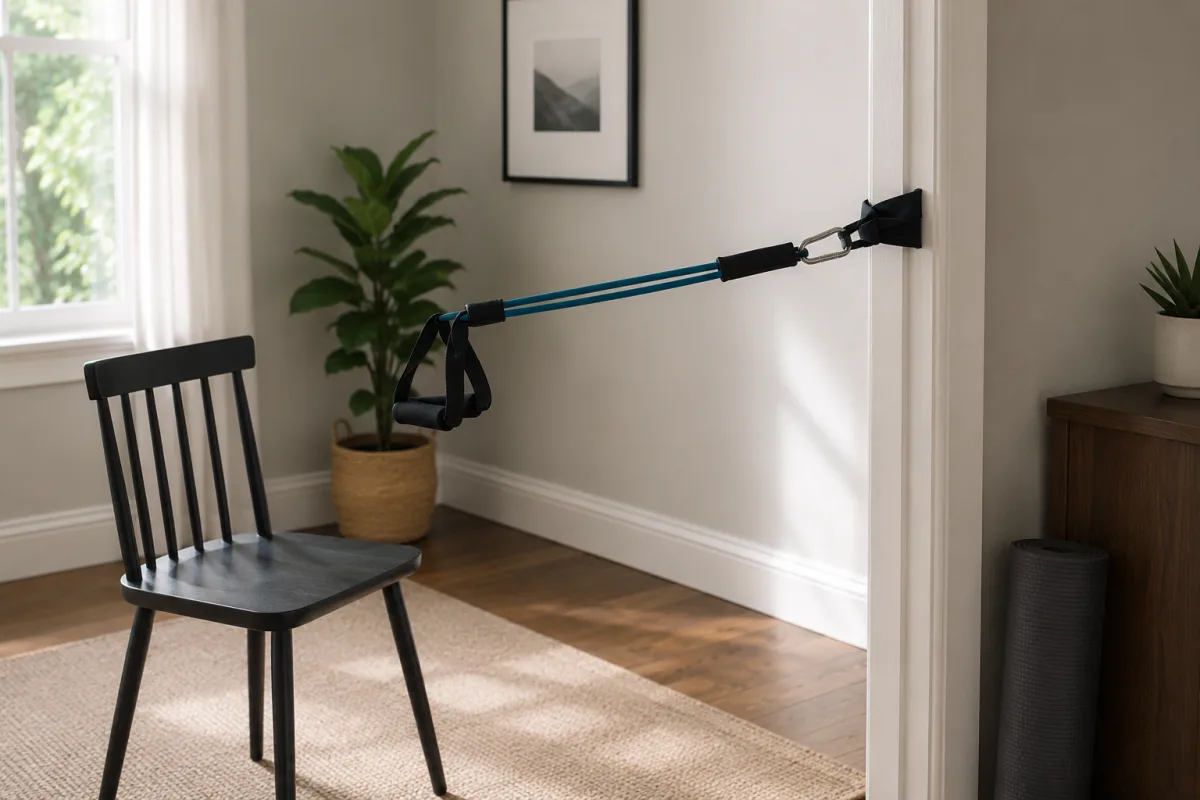
Upper chest work should be paired with back work. A resistance-band row helps counter rounded shoulders and can feel good when the front body is carrying more weight.
Anchor the band safely at chest height, pull elbows back, pause, and release slowly. If the anchor slips, stop using it.
Know When To Stop
CDC says moderate-intensity physical activity is safe for generally healthy pregnant and postpartum people and can support heart and lung health: CDC pregnant and postpartum activity. Moderate does not mean ignoring symptoms.
Stop for bleeding, dizziness, chest pain, fluid leakage, painful contractions, severe headache, calf swelling, or reduced fetal movement later in pregnancy. If mood or motivation is tied to distress, Livecub's guide to depression during pregnancy may help start a care conversation.
Make Recovery Part Of The Workout
Drink water, cool down, and eat enough. If nausea limits food, Livecub's guide to bland pregnancy meals may help with simple meals before or after light exercise.
Body confidence can change week to week; Livecub's guide to feel attractive during pregnancy can help keep exercise tied to function instead of appearance.
Ask Your Care Team Where The Line Is
For tone your arms and upper chest during pregnancy, a useful plan says what is fine at home and what needs a call. Pregnancy changes the risk calculation, so the stop signs should come from your obstetric care team.
Write those stop signs down. Tired people forget details, and partners cannot help much if the plan lives only in one person's head.
Use The Smallest Effective Exposure
The safest pregnancy routine is usually the boring one: good ventilation, clean tools, short sessions, low strain, breaks, water, and products used exactly as labeled.
More is not better. Longer sessions, stronger smells, heavier weights, hotter rooms, and improvised products all add risk without adding much benefit.
Keep Comfort From Becoming Pressure
How to Tone Your Arms and Upper Chest During Pregnancy should support the pregnant person, not create another standard to meet. If the activity starts feeling like proof of beauty, toughness, or patience, step back.
Pregnancy is already full of measurement. A self-care or exercise plan should lower friction, not create a new scoreboard.
Share The Practical Details
Tell a partner or trusted person what you are doing, where supplies are, how long the activity should take, and what symptoms would stop it.
Shared details make help easier. They also make it less likely that someone interrupts with bad advice at the wrong moment.
Revisit The Plan Later
A plan that worked at 18 weeks may feel wrong at 34 weeks. Balance, breathing, skin sensitivity, nausea, back pain, and swelling can change quickly.
Treat adjustment as normal. Changing the plan is not quitting; it is listening to new information.
Plan Around Smell And Heat
Smell sensitivity and overheating can derail even simple plans. Choose cool rooms, fresh air, short sessions, and supplies that do not sit open longer than needed.
If nausea starts rising, stop early. Finishing the activity is less useful than keeping the rest of the day manageable.
Protect Skin And Joints
Pregnancy can make skin itchier and joints looser. Patch test products, avoid harsh scrubbing, and keep movement slow enough that balance stays boring.
Pain that feels sharp, one-sided, electrical, or unusual is not a cue to push harder. It is a cue to stop and ask.
Make The Setup Do Some Work
A chair, towel, water bottle, open window, cleared floor, and nearby phone can make a small activity safer without turning it into a production.
Good setup also makes it easier for someone else to help without asking ten questions.
Use Short Sessions
Ten calm minutes often beat forty stubborn minutes. Short sessions reduce fume exposure, fatigue, swelling, and form breakdown.
If you want more, take a break first. The second round should be a fresh choice, not momentum.
Keep Products In Their Lane
Use cosmetics, craft supplies, and exercise gear only for their labeled purpose. Do not mix products, heat products, or apply products to broken skin unless the label and clinician say it is fine.
Pregnancy is not the moment for improvised chemistry. Familiar, boring products are easier to assess and easier to stop using.
Let The Day Decide
Sleep, swelling, nausea, mood, appointments, and weather can change the right answer. A plan that bends is more useful than a plan that demands loyalty.
If today is not the day, move the activity. Rest is sometimes the better pregnancy decision.
Keep Aftercare Simple
Wash hands, drink water, moisturize irritated skin, put supplies away, and note any symptom that showed up. Aftercare is not dramatic, but it closes the loop.
If a symptom repeats the next time, treat that as information. A pattern is more useful than a guess.
Name The Reason
Before doing tone your arms and upper chest during pregnancy, name the reason in one sentence. Comfort, memory-making, movement, confidence, or connection are all different reasons, and each one suggests a different limit.
A clear reason makes it easier to stop. If the reason was comfort and the activity creates discomfort, the plan has already answered itself.
It also helps partners. Someone can support rest, open a window, clear a chair, or take over a step when they understand the point of the activity.
Respect The Next Appointment
Bring repeated symptoms, product reactions, pain patterns, or exercise questions to the next prenatal visit. Small notes help clinicians spot patterns that a tired brain might minimize.
If the appointment is weeks away and the symptom feels urgent, do not wait for the calendar. Call the care team.
Keep the note plain: what happened, when it started, what helped, and what made it worse. That is enough to make the next conversation clearer and faster for everyone in the room during care that day.
A note also helps you avoid repeating a product, posture, or routine that already caused trouble once before in pregnancy or labor care.
For movement routines, add which side felt different, whether rest changed the sensation, and what surface or support you used during the set that day at home safely afterward.
Frequently Asked Questions
Can I do arm exercises while pregnant?
Often yes in uncomplicated pregnancies, but ask your care team if you have restrictions or symptoms.
Are pushups safe during pregnancy?
Wall or incline pushups are often easier to control than floor pushups, especially later in pregnancy.
Should I avoid lying on my back?
After the first trimester, many guidelines advise avoiding long flat-on-back exercise. Use incline or seated options.
How heavy should weights be?
Use light resistance that allows steady breathing and full control.
When should I stop exercising?
Stop for bleeding, dizziness, chest pain, painful contractions, fluid leakage, severe headache, calf swelling, or reduced fetal movement.
This article is for general information only and is not medical, pregnancy, labor, or emergency advice. Contact your obstetric care team for personal guidance and call emergency services for urgent symptoms.

Chiara Bradshaw
Covers education, culture and creative topics with an emphasis on readable explanations and verifiable references.


Leave a reply
Replying to