
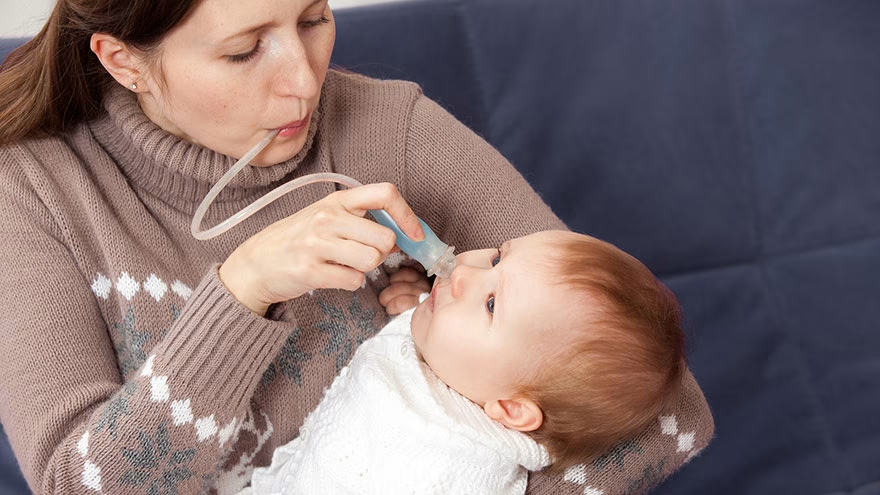
How to Use a Nasal Aspirator on a Newborn should be gentle, brief, and tied to a real need. Newborn noses are small, and too much suction can irritate the tissue.
Use an aspirator when congestion is making feeding, sleep, or breathing through the nose harder. Do not use it as a routine every time the baby makes a sound.
Know Why You Are Suctioning
Newborns can sound congested because of small nasal passages, dry air, mild mucus, or normal newborn noises. Suction is for mucus that is actually blocking comfort, not for every snort.
If the baby is breathing comfortably, feeding well, and has normal color, aggressive suction may do more harm than good.
Use Saline First
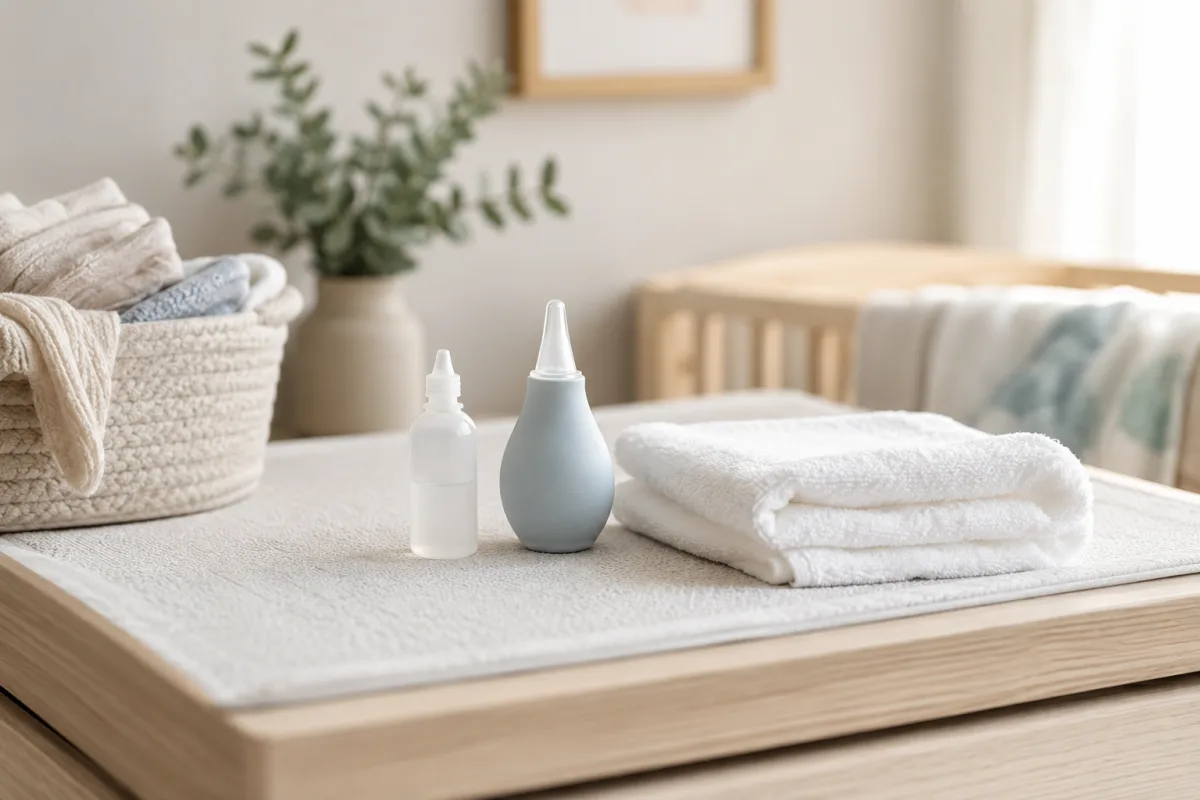
Cleveland Clinic advises following saline drop or spray instructions before suctioning and using only gentle suction: Cleveland Clinic nasal aspirator guidance.
Saline helps loosen sticky mucus so the aspirator does not need force. Use baby-safe saline and follow the product or clinician directions.
Choose The Tool
A bulb syringe, oral suction aspirator, or electric aspirator can work if used correctly and cleaned well. The best tool is the one you can use gently and keep clean.
Do not put an aspirator in the mouth or throat unless a clinician has specifically instructed you with a medical device. This article is about the nose.
Suction Before Feeding
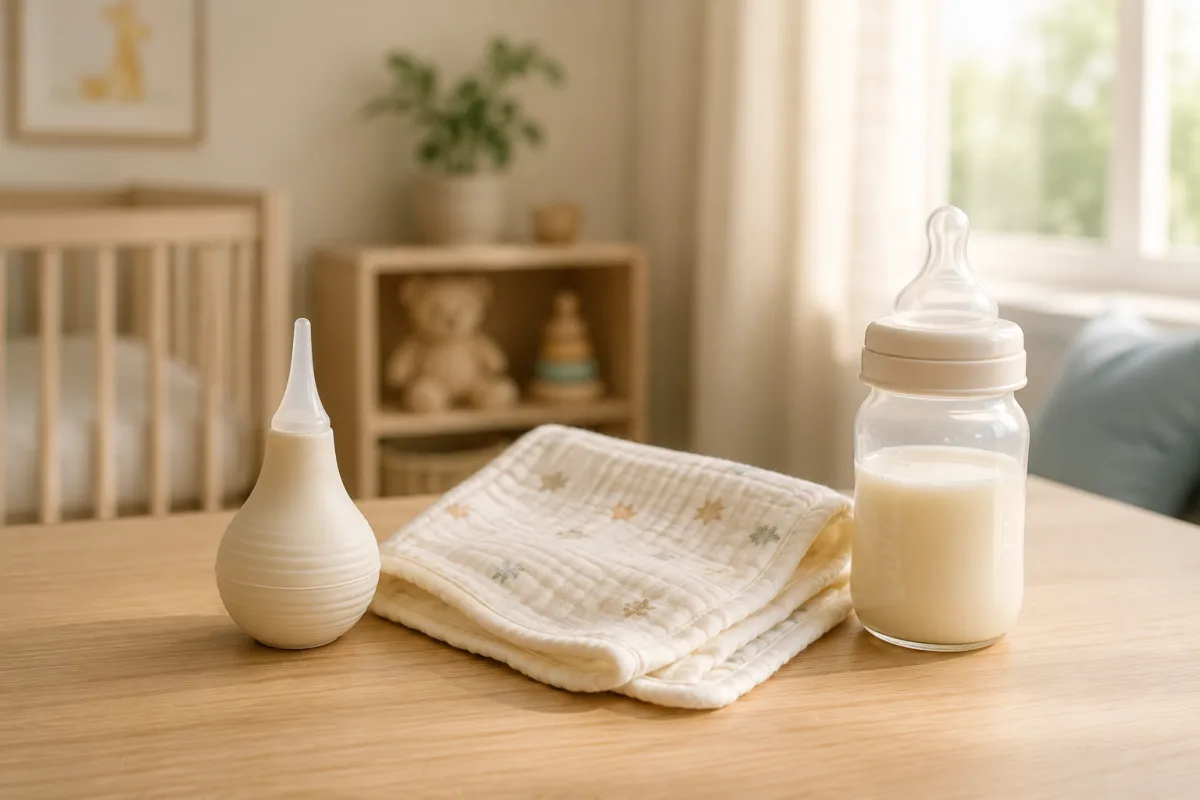
Nationwide Children's says suctioning can make it easier for a baby to breathe, suck, and eat, and suggests doing it before feeding if the baby seems congested: Nationwide Children's bulb syringe guide.
A less stuffy nose can help feeding because newborns coordinate sucking, swallowing, and breathing. Keep the session short so the baby is not exhausted before eating.
How To Use A Bulb
Squeeze the bulb before it touches the nose. Place only the tip at the nostril opening, then slowly release the bulb to pull mucus out.
Empty the bulb into a tissue, repeat on the other side if needed, and stop if the baby becomes too upset or the nose looks irritated.
How To Use An Oral Aspirator
Place the clean tip at the nostril opening, use the mouthpiece gently, and let the filter or device design protect the caregiver. Do not create hard suction.
Follow the maker's cleaning instructions every time. A dirty aspirator can turn a helpful tool into a germ reservoir.
Clean The Aspirator
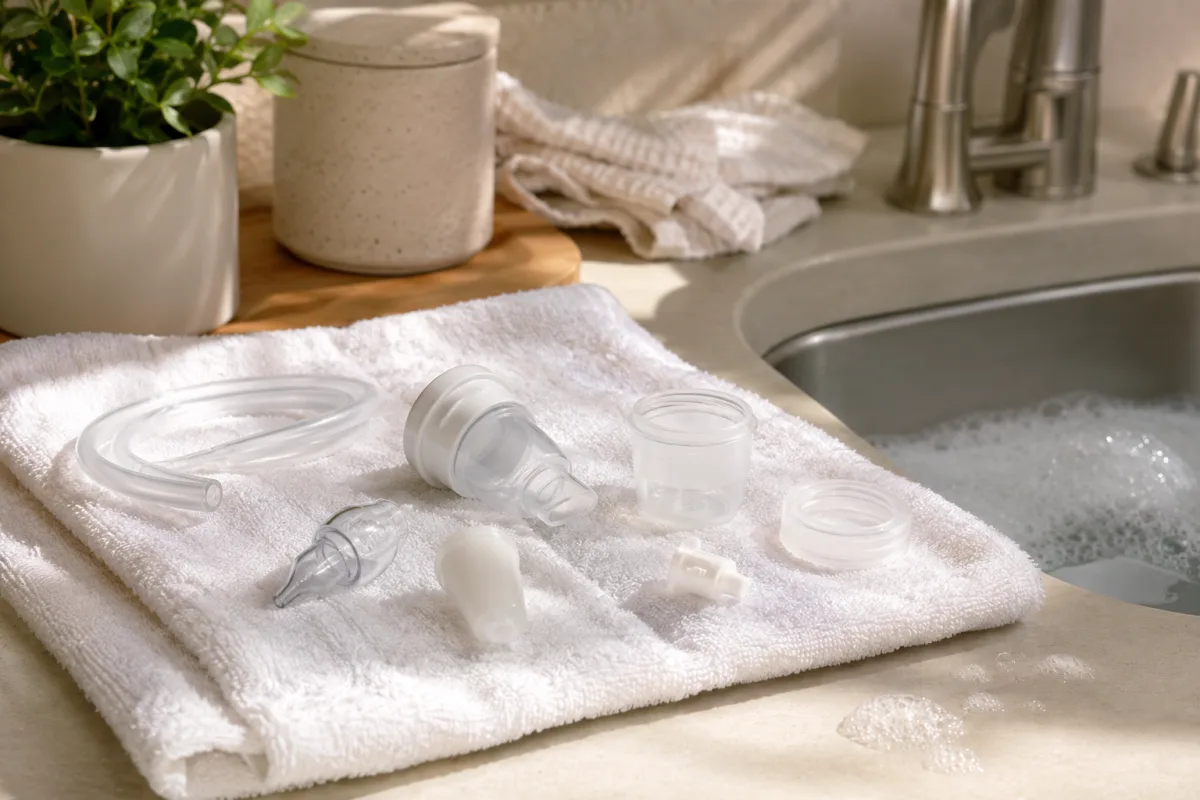
Cleveland Clinic recommends washing a suctioning bulb with soap, rinsing well, and letting it air dry. Cleaning matters because moisture can sit inside suction tools.
Livecub's infant washing guide is about bathing, but the same calm setup helps with small newborn care tasks.
Avoid Overuse
Too much suction can irritate the nose and make swelling worse. If you feel tempted to suction every hour, call the pediatrician and ask what is safe for your baby's age and symptoms.
MyHealth Alberta warns not to suction too much and says saline drops can help loosen mucus before suction: MyHealth Alberta baby nose suctioning.
Keep The Baby Steady
Lay the baby on a safe flat surface or hold them securely with another adult helping if needed. Expect crying; crying does not always mean pain, but it does mean you should stay gentle.
Never suction on a high changing table without a hand on the baby. Newborn care tools should be ready before you start.
Use Other Comfort Steps
A cool-mist humidifier, upright holding while awake, and avoiding smoke or strong fragrance may help nasal comfort. Do not prop the crib or use unsafe sleep positions.
If congestion comes with hiccups or feeding fussiness, Livecub's newborn hiccups guide may help you separate normal noises from feeding concerns.
When To Call The Doctor
Call promptly for trouble breathing, blue or gray color, poor feeding, fewer wet diapers, fever in a young infant, wheezing, chest pulling in, or a baby who seems very sleepy or weak.
If your baby was premature or medically fragile, use the threshold your care team gave you. Livecub's premature baby development guide may help with broader follow-up questions.
Skin And Nose Irritation
Watch for bleeding, raw skin, swelling, or worsening stuffiness after repeated suction. Stop and ask for guidance if suction seems to make the nose worse.
If irritation spreads around the face or diaper area during an illness, Livecub's baby rash and blister guide can help organize questions for the pediatrician.
What Not To Use
Do not use adult decongestant sprays, essential oils near the nose, menthol rubs, or homemade devices without medical advice. A newborn's airway is not the place for experiments.
Stick with saline, gentle suction, clean equipment, and pediatric guidance.
Before Sleep
If congestion is disturbing sleep, suction before the sleep routine rather than after the baby is already nearly asleep. Keep the baby on a safe sleep surface afterward.
Do not use pillows, wedges, or inclined products to manage congestion unless the baby's clinician gives specific instructions. Safe sleep rules still apply.
Caregiver Stress
Suctioning can make caregivers tense because the baby may cry. Prepare everything first, move slowly, and stop after a brief attempt if everyone is escalating.
A calm short attempt is better than a long struggle. You can try again later or call for advice.
Good Timing
The best suction timing is usually before feeding or before a sleep routine, not immediately after a full feeding. Suctioning after a feed may upset the baby and increase spit-up.
If the baby is already calm and feeding well, skip it. The point is relief, not perfect silence.
Saline Drops Vs Spray
Some caregivers prefer drops for newborns because they feel easier to control. If using spray, follow pediatric or product directions and keep it gentle.
Do not make homemade saline unless your clinician has given exact instructions and water safety guidance. Store-bought sterile saline is simpler for most families.
What Mucus Color Means
Clear or white mucus can happen with ordinary congestion. Yellow or green mucus alone does not always prove a serious infection, but the whole baby matters more than color.
Call about fever, breathing effort, poor feeding, dehydration signs, or a baby who seems weaker than usual.
Sharing Tools
Do not share nasal aspirators between siblings without proper cleaning. Label the tool if more than one child is sick in the home.
Replace parts according to the maker's instructions. Filters, tubing, and bulbs can wear out or hold moisture.
After Care
After suctioning, comfort the baby and watch whether feeding or breathing improves. If nothing improves after gentle attempts, stop repeating the same stressful step.
A pattern of needing frequent suction is a reason to ask for medical advice, especially in a young newborn.
Do Not Chase Every Sound
Newborns grunt, squeak, snort, and make wet sounds for reasons that are not always blocked mucus. If feeding and color are normal, observation may be enough.
Parents often feel better after doing something, but the baby's nose may not need intervention.
Sick Household Rules
If siblings are sick, increase handwashing, avoid kissing the baby's face, and keep shared tissues and suction tools away from the newborn.
Aspirators help after mucus appears; they do not replace basic infection control in the home.
Travel Bag
Keep saline, tissues, and the cleaned aspirator in a small bag if the baby is congested during necessary travel. Add a spare burp cloth and hand sanitizer for adults.
Do not suction in a moving car. Stop somewhere safe if the baby needs care.
Follow-Up Pattern
If congestion lasts, keeps returning, or seems tied to feeding, reflux, smoke, pets, or dry air, write the pattern down for the pediatrician.
A pattern can help the clinician decide whether this is a cold, irritation, feeding issue, or something else.
Frequently Asked Questions
How often can I use a nasal aspirator on a newborn?
Use it only when congestion is affecting comfort, feeding, or sleep, and ask your pediatrician for frequency limits for your baby.
Should I use saline before suctioning?
Often yes. Baby-safe saline can loosen mucus so suctioning is gentler. Follow product directions or your clinician's advice.
Can suctioning hurt a newborn's nose?
Yes, if it is too forceful or too frequent. Stop if there is bleeding, raw skin, swelling, or worsening irritation.
When should I call the doctor for congestion?
Call for fever in a young infant, trouble breathing, poor feeding, fewer wet diapers, blue color, wheezing, or unusual sleepiness.
Do I need an electric aspirator?
Not necessarily. A clean bulb or oral aspirator can work. Technique, gentleness, and cleaning matter more than buying the most expensive tool.
Use a nasal aspirator on a newborn only when it helps breathing or feeding. Saline, gentle suction, clean equipment, and clear call-the-doctor rules matter most.

Linda Fehrman
Edits general wellness and relationship explainers. Health material is educational, avoids diagnosis and links to health-authority guidance.




Leave a reply
Replying to