

Online Infant Care Classes for New Parents are useful when they teach the parts of baby care that have real consequences: safe sleep, feeding, diapering, bathing, car seats, warning signs, and basic first aid.
A good class does not replace the pediatrician, hospital discharge instructions, or a hands-on CPR course. It should give new parents a calm framework for the first month at home and enough language to ask better questions at appointments.
What A Good Infant Care Class Should Cover
Start with the syllabus. Newborn sleep, feeding cues, diaper output, bathing, umbilical cord care, skin rashes, temperature checks, car seat use, and when to call the doctor should be visible before you pay.
CDC's infant parenting tips emphasize talking, holding, playing when the baby is alert, and watching for tired or fussy signs: CDC infant parenting tips. That kind of responsive care belongs in any class meant for first-time parents.
The class should also explain limits. No video can examine a baby with poor feeding or fever. If the lesson sounds like a substitute for medical care, choose a different course.
Safe Sleep And Car Seat Lessons

Safe sleep needs more than a slide that says back to sleep. Parents should see the difference between a safe sleep space and a staged nursery photo full of soft objects.
HealthyChildren's safe sleep guidance says babies should sleep on their backs on a firm, flat surface, with no blankets, pillows, bumpers, stuffed toys, or loose items in the sleep area: HealthyChildren safe sleep guidance.
Car seat lessons should push parents toward the seat manual, the vehicle manual, and local inspection resources. A class can show the concepts, but a real seat in a real car still needs its own check.
Home preparation also matters once the baby begins moving. Keep baby-proofing your home room by room for the next stage, even if the newborn period feels still and contained.
Feeding, Diapers, And Everyday Care
Feeding lessons should describe hunger cues, fullness cues, normal spit-up questions, and signs that a baby is not feeding well. They should avoid shaming breast, formula, pumping, or mixed feeding families.
Diaper output gives parents a rough window into intake and hydration, but the exact plan depends on age and the pediatrician's guidance. Bathing lessons should be gentle and practical: warm room, shallow water, one hand on the baby, mild products, and no rushing.
For daily hygiene, how to wash an infant pairs well with a class because it turns the broad lesson into a step-by-step home routine. For common skin worries, baby rash blister cures can help parents describe what they see.
First Aid And Emergency Skills
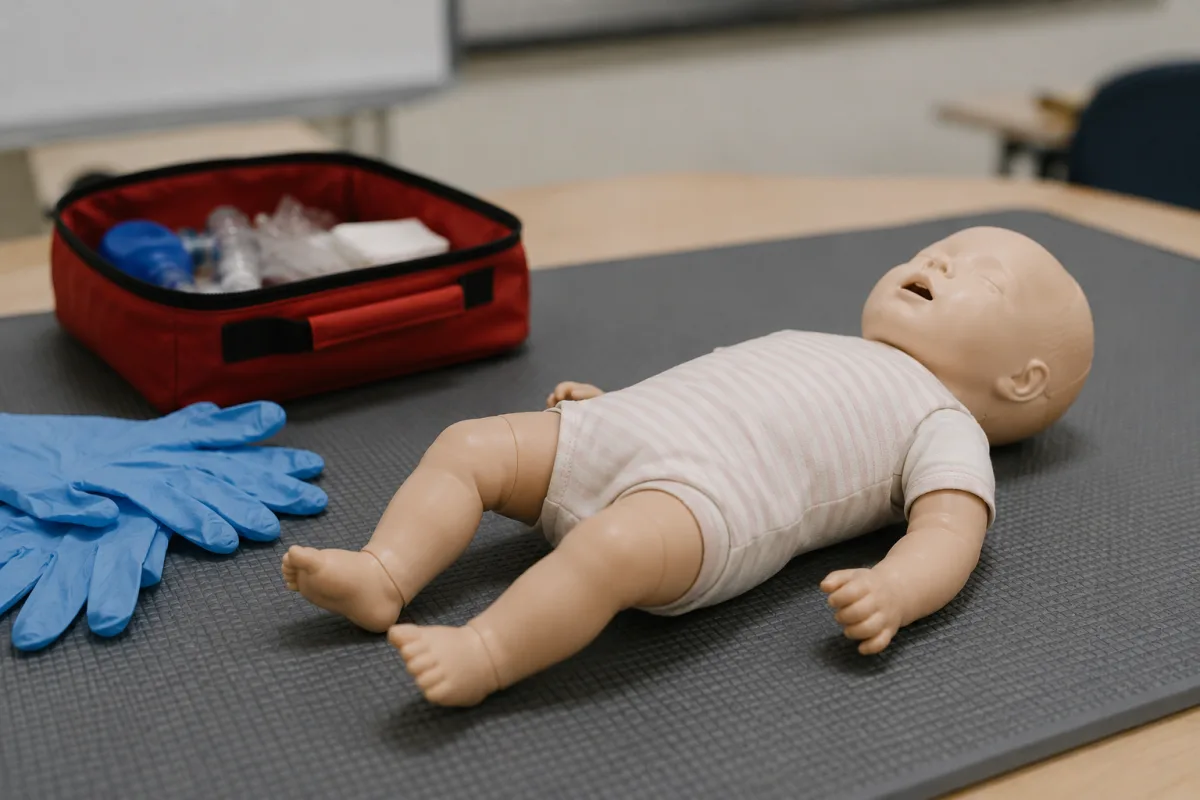
Video infant-care lessons can introduce choking, fever, breathing trouble, falls, burns, and poisoning prevention. They cannot give muscle memory. For CPR and choking response, look for a reputable course with pediatric content and hands-on practice when possible.
The American Red Cross offers online and blended pediatric first aid, CPR, and AED training options: Red Cross first aid classes. If you choose an online-only option, schedule hands-on practice later rather than treating the video as enough forever.
A class should tell you what to do while help is coming, not make you feel clever for avoiding help. Breathing trouble, blue color, limpness, fever in a young infant, and poor feeding deserve fast medical guidance.
How To Judge The Teacher
Look for credentials and review dates. Hospital educators, pediatric nurses, lactation consultants, pediatricians, certified car seat technicians, and recognized first-aid trainers are safer choices than a random influencer with a newborn checklist.
The teacher should separate evidence from preference. Swaddling, pacifiers, bathing frequency, room-sharing, visitors, and feeding routines often get mixed with family tradition. A strong class says where the evidence is firm and where parents have room to choose.
If the class includes premature babies or NICU discharge, it should say so clearly. Parents with early or low-birth-weight babies may also need how to gauge a premature baby's development and differences between low birth weight and preterm infants as background, but the discharge plan wins.
Make The Class Useful At Home

Watch the class before the due date if you can, then rewatch the practical chapters during the first week. Sleep deprivation changes memory. A short replay on diapering or safe sleep can help more than trying to remember a long prenatal session.
Keep a notebook with the pediatrician number, poison control number, class login, car seat manual location, and feeding notes. Put the notebook where care happens, not in a drawer with hospital papers.
If your baby has a circumcision site, use the doctor's instructions and keep how to care for the circumcision site nearby for ordinary care organization. Do not use class advice to override procedure-specific directions.
What To Skip
Skip classes that sell fear. A newborn course should not make parents feel they need a room full of products to keep a baby safe. It should make the first weeks clearer and calmer.
Also skip courses that promise rigid schedules for every baby. Newborn feeding, sleep, and fussiness vary. A course can teach patterns, but it should leave space for prematurity, reflux, jaundice, feeding problems, family support, and pediatric advice.
The best class leaves you with fewer myths, a short list of warning signs, and practical confidence about the next diaper, next feed, next nap, and next question for the doctor.
Set Up A Two-Week Learning Plan
Do not try to master every baby-care topic in one sitting. Split the class into a practical two-week plan: safe sleep and warning signs first, feeding and diapers next, bathing and skin care after that, then first aid and car seat review.
If the baby is already home, shorten the cycle. Watch one lesson per day and tie it to the task you are doing anyway. A diaper lesson right before a diaper change will stick better than a three-hour marathon watched before delivery.
Give each caregiver a role. One adult can own the car seat manual and appointment questions. Another can own feeding notes, diaper counts, and the medicine cabinet. Shared care works better when everyone knows who checks what.
After each lesson, write one rule in plain language. Back sleep, empty crib. Call for fever. Do not give cold medicine without the doctor. Keep the car seat straps flat. These short rules are easier to remember at 2 a.m. than a long video.
Review the plan after the first pediatric visit. Some lessons will become less urgent; others will need a second look because your actual baby has reflux, jaundice, prematurity, feeding trouble, or a healing procedure site.
Add a practice round before the baby arrives if possible. Adjust the car seat straps on a doll, open the stroller, set up the bassinet, pack the diaper bag, and run through a pretend night feeding. Awkward practice now prevents real frustration later.
Keep class notes short enough that another caregiver will read them. A one-page checklist on the fridge beats a long folder nobody opens. Include the few rules that prevent harm, then leave preferences for later.
If the class makes you anxious, pause and turn it into actions. Buy the thermometer, clear the crib, find the pediatrician number, schedule CPR practice, and wash the first set of clothes. Action absorbs fear better than another hour of scrolling.
For second-time parents, the value is different. The class may refresh safe sleep, medicine, and first aid rules that changed since the older child was born. It also gives both adults the same baseline before the new baby arrives.
Frequently Asked Questions
Are online infant care classes enough?
They are useful for basics, but hands-on CPR, car seat checks, and medical questions still need real-world support.
When should parents take a class?
Before birth is easiest. Rewatch short lessons during the first week when the exact task is in front of you.
What class topic matters most?
Safe sleep, feeding cues, warning signs, diaper output, and emergency response should come before nursery products.
Should grandparents watch the class too?
Yes, if they will help with care. Shared rules reduce arguments about sleep, feeding, medicine, and visitor habits.
What if my baby was premature?
Use NICU and pediatric instructions first. Online newborn classes are general and may not match a premature baby's plan.
This article is for general information only and isn't a substitute for medical advice. Talk to a clinician who knows your full history before making changes.

Linda Fehrman
Edits general wellness and relationship explainers. Health material is educational, avoids diagnosis and links to health-authority guidance.



Leave a reply
Replying to