

Owning a Scottish Terrier starts long before the puppy comes home. The breeder you choose shapes the dog's health, temperament, grooming tolerance, and the kind of support you will have when the independent little terrier starts acting like a Scottie. Good Scottish Terrier breeder recommendations should focus on records, health tests, coat care, temperament, and honesty about terrier behavior.
A Scottish Terrier can be loyal, funny, dignified, and deeply attached to its people. It can also be stubborn, suspicious of strangers, prey-driven, and uninterested in obeying for the sake of obeying. A good breeder prepares buyers for both sides.
What Should A Scottish Terrier Breeder Know?
The American Kennel Club describes the Scottish Terrier as independent, confident, spirited, and compact. Those words should show up in the breeder's real-life examples. Ask how their adult dogs handle visitors, grooming, training, other dogs, children, travel, and quiet time at home.
Do not shop only by coat color or a charming puppy photo. A Scottie breeder should talk about the whole dog: health history, temperament, structure, coat, and long-term fit. If you are comparing terriers, Livecub's Miniature Schnauzer questions show how another small terrier-type dog can have a very different daily feel.
What Health Tests Should You Ask For?

The Scottish Terrier Club of America CHIC registry page lists required tests for von Willebrand disease, craniomandibular osteopathy, and patellar luxation, with optional tests such as thyroid, eye exam, bile acid, kidney screen, and Legg-Calve-Perthes evaluation. Ask for registered names and results, not only a verbal claim.
Von Willebrand disease is a bleeding disorder, and CMO affects jaw bone growth in young dogs. Patellar luxation concerns kneecap stability. A breeder who understands these topics should be able to explain why testing matters, how results are used, and what health issues have appeared in relatives.
How Should A Breeder Talk About Temperament?
Scotties are not usually soft, eager-to-please dogs. They often have strong opinions and a serious sense of personal space. A breeder should ask what kind of home you have, how much training experience you bring, whether children visit often, and how you plan to manage prey drive and barking.
Look for balance. A breeder should not sell fearfulness as "protective" or rudeness as "just a Scottie." The dog should be confident enough for normal life and handled enough to accept grooming, vet care, and family routines. If a breeder cannot describe adult temperament clearly, keep asking.
What Coat And Grooming Questions Matter?
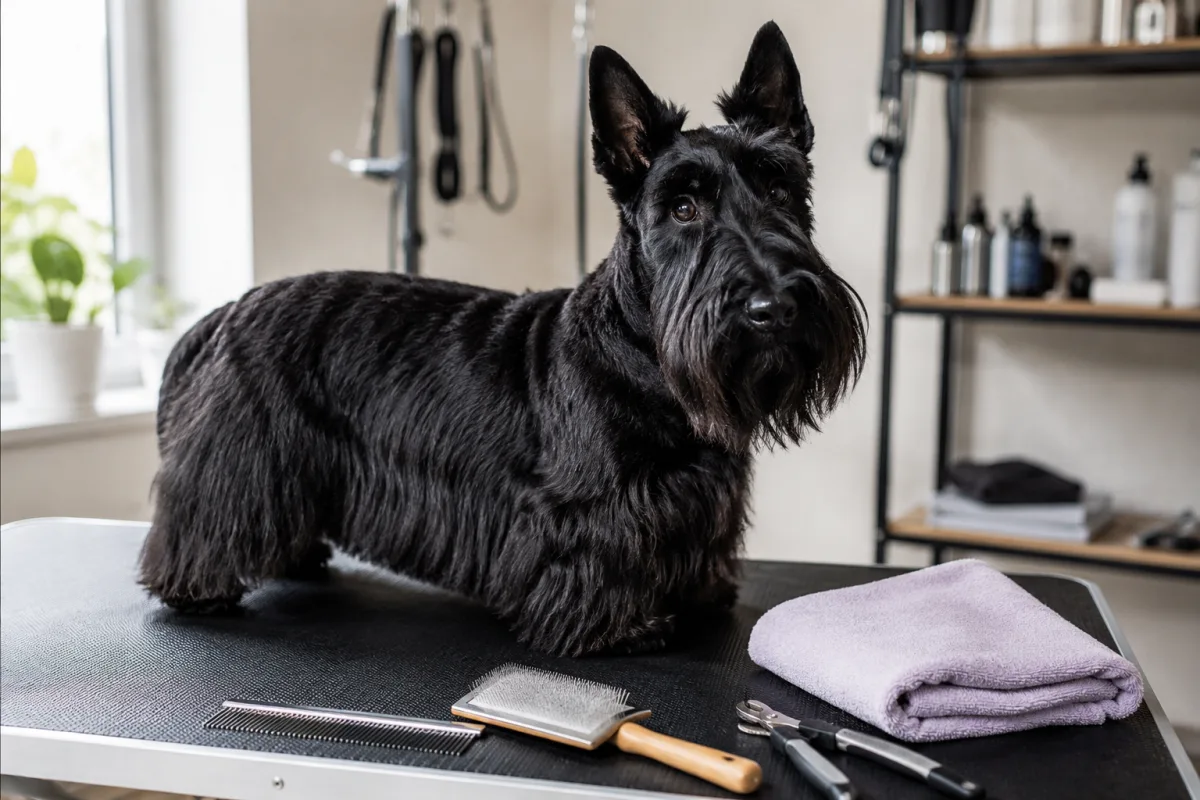
A Scottish Terrier's hard, wiry coat and furnishings need real care. Many pet Scotties are clipped, while show coats may be hand-stripped. Ask what the breeder recommends, what tools you need, how often grooming should happen, and whether the puppy has practiced handling.
Grooming is not only looks. It is how you find skin issues, weight changes, sore feet, ticks, ear problems, and dental concerns. Livecub's longhair Dachshund grooming guide covers a different coat, but the core lesson is the same: start handling before the dog decides grooming is a fight.
How Do You Spot A Responsible Breeder?
A responsible breeder welcomes health questions, shows records, asks about your home, provides a contract, explains what happens if you cannot keep the dog, and does not rush the sale. They can talk about the parents' strengths and weaknesses without sounding defensive.
The OFA CHIC program explains that CHIC creates a public record of recommended health tests. It does not mean every result is perfect; it means the breeder made results available for better decisions. That transparency is what buyers should value.
What Red Flags Should Stop You?
Walk away from a breeder who says the breed has no health issues, refuses records, will not discuss vWD or CMO, sells puppies too young, has no return policy, avoids questions about the parents, or keeps dogs in poor conditions. Be careful with anyone who focuses only on rarity, color, or quick payment.
Also be wary if the breeder makes the breed sound effortless. A Scottie is small, but it is not a push-button pet. Buyers deserve a realistic picture of training, grooming, socialization, and terrier drive before money changes hands.
Are Scottish Terriers Good Family Dogs?
They can be good family dogs in homes that respect boundaries. Many Scotties bond strongly with their people and prefer predictable handling. Young children need supervision because grabbing, chasing, or hugging can push a terrier too far. A Scottie should have a quiet resting space where no one bothers it.
Ask the breeder how their puppies are exposed to household noise, handling, visitors, and other dogs. A puppy raised with thoughtful socialization has a better start than one raised with little daily contact. If you are comparing small companion breeds, Livecub's Maltese questions show a very different family-dog profile.
What Should The Contract Include?
Contracts vary, but a good one usually covers identification, purchase terms, health information, spay or neuter expectations if relevant, breeding restrictions, return policy, and what support the breeder provides. Read it before pickup day. Ask questions before emotions take over.
The contract should not replace your own judgment. If the breeder's answers feel slippery, the paperwork may not protect you. A better breeder will slow down, explain terms, and make sure the match is right for the dog.
How Should You Prepare For A Scottie Puppy?
Prepare for grooming, training, secure outdoor time, and quiet rest. Use gates, leash practice, chew toys, short training games, and safe handling practice. Do not wait until the puppy is older to teach nail trims, brushing, teeth checks, and polite greetings.
Terriers often learn fast when the reward makes sense. Use food, toys, access to sniffing, and calm praise. Keep sessions short. If the puppy ignores you outdoors, reduce distractions and build recall in easier spaces first. A Scottie that practices ignoring people every day gets better at it.
What Questions Should You Bring?

Ask about health tests, cause of death for older relatives, grooming style, temperament, barking, prey drive, dog-dog tolerance, children, training style, food, vaccine records, and what support is available after the sale. Ask to see adult dogs if possible. Adults show the real coat, size, voice, and attitude.
For a general breeder-interview structure in another active breed, Livecub's Brittany Spaniel breeder recommendations can help you organize questions. The breed differs, but the need for clear records and honest answers is the same.
How Do You Compare Two Good Breeders?
If two breeders both show records, look at communication and fit. Which one explains the breed more clearly? Which one asks better questions about your home? Which one can describe adult dogs in detail? Which one sounds prepared to help if grooming, training, or health concerns appear later?
Do not choose only by waiting-list speed. A slower breeder with stable adult dogs, health transparency, and thoughtful matching may save years of frustration. A Scottie is a long-term companion, not a quick purchase.
What Should You Do After Pickup?
Schedule a veterinary visit, keep the breeder's records together, follow the food transition plan, and start gentle handling right away. Touch feet, lift lips, brush small areas, and reward calm behavior. If you want a clipped pet coat, ask the breeder and groomer how early to begin shaping a routine.
Build social experiences carefully. Let the puppy see people, surfaces, sounds, and calm dogs without flooding it. A confident Scottie should learn that the world is normal, not that every stranger gets to grab it.
Frequently Asked Questions
Are Scottish Terriers good first dogs?
They can be, for owners who like independent terriers and will commit to training, grooming, and socialization.
What health tests should a Scottie breeder show?
Ask about vWD, CMO, patellas, and any optional tests the breeder uses, such as thyroid, eyes, liver, kidney, or hip-related screening.
Do Scottish Terriers need professional grooming?
Many do. Pet clipping is common, while show coats may need hand-stripping by someone experienced.
Are Scotties good with other dogs?
Some are, some are selective. Ask about the parents and socialize carefully without forcing rough dog-park contact.
What is the biggest buyer mistake?
Choosing by looks and ignoring temperament, health records, grooming commitment, and breeder support.
Should You Buy From This Breeder?
Buy only if the breeder is open about health, realistic about temperament, clear about grooming, and invested in the dog's future. A good Scottish Terrier breeder does not sell a myth. They help you decide whether a proud, independent Scottie can live well in your real home.

Chiara Bradshaw
Covers education, culture and creative topics with an emphasis on readable explanations and verifiable references.



Leave a reply
Replying to