
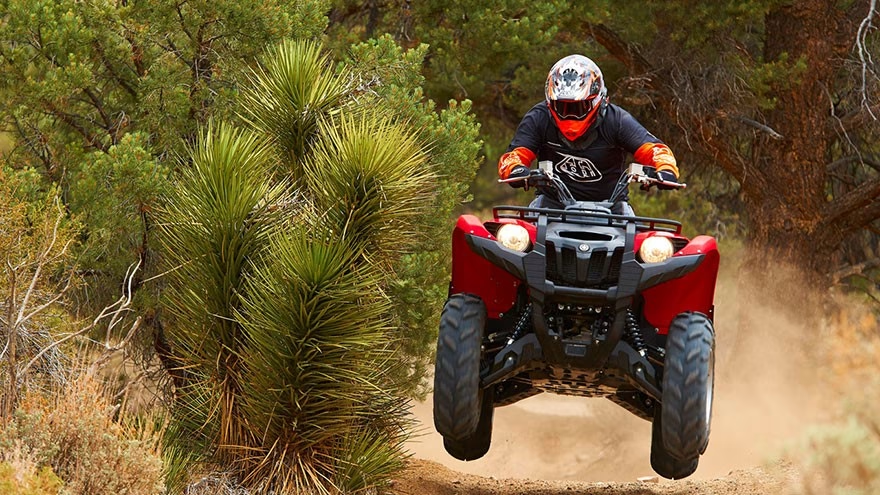
Places to ride ATVs in Maryland are not scattered evenly across the state. Most legal public off-road riding is concentrated in Western Maryland, where state forests and Wolf Den Run State Park provide designated ORV routes. That means a good trip starts with rules, not only scenery. You need the right sticker or registration, the right reservation where required, a trail that fits your machine, and a current check on closures. Maryland has good riding, but it is not a state where you can simply unload beside any forest road and start exploring.
Where can you ride ATVs legally in Maryland?
Maryland DNR lists off-road vehicle riding on designated state forest trails and explains that ORV permits are available through state parks, state forests, and DNR service centers. Its off-road vehicles on state forests page is the first place to check because trail availability can change by season and condition.
The main public options are in the western part of the state, especially Garrett and Allegany County areas. Trails are not all the same. Some suit ATVs or motorcycles. Some allow four-wheel-drive vehicles. Some require reservations or specific access points.
Travelers used to open desert routes, such as those planning things to see around Laughlin, should reset expectations. Maryland riding is more regulated, wetter, forested, and tied to designated routes.
What permits and registration do riders need?
Maryland DNR's registration page says ORV permits are available at Deep Creek Lake and New Germany state parks, Savage River State Forest, Herrington Manor State Park, and Potomac-Garrett State Forest. It also links to the decal application and regional service-center information.
Do not rely on old forum posts for fees, age rules, or sticker instructions. Check DNR before each trip. If you are using a vehicle with Maryland Motor Vehicle Administration tags, read the specific trail requirements because legal road status and trail permission are not the same thing.
Permit planning should happen before you load the trailer. Cell service, office hours, appointment rules, and online reservation steps can all affect whether your riding day starts on time.
What is Wolf Den Run State Park like?
Wolf Den Run State Park is Maryland's most important public ORV destination. Maryland DNR says the park covers 2,039 acres and offers hiking, biking, fishing, birdwatching, hunting, and ORV riding, with an expanding trail network and the largest collection of ORV trails in Maryland. The official Wolf Den Run State Park page also notes that all vehicles must have a DNR ORV sticker and/or MVA registration to operate on state lands.
The park includes different areas and terrain, so do not assume every trail fits every rider or vehicle. Check the map, call the park office for conditions, and respect gates and posted closures. Mud, rocks, wet leaves, and changing weather can alter difficulty quickly.
Wolf Den Run is a good choice when you want a destination built around ORV riding rather than a short side trail. Plan fuel, food, water, spare gear, and a recovery plan before the first loop.
What about St. John's Rock and state forest trails?
Maryland DNR describes St. John's Rock ORV Trail as a recreational ORV trail requiring a registered ORV with DNR or an MVA-tagged vehicle suitable for off-road use. The official St. John's Rock ORV Trail page is the source to check for current access, reservations, vehicle suitability, and camping notes.
State forest systems may include rugged forest roads, mountain terrain, damp crossings, and seasonal restrictions. What looked open in an old blog post may be closed, rerouted, or limited now. Treat DNR pages and office calls as the live source.
Hikers who think carefully about footing, like readers learning how to adjust walking sticks, already know the core idea: terrain changes how hard a route feels. ATV riders need the same humility.
How should beginners choose a Maryland ATV route?
Beginners should choose a legal, signed, moderate route with clear maps and support nearby. Avoid starting with the muddiest or rockiest trail because a social media clip made it look fun. Ride with someone experienced, carry recovery gear, and know how to turn around before you are tired.
Match the machine to the trail. ATV, side-by-side, dirt bike, and full-size 4x4 routes may have different widths, surfaces, and permission rules. Do not follow another vehicle just because it fits through the gate.
Beginner safety includes helmet, eye protection, gloves, boots, water, first-aid kit, charged phone, paper map, and telling someone where you will be. A short day that ends cleanly is better than a long day that teaches lessons through damage.
How do you plan a better Western Maryland riding trip?
Build the trip around more than the trail. Western Maryland has weather swings, rural roads, limited services near some access points, and enough scenery to make a weekend out of it. Lodging near Deep Creek, Oakland, or Grantsville can make sense depending on which trail system you choose.
Keep other travel ideas separate from riding time. A scenic stop like waterfalls on Skyline Drive or a town-focused trip like places to see in Petoskey has a different rhythm than an ORV day. Riding days need daylight, rules, gear, cleanup, and recovery time.
Call before you haul. Weather, trail maintenance, hunting seasons, snow, and saturated ground can affect access. A five-minute call can save a long drive with a trailer.
How should you plan a Western Maryland ATV weekend?
Build the trip around the riding area first, then choose lodging, fuel, food, and backup activities. Trail access can depend on weather, reservations, daylight, and machine type. A smart plan includes one main riding day and one flexible day in case conditions change.
Call before you haul. A trailer, hotel, fuel, and time off can become expensive if a storm or maintenance closure changes access. Save the DNR page, check the park office, and keep the route simple enough that a late start does not push you into bad decisions.
Western Maryland also rewards slower travel. If your group includes non-riders, plan overlooks, short walks, local food, or lake time so the trip is not ruined if one person skips the trail. A good ATV weekend still needs a good travel plan.
What should riders bring?
Bring helmets that fit, eye protection, gloves, sturdy footwear, water, snacks, basic tools, tire repair supplies, a charged phone, offline maps, and a way to secure the machine during transport. Do not assume another rider will have the missing item.
Pack for wet ground. Maryland forest routes can be muddy, rocky, shaded, and slick after rain. Dry socks, layers, a towel, and trash bags for dirty gear make the ride home better for everyone in the vehicle.
A simple paper note can help too. Write the riding area, expected return time, vehicle description, trailer plate, and emergency contact. Leave it with someone not on the trail. That small step is easy to skip and useful when a group is late.
How do you ride without damaging access?
Stay on designated routes, slow down around other users, avoid widening mud holes, and do not ride around gates or barriers. Illegal shortcuts give land managers reasons to close access for everyone. The best riders protect the next trip.
Noise and courtesy matter near campgrounds, trailheads, and rural roads. Keep machines maintained, avoid revving in parking areas, and be patient with hikers or families who may not understand ATV traffic. Shared land stays open when conflict stays low.
Groups should pick a lead rider and a sweep rider before leaving the parking area. Decide where to regroup, what signal means stop, and what the plan is if someone has a mechanical problem. Forest riding gets messy when every rider assumes someone else is counting heads.
Ride within the slowest rider's day. A Maryland trail trip is more fun when everyone finishes with the machine, body, and access rules intact.
Frequently Asked Questions
Do I need a Maryland ORV sticker?
For state land ORV riding, assume you need current DNR registration, sticker, reservation, or MVA-tag compliance as the specific trail requires. Check DNR before going.
Is Wolf Den Run good for beginners?
It can be, if beginners choose suitable routes, check conditions, ride with experienced people, and avoid trails beyond their skill or machine.
Can I ride an ATV on any Maryland forest road?
No. Ride only where ORV use is designated and legal. Public forest land is not open riding by default.
Are Maryland ATV trails open year-round?
Not always. Weather, seasons, maintenance, reservations, and trail-specific rules can affect access. Use current DNR pages and park office updates.
The best Maryland ATV trip starts before the engine starts. Confirm the legal trail, sticker, reservation, weather, and machine fit first, then enjoy the ride without guessing.

Tory Stearns
Edits practical household, travel and lifestyle explainers. Claims that can change are linked to current primary or subject-authority sources.



Leave a reply
Replying to