

A receptionist or administrative assistant can make an office feel organized before anyone has opened a spreadsheet. The work is visible at the front desk, but much of the value happens behind the scenes: routing information, protecting schedules, calming visitors, updating records, and making sure small tasks do not become big problems. These receptionist and administrative assistant office duties often overlap, but they are not identical.
A receptionist is usually the first point of contact. An administrative assistant may support a team, manager, department, or office system. In smaller workplaces, one person may do both jobs. The best performers know how to stay courteous while keeping priorities straight.
What Does A Receptionist Do?
The U.S. Bureau of Labor Statistics describes receptionists as workers who answer phones, greet visitors, and provide general information. That sounds simple until the lobby is full, two phone lines are ringing, a delivery arrives, and a manager needs a meeting room.
Reception duties often include greeting guests, checking appointments, answering calls, routing messages, managing visitor badges, receiving mail, scheduling rooms, and keeping the front area professional. If the office culture feels cold, even good systems can feel bad. Livecub's office cubicle personalization guide is a small reminder that workspaces affect how people feel.
The front desk also filters urgency. A delivery driver, a job applicant, a vendor, and a client with a complaint do not need the same response. The receptionist has to be warm while sorting what happens next. That skill is easy to miss until it is absent and every visitor becomes an interruption.
What Does An Administrative Assistant Do?
Administrative assistants usually handle more internal coordination: calendars, files, meeting prep, travel arrangements, expense reports, data entry, email triage, supply orders, document formatting, and follow-up. The job can be quiet on the surface while carrying a lot of context.
The BLS administrative assistant profile includes scheduling, preparing documents, organizing files, and supporting office operations. In practice, the assistant often becomes the person who knows where the form lives, who approved the vendor, and why a deadline moved.
Strong assistants keep context without becoming a bottleneck. They document recurring processes, name files clearly, and make sure another person can cover the task if they are out. The job is not to be the only person who knows everything. It is to make the office less fragile.
Which Duties Overlap?
Phone etiquette, email, scheduling, filing, customer service, confidentiality, supply tracking, and problem-solving can belong to either role. The overlap is why job postings often combine the titles. A front-desk assistant may greet clients in the morning, prepare reports after lunch, and help coordinate a staff event before leaving.
Overlapping duties need clear ownership. Who orders supplies? Who confirms appointments? Who handles upset visitors? Who has authority to move a meeting? Without answers, the same tasks either get duplicated or ignored. If customer-facing conflict is common, Livecub's customer service complaints guide offers useful language even outside restaurants.
What Skills Matter Most?
Good office support requires attention, tact, memory, writing, phone presence, software comfort, and judgment. A receptionist may need to decide whether a visitor can wait in the lobby. An assistant may need to decide whether an email is routine or urgent. Those small decisions shape the day.
Writing matters more than many job ads admit. Clear subject lines, clean meeting notes, short status updates, and accurate names prevent confusion. A good assistant does not need ornate language. They need messages that people can act on without sending three follow-up questions.
O*NET's receptionist profile lists tasks such as greeting people, answering inquiries, scheduling appointments, and maintaining records. Those tasks reward accuracy. A wrong appointment time, misspelled name, or misplaced document can create more work for everyone.
How Should Phone And Visitor Etiquette Work?
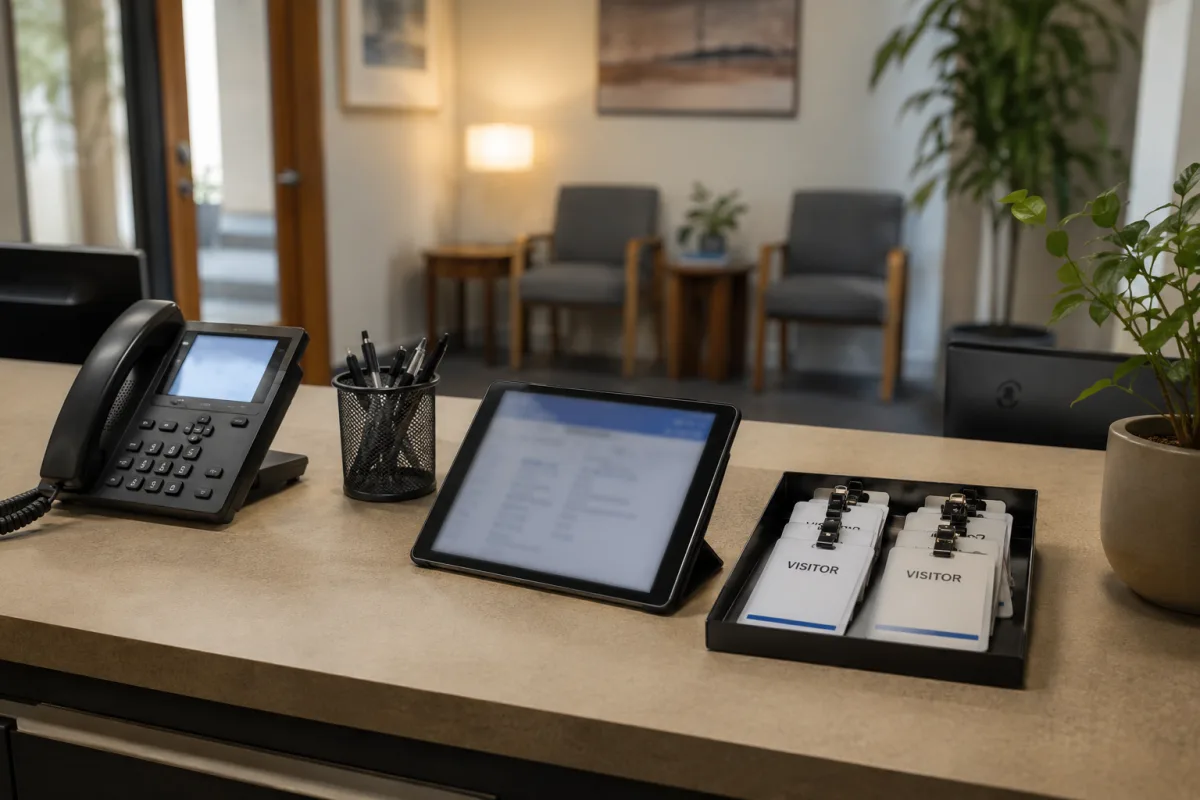
Use a calm greeting, identify the organization, listen before transferring, and confirm names or numbers. Do not leave callers on hold without checking back. In person, make eye contact, acknowledge people quickly, and avoid discussing private office issues where visitors can hear.
Receptionists also need boundaries. Courteous does not mean available for abuse. If someone is rude, threatening, or demeaning, follow office policy and get support. Livecub's rude coworker guide can help with language for boundary-setting inside the workplace too.
Visitor logs should be consistent. Record the name, company, contact person, arrival time, badge number if used, and departure time when policy requires it. Consistency protects security and saves time later if someone asks who was in the building.
How Do Scheduling And Calendar Duties Work?

Calendar work is more than dragging boxes around a screen. It means knowing priorities, travel time, meeting purpose, time zones, room capacity, and who actually needs to attend. A good assistant protects focus time and avoids filling every gap just because the calendar is open.
Use clear titles, attach agendas, confirm location, and leave notes when a meeting moves. If a calendar supports several people, use naming conventions so future searches work. The best calendar is not the fullest one. It is the one that lets people show up prepared.
Calendar judgment improves when assistants know the business rhythm. Month-end close, client deadlines, hiring loops, board meetings, and travel days all change what counts as urgent. Ask managers how they want conflicts handled before the conflict appears.
What About Confidentiality?
Receptionists and administrative assistants often see visitor logs, personnel notes, invoices, medical details, legal mail, salary clues, or customer complaints. Confidentiality is not optional. Do not gossip about who visited, what was mailed, or which meeting looked tense.
Use locked drawers, clean desks, careful screen angles, and secure shredding policies. Sympathy cards, illness updates, and workplace losses also require discretion. Livecub's office sympathy card etiquette is a good example of how office communication can be kind without becoming intrusive.
How Can The Role Stay Organized?
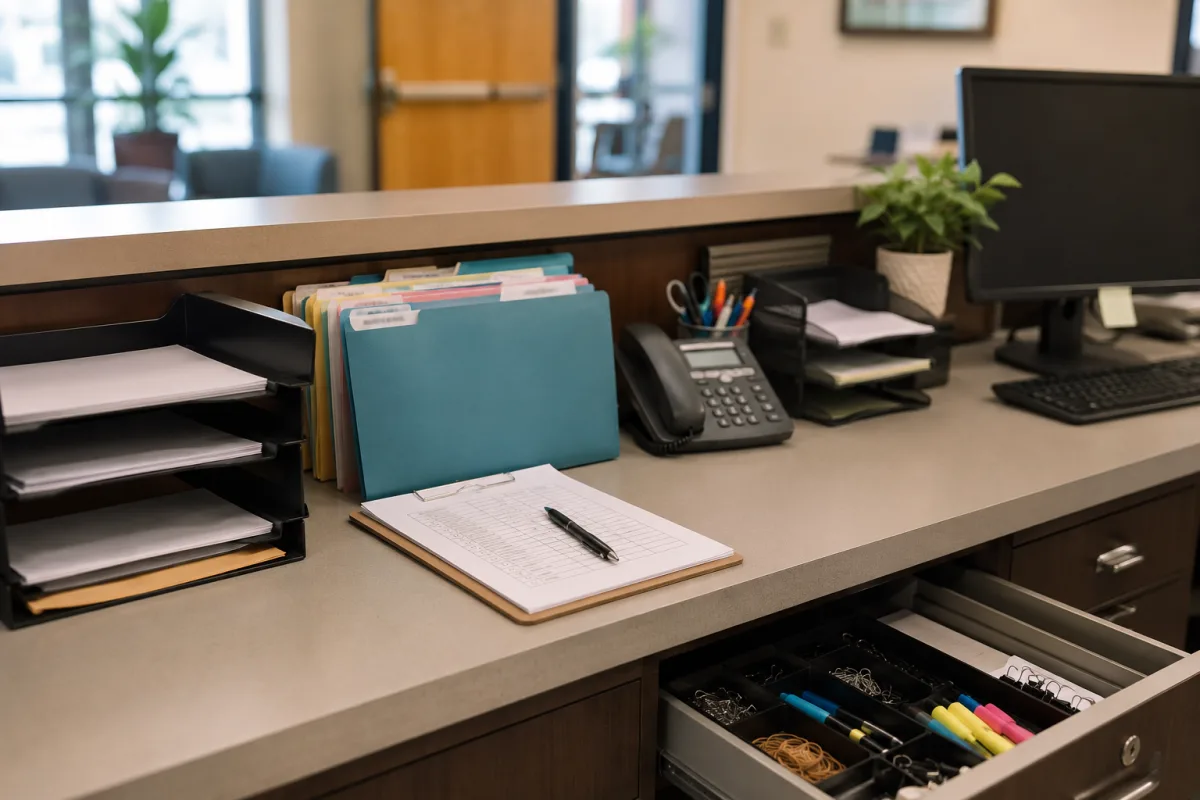
Build repeatable systems: daily opening checklist, closing checklist, supply reorder point, visitor procedure, phone notes template, meeting-room reset, mail routine, and weekly file cleanup. Systems keep the job from depending on memory alone. They also make vacation coverage possible.
Energy management matters. Front-desk work can require constant alertness. If afternoon fatigue is a pattern, Livecub's stay awake at work guide may help with basic habits, but workload and break coverage should also be discussed with a supervisor.
Training new coverage staff is part of organization too. A one-page desk guide with phone transfers, mail steps, emergency contacts, and visitor procedures can prevent chaos when the usual person is sick. The office should not lose its memory because one desk is empty.
Inventory is another quiet duty. Someone has to notice when printer paper, badges, toner, coffee, shipping labels, envelopes, cleaning wipes, or visitor forms are running low. Reordering too late wastes time; over-ordering wastes space and budget. A simple reorder list with preferred vendors can save repeated decisions.
Administrative support also includes emotional pacing. The front desk may see irritated clients, nervous applicants, grieving employees, and rushed executives in the same hour. The role requires a steady tone without absorbing every mood in the building. That skill takes practice and deserves respect.
Good offices make that skill sustainable with clear escalation paths. The receptionist should know when to call security, when to notify a manager, and when to step away from a tense exchange. Courtesy works better when policy backs it up.
Frequently Asked Questions
Is a receptionist the same as an administrative assistant?
Not always. The receptionist is often front-facing, while an administrative assistant may handle deeper internal coordination. Many jobs combine both.
What is the most visible receptionist duty?
Greeting visitors and answering phones. The tone used there affects how people read the whole organization.
What software should assistants know?
Email, calendars, word processing, spreadsheets, video meeting tools, document storage, and whatever database the office uses.
How do assistants handle competing requests?
They clarify priority, deadlines, and authority. If two urgent requests conflict, they escalate instead of guessing silently.
What makes someone strong in these roles?
Calm communication, follow-through, discretion, accuracy, and the ability to keep small systems working.
What Is The Core Office Duty?
The core duty is to reduce friction. Visitors know where to go. Calls reach the right person. Meetings have rooms. Files can be found. People feel respected. A strong receptionist or administrative assistant keeps the office moving without making every solved problem visible.

Timothy Davidson
Edits step-by-step general-interest guides for clarity, realistic limits and source verification.




Leave a reply
Replying to