
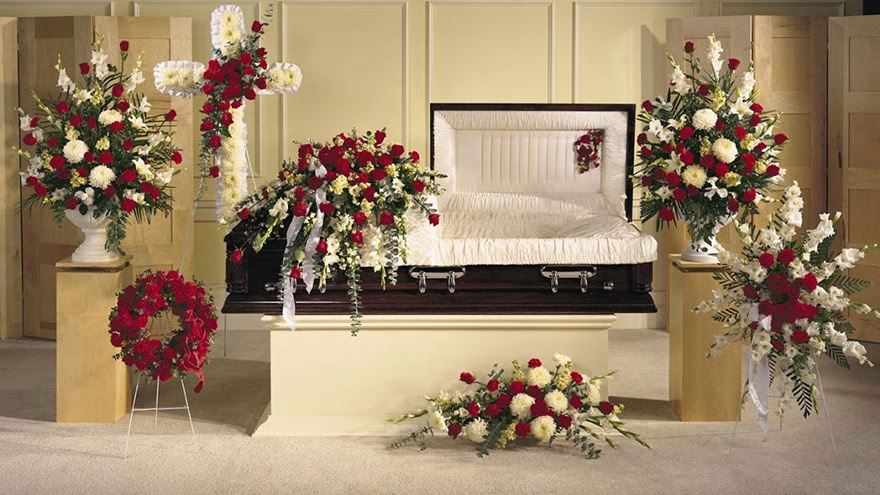
Start With the Immediate Facts
Making arrangements for a funeral is hard because grief and logistics arrive at the same time. The first hours are not the moment to solve every detail. Start with the facts that cannot wait: where the person died, who has legal authority to act, whether there are written wishes, and which professional needs to be called. If the death happened in a hospital, hospice, or care facility, staff will usually explain the next step. If it happened at home without hospice or medical support, local emergency procedures may apply.
Do not let anyone rush you into expensive choices before the basics are clear. You need a legal pronouncement of death, information for the death certificate, and a decision about who has legal authority to act. You may also need to check whether the person left prepaid arrangements, military paperwork, burial wishes, organ donation records, or instructions in estate documents. The early goal is order, not perfection.
Keep one notebook or shared document for names, phone numbers, prices, dates, and decisions. Grief makes memory unreliable. A written record helps when several relatives are calling different people and trying to be useful at the same time.
Find Documents Before Choosing Details
Before you choose flowers, music, or a venue, look for documents that may control or guide the arrangements. These can include a will, advance directive, prepaid funeral contract, cemetery deed, cremation authorization, military discharge papers, insurance policy, and contact information for an attorney or executor. Some states allow a person to name an agent for body disposition. Rules vary, so local law matters.
Death certificate information
The funeral home usually helps file death certificate paperwork, but family members still need to provide personal details. Gather the person's legal name, date of birth, place of birth, Social Security number, marital status, spouse name, parents' names, address, occupation, and veteran status. Order more certified copies than you think you need. Banks, insurers, government agencies, and property offices often require them.
Government notifications
USAGov's page on dealing with the death of a loved one gives a practical path for death certificates, survivor benefits, and agencies to notify. The Social Security Administration notes that funeral homes often report a death, but if one does not, someone should report it by phone or in person. Its when someone dies page explains that process.
Estate and legal questions
Funeral planning is separate from settling an estate, but the two can touch quickly. If there is disagreement about payment, authority, burial location, or the person's written wishes, pause before signing contracts. Livecub's guide to questions to ask an estate lawyer can help you organize the legal side without turning the funeral meeting into a fight.
Choose a Funeral Home With Your Rights in Mind
A funeral home can be a steady guide, but it is still a business. In the United States, the FTC Funeral Rule gives consumers specific rights around price information and choice of goods and services. The FTC's funeral costs and pricing checklist explains common charges and encourages comparing several funeral homes when possible.
Ask for the General Price List before you make choices. You have the right to choose only the goods and services you want, with some exceptions under state or local law. You can ask for prices by phone. You can buy a casket or urn from another seller, and the funeral home cannot charge a handling fee for using it. These rights matter because funeral decisions are often made quickly.
When you call funeral homes, use the same questions each time. Ask for the basic services fee, transfer fee, embalming policy, direct cremation price, immediate burial price, casket or urn price range, cash advance items, and any package limits. A calm comparison protects the family from guessing. It also makes it easier to explain the decision to relatives later.
Decide Between Burial, Cremation, and Service Style
The main choices are body disposition and ceremony style. Disposition means burial, cremation, donation, or another lawful option. Ceremony style means visitation, funeral service, graveside service, memorial service, religious service, celebration of life, private family gathering, or no formal event. These choices can be mixed in many ways.
Direct cremation or immediate burial can reduce cost because they skip many ceremony-related services. A full-service funeral with viewing, transportation, ceremony, cemetery charges, flowers, printed materials, and reception can cost much more. Neither choice is morally better. The right choice is the one that fits the person's wishes, family needs, budget, faith practice, and local rules.
Talk plainly about money. If several relatives want a larger service, decide who is paying before contracts are signed. Funeral homes can provide an itemized statement. Ask questions until every charge is clear. A respectful farewell should not depend on relatives being too embarrassed to discuss cost.
Plan the Service Around the Person
A meaningful service does not need to be elaborate. Start with the person's values, faith, music, work, family role, humor, favorite places, and the kind of gathering they would have recognized. Choose one tone and let it guide the details. A formal church service, quiet graveside gathering, backyard memorial, and community hall reception can all be fitting if they reflect the person.
Assign specific tasks. One person can write the obituary, another can gather photos, and another can talk to clergy or the celebrant. Someone else can arrange food or track expenses.
Clear roles keep the loudest voice from taking over and give quieter relatives a way to help. For later remembrance ideas, Livecub's article on memorial birthdays can help families think beyond the funeral week.
Food and display decisions can stay simple. A reception table with photos, a guest book, water, coffee, and modest food may be enough. If you need layout ideas for a neat table, Livecub's cookie display guide can be adapted in spirit: keep items visible, easy to reach, and not crowded.
Write Notices and Handle Invitations
An obituary or death notice should give the basic facts, but it does not need to reveal private details. Include the person's name, age, date of death if the family chooses, close family, service information, memorial donation preference, and where to send condolences. Avoid publishing home addresses or empty-house details that could create security risk.
For invitations, use layers. Immediate family and close friends may need phone calls. Extended contacts can receive a text or email. Community members may see an obituary, church notice, workplace message, or social post.
If the service is private, say so gently. People may be disappointed, but privacy is a valid family choice.
Proofread names and dates. Funeral notices are emotionally charged, and mistakes can hurt. Have two people review the final version before it is sent to a newspaper, funeral home, or social platform.
After the Service, Finish the Practical Tasks
After the funeral, the work changes from ceremony to administration. Order remaining death certificates, pay final funeral bills, collect receipts, notify agencies and companies, pause subscriptions, protect the home, and help the executor or next of kin sort paperwork. Do not try to finish everything in one day. Make a list, group tasks, and work through it steadily.
Send thank-you notes only if the family wants to and has capacity. A short note is enough. People who brought food, sent flowers, gave money, hosted guests, or handled a hard errand often appreciate acknowledgment, but grief does not run on office deadlines. Ask for help if the list feels heavy.
The best funeral arrangements are not the most expensive or the most polished. They are the ones made with care, clear records, and enough room for grief. Keep the steps simple, ask direct questions, and let trusted people carry part of the load.
Frequently Asked Questions
Who has the right to make funeral arrangements?
Authority depends on state law, written instructions, marital status, next of kin, and any appointed agent. If family members disagree, get local legal guidance before signing contracts.
How many death certificates should I order?
Needs vary, but families often order several certified copies for banks, insurance, government agencies, property matters, and benefits. Ask the funeral home or local records office what is typical.
Can I compare funeral home prices?
Yes. In the United States, funeral homes must give price information by phone and provide a General Price List when required by the Funeral Rule. Comparing prices is reasonable.
Do we need to hold the funeral right away?
Timing depends on local rules, the chosen disposition, religious practice, family travel, and funeral home availability. Ask the provider what must happen soon and what can wait.

Alyssa Curlin
Edits general health, nutrition and education explainers. Medical topics are educational and link to public-health guidance.




Leave a reply
Replying to