
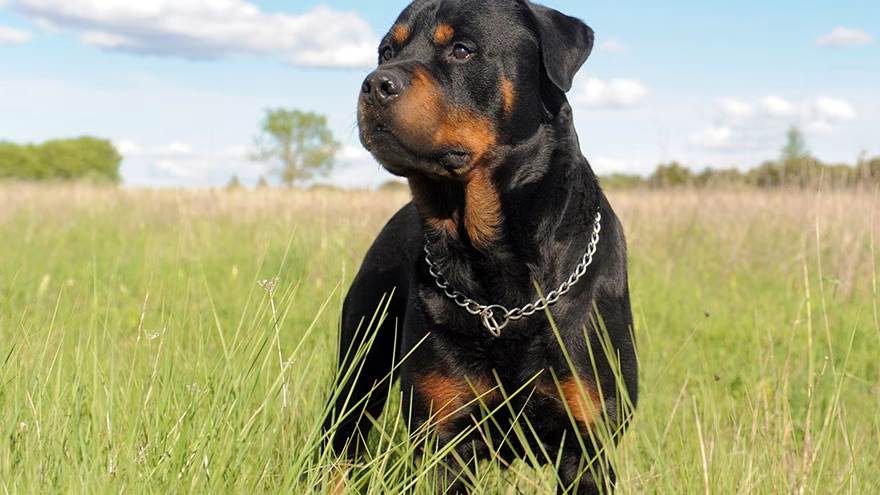
A Rottweiler is not difficult because it is bad-tempered. It is difficult when its owner treats strength, confidence, and guarding instinct as decoration. Real Rottweiler breed information has to hold two facts together: a well-bred, well-raised Rottweiler can be calm and affectionate with family, and the same dog needs structure before its adult body and adult opinions arrive. This is a working breed, not a black-and-tan status symbol.
What is the Rottweiler breed known for?
The AKC Rottweiler profile describes the breed as a strong working dog descended from the mastiffs of the Roman legions, with a gentle family side and a self-assured attitude toward the outside world. That mix explains both the appeal and the responsibility.
Rottweilers often bond closely to their people. They notice visitors, movement near the property, and emotional tone in the household. In a prepared home, that awareness can look calm and sensible. In an unprepared home, it can become jumping, blocking, resource guarding, leash reactivity, or suspicion that the owner cannot interrupt.
If size is part of the appeal, compare expectations with Livecub's largest dog breed overview. A Rottweiler is not the tallest dog in that category, but it brings power, density, and drive that require serious handling.
The breed also changes with maturity. A puppy that accepts everyone at twelve weeks may become more selective as adult confidence arrives. That shift is not a betrayal of training. It is a reason to keep reinforcing neutral behavior around visitors, dogs, delivery sounds, and neighborhood activity.
Is a Rottweiler a good family dog?
A Rottweiler can be a good family dog when breeding, socialization, training, supervision, and household rules line up. The breed is not a shortcut to safety, and it is not a babysitter. Children need to respect space, adults need to manage greetings, and the dog needs a reliable way to disengage from noise or rough play.
The best family Rottweilers usually learn calm routines early: wait at doors, settle on a mat, release toys, accept handling, walk without dragging, and greet guests with all four feet on the floor. Those behaviors are not fancy obedience. They are household safety.
A home with no time for training should choose a different breed. A home that enjoys practice, boundaries, and daily engagement may find the Rottweiler steady, funny, and deeply loyal.
Guest rules should be written before the dog is excited. Use a leash, gate, crate, or mat when people arrive. Ask visitors to ignore the dog until it is calm. If the dog cannot settle, increase distance and reward quiet observation. Clear exits protect everyone: the dog can leave pressure, and people do not have to negotiate with a powerful animal.
How much training does a Rottweiler need?
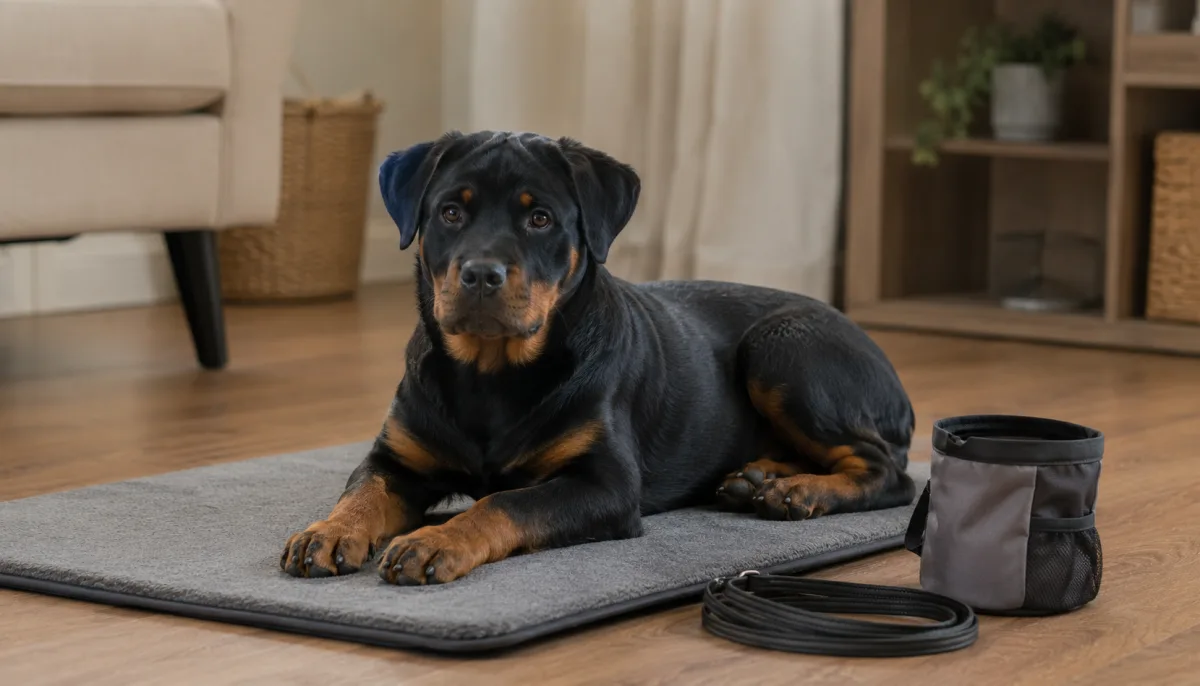
Training should begin the week the puppy comes home and continue through adolescence. The veterinary handout from Today's Veterinary Practice says puppies learn well by eight weeks, respond best to positive reinforcement, and need consistent cues from everyone in the family. For a Rottweiler, inconsistency is expensive because a half-grown dog can already be hard to physically manage.
Foundation manners
Teach sit, down, wait, hand target, recall, drop, leave it, and mat settling. Keep sessions short and frequent. Reward the behavior you want before the puppy invents a louder option. The goal is automatic manners, not a dog that performs only when it sees a treat.
Leash control
Loose-leash work must start before the dog is powerful. Reward check-ins, stop forward motion when the leash tightens, and practice around low-level distractions before crowded streets. Equipment can help, but no collar or walking vest replaces repetition.
Resource comfort
Trade games are safer than grabbing. Walk by the bowl and drop better food. Approach toys and offer a swap. Teach the dog that human hands predict good things, not theft. If growling appears, call a qualified trainer early instead of punishing the warning.
How should Rottweiler socialization be handled?
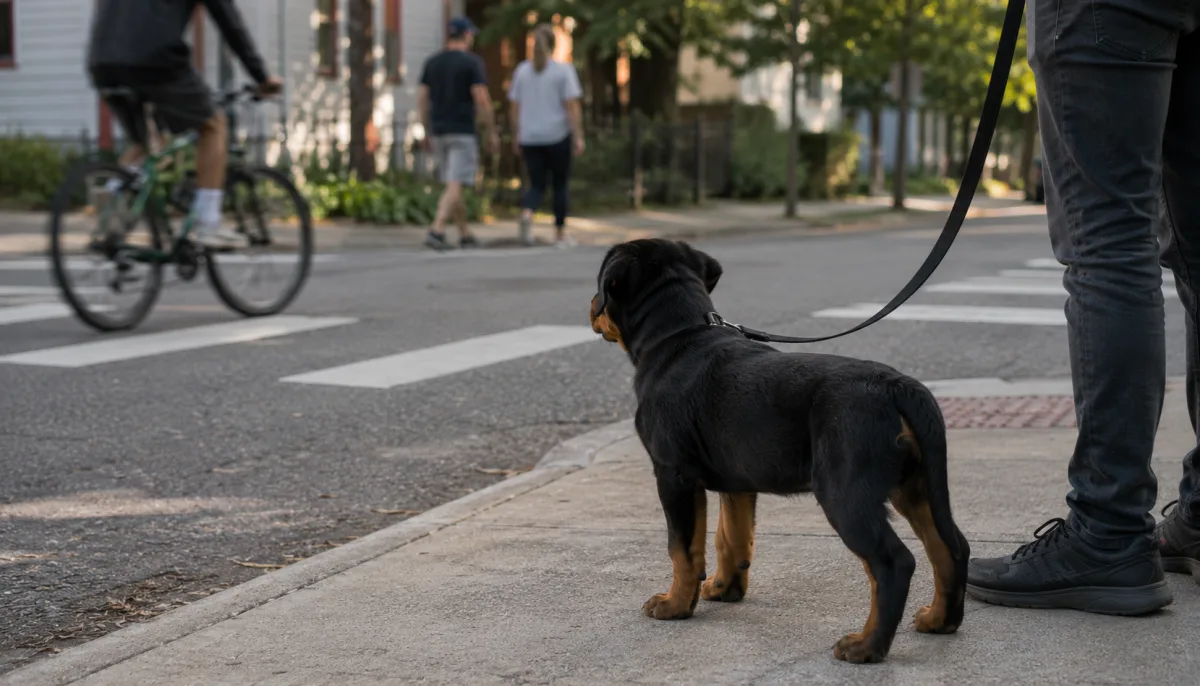
Socialization is not letting every stranger touch the puppy. It is planned exposure to surfaces, sounds, people, dogs, handling, vehicles, vet-style exams, and quiet public spaces while the puppy still feels safe. The AVSAB puppy socialization statement says the first three months are the primary window and supports safe socialization before full vaccination when illness risk is managed.
For Rottweilers, the point is neutrality. You do not need a dog that rushes every person. You need a dog that can observe, take food, respond to its handler, and move on. That skill prevents the dog from deciding alone who belongs and who does not.
Dog parks are a poor socialization plan for many Rottweilers. Unknown dogs, rough play, and crowded gates can teach the wrong lessons. Controlled puppy classes, calm adult dogs, and structured walks are safer tools.
What exercise does a Rottweiler need?
Most adult Rottweilers need daily walks, training, play, and mental work. They are athletic enough for hiking, obedience, tracking, carting, scent games, and structured play, but puppies should not be pushed into repetitive jumping or forced distance work while growing. Ask your veterinarian about age-appropriate activity.
Exercise without training can create a fitter problem. A Rottweiler that only runs, wrestles, and pulls may become harder to live with. Mix movement with impulse control: sit before the ball, heel for ten steps, sniff as a reward, settle after play.
Owners who like energetic dogs can compare this with German Shorthaired Pointer questions. The Rottweiler usually needs less frantic mileage, but more deliberate control work.
Grooming is simple but still useful training. Brush the short coat, handle paws, lift lips for tooth checks, and inspect ears while rewarding calm cooperation. These small routines make veterinary exams easier and help owners notice lumps, soreness, broken nails, or skin irritation before they become bigger problems.
What health screening should Rottweiler buyers ask about?

Responsible buyers should ask for health records from the parents, not vague reassurance. The American Rottweiler Club health statement says breeding stock in its mandatory practices must have a CHIC number and includes testing such as hip evaluation and cardiac evaluation with disclosed results.
Discuss hips, elbows, heart, eyes, JLPP status, dentition, temperament, and family longevity with the breeder and your veterinarian. A CHIC number means required tests were completed and disclosed; it is not a magic badge saying every result is perfect. Read the results.
Rottweilers can also face weight-related strain if overfed. Keep the dog lean, build muscle gradually, protect joints during growth, and schedule veterinary checks for limping, exercise intolerance, skin issues, or behavior changes. For broader breed-health thinking, the Staffordshire Bull Terrier health article shows why breed-specific risks should lead to questions, not fear.
Lean body condition is one of the cheapest health tools an owner controls. Use your hands, not just your eyes, because a thick coat and broad chest can hide gradual weight gain. If treats are used for training, subtract them from meals and track chews that add calories.
Adolescent management matters as much as puppy class. Between puppyhood and adult steadiness, many Rottweilers test body pressure, barking, and selective listening. Go back to easier settings, reward fast responses, and avoid crowded places where the dog can practice bad habits at full strength.
Keep written notes on training setbacks early. The trigger, distance, recovery time, reward used, and timing will help a trainer or veterinarian separate normal adolescence from fear, pain, or a handling gap.
Frequently Asked Questions
Are Rottweilers aggressive?
A well-bred and well-trained Rottweiler should not be randomly aggressive, but the breed is strong, confident, and protective. Poor breeding, weak socialization, pain, fear, or careless handling can create dangerous behavior.
Can first-time owners have a Rottweiler?
Some can, but they need mentor support, a reward-based trainer, time for daily practice, and honest control of greetings and leash work. A casual first-time home should choose an easier breed.
Do Rottweilers need a yard?
A secure yard helps, but it does not replace walks or training. Apartment living can work only if the owner provides exercise, structure, and safe outlets every day.
When should Rottweiler training start?
Start immediately with short, kind sessions. Name response, handling, crate comfort, leash basics, and calm greetings can begin the first week, adjusted to the puppy's age and confidence.
The right Rottweiler home does not rely on strength after a problem starts. It builds habits early, keeps the dog lean and trained, and treats confidence as something to guide every day.

Chiara Bradshaw
Covers education, culture and creative topics with an emphasis on readable explanations and verifiable references.



Leave a reply
Replying to