
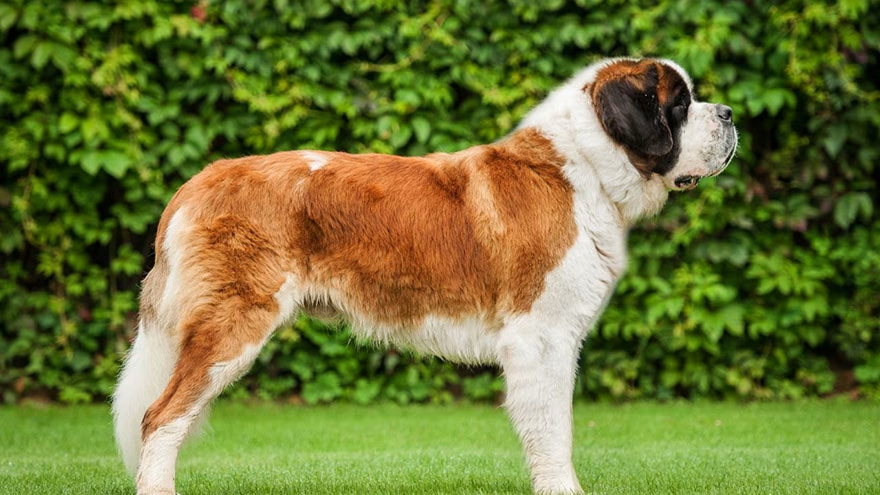
A Saint Bernard can look like the ideal family giant: soft eyes, heavy head, huge body, and a famously patient expression. The honest version of Saint Bernard common questions starts with size, drool, grooming, heat, training, children, and health testing. This breed can be gentle, but nothing about a 120- to 180-pound dog is casual.
Saints need space, planning, and owners who respect giant-breed limits. They are not built for speed, hot weather, or a house where no one wants hair, mud, water on the floor, and drool cloths near the door. The right home sees those details before the puppy grows.
What Is A Saint Bernard Like?
The American Kennel Club describes the Saint Bernard as watchful, patient, and careful with children. That is the public image for good reason. Many Saints are calm, affectionate dogs that enjoy being close to the family rather than running all day.
Calm does not mean no training. A giant dog that leans, pulls, jumps, blocks doorways, or refuses to move is hard to manage. Teach leash manners, wait, leave it, drop it, settle, grooming cooperation, and polite greetings while the dog is still small enough to guide. If you are comparing large breeds, Livecub's top biggest dog breeds guide puts Saint size into context.
Are Saint Bernards Good With Children?

They can be excellent with respectful children, but supervision matters. A Saint Bernard can knock over a small child by turning around. Food, toys, stairs, doors, and outdoor play should be managed. Children should not climb on the dog, grab jowls, or wake the dog from deep sleep.
The best family Saints learn calm routines: lie on a mat during meals, walk away when play gets loud, and greet visitors from the floor. Children learn rules too. A sweet temperament is not a substitute for adults paying attention.
How Much Exercise Does A Saint Bernard Need?
Most Saints need steady daily movement, not hard athletic work. Walks, easy hikes in cool weather, gentle training, and sniffing time are useful. Puppies need careful exercise because giant-breed bones and joints are still developing. Avoid repeated stairs, forced running, slick floors, and heavy jumping.
Heat changes everything. A Saint in warm weather may tire quickly, pant hard, or seek shade. Plan walks for cool hours, carry water, and stop before the dog is struggling. A breed built for alpine work should not be pushed like a summer running partner.
Do Saint Bernards Drool And Shed?
Yes. Drool varies by individual, but it is part of the breed. The Saint Bernard Club of America FAQ says there is no truly dry-mouthed Saint, though some drool less than others. Keep towels near water bowls, doors, and the car. Guests should know before a friendly head lands in their lap.
Shedding is also real. Smooth and longhaired Saints both need brushing, and seasonal coat changes can be heavy. If a tidy house is a top priority, this may not be your breed. Livecub's longhair Dachshund grooming guide is smaller-scale, but it shows the same principle: grooming is easiest before mats start.
How Much Grooming Is Required?
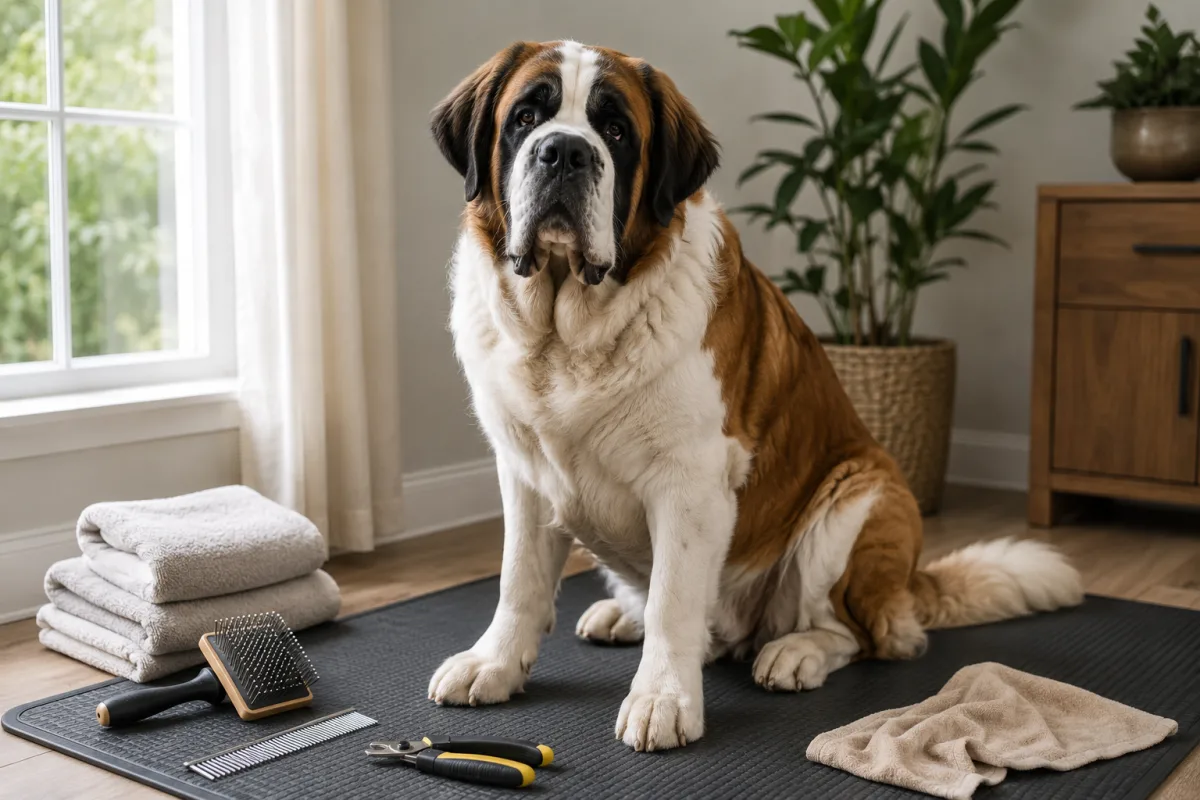
The Saint Bernard Club of America care guidance lists basic grooming tools such as brushes, combs, scissors, nail clippers, ear cleaner, shampoo, conditioner, and coat spray. That tells new owners the job is not only a quick brush over the top.
Check ears, nails, teeth, skin folds, tail, feet, and damp areas under the coat. A big dog can hide hot spots or skin irritation. Teach grooming in small sessions with treats and breaks. Waiting until the dog is full grown and matted makes the job harder for everyone.
What Health Issues Should Buyers Ask About?
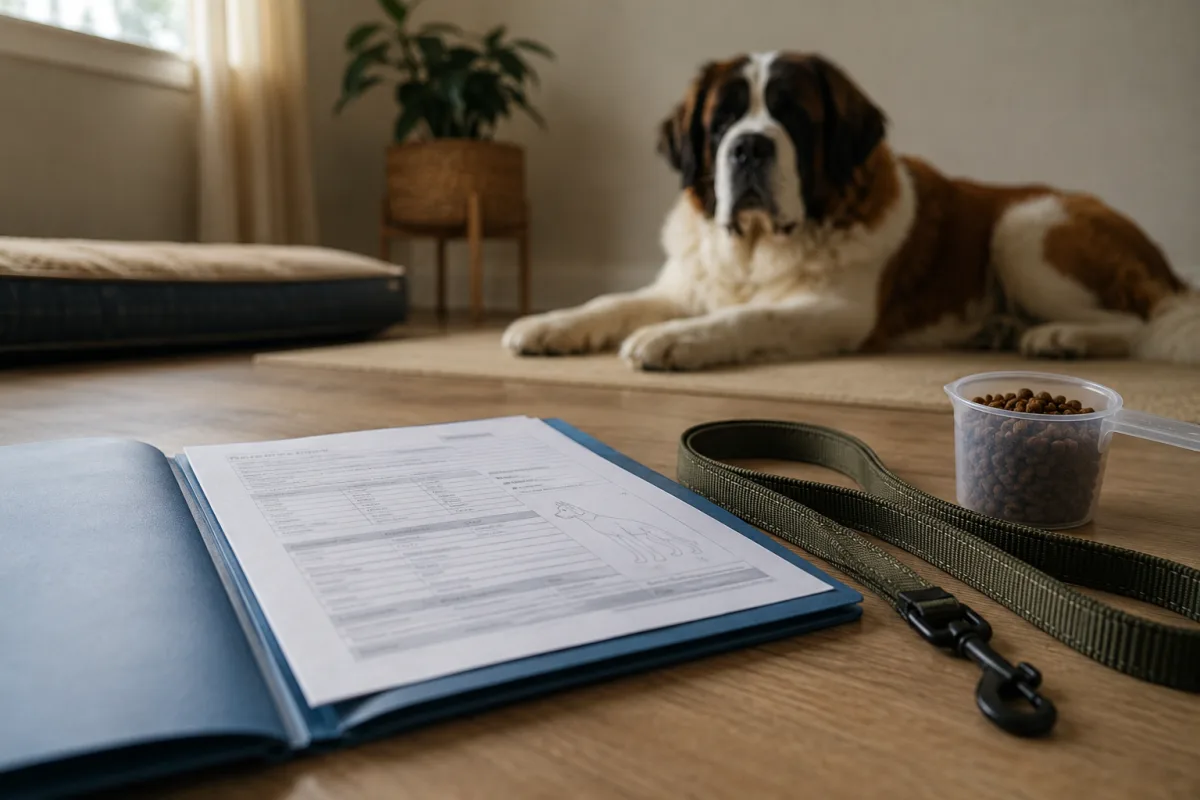
The Saint Bernard Club of America breeder referral materials list health screening concerns including hip and elbow dysplasia, eye examination, cardiac evaluation, degenerative myelopathy, and recommended thyroid testing. Buyers should ask for registered names and actual test results, not only a promise that the parents are healthy.
VCA notes Saint Bernard concerns such as hip dysplasia, bloat, and eye problems. Bloat, or gastric dilatation-volvulus, is an emergency. Sudden retching, swollen abdomen, distress, restlessness, or collapse needs urgent veterinary care. Ask your vet about meal timing, exercise after eating, and whether gastropexy should be discussed.
Are Saint Bernards Easy To Train?
They are often willing, but they are large, slow-maturing dogs. Use short, steady training, reward calm choices, and avoid wrestling games that teach the dog to use weight against people. A Saint that learns to drag people to greet visitors can become difficult fast.
Socialization should include calm dogs, people with hats, wheelchairs, children at a distance, vet handling, grooming tables, car rides, and quiet rest in public. The goal is a dog that can observe without pulling or panicking. If you want a contrast with a different powerful breed, Livecub's Rottweiler questions show how management changes by breed purpose.
Can Saint Bernards Live In Apartments?
Some can, if the building has enough space, cool air, easy outdoor access, and no long flights of stairs. The harder parts are size, shedding, drool, elevator manners, heat, and emergency logistics. Can you lift or transport the dog if it cannot walk? Can the dog turn around comfortably in hallways and vehicles?
A yard is helpful but not a training program. A Saint left outside without structure can dig, bark, overheat, or become lonely. The home setup matters less than the owner's ability to manage the dog's body safely every day.
What Should You Ask A Breeder?
Ask about hip, elbow, eye, heart, DM, thyroid history, bloat in relatives, lifespan, temperament, and why the pairing was made. Ask how puppies are raised, what surfaces they use, how weight is managed, and how the breeder supports owners after purchase. A serious breeder will not be offended by careful questions.
Ask to meet adult relatives if possible. A Saint puppy is charming, but adults show the real size, coat, drool, voice, and movement. If breeder conversations feel vague, Livecub's Brittany Spaniel breeder recommendations can help shape better questions even for a different breed.
What Daily Costs Should Owners Expect?
Saint Bernard costs scale with the dog. Food, preventives, beds, crates, car restraints, grooming tools, professional grooming, medication, anesthesia, and emergency care can cost more than they would for a small breed. Even simple supplies need to be large and sturdy. A bargain puppy can become expensive quickly if health testing, growth, or training were poor.
Plan for transportation too. A sick Saint may not fit in every car, and lifting a giant dog is not realistic for many people. Owners should know which veterinary clinic can handle giant breeds, which emergency clinic is closest, and how they would move the dog safely if it could not walk.
How Do Saint Bernards Change With Age?
Senior Saints often need traction, ramps, shorter cool walks, softer bedding, dental care, nail maintenance, and pain checks. Slowing down is not always just age. Arthritis, heart disease, thyroid issues, eye pain, dental disease, or weight gain can make a gentle dog withdraw or resist movement.
Keep records of weight, appetite, mobility, breathing, lumps, medication, and heat tolerance. A small change in a giant dog can become a large care problem if everyone assumes the breed is simply lazy.
Frequently Asked Questions
Are Saint Bernards lazy?
They are usually not hyper dogs, but they still need walks, training, grooming, and mental work.
Do Saint Bernards bark a lot?
Many are watchful and may alert, but constant barking often points to boredom, stress, or poor management.
Are Saint Bernards good first dogs?
They can be for prepared owners with space, budget, training help, and giant-breed planning. They are not a low-effort first dog.
How much do Saint Bernards eat?
They eat more than small breeds, but portions should be measured. Overfeeding a giant puppy can harm growth and joints.
Do Saint Bernards tolerate heat?
Not well. Use cool-hour walks, shade, water, air-conditioning, and a low threshold for stopping activity.
Should You Choose A Saint Bernard?
Choose a Saint Bernard if you want a gentle giant and are ready for size, drool, grooming, health screening, training, and heat management. Skip the breed if you want a tidy, portable, low-cost dog. A Saint can be a wonderful companion, but the scale of care is part of the deal.

Chiara Bradshaw
Covers education, culture and creative topics with an emphasis on readable explanations and verifiable references.




Leave a reply
Replying to