
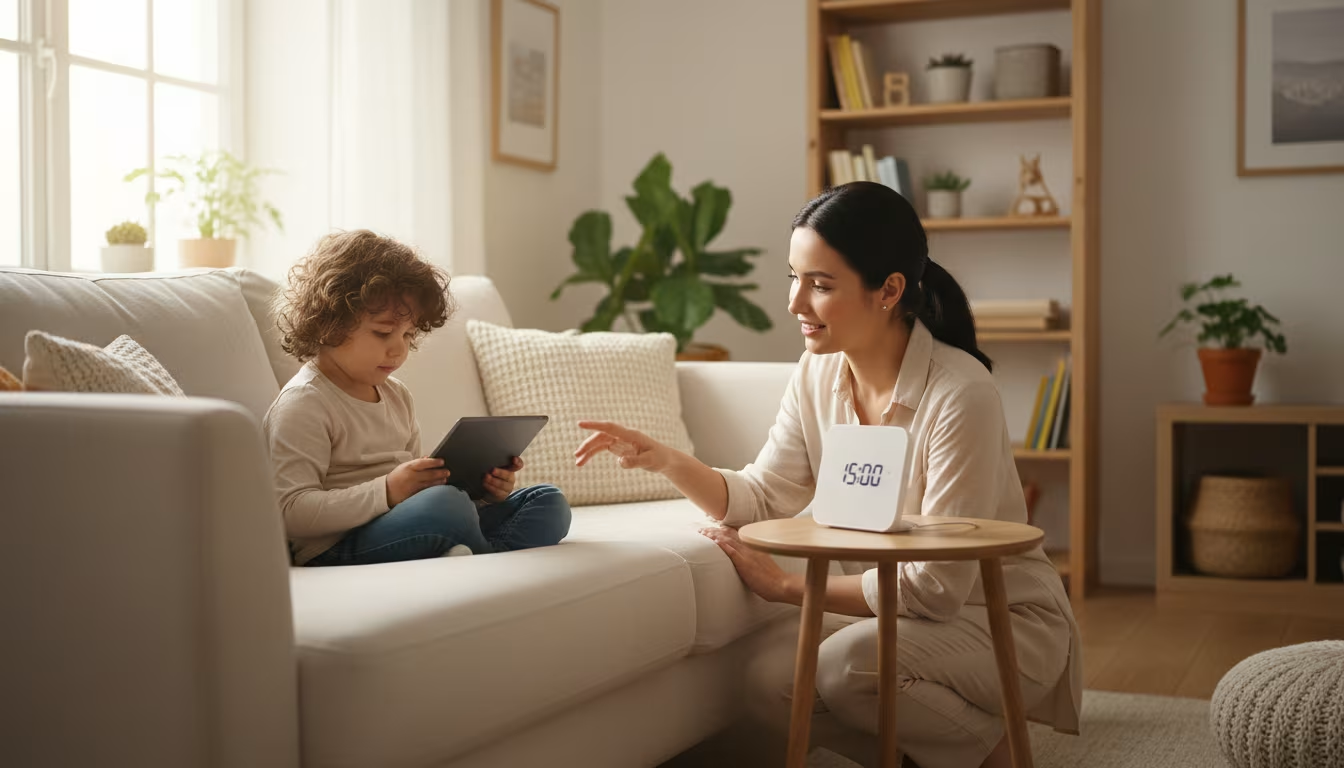
Counting minutes used to feel like the whole job, and it turns out to be the smallest part of it. What a child watches, when they watch it, how they behave afterward, and what the screen quietly pushes out of the day all shape the answer far more than any single daily number. This is general parenting education, not a diagnosis; ask your pediatric clinician about developmental delays, sleep problems, anxiety, attention concerns, aggression, or screen use that feels impossible to manage.
Start With The Child, Not The Clock
The American Academy of Pediatrics now frames media around the 5 Cs: child, content, calm, crowding out, and communication. HealthyChildren explains the 5 Cs of media use as a way to move past a one-size rule. A child who sleeps well, plays outside, reads, connects with family, and handles transitions may need a very different plan from a child whose screen use triggers daily battles. Start with the kid in front of you, not the number in an article.
Age Still Matters
Younger children need face-to-face interaction, movement, sleep, and play far more than passive screens, and the younger the child, the more screen time should be adult-led, brief, and not the main tool for calming down. Age does not set a magic limit, but it does change what screens should be doing in a child's day.
| Age | What matters most | Screen role |
|---|---|---|
| Under 2 | Talking, floor time, responsive care | Video chat aside, keep it minimal and adult-led |
| 2–5 | Co-viewing, language, play | Short, chosen, watched together; avoid autoplay |
| 6–12 | Sleep, school, friendships, activity | Clear rules tied to bedtime, meals, and homework |
| Teens | Privacy, trust, honest conversation | Guardrails plus talks about sleep, comparison, and safety |
The bands are guides, not gates. A calm, curious eight-year-old and a wired, tearful one may sit at the same daily total and still need opposite plans.
Look At What Screens Replace
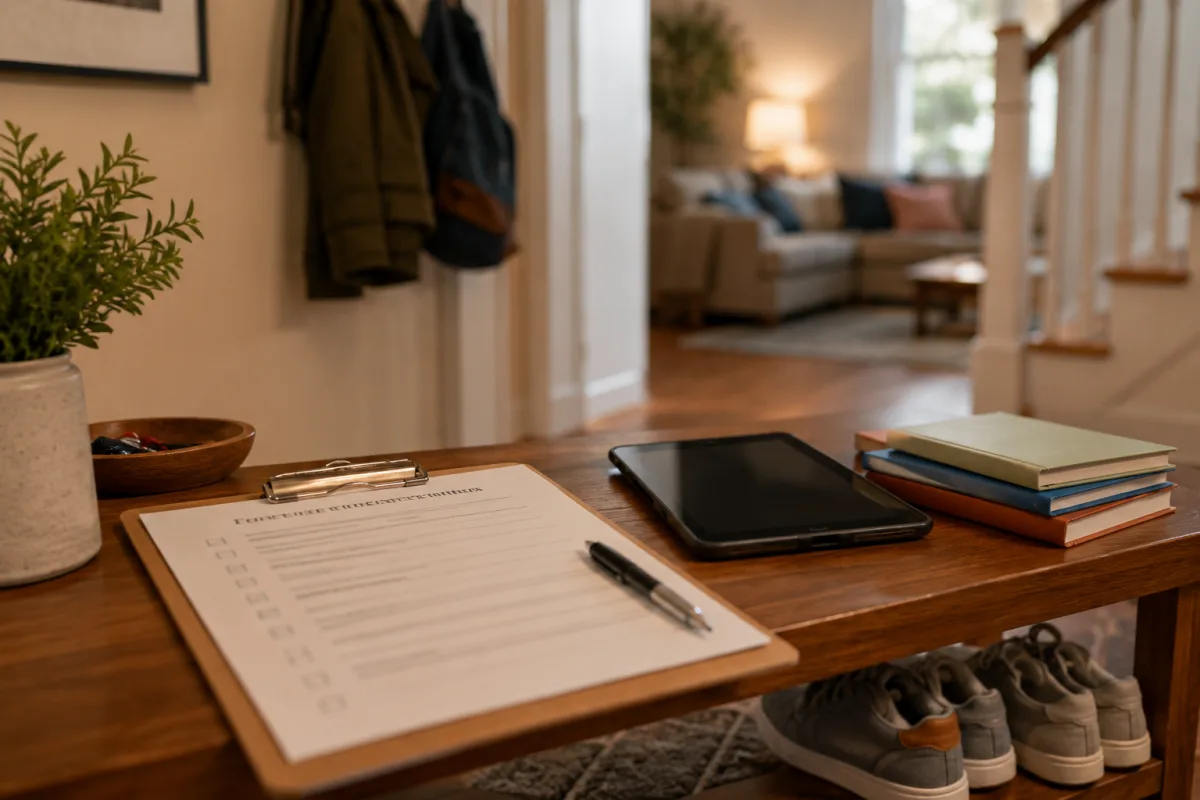
AAP guidance asks families to notice what media is crowding out. Screens become too much when they replace sleep, physical activity, homework, reading, outdoor play, chores, or conversation. If bedtime, meals, or the morning routine are falling apart, start there rather than arguing over a perfect daily figure.
A one-week content audit usually reveals more than a stopwatch. For seven days, write down what your child actually uses, not only how long: games, videos, social media, homework, video chats, and background TV. The real problem is rarely screens in general. It is one app, one time of day, or one transition that reliably ends in a meltdown.
Content And Calm Are Clues
A video call with grandparents, a creative project, a slow educational show, and an endless feed of short clips do not land on a child the same way. Look at pace, ads, autoplay, violence, in-app purchases, and whether your child can stop without falling apart. Autoplay deserves particular suspicion, because the next video starts before the child makes any choice; turning it off restores a natural stopping point.
How a child calms down is another signal. If screens are the only thing that settles them, the family may need more tools, because children still need practice with boredom, waiting, frustration, and disappointment. That does not mean never handing over a device in a hard moment. It means a screen should not become the only coping skill on the shelf. Watch the after-screen pattern too: calm, curious, aggressive, restless, tearful, sneaky, or unable to shift. The after-effect often tells you more than the clock did. When the sticking point is the transition itself, the guide to toddler tantrums can help with the handoff.
Stopping a screen is easier with a predictable exit than with a surprise. A warning, a natural stopping point such as the end of a level or an episode, a saved game, and then a ready replacement activity all soften the landing. Try not to pull a child out at the most intense moment if you can help it, since being yanked mid-story feels like a punishment and turns the next screen session into a fight before it even starts. A planned stop, repeated the same way most days, teaches the child that screen time has a beginning and an end they can predict.
Protect Sleep And Bedrooms
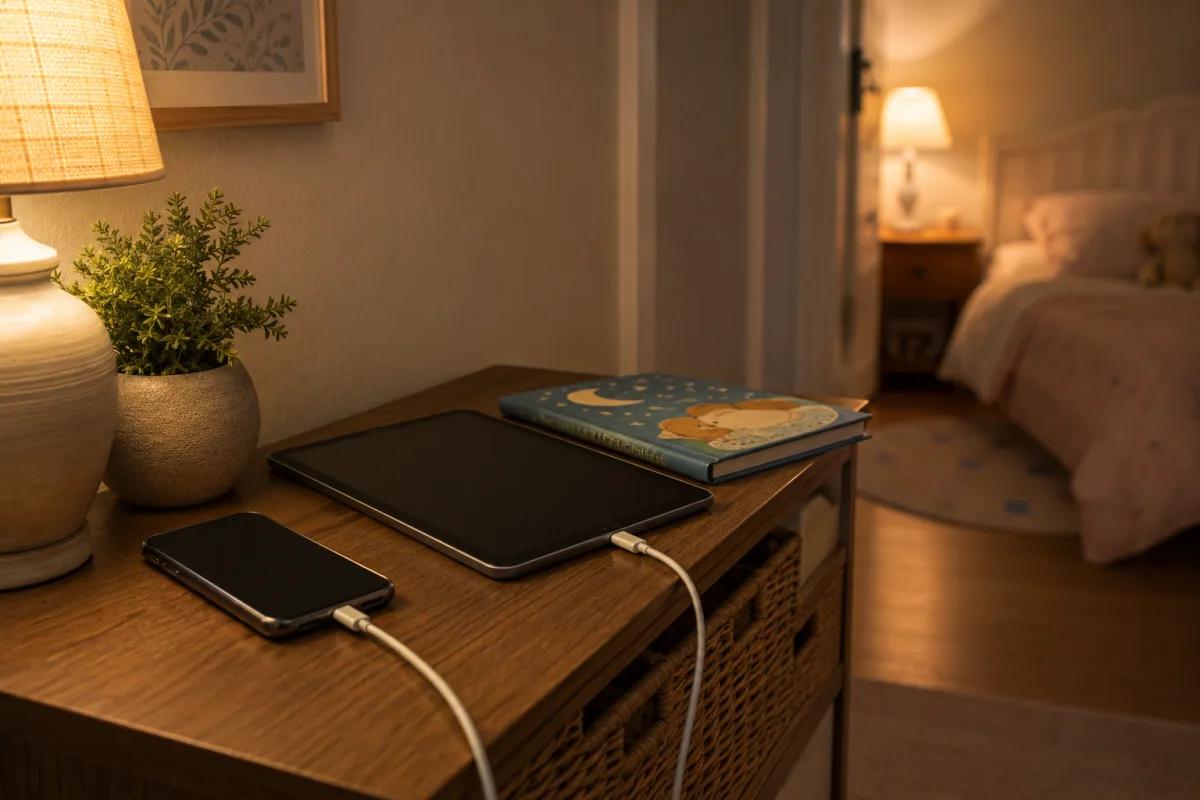
Screens near bedtime delay sleep through light, stimulation, conflict, and one-more-video loops. Charging devices outside the bedroom removes most of that friction at once. Mayo Clinic's screen time guidance suggests firm limits, tech-free times, and encouraging unplugged play.
Bedrooms are the highest-risk zone because parents cannot see timing, content, messages, or sleep disruption. A shared charging station is usually easier to hold than a nightly negotiation. If a child needs music or audio to fall asleep, choose a setup that does not also invite video or messaging. School nights need the tightest routines, since lost sleep shows up in the next morning's mood, so pick a shutoff time the whole household can actually support even during busy weeks.
Build Realistic Alternatives

Removing screens without offering a replacement rarely lasts. Have something realistic ready: blocks, drawing, outside time, chores, music, audiobooks, playdates, cooking, or quiet bins. The alternative does not need to be magical; it needs to be available before the child is already dysregulated. Keep a short bad-weather list too, since limits get harder during sickness, winter, or heat: a blanket fort, an audio story, sorting toys, or helping with simple cooking.
For younger children, choose the show yourself, watch nearby, and stop after one episode or one planned block instead of letting a feed run as the default babysitter. A predictable ending teaches a child that screens have edges. Home setup helps here as well; a look at baby-proofing your home can carve out safer play space away from devices, and if development is already being watched closely, background on premature baby development adds useful context.
Co-Viewing And School Screens
Watching alongside a child changes the whole experience. It lets you ask questions, explain ads, notice fear, and tie what is on screen back to real life. Co-viewing is not required every minute, but for preschoolers it usually matters more than hunting for a supposedly perfect educational label. When you sit in, a mediocre show becomes a conversation; when you do not, even a good one is just a feed.
School use muddies the picture, because homework portals and reading apps are screens too. Separate required school time from entertainment time so a night of assigned reading online does not get counted as "free" gaming, and ask teachers how much screen-based homework to expect so you can build breaks around it. Background TV deserves a mention here as well: even when nobody is actively watching, it pulls attention, raises the noise floor, and interrupts play, so switching it off often lets children build longer, calmer stretches of their own.
Model It And Talk About It
Children read adult phone habits closely. If grown-ups scroll through meals, bedtime, and conversations, the family rule becomes hard to believe, so pick one shared phone-free time before asking children to change everything. A written family media plan, like the tool AAP offers through HealthyChildren, cuts down on daily bargaining by putting sleep, meal, homework, and bedroom rules in plain language. Keep the list short and visible, because too many rules blur into background noise.
Older kids need conversation more than surveillance. They want privacy and trust, but they also need honest talks about sleep, comparison, bullying, sexual content, scams, and persuasive design. Ask which apps feel good, which feel bad, and what they wish adults understood; a real exchange teaches more than a lecture. Parental controls can still help with time, purchases, ratings, and sleep hours, but tell children what the controls do, since secret restrictions usually turn into a trust fight rather than a solution.
Red Flags And When To Get Help
Some patterns signal more than a timer problem: secrecy, major sleep loss, violent behavior after gaming, unsafe contacts, falling grades, loss of offline interests, or panic when disconnected. Get help if screen use is tied to serious sleep loss, aggression, school refusal, isolation, unsafe contact, or daily conflict that feels out of control. A pediatrician, therapist, or school counselor can help sort screen use from anxiety, ADHD, learning issues, or family stress, and treat the underlying issue rather than only the screen.
Every family breaks its own rules sometimes. Repair by returning to the plan at the next routine, not by delivering a speech. Consistency means coming back, not never slipping, and a household that keeps circling back to meals without screens, devices charging outside bedrooms, and a calm shutoff time is already doing the real work.
Frequently Asked Questions
How much screen time is too much?
It is too much when it crowds out sleep, movement, school, play, relationships, or emotional regulation.
Are time limits still useful?
Yes, but quality, timing, content, and the child's reaction matter just as much.
Should screens be allowed before bed?
It is usually better to keep screens out of the bedtime routine and the bedroom.
Are educational apps always okay?
No. Educational labels vary widely; co-use and the child's response still matter.
What if my child melts down when screens stop?
Use warnings, routines, fewer autoplay loops, and alternative calming skills, and seek help if it stays severe.
Too much screen time is never one universal number. The sharper question is what screens are doing to sleep, movement, mood, school, play, and family connection, and that is a question you can answer at your own kitchen table.

Chiara Bradshaw
Covers education, culture and creative topics with an emphasis on readable explanations and verifiable references.


Leave a reply
Replying to