
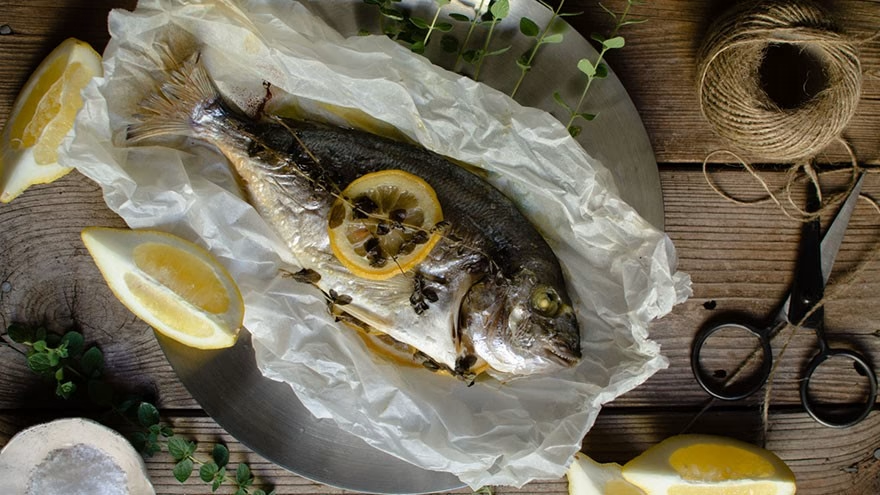
What is dorade fish? Clearing up the naming confusion
If you've seen dorade on a restaurant menu, spotted "orata" at an Italian fish counter, or noticed "dorada" at a Spanish market, you were almost certainly looking at the same fish: Sparus aurata, the gilt-head sea bream. The French call it dorade royale or daurade. Italians say orata. Spaniards and Portuguese use dorada or dourada. Greeks know it as tsipoura. In Turkey it's çipura. Americans mostly see it labeled as "dorade" or "sea bream" at fish counters, and the labels are used interchangeably for this single species. The name aurata comes from the Latin for gold — a reference to the distinctive gold band that runs across the forehead between the eyes, visible even at the fishmonger's counter.
Worth flagging before anything else: dorade is not the same fish as dorado. Dorado is the Spanish common name for mahi-mahi (Coryphaena hippurus), a large, tropical, open-water species with firm, meaty flesh and a very different flavor profile. The naming overlap has sent more than a few cooks to the wrong aisle. The simplest fix is to use the Latin: Sparus aurata for dorade, Coryphaena hippurus for mahi-mahi.
Dorade is native to the eastern Atlantic and the Mediterranean, where it inhabits coastal shallows, rocky grounds, and seagrass meadows. It has been prized since antiquity — ancient Romans maintained dorade in coastal lagoons long before modern aquaculture existed — and remains a cornerstone of seafood cooking from Marseille to Istanbul. The flesh is white, mildly sweet, and moderately lean (leaner than salmon, richer than sole), with a fine texture that flakes in large, clean pieces. It holds up well to high heat, takes to assertive herbs and citrus without disappearing, and rewards preparation that gets out of its way. Cooking dorade fish well is less about elaborate technique and more about understanding what the fish needs at each step.
How to choose and buy fresh dorade
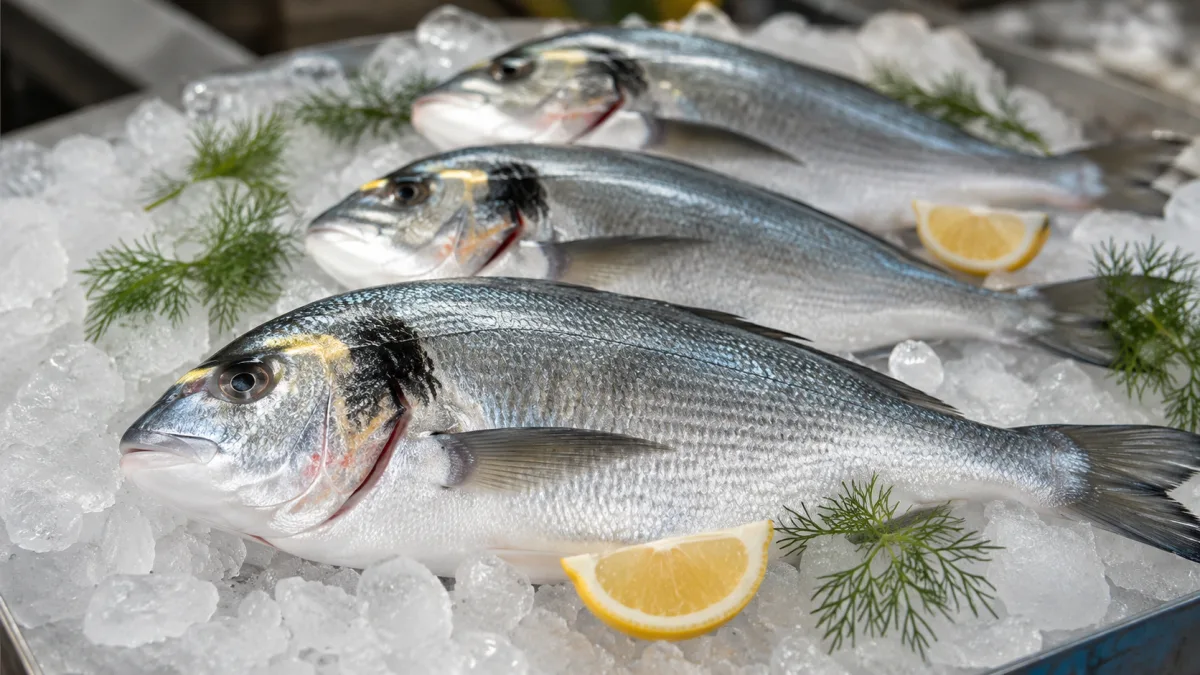
A whole dorade announces its freshness before you touch it. The body should be bright silver with a faint iridescent sheen, and on a quality gilthead sea bream you'll see that distinctive gold band on the forehead. Look also for a clear, dark blue-black spot just behind each gill cover — this marking fades quickly in aging fish. Press the flesh gently: it should spring back. If it stays depressed, move on.
The gills are the single most reliable freshness indicator. Open them and look for vivid, deeply red tissue — not gray, not brown, not pink fading to pale. Eyes should be clear and slightly convex, not sunken or with a milky film. The fish should smell of clean sea air, faintly briny. A sour, ammonia-edged smell means the protein is already breaking down. For whole roasting, a fish between one and two pounds suits a single serving well; a two- to three-pound fish is better for sharing from a platter.
For fillets, the flesh should be translucent and glistening, never opaque or beginning to separate along the muscle segments. Ask your fishmonger to scale and gut a whole fish if you're roasting it whole — most will do this at no charge, and it saves ten minutes of mess at home. Dorade is available year-round in the United States, primarily as farmed product from Mediterranean aquaculture, with some wild-caught European fish appearing seasonally at specialty counters.
Whole roasted dorade — the Mediterranean method
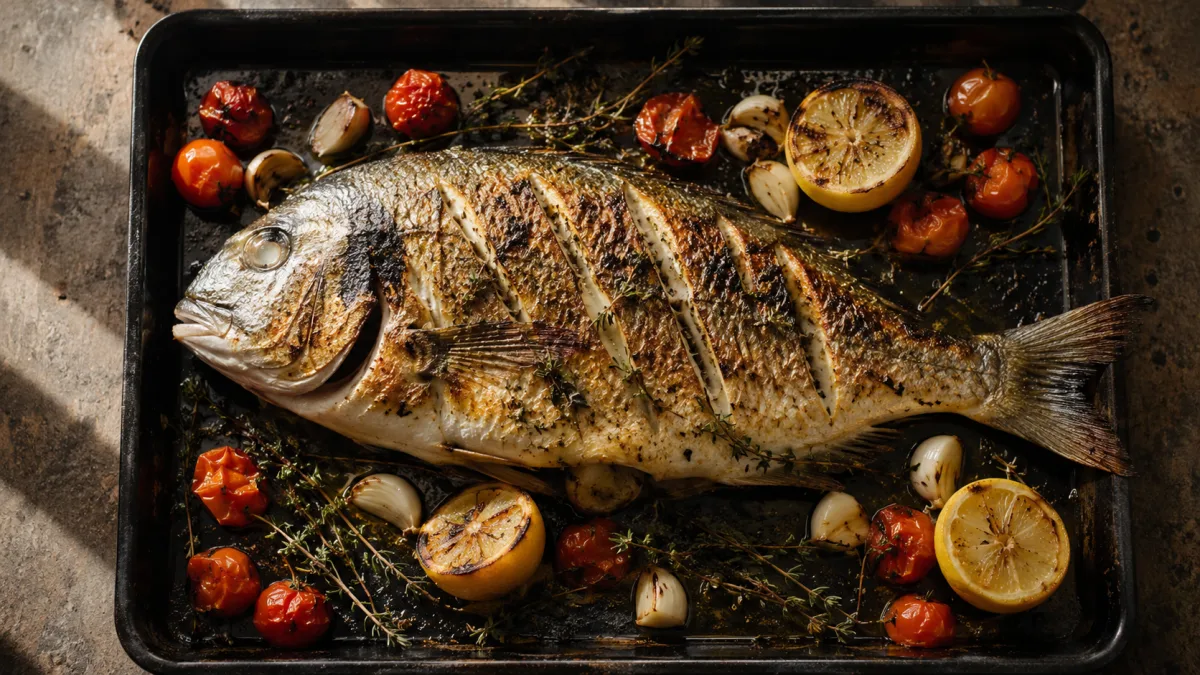
Across the Mediterranean coast, cooking dorade whole is the standard move, not the exception. The logic is straightforward: the bones conduct heat inward and contribute gelatin to the surrounding flesh as it cooks, keeping the meat moister and more flavorful than a boneless fillet cooked in isolation. Scoring the fish — making three or four diagonal cuts through the skin and into the flesh on each side — is not decorative. The cuts allow heat to penetrate the thickest part of the body faster and give salt and olive oil a path into the flesh rather than pooling on the surface.
The original recipe recommends 350°F, but this is lower than most cooks working with whole fish would choose. At 350°F, the skin tends to steam rather than roast, emerging pale and soft. The better target is 425°F to 450°F (220–230°C). At this temperature, a one-and-a-half-pound dorade cooks in 16 to 20 minutes — often less time than the lower-heat approach — while the skin blisters and takes on some color at the edges, adding texture and a faint char the low-temperature version cannot produce. The faster cook also reduces overall moisture loss. Higher heat is not harsher on a whole fish; if anything, it's kinder to the flesh.
The method: preheat the oven to 425°F. Pat the fish completely dry inside and out. Moisture on the skin creates steam and prevents browning. Score the flesh three times on each side, cutting at an angle down close to the bone. Season generously with salt and black pepper inside the cavity and in each score. Stuff the cavity with slices of lemon, sprigs of fresh thyme, a small handful of flat-leaf parsley, and two or three garlic cloves lightly crushed. Rub the exterior with good olive oil. Set the fish on a parchment-lined tray or lightly oiled roasting pan and slide it into the oven.
Roast for 16 to 20 minutes depending on size. The fish is done when the flesh at the thickest point — just behind the head, near the backbone — reaches 145°F (63°C) on an instant-read thermometer, or when it flakes cleanly from the bone with gentle fork pressure. Let it rest two minutes before serving. Roasted cherry tomatoes, braised white beans with garlic, or a simple fennel salad work well alongside, and can be placed in the same pan to absorb the cooking juices.
Salt-crusted dorade — the moisture-lock technique
Salt-crust cooking is the method that most surprises people encountering it for the first time. You encase a whole fish entirely in wet, packed kosher salt — roughly two to three pounds of salt per fish — and bake it at 400°F for 20 to 25 minutes. The result is the most consistently moist, evenly cooked dorade a home kitchen can produce.
The mechanism works on two principles. The thick salt shell acts as a thermal insulator, distributing heat slowly and evenly around the fish and preventing the exterior from overcooking before the interior finishes. Simultaneously, the moisture in the fish has nowhere to escape to, creating a self-contained steam environment inside the crust. The fish essentially braises in its own vapors. Contrary to what most people assume, the fish does not emerge aggressively salty — the skin acts as a barrier, and the effect is one of gentle, even seasoning rather than sodium overload. The flesh comes out with a purity of flavor that direct-heat cooking rarely matches.
To prepare: mix three cups of kosher salt with two egg whites and just enough cold water to make a paste that holds its shape when squeezed. Dried herbs — thyme, rosemary, fennel fronds — can be worked into the salt mixture for fragrance. Stuff the fish cavity with lemon and fresh herbs. Spread a layer of the salt paste on a baking tray, lay the fish on top, and pack the remaining salt firmly around and over it until it's completely buried. Bake at 400°F for 20 to 25 minutes. Rest five minutes, then crack the crust with the back of a heavy spoon or the butt of a knife and peel it away in sections. The skin typically comes off with the crust, revealing clean white flesh beneath. Finish with good olive oil and a squeeze of lemon.
This preparation suits dinner parties well: the crust can be assembled hours ahead, and breaking it open at the table is a more effective moment of drama than most kitchen theatrics.
How to pan-sear dorade fillets with crispy skin
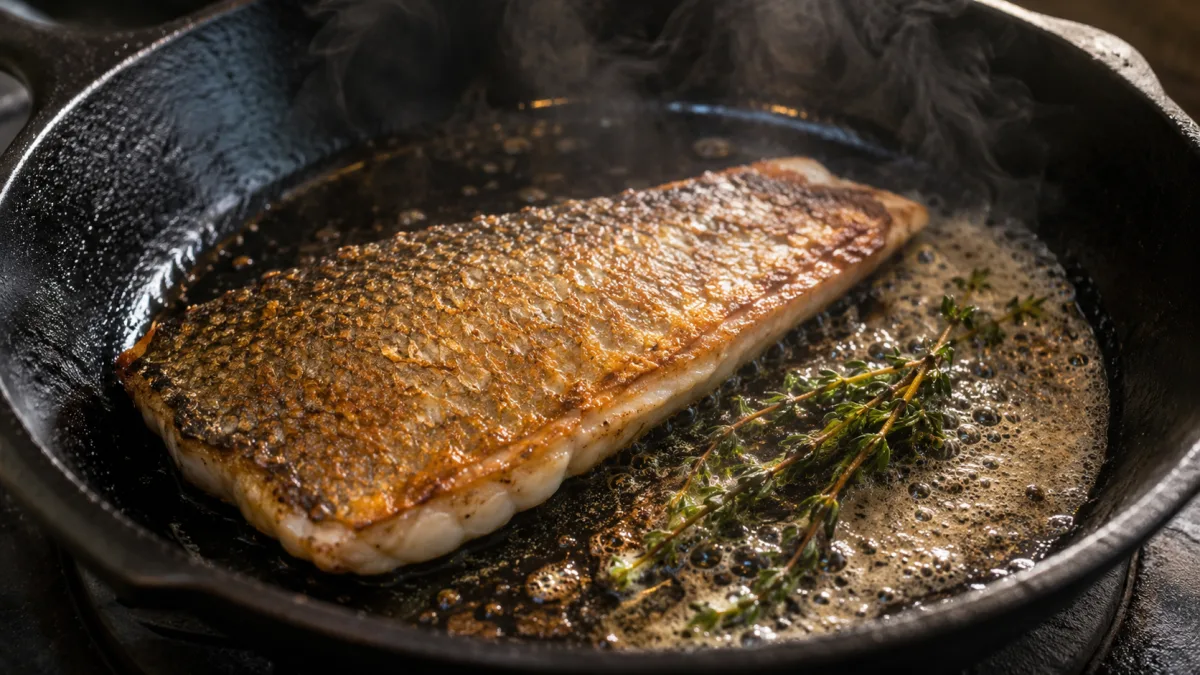
The biggest obstacle between you and crispy fish skin is moisture. When a wet fillet hits a hot pan, the surface water converts instantly to steam. That steam layer insulates the skin from direct metal contact, and without contact, the Maillard reaction — the chemical browning between amino acids and reducing sugars that produces flavor and crunch — cannot start. Aggressive drying is the single most important step: pat the skin side thoroughly with paper towels, then let the fillet sit uncovered on a rack in the refrigerator for 20 to 30 minutes if you have the time. The skin surface should look matte, not glistening, before it goes near heat.
Scoring matters here too. Dorade skin contracts when it hits heat faster than the flesh beneath it, lifting the center of the fillet off the pan and leaving a curved fillet cooking only at its edges. Score the skin side lightly with two shallow cuts — not deep enough to reach the flesh — to break the tension. Alternatively, press the fillet flat against the pan with a spatula for the first 30 seconds until the skin has set in place.
Use a stainless steel or cast-iron pan over medium-high heat. Add a thin layer of a high-smoke-point oil — grapeseed, avocado, or canola — and let it heat until shimmering. Season both sides of the fillet, lay it skin-side down, and do not touch it. The skin will tell you when it's ready: it will release from the pan without sticking when the Maillard reaction has progressed far enough to form a proper crust. Forcing an early flip tears the skin apart. After 3 to 4 minutes, the flesh will have turned opaque about two-thirds of the way up the fillet's thickness. Flip once, add a small knob of butter and a sprig of thyme to the pan, and cook for another 60 to 90 seconds while basting the flesh with the foaming butter. The fish is done at 145°F internal temperature, or when the flesh yields to light pressure without any raw, translucent center.
Note on the cold-pan method sometimes recommended for thick salmon fillets: it works well for fatty, dense fish that need slow rendering, but dorade skin is thinner and crisps better in an already-hot pan that moves quickly. Stick with the hot start for sea bream.
Flavor pairings and sides for dorade
Dorade's mild sweetness and moderate fat content give it a wide pairing range, but it finds its best expression with the flavors of its native coastline. Lemon is almost obligatory — not just a garnish but an active ingredient, its acidity cutting through the richness of olive oil and lifting the clean fish flavor. Fresh herbs work in layers: thyme and oregano can handle the heat of roasting, while flat-leaf parsley, dill, and fresh basil are best added raw at the end. Garlic and olive oil are structural.
For a quick Mediterranean sauce, whisk together extra-virgin olive oil, fresh lemon juice, a minced garlic clove, rinsed capers, and roughly chopped flat-leaf parsley. Spoon it over the fish just before serving. The capers add a sharp brininess that mirrors the fish's oceanic character without overwhelming it. For something more concentrated, make a gremolata — equal parts finely grated lemon zest, minced garlic, and chopped parsley — and scatter it over a hot pan-seared fillet while the butter is still foaming.
Cherry tomatoes slow-roasted in olive oil and thyme are an ideal accompaniment, as is shaved fennel with orange segments. Sides with brightness or acidity balance the fish better than heavy starches. A simple couscous or saffron rice works if you want a grain. A full clambake spread places dorade naturally among other brinily flavored shellfish for a larger seafood table. If you're exploring herb-forward seasoning beyond the Mediterranean canon, building your own seasoning mix lets you tailor the aromatic profile without overpowering the fish's delicate flavor.
Wine pairings that work without resistance: a crisp Vermentino from Sardinia, an Assyrtiko from Santorini, or a dry Provençal rosé. All three have the acidity and salinity to match dorade without competing with it. For a non-wine option, a splash of good fish stock or clam juice deglazes a pan beautifully into a two-minute sauce.
Sustainability and sourcing
Most dorade sold in the United States today comes from Mediterranean aquaculture, primarily Greece and Turkey, which together account for the bulk of global farmed sea bream production. Greece alone produces around 56,000 tonnes annually; Turkey, approximately 77,000 tonnes. Captive breeding became commercially viable in the 1980s once hatchery technology matured, though keeping dorade in coastal lagoons in Italy and Spain is a practice that predates that by centuries.
Farmed sea bream is generally considered a more sustainable choice than wild-caught at this point, given the historical overfishing pressure on wild Mediterranean stocks. That said, not all farmed product is equivalent. Intensive aquaculture operations can affect local water quality, seagrass habitats, and nutrient loading in surrounding waters. The best signal of responsible farming at the counter is third-party certification. The Aquaculture Stewardship Council (ASC) has a specific standard for sea bream, sea bass, and meagre — it covers water quality monitoring, proximity to seagrass meadows, feed sourcing, carbon emissions, and worker welfare. Farms that carry the ASC label have been independently verified against those standards. Some operations also hold MSC Chain of Custody certification through their distribution chain.
The flavor difference between wild and farmed dorade is real but subtle. Wild fish tend to have a slightly more pronounced, mineral-edged character and firmer flesh — a result of swimming in open water with variable current. Farmed fish is more consistent in size, fat distribution, and availability, which is actually an advantage for even cooking. For most home cooks, responsibly farmed dorade from a traceable source is the better choice on practical and environmental grounds. Ask your fishmonger where the fish came from. If they can't answer that question, that's information too. For another whole-animal cooking challenge that uses similar technique principles, grilling a whole duck applies many of the same ideas about scoring, heat management, and resting time.
Frequently Asked Questions
Is dorade the same as sea bream?
Yes. "Dorade" is the French name for Sparus aurata, the gilt-head sea bream — the same species sold as orata in Italy, dorada in Spain, and tsipoura in Greece. In the United States, "dorade" and "sea bream" are used interchangeably at fish counters and on menus. Dorade is not the same as dorado (mahi-mahi), which is an unrelated tropical fish.
What internal temperature signals that dorade is cooked through?
The FDA standard for all finfish is 145°F (63°C) at the thickest point. For dorade, this corresponds to flesh that is fully opaque and separates cleanly from the bone when pressed gently with a fork. For whole fish, insert an instant-read thermometer near the backbone behind the head — the last part to cook through. The flesh should feel firm but not dry to the touch.
Why do recipes say to score dorade before cooking?
Scoring serves two functions. On a whole roasted fish, the cuts allow heat to penetrate the thickest part of the body faster and let salt and olive oil reach the flesh beneath the skin. On pan-seared fillets, scoring relieves the tension in the skin that causes it to contract and curl away from the pan, preventing even contact and uneven cooking. In both cases, the cuts should go through the skin and slightly into the flesh — they're functional, not just decorative.
What is the best oven temperature for whole roasted dorade?
425°F to 450°F (220–230°C) produces better results than lower temperatures. At this heat, the skin browns and crisps, cooking time is shorter (16 to 20 minutes for a 1.5-lb fish), and moisture loss is reduced. At 350°F, the skin tends to stay pale and the fish must spend more time in the oven, which actually costs it more moisture in the end. The salt-crust method is the exception — 400°F works there because the crust manages heat distribution.
How do I get genuinely crispy skin when pan-searing dorade?
Dry the skin as thoroughly as possible — paper towels first, then an optional 20- to 30-minute rest uncovered in the refrigerator. Score the skin lightly to prevent curling. Use a hot pan with a high-smoke-point oil (grapeseed, avocado, canola), lay the fillet skin-side down, and do not move it. The skin releases from the pan when it has crisped enough; forcing an early flip destroys the crust. Patience is the actual technique here. The skin should look and sound like a cracker when done — if it's still soft and pliable, it needs more time skin-side down.
Sources and verification
Check current details with these primary or subject-authority sources before acting on the information.

Timothy Davidson
Edits step-by-step general-interest guides for clarity, realistic limits and source verification.




1 Comment
Join the discussion. Comments are moderated before appearing.