
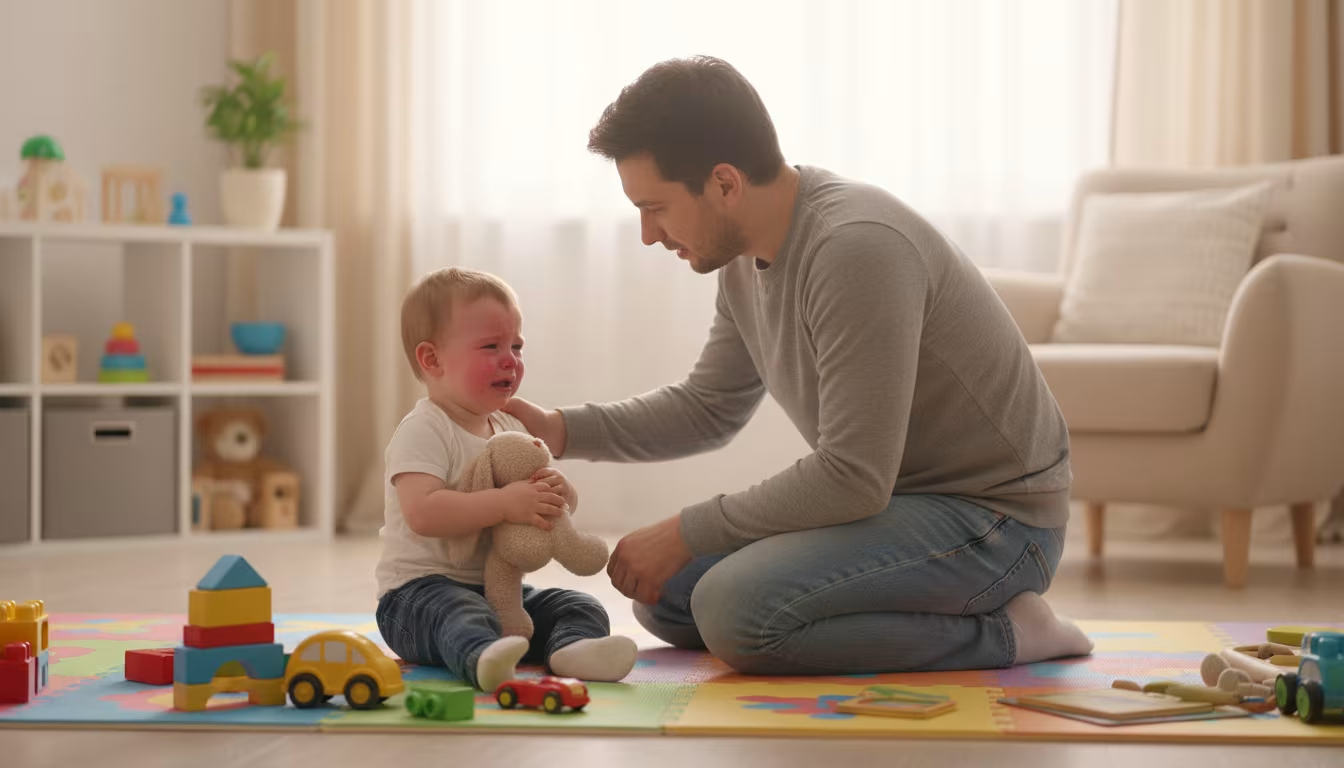
A meltdown on the kitchen floor is not a sign of a bad child or a failing parent. It is a young brain showing feelings it cannot yet manage in words. Tantrums can include crying, screaming, dropping to the floor, hitting, kicking, running off, or refusing to move, and they are one of the most predictable parts of the toddler years.
This article is general parenting education, not medical or mental-health advice. Talk with your pediatrician or a child-development professional if tantrums are very frequent, last a long time, include self-injury, cause serious aggression, come with developmental regression, or leave you afraid for anyone's safety.
Why Toddlers Have Tantrums
Toddlers want control long before they have the language, patience, impulse control, or flexible thinking to handle it. Hunger, tiredness, transitions, overstimulation, illness, jealousy, plain frustration, and being told no can all light the fuse. Most of the time the tantrum is not manipulation; it is capacity running out.
HealthyChildren.org from the American Academy of Pediatrics offers tantrum tips for parents that emphasize attention for positive behavior, small choices, and distraction during difficult moments. Before treating a meltdown as a discipline problem, run a quick check of the basics: hunger, fatigue, thirst, overstimulation, heat, pain, and toilet needs. A snack, a nap, a quieter room, or a shorter errand prevents more fights than any clever consequence.
Stay Calm Enough And Keep It Safe

You do not have to feel calm. You need to act calm enough to keep the situation safe. Lower your voice, loosen your shoulders, and use short sentences, because long lectures bounce off a child mid-meltdown. Mayo Clinic's tantrum guidance notes that staying calm and redirecting tends to help, while shouting usually makes things worse.
Safety comes before teaching. Move your child away from traffic, stairs, sharp corners, pets, hot drinks, or breakable objects. If they hit or bite, block gently and say, "I will not let you hit," keeping your body steady and firm. For the wider home, a room-by-room baby-proofing guide can remove hazards before a meltdown ever starts.
Hold The Boundary, Offer Small Choices

If the tantrum began because you said no to candy, a toy, or a screen, giving in teaches that the tantrum worked. You can comfort the feeling without changing the answer: "You are mad. The answer is still no." This is hardest in public, so decide your rule before the store rather than in the cereal aisle with an audience watching.
At the same time, give your toddler some real control. Offer two acceptable choices: red cup or blue cup, walk or be carried, shoes first or jacket first. Avoid yes-or-no questions when no is not actually on the table. Small choices are not bribes; they hand over autonomy inside a boundary. Keep your words few during the storm ("You are safe." "I am here." "No hitting.") and save the lesson for later, when your child can hear it. When potty pressure is feeding the stress, the guide to getting kids off pull-ups can help you separate readiness from force.
Prevent Repeated Triggers
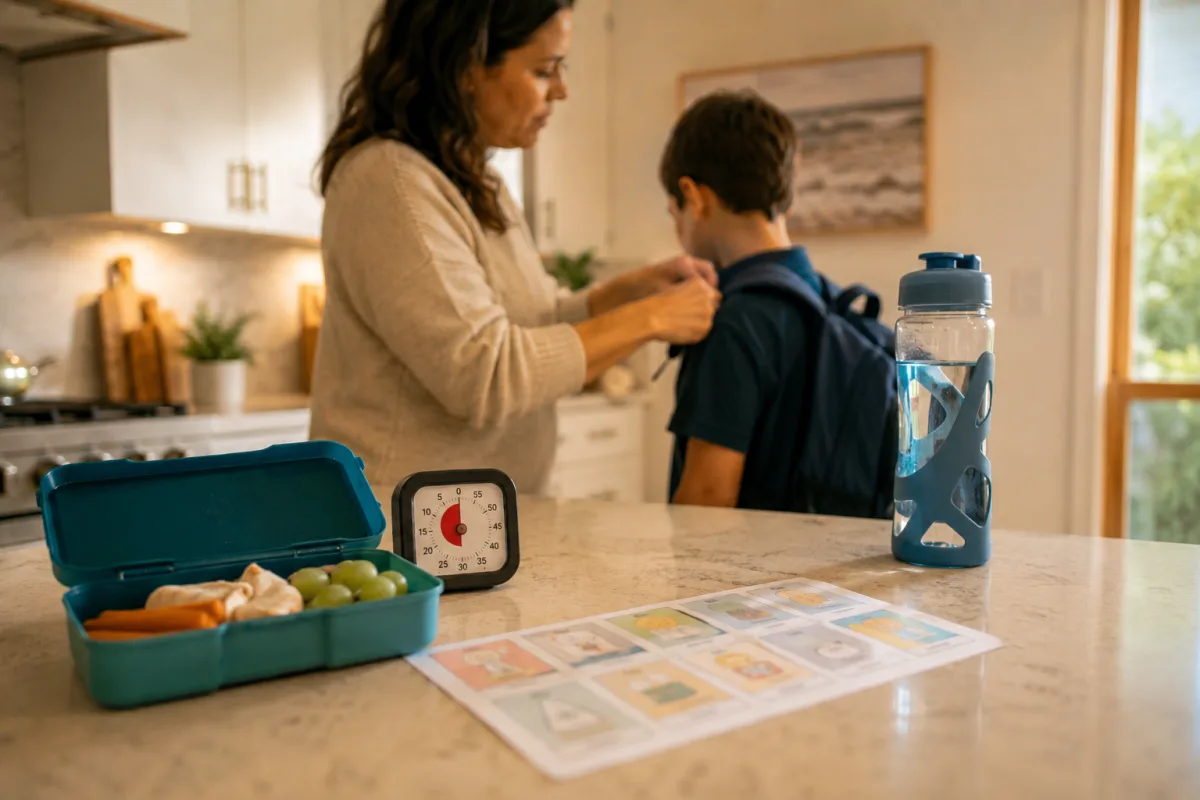
Most tantrums cluster in patterns: before meals, during transitions, after screen time, in noisy stores, or when a sibling gets attention. Prevention is not spoiling; it is adjusting the day to a young nervous system. Transitions in particular need warning. Give a short heads-up ("Two more minutes, then bath") with a timer, a picture card, or the same phrase each time, and keep it brief, since a twenty-minute explanation just gives a toddler more room to protest.
Screen endings deserve special care because the content is designed to hold attention. Set the limit before the device goes on, use a timer the child can hear, and move straight into a predictable next activity such as snack, bath, or outside time. Sleep and food matter too: a toddler who skipped a nap or grazed on carbs all afternoon has less ability to cope with ordinary frustration. Predictable meals and wind-down routines will not erase tantrums, but they lower the number caused by an empty tank. For a week, jot down time, trigger, sleep, food, and how each tantrum ended, not to prove your child is bad but to find the patterns you can change.
When Tantrums Need Extra Help
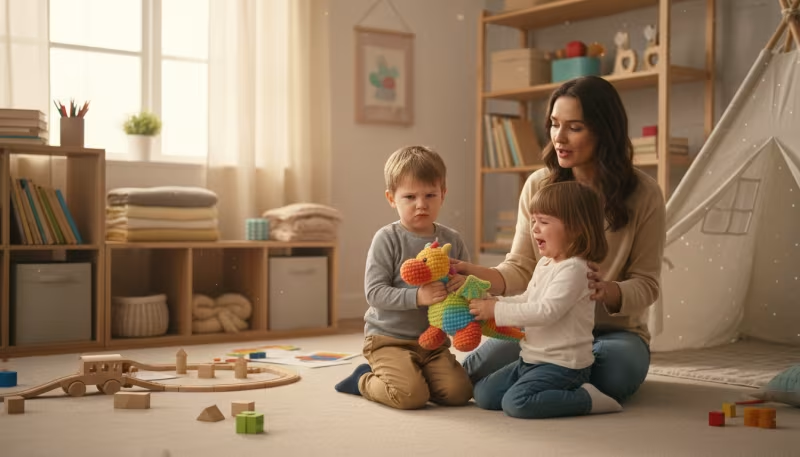
Hitting, biting, and throwing sit in their own category. A toddler who lashes out is usually overwhelmed rather than cruel, but the behavior still needs a firm limit. Move objects away, block the hit, and repeat the same short phrase: "I will not let you hurt me," keeping your face and voice steady. Later, when everyone is calm, practice a replacement — stomp feet, squeeze a pillow, say "mad," ask for help, or walk away. The limit and the alternative work as a pair; the limit alone teaches only what not to do.
Consistency across caregivers matters just as much as any single technique. Parents, grandparents, babysitters, and daycare staff do not need identical personalities, but they do need similar boundaries. If one adult hands over candy after screaming and another holds firm, the child simply learns to keep testing until someone folds. Write the plan down in one line everyone can follow: safety first, fewer words, no hitting, no giving in to the original demand, and comfort once the storm passes.
Ask for help if tantrums are extreme, last far beyond what seems typical, cause serious injury, happen many times a day, or come paired with speech delay, sleep problems, sensory distress, or loss of skills. Also reach out if your own anger starts to feel unsafe. Development varies, and some children need more support with language, sensory processing, sleep, or behavior. If your child was premature or had early developmental concerns, background on low birth weight and preterm infants can add context, though tantrums still need age-appropriate guidance.
Take care of the adult, too. Tantrums can leave parents embarrassed, angry, or defeated. If you yell, repair it afterward: "I shouted. I am sorry. I am working on staying calm." Repair teaches far more than pretending you never struggle. Practice calm skills outside the storm, during play rather than peak screaming, so smelling the flower, blowing the candle, or squeezing hands is already familiar when stress hits.
Frequently Asked Questions
Are toddler tantrums normal?
Yes, they are common, especially while language and self-control are still developing.
Should I ignore every tantrum?
No. Keep your child safe, stay nearby, and avoid rewarding the demand that triggered it.
What should I do if my toddler hits?
Block calmly, keep everyone safe, and say clearly that hitting is not allowed.
How do I handle public tantrums?
Focus on safety and your child rather than the audience, use fewer words, and have an exit plan for hard places.
When should I call the pediatrician?
Call if tantrums are severe, frequent, injurious, unusually long, or linked with developmental concerns.
Surviving the toddler years is less about ending tantrums and more about staying calm enough, protecting safety, holding a few reasonable boundaries, offering small choices, heading off predictable triggers, and reconnecting once the storm passes. The goal was never a tantrum-free child. It is a child slowly learning how to carry big feelings.

Linda Fehrman
Edits general wellness and relationship explainers. Health material is educational, avoids diagnosis and links to health-authority guidance.



Leave a reply
Replying to