
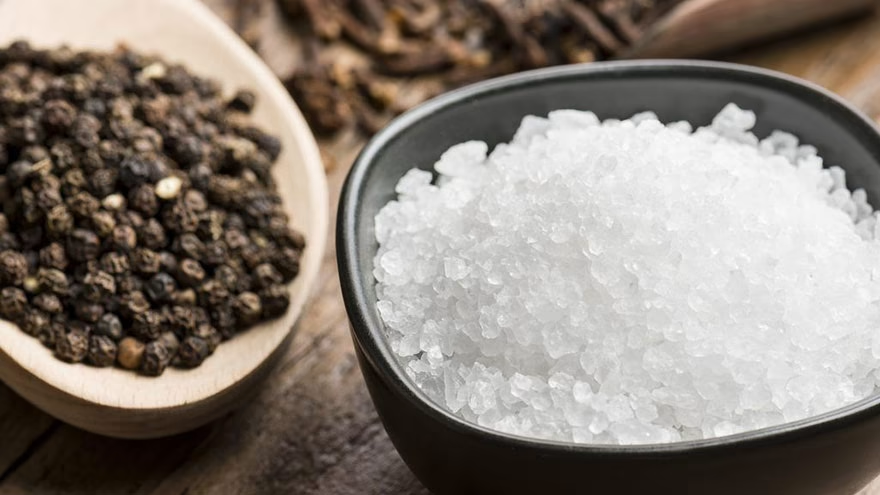
Types of pepper are confusing because the kitchen uses one word for several different things. Black, white, and green peppercorns come from Piper nigrum. Pink peppercorns usually do not. Sichuan pepper is not true pepper either, but cooks group it with pepper because it brings aroma, bite, and a mouth-tingling effect. The right choice depends on when you add it, how finely it is ground, and what flavor you want left after the heat fades.
Ground black pepper is useful, but it is only one tool. Whole peppercorns give fresher aroma. White pepper hides in pale sauces and brings a sharper, fermented note. Green peppercorns taste brighter. Cracked pepper gives texture. Pepper used early tastes different from pepper added at the table.
Where Does Black Pepper Come From?
The McCormick Science Institute identifies black pepper as Piper nigrum and notes that peppercorns are widely traded and used around the world. Black peppercorns are harvested and dried in a way that keeps the outer fruit layer, which gives them more aroma than a peeled seed alone.
Use black pepper when you want heat, woodiness, and a familiar savory edge. It belongs in eggs, roasted vegetables, steak, soups, vinaigrettes, pasta, potatoes, beans, and almost any sauce that can handle a little bite.
In a sauce-heavy dinner, pepper often does the same balancing work it does in stir fry sauces: it does not need to dominate, but it keeps sweetness and salt from tasting flat.
When Should You Use Whole Peppercorns?
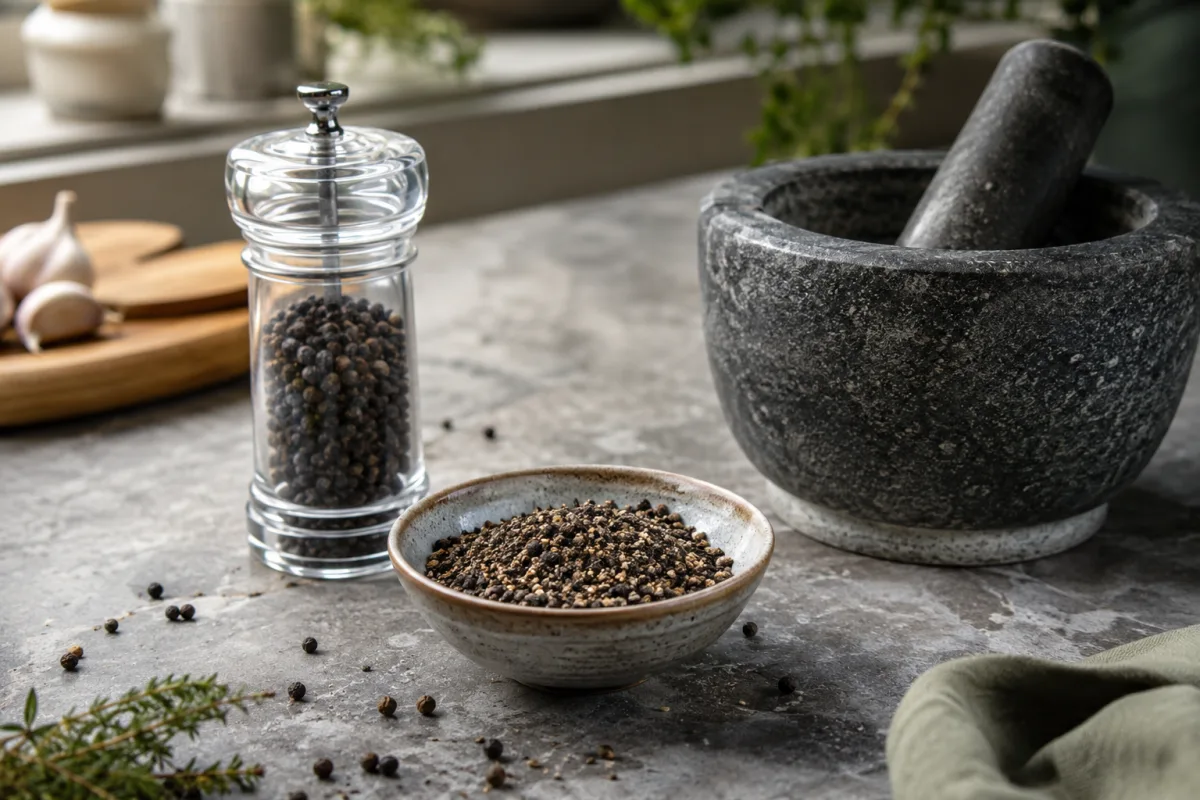
Use whole peppercorns when aroma matters. Grind them right before serving, crack them for steak or roasted vegetables, or simmer them whole in stocks, pickles, brines, and braises. Whole pepper keeps volatile aroma longer because less surface area is exposed to air.
McCormick's spice storage guide lists whole spices such as peppercorns as lasting longer than many ground spices. That does not mean pepper stays equally fragrant forever; it means whole pepper gives you a wider window before the aroma fades.
A pepper mill with adjustable grind is useful. Fine pepper disappears into sauces. Coarse pepper makes a crust. Cracked pepper gives bursts of heat. Choose texture on purpose.
What Is White Pepper For?
White pepper comes from the same plant as black pepper, but the outer layer is removed from ripe berries. The flavor is sharper, earthier, and sometimes faintly fermented. It is common in light-colored sauces, mashed potatoes, soups, and many Chinese and Southeast Asian dishes.
Use white pepper when black flecks would look wrong or when its particular flavor belongs in the dish. A small amount can sharpen cream sauces and broths. Too much can taste barnyard or dusty, especially if the pepper is old.
White pepper is not invisible black pepper. If a recipe relies on black pepper's floral aroma, white pepper will not copy it. If a recipe relies on pale color and background heat, white pepper makes sense.
Buy white pepper in small amounts unless you use it often. Its aroma can turn stale fast in a warm cabinet, and old white pepper is the reason some people think they dislike it. Fresh white pepper should be assertive, not musty.
How Do Green Peppercorns Taste?
Green peppercorns are harvested before full ripeness and are often sold brined, freeze-dried, or dried. They taste fresher, fruitier, and less heavy than black pepper. Brined green peppercorns are soft enough to crush into pan sauces.
Use green peppercorns with cream sauces, steak, pork, duck, mushrooms, and mild fish. They are especially good when the dish already has fat and needs a bright pepper note instead of dry heat.
Brined green peppercorns should be rinsed or tasted before use because the brine can push a sauce too salty. Dried green peppercorns need more time to soften. Treat the two forms as related ingredients, not exact twins.
For richer meats, the same restraint used in cooking goose applies: let pepper cut through fat, but do not bury the main ingredient under spice.
Are Pink And Sichuan Pepper Really Pepper?
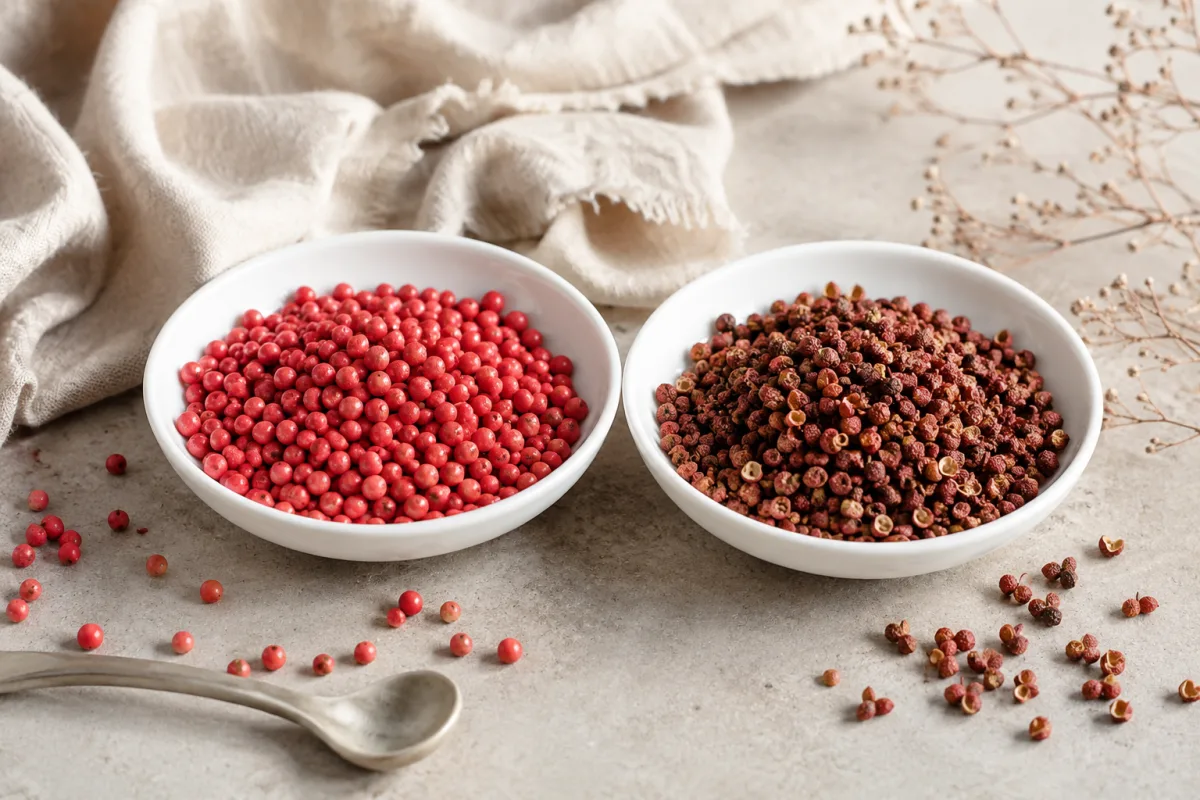
Pink peppercorns are usually berries from a different plant, often in the cashew family. They are sweet, fruity, and colorful rather than deeply hot. People with severe tree nut or cashew-family sensitivities should be cautious and check labels.
Sichuan pepper comes from Zanthoxylum, not Piper nigrum. It is prized for citrusy aroma and a tingling, numbing sensation. Toast it lightly, grind it fresh, and use it with chili, salt, sesame, noodles, dumplings, or braised dishes. Old Sichuan pepper tastes dusty and loses the tingle.
If you make your own blends, a small amount can change the profile quickly. Use Sichuan pepper more like a focused accent than a table grinder. It belongs near chili oil, noodles, dumplings, and rich meats, not sprinkled automatically over every plate.
Ground, Cracked, Or Coarse?
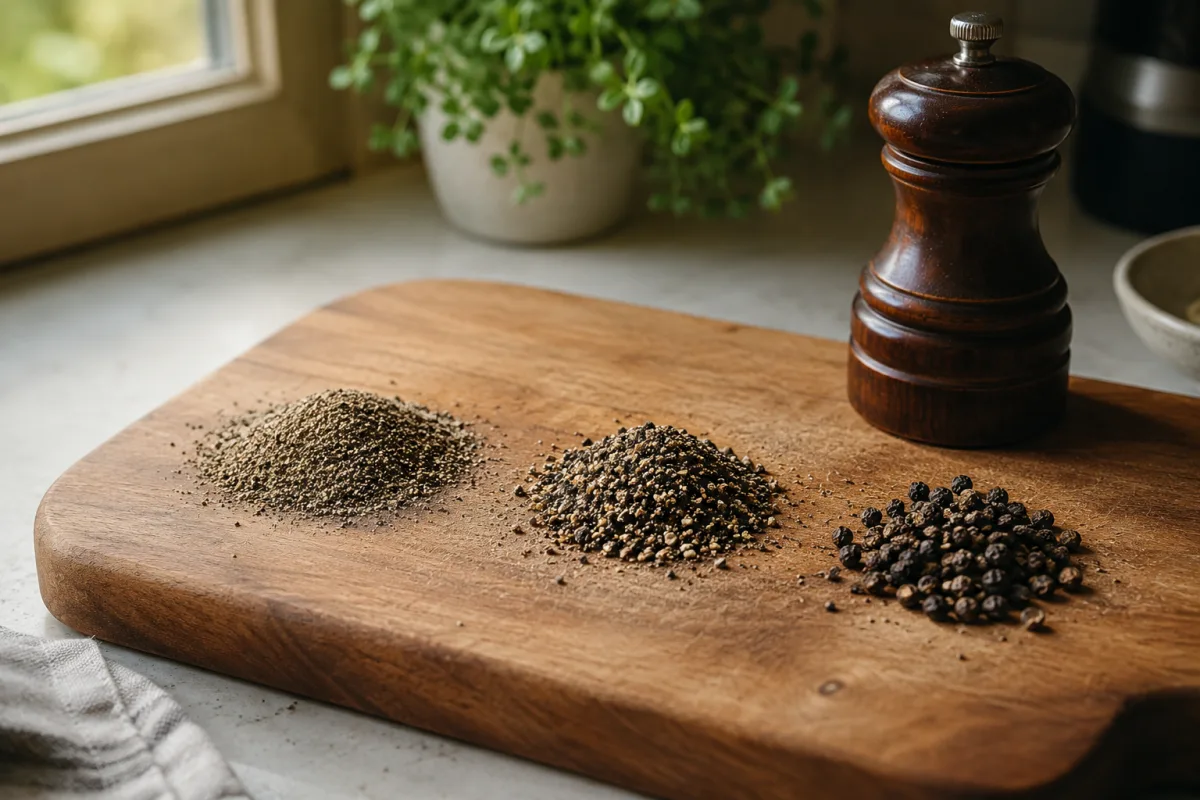
Fine ground pepper disperses evenly and is useful in sauces, dressings, eggs, and batters. Coarse ground pepper gives texture and stronger hits of flavor. Cracked pepper is best when you want pepper to act like a crust or visible seasoning.
Timing changes flavor. Pepper added early to a soup becomes rounder and less sharp. Pepper added at the end smells more alive. Pepper cooked hard in a dry pan can turn bitter. Add some early for background and some late for aroma if the dish can handle both.
With greens, late pepper often works better. After reading a guide to cooking greens, use pepper after bitterness and acidity are balanced, not before you know what the greens need.
For fried or roasted food, coarse pepper has a place but needs timing. Pepper on raw proteins can scorch before the center is done; pepper added after cooking tastes sharper and cleaner. If you are using a method like buying and cooking frog legs, season the base and finish carefully rather than burning a heavy pepper crust.
How Should Pepper Be Stored?
Store pepper away from heat, light, steam, and open air. Do not keep the main jar above the stove. Steam from cooking gets into the container and dulls the spice. Buy whole peppercorns if you use pepper often; buy smaller amounts of ground pepper if convenience matters more.
The McCormick Science Institute black pepper page notes that pepper has low moisture and can be stored for years, especially whole. In cooking terms, "safe" and "lively" are different. Old pepper may not hurt you, but it may taste like dust.
Smell the jar. Fresh pepper smells warm and sharp. If it smells faint, stale, or cardboard-like, use more only as a temporary fix and replace it soon.
Do not buy giant containers unless your kitchen uses pepper daily. The price per ounce may look good, but stale spice is false economy. A smaller jar replaced twice a year usually gives better flavor than a warehouse tub that sits above the stove.
Use pepper differently in sweet-leaning foods. A tiny pinch can sharpen fruit, chocolate, or caramel, but visible black flecks may look odd in pale desserts. If you are making something smooth like fudge icing, taste first and add pepper only if the flavor has a reason to be there.
Label blends that contain pepper. A jar that looks like plain pepper but also contains garlic, salt, citrus peel, or chile can throw off a recipe fast. Plain pepper gives you more control in careful everyday cooking.
Frequently Asked Questions
Are black, white, and green peppercorns the same plant?
Yes. They come from Piper nigrum, but harvest timing and processing create different color, aroma, and flavor.
Is pink peppercorn true pepper?
Usually no. Pink peppercorns are generally from another plant and taste fruitier and sweeter than black pepper.
Why grind pepper fresh?
Grinding exposes aroma compounds to air. Fresh grinding gives stronger smell and flavor than old pre-ground pepper.
Can I substitute white pepper for black pepper?
In small amounts, sometimes. The flavor is different, so avoid the swap in pepper-forward dishes unless you want that sharper white pepper note.
When should pepper be added during cooking?
Add early for background flavor and late for aroma. Avoid burning pepper in a dry, very hot pan because it can turn bitter.
Better pepper use is mostly timing and texture. Keep whole peppercorns for aroma, use ground pepper where it needs to vanish, and treat pink and Sichuan pepper as their own ingredients rather than colorful filler.

Timothy Davidson
Edits step-by-step general-interest guides for clarity, realistic limits and source verification.



Leave a reply
Replying to