
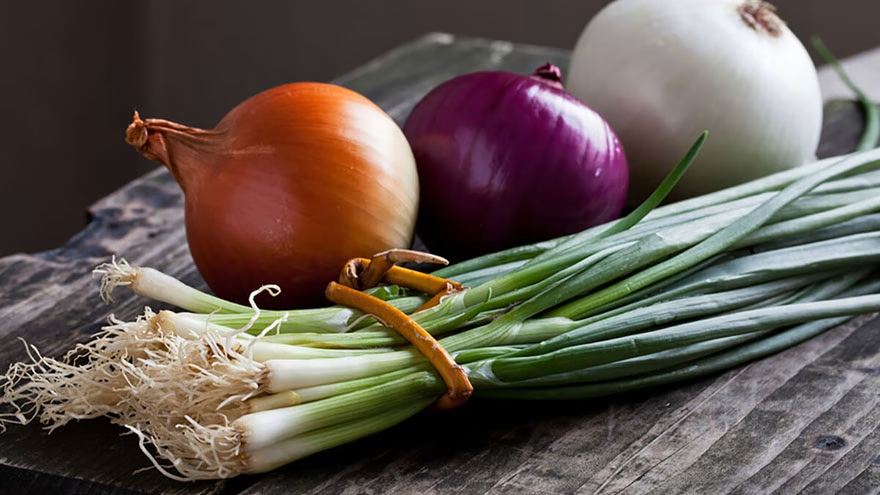
Onions do not all behave the same in a pan. Some collapse into sweetness, some stay sharp, some look better raw than cooked, and some are better treated as herbs than vegetables. Learning the main types of onions helps you choose by job instead of grabbing the nearest bulb. A soup onion, taco onion, pickle onion, and finishing onion can all be different, even when the recipe only says "onion."
How do onion color, season, and storage affect flavor?
USDA SNAP-Ed notes that onions can be eaten raw or cooked and added to salads, sauces, soups, and stews. That range is why onion choice matters. A long-cooked stew can handle a stronger onion, while a raw salad needs something cleaner and less harsh.
The USDA SNAP-Ed onion guide also notes that onions are in season year-round and have papery layers that should be removed before preparing. Storage onions are built for longer keeping; fresh onions and scallions are more perishable.
University of Minnesota Extension says whole onions should be dry, have papery skin and shriveled roots, and be stored in a cool, dark, well-ventilated place. Its onion storage guidance says cut onions should be refrigerated in a sealed container and used within 2 to 3 days.
Freshness changes the choice. A dry yellow onion with tight skin is good for a long simmer, while a limp scallion or wet spring onion should be used quickly in eggs, soup, or a sauce. The best onion for a recipe is partly about flavor and partly about what needs to be cooked first.
Which onion should you use for everyday cooking?
Everyday cooking usually starts with yellow onions because they have enough strength to season soups, stews, roasts, sauces, and skillet dinners. White onions are cleaner and sharper. Red onions bring color and bite. Sweet onions are mild and juicy. Shallots sit between onion and garlic.
Illinois Extension says onions may be eaten raw, broiled, boiled, baked, steamed, fried, French fried, or pickled, and are commonly used in soups, stews, stir-fries, and with vegetables and meats. The Illinois Extension onion page is a useful reminder that cooking method changes the onion as much as variety.
Heat softens sharpness. A raw white onion can taste aggressive on its own, then become sweet and quiet after time in a pan. That is why a substitution that works in soup may taste wrong in salsa.
If you are making a fast sauce, Livecub's stir-fry sauce guide pairs well with white onion, scallion, shallot, or spring onion because those alliums can add sharpness without long simmering.
Which 16 types of onions are worth knowing?
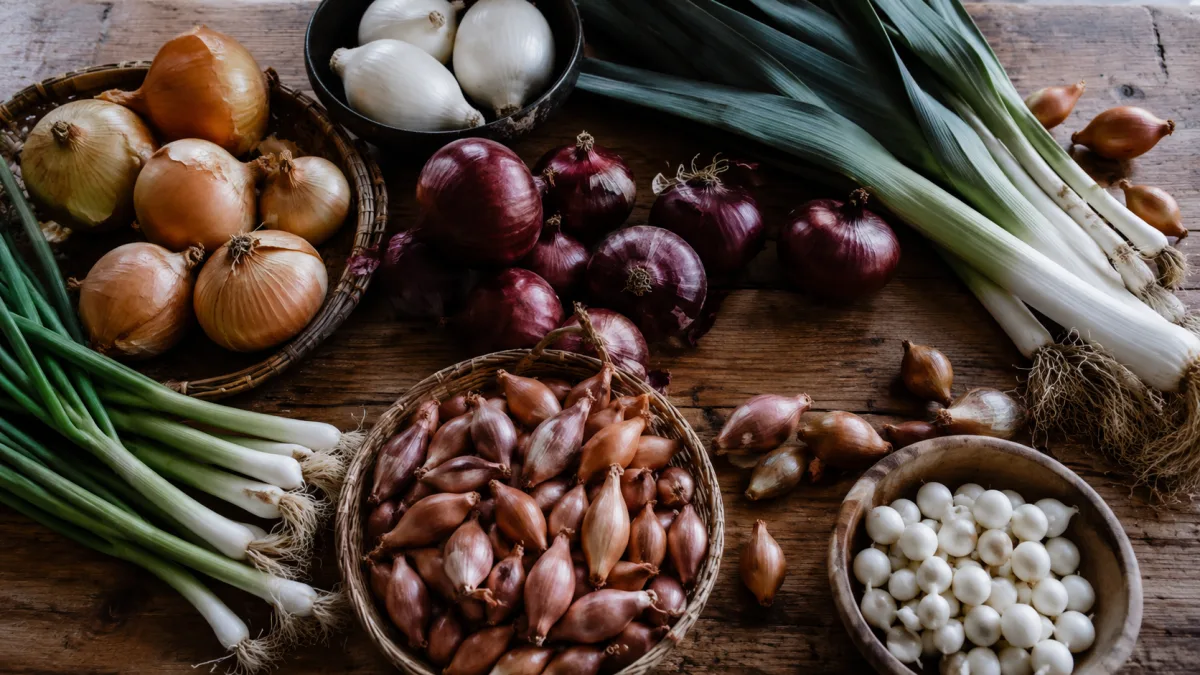
Yellow onions
Yellow onions are the default for long cooking. They start sharp, then turn sweet and savory as they brown. Use them for soups, stews, pot roasts, caramelized onions, gravies, and baked dishes.
White onions
White onions taste cleaner and sharper than yellow onions. They are common in salsas, tacos, relishes, and raw toppings. Rinse chopped white onion briefly if you want less bite without losing crunch.
Red onions
Red onions bring color, crunch, and a peppery edge. Use them raw in salads, sandwiches, ceviche-style dishes, and quick pickles. Cooked red onion can turn dull, so save it for places where color matters less.
Sweet onions
Sweet onions are juicy and mild, with less harshness when raw. They work well in salads, onion rings, grilled slices, and sandwiches. Because they contain more moisture, they usually do not store as long as dry storage onions.
Vidalia onions
Vidalia is a famous sweet onion from Georgia. Treat it gently: raw, grilled, lightly sauteed, or baked whole. It is not the best choice when you need strong onion backbone in a stew.
Spanish onions
Spanish onions are large and useful when you need volume. They can be yellow or white and are common in food-service cooking. Use them for soups, fajitas, roasts, and big-batch sauces.
Pearl onions
Pearl onions are tiny bulbs used whole. They are good in stews, glazed side dishes, pickles, and holiday vegetable plates. Blanching helps loosen the skins before peeling.
Boiling onions
Boiling onions are small, usually larger than pearl onions but still meant to stay whole. Use them in braises, stews, and roasted vegetable mixes where whole onion pieces look intentional.
Cipollini onions
Cipollini onions are small, flat, and sweet when cooked. Roast or glaze them so their sugars concentrate. They are excellent beside meats, mushrooms, or roasted root vegetables.
Shallots
Shallots are more delicate and layered than common onions. Use them in vinaigrettes, pan sauces, compound butter, omelets, and quick sauteed dishes. They burn faster than yellow onions, so keep the heat moderate.
Scallions
Scallions, also called green onions, are used fresh or lightly cooked. The white part is sharper; the green tops are more herb-like. Add them to noodles, eggs, soups, rice bowls, and dips.
Spring onions
Spring onions are young onions with small bulbs and green tops. They are stronger than scallions but fresher than storage onions. Grill them whole, slice them into salads, or use them in quick sautes.
Leeks
Leeks are milder and more fibrous, so they need washing and cooking. Use the white and light green parts in soups, gratins, braises, and omelets. Dirt hides between layers, so split and rinse thoroughly.
Ramps
Ramps are wild spring alliums with a short season and strong flavor. Use them sparingly in eggs, potatoes, pasta, compound butter, or pickles. Buy from responsible sources because overharvesting can damage wild stands.
Chives
Chives are not bulb onions, but they belong in the same cooking family. Snip them over potatoes, eggs, fish, dips, and salads. Add them at the end because heat dulls their fresh flavor.
Egyptian walking onions
Egyptian walking onions are perennial onions that form small top sets. Gardeners value them because they return year after year. In the kitchen, use the greens like scallions and the small bulbs like strong pearl onions.
How do you store onions so they last?
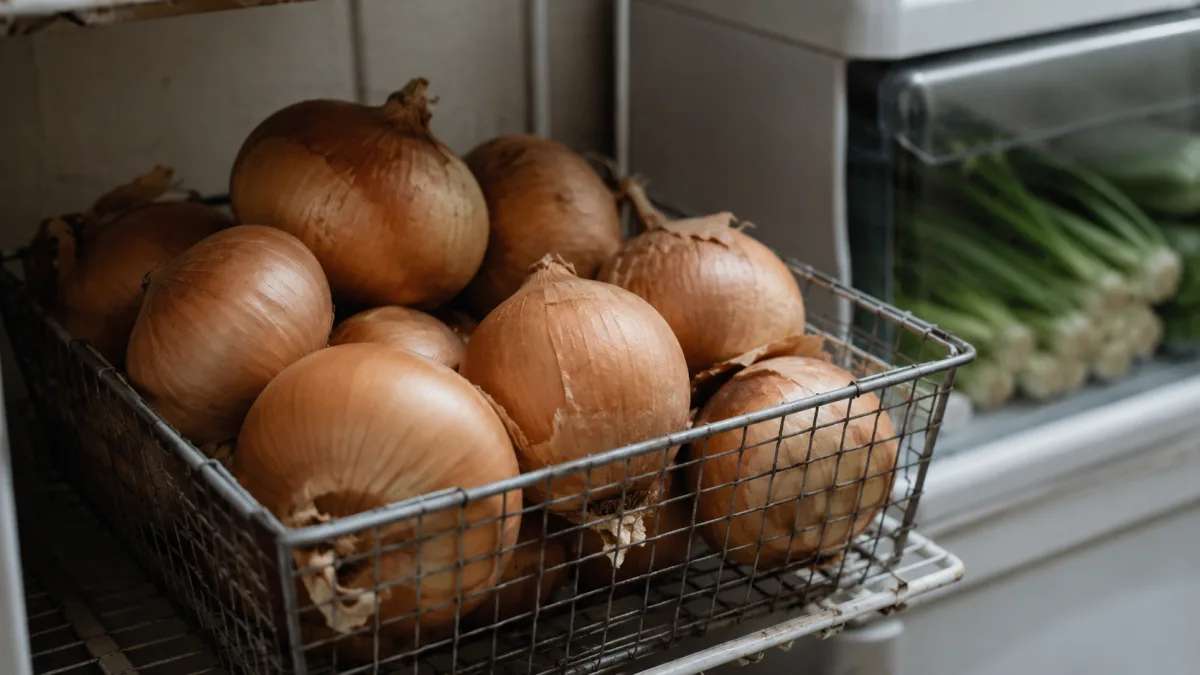
Store whole dry onions in a cool, dark, well-ventilated place. Do not seal them in plastic. Airflow matters because trapped moisture encourages spoilage. Keep cut onions in the refrigerator in a sealed container and use them quickly.
Do not store every onion the same way. Scallions, leeks, and spring onions belong in the refrigerator. Dry yellow, red, and white onions prefer cool pantry storage. Sweet onions may spoil sooner because they are juicier.
If you have too many onions, use them in sauces, soups, or cooked greens. Livecub's cooking greens guide is a good place to use yellow onion, garlic, scallion, or shallot as a flavor base.
How do you substitute one onion for another?
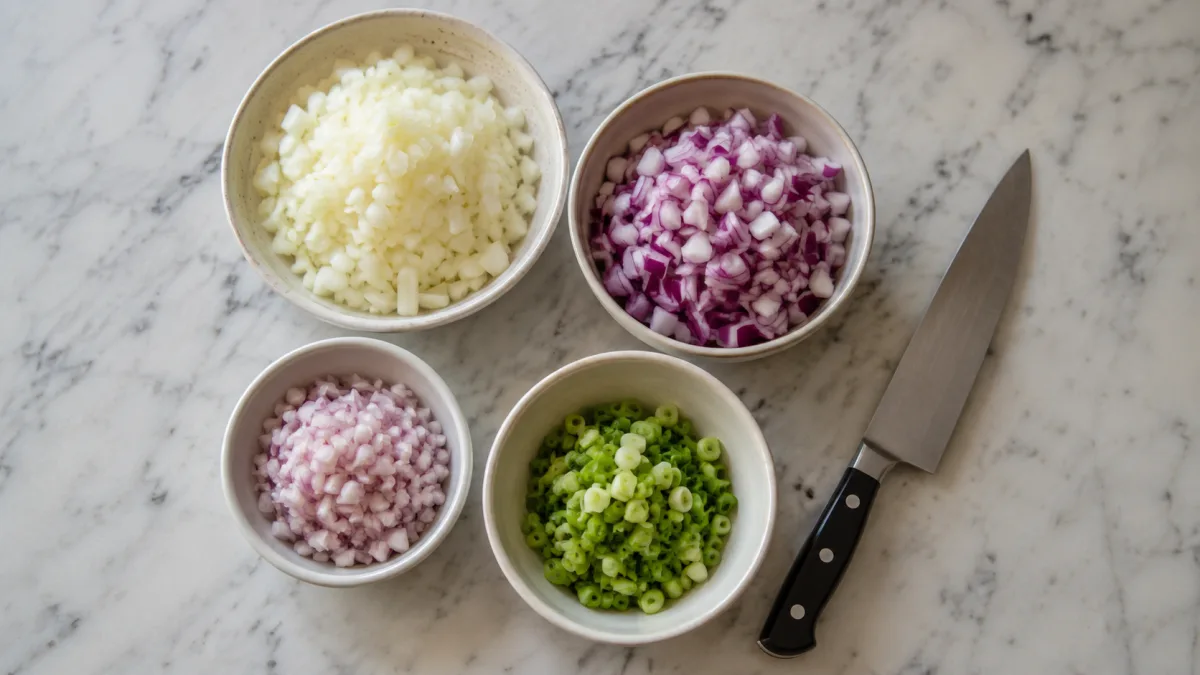
Substitute by strength and moisture. Yellow can stand in for white in cooked dishes. Red can stand in for white when color is acceptable. Sweet onions can replace yellow in raw dishes but may taste too mild in long-cooked stews. Shallots can replace a small amount of onion in sauces.
Raw use is less forgiving. If a recipe depends on crisp bite, choose red, white, sweet, scallion, or spring onion. If it depends on sweetness after cooking, choose yellow, sweet, cipollini, leek, or shallot.
Use less onion when moving from sweet to white, and use more when moving from yellow to shallot. If the dish tastes flat after the swap, add salt and acid before adding more onion. Lemon, vinegar, tomato, or a small splash of pickle brine can wake up an onion-heavy dish without making it harsher.
For freezer planning, onions can be chopped and frozen for cooked uses, but they soften. If you are already freezing produce, Livecub's fresh vegetable freezing guide can help you think about texture after thawing.
Frequently Asked Questions
What onion is best for soup?
Yellow onion is the safest default for soup because it has enough strength to season the broth and enough sugar to sweeten during cooking.
What onion is best raw?
Red, white, sweet, scallion, and spring onion all work raw. Choose red for color, white for sharpness, sweet for mild crunch, and scallion for a fresh finish.
Can I use shallots instead of onions?
Yes, especially in sauces, vinaigrettes, eggs, and small-batch cooking. Shallots are usually milder and more delicate, so use more if replacing a large onion.
Why do onions make me cry?
Cutting breaks onion cells and releases irritating compounds. USDA SNAP-Ed suggests chilling onions briefly before cutting to reduce tears.
Pick onions by the job: yellow for depth, white for snap, red for color, sweet for raw crunch, shallot for finesse, and scallion or chive for a fresh finish.

Cashie Evans
Covers parenting and practical household topics with clear steps, safety notes and links to current guidance.




Leave a reply
Replying to