
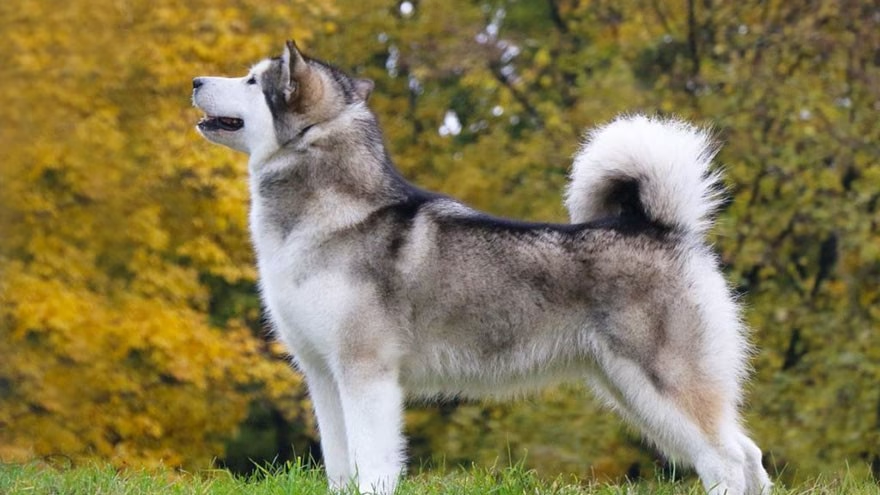
An Alaskan Malamute can look unstoppable: broad chest, heavy coat, powerful legs, and a face built for cold weather. Health is more complicated than appearance. A useful Alaskan Malamute health guide looks at joints, eyes, inherited nerve disease, thyroid, weight, heat, grooming, and the daily habits that keep a working dog comfortable.
This guide is educational and does not replace veterinary care. If a Malamute is limping, collapsing, vomiting, bloating, struggling to breathe, overheating, losing vision, having seizures, or showing sudden weakness, contact a veterinarian or emergency clinic quickly. Breed knowledge helps owners ask better questions, but the dog in front of you needs a clinician.
What Health Problems Are Common In Alaskan Malamutes?
The Alaskan Malamute Club of America health statement lists required breeder testing for hips, eyes, and polyneuropathy, with recommended testing for several other concerns. That tells buyers where to start. Hip structure, eye health, and inherited neurologic disease are not small footnotes in this breed.
Owners should also ask about hypothyroidism, coat and skin health, weight, heat tolerance, bloat risk, and relatives' longevity. A strong breed can still have inherited risks. If you are comparing large dogs, Livecub's top biggest dog breeds guide helps put Malamute size into context.
Why Do Hips And Joints Matter?
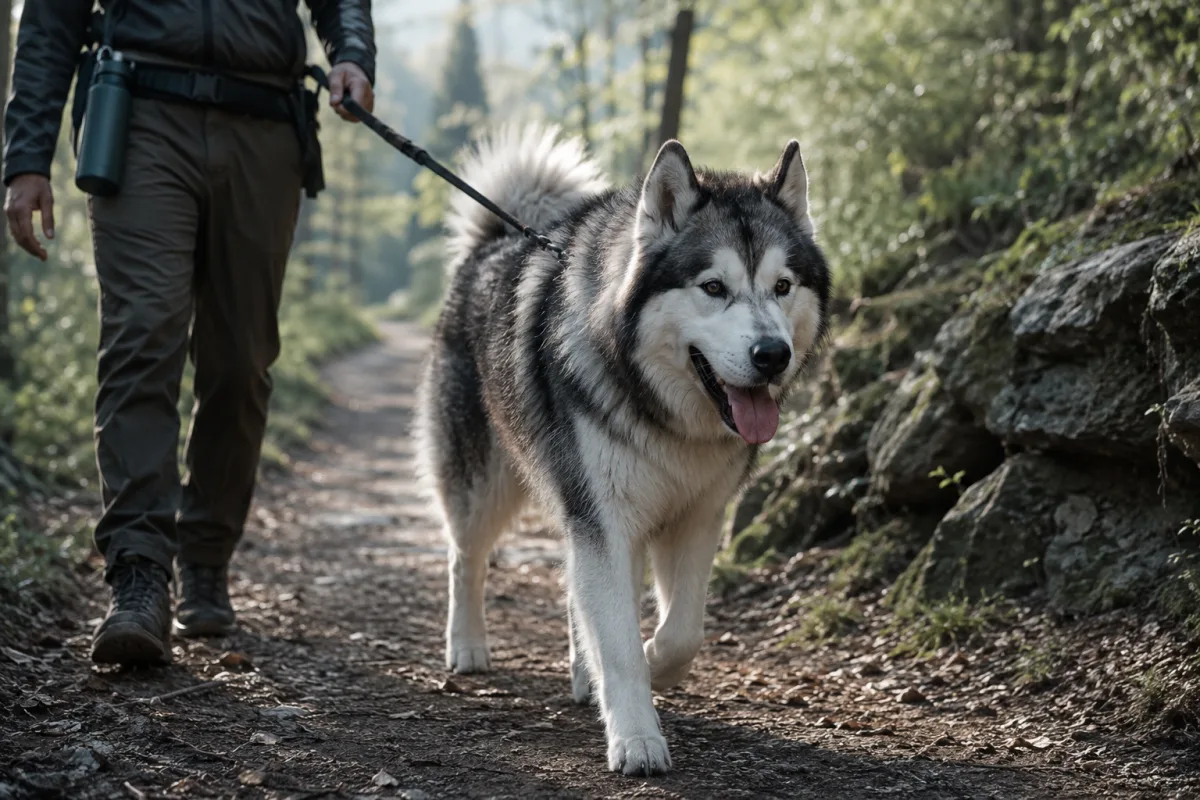
Malamutes are large, powerful dogs, so joint comfort affects the whole life of the dog. Hip dysplasia can lead to pain, stiffness, reduced exercise tolerance, and arthritis. A responsible breeder should be able to discuss hip results, relatives, and how puppies are raised to protect developing joints.
Keep puppies lean, use large-breed growth guidance from a veterinarian, avoid repetitive forced jumping, and build exercise gradually. Adults need movement, but not every activity is joint-friendly. Hiking in cool weather may suit a fit adult; hard running in heat or on slick floors may not. If you like other active breeds, Livecub's German Shorthaired Pointer questions show how exercise needs change with breed purpose.
What Is Alaskan Malamute Polyneuropathy?
Polyneuropathy affects nerves and can cause weakness, abnormal gait, exercise intolerance, and coordination problems. The AMCA health statement treats polyneuropathy DNA testing as required for breeding guidance. Buyers should ask whether both parents were tested and how the breeder uses results when planning litters.
Do not dismiss weakness as laziness or stubbornness. A Malamute that bunny-hops, drags feet, tires suddenly, or moves oddly needs veterinary evaluation. Video can help the vet see what happens at home. Early documentation is useful because movement problems can be subtle before they are obvious.
What Eye Issues Should Owners Ask About?
Eye screening matters because inherited eye conditions can affect comfort and function. The AMCA health statement includes eye screening for phenotype abnormalities. Ask breeders for eye exam records and ask your veterinarian what changes should be checked between routine visits.
Watch for squinting, cloudiness, bumping into objects, light sensitivity, discharge, redness, or a sudden change in confidence outdoors. Eyes can worsen quickly, so waiting weeks to see if it improves is not a good plan. Eye care also depends on daily observation, especially in a thick-coated dog whose face may hide subtle changes.
How Do Weight And Diet Affect Health?
Extra weight makes joint disease, heat stress, and exercise intolerance worse. The coat can hide weight gain, so owners should use hands, not only eyes. You should be able to feel ribs with light pressure and see a waist from above when coat and body shape allow it.
Use measured meals, monitor treats, and adjust food as activity changes. Working, growing, neutered, senior, and recovering dogs do not all need the same calories. If a Malamute is gaining weight despite measured food, ask about thyroid testing or other medical factors. Weight is not only appearance; it changes how the dog moves and cools itself.
Why Is Heat Management So Serious?
VCA notes that the Malamute's heavy double coat needs regular care and that purebred dogs can have several congenital health concerns. The coat is part of the breed's cold-weather design. It does not make hot-weather exercise safe.
Walk during cool hours, provide shade and water, use air-conditioning when needed, and skip hard work in heat. Heavy panting, weakness, vomiting, confusion, collapse, or glassy eyes need urgent attention. Do not shave the coat as a simple summer fix. Clean undercoat removal, cooling, and schedule changes are safer than removing coat structure without guidance.
How Does Grooming Protect Health?
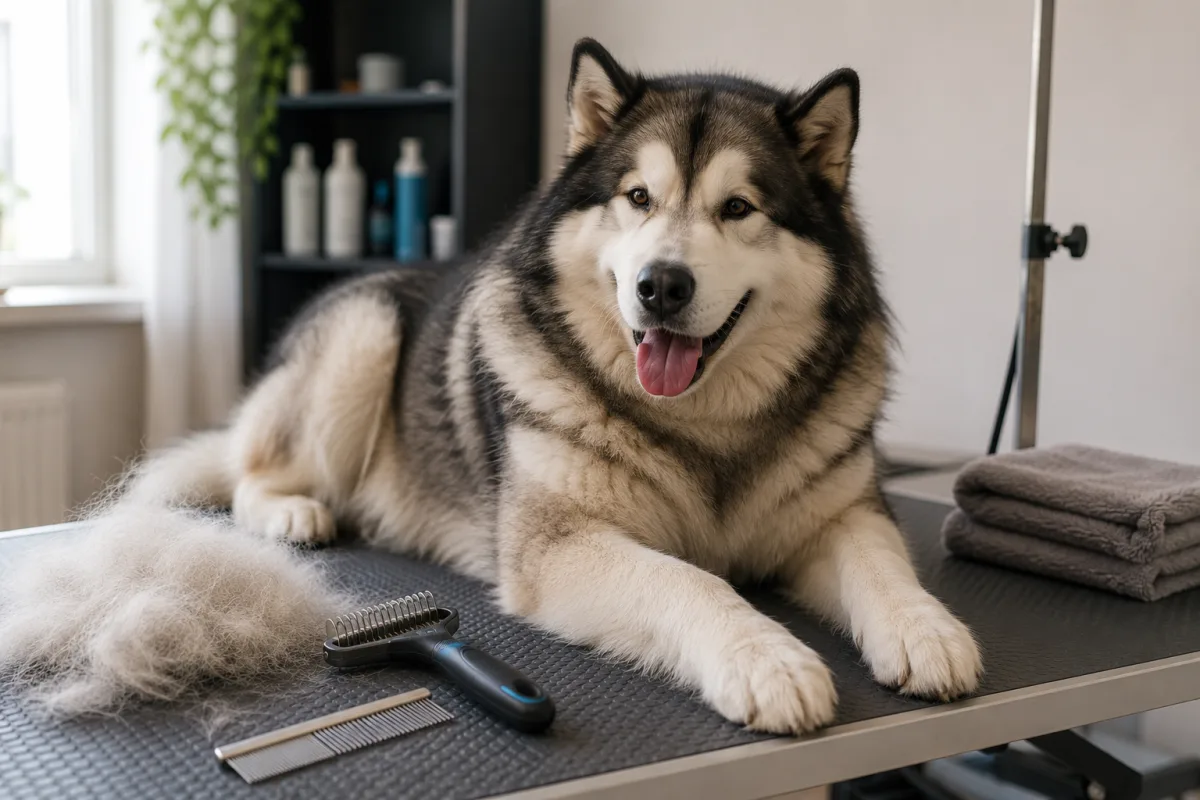
Grooming is health care for a Malamute. Loose undercoat traps heat, mats can pull skin, and coat can hide sores, ticks, weight gain, or hot spots. Brush to the skin, check behind ears and under collars, trim nails, and dry the coat fully after baths.
For grooming mechanics in another long-coated dog, Livecub's longhair Dachshund grooming guide is a useful reminder that a smooth top layer does not mean the coat is clear underneath. A Malamute's grooming job is bigger, but the principle is the same: reach the coat where problems start.
What Should Breeders And Owners Track?
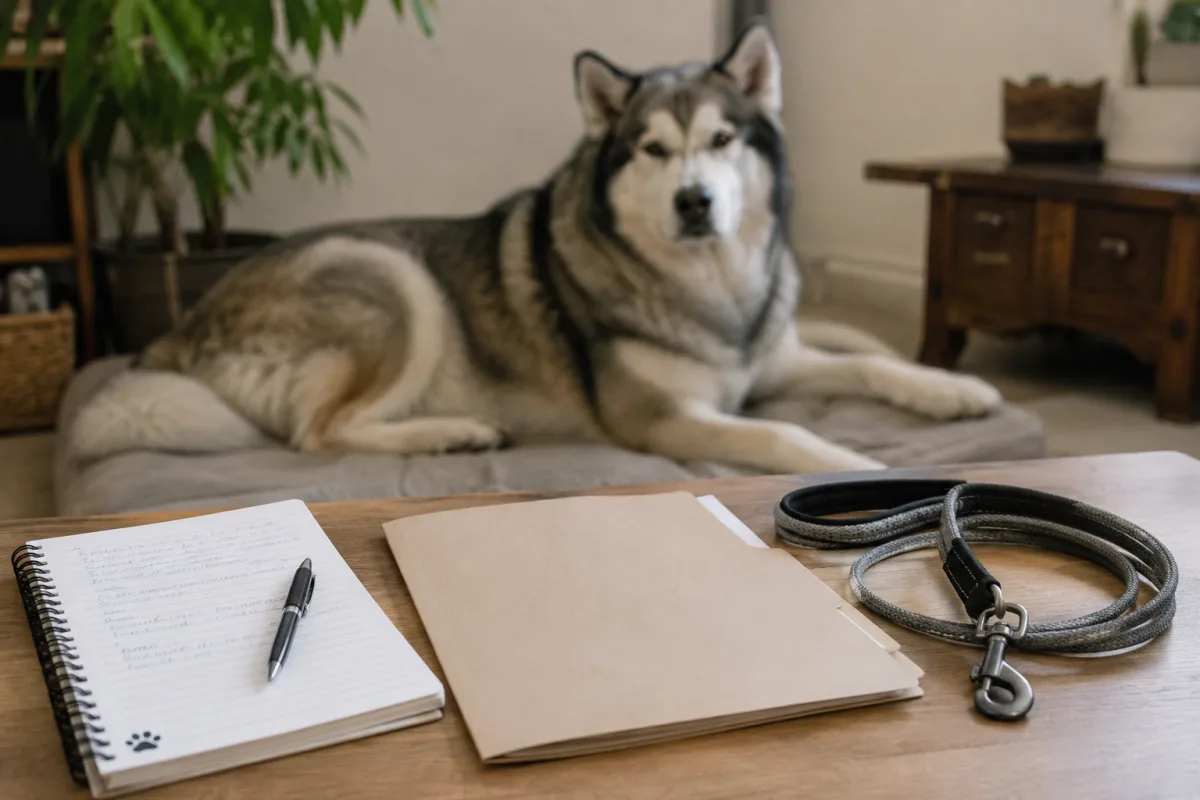
The OFA breed screening database lets buyers look for breed-specific screening programs and public results. Ask for registered names, not only call names. Ask what testing was done, when it was done, and what the results mean.
Owners should keep a health notebook: weight, diet, exercise tolerance, heat reactions, eye notes, limping, medications, and vet visits. Written trends help the veterinarian. They also help a sitter or family member notice when a powerful dog is quietly struggling.
What Should A Vet Visit Include?
For a Malamute, routine veterinary care should include more than vaccines. Ask the clinic to track body condition, joint range of motion, gait, dental health, skin, ears, eyes, heart, and thyroid signs. Bring the dog's food amount, supplement list, exercise schedule, and any videos of odd movement. Large dogs often hide discomfort until it affects stairs, rising, or turning.
Before anesthesia, ask whether the clinic wants current blood work, weight confirmation, and notes about heat sensitivity or breathing changes. A heavy-coated dog can become warm in stressful settings, so travel timing and recovery location matter. If the dog has ever shown weakness, collapse, or unusual gait, mention it before sedation, dental work, or surgery.
How Do You Notice Quiet Pain?
Malamutes may not complain loudly. Pain can look like slower rising, sitting crooked, refusing a favorite walk, licking a joint, sleeping away from the family, resisting brushing, or snapping when a sore area is touched. A dog that seems stubborn may be uncomfortable. Track what changed, when it started, and whether rest or medication helped.
Use simple home checks: watch the dog from the side and from behind, feel for heat or swelling, compare nail wear between feet, and note whether the dog avoids slick floors. Do not give human pain medicine unless a veterinarian tells you to. Many common human drugs can be dangerous for dogs.
How Should Owners Handle Aging?
Senior Malamutes often need smaller adjustments before they need major intervention. Add rugs for traction, use ramps when needed, keep nails short, raise water access if bending hurts, and split exercise into cooler, shorter sessions. A senior dog still needs movement, but the goal becomes comfort and muscle maintenance rather than proving toughness.
Ask the veterinarian which changes are aging and which may be treatable disease. Arthritis, dental pain, thyroid disease, eye changes, and skin infections can look like a dog simply slowing down. Old age should not become an excuse to ignore pain that can be managed.
Frequently Asked Questions
Are Alaskan Malamutes generally healthy?
Many are sturdy dogs, but the breed has known risks. Health testing, lean weight, grooming, and heat management matter.
What health tests should a Malamute breeder discuss?
At minimum, ask about hips, eyes, and polyneuropathy, plus any recommended tests used by the breeder's program.
Do Malamutes overheat easily?
They can struggle in heat because of their heavy coat and cold-weather build. Exercise should shift to cool hours.
How often should a Malamute be groomed?
Weekly brushing is a baseline for many dogs, with much more during seasonal coat blow.
Can joint problems be prevented?
Not always, but health-tested parents, lean weight, safe growth, and appropriate exercise can reduce risk and severity.
What Is The Best Health Habit?
Treat the Malamute as a working breed with a real body, not a winter mascot. Keep the dog lean, cool, brushed, screened, and watched. A healthy Malamute life is built from daily choices long before a problem becomes dramatic.

Timothy Davidson
Edits step-by-step general-interest guides for clarity, realistic limits and source verification.

Leave a reply
Replying to