
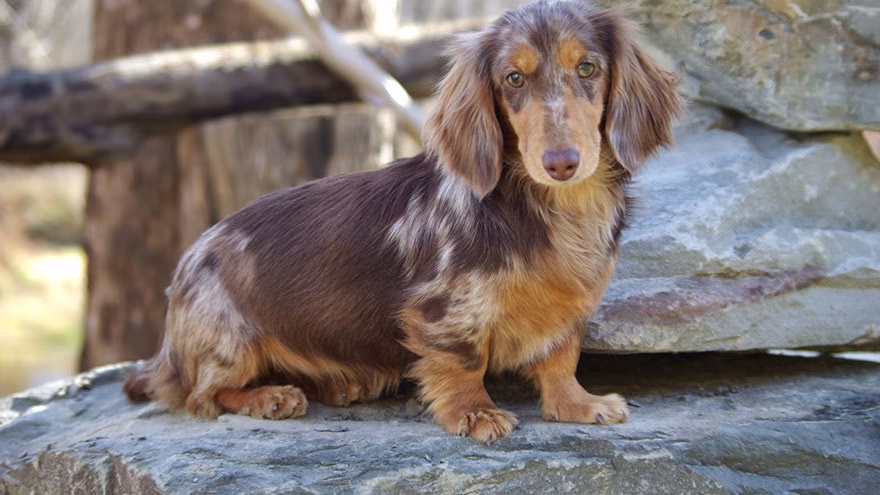
The longhaired dachshund carries one of the most striking coats in the dog world — a silky, slightly wavy mantle that grows long and feathered along the ears, chest, belly, and behind each leg. That coat is not low maintenance. Groomers who work with the breed regularly note that the feathering around the chest and belly mats faster than any other zone because the dog sits just inches off the ground, dragging those long hairs through grass and damp soil on every walk. Knowing how to groom a longhair dachshund properly means understanding which tools do what, why certain problems happen, and how to work around the breed's uniquely long, vulnerable spine.
How often should you brush a long-haired dachshund?
Three to four sessions per week is the minimum for most longhaired dachshunds; during spring and autumn shedding season, daily brushing is the only way to stay ahead of tangles. The coat sheds more than people expect — the silky texture grabs loose hair before it falls and holds it in place until a knot forms. Left alone for even four or five days, the feathering on the ears and thighs can mat down to the skin, and at that point a brush will only make things worse.
Each session takes roughly ten minutes. Start at the head and work toward the tail, then flip the dog and do the belly and chest last. The belly feathering is where mats form fastest, so give it extra time even when the rest of the coat looks clean. Brushing also spreads the coat's natural sebum from root to tip, which keeps the hair glossy and reduces breakage. Think of it as circulation for the coat — skip enough sessions and the whole system degrades.
What tools do you need to groom a longhaired dachshund at home?
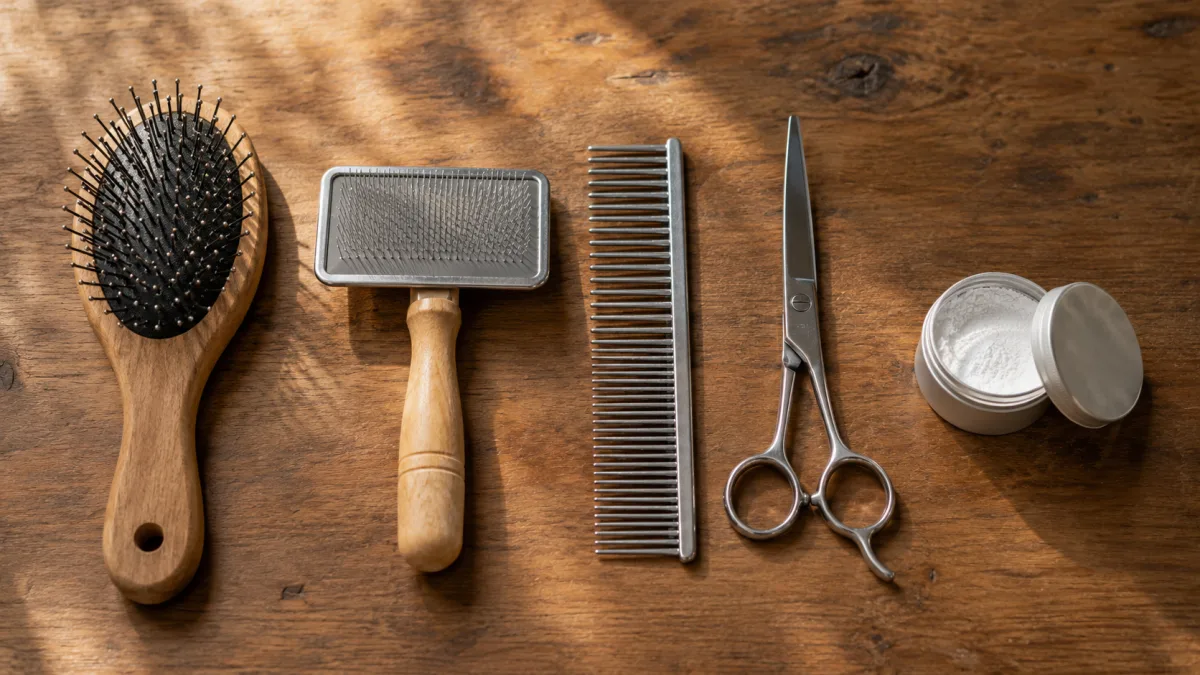
Three tools cover the full job. A pin brush — the kind with widely spaced, rounded metal pins on a rubber or cushion pad — is the everyday workhorse. It separates and smooths the long outer coat without stripping it, and the rounded tips slide through silky hair without scratching the skin. A slicker brush, with its fine angled wire bristles set close together, is better for catching shed undercoat and working through the lighter tangles that the pin brush leaves behind. Use the slicker first on problem zones, then finish with the pin brush to smooth everything flat.
The third tool is a stainless steel dematting comb — a wide-tooth metal comb, not a plastic one. Run it through the coat after both brushes. If the comb catches, the area needs more work with the slicker. If it passes straight through, you are done. The comb also lets you scan for fleas or skin irritation that the brushes can hide. Skip this step and you will miss the mats forming at the skin level beneath otherwise smooth-looking hair.
Optional but useful: a fine-tipped pair of straight grooming scissors for trimming paw hair and a thinning shear for feathering. Nail clippers — either the guillotine style or the scissor type — and styptic powder round out the kit.
How do you clean a dachshund's ears safely?
Dachshunds have large, pendulous ears that fold down and seal the ear canal almost completely. That flap traps heat and moisture, turning the canal into a warm, dark, humid environment — exactly the conditions bacteria and yeast need to colonize. The VCA Animal Hospitals describe otitis externa as one of the most common infections in dogs, and floppy-eared breeds sit at the top of the risk list. Add a thick fringe of hair around the canal opening, and you further block what little airflow remains.
The AKC recommends that groomers keep the hair in and around the opening of the ear canal thinned and trimmed, and your vet can confirm whether plucking a few hairs from inside the canal is appropriate for your dog. Not all dogs need ear plucking — in some cases removing hair can cause micro-irritation — so check before reaching for tweezers. What every longhaired dachshund does need is a weekly ear inspection: lift the flap, look for redness, dark discharge, or a yeasty smell, and wipe the visible canal with a vet-approved ear cleaning solution on a cotton ball or gauze. Do not use cotton swabs down the canal; they push debris deeper rather than removing it.
After every bath, dry the ears thoroughly before letting the flap fall back down. Residual moisture trapped overnight is enough to trigger an infection in a susceptible dog. If you notice your dachshund shaking its head repeatedly, scratching at one ear, or tilting its head to one side, those are signs of active infection — see your vet rather than attempting home treatment, since using the wrong product on an inflamed or ruptured eardrum can cause permanent damage, as noted by the American Kennel Club.
How do you trim a long-haired dachshund's nails without hitting the quick?
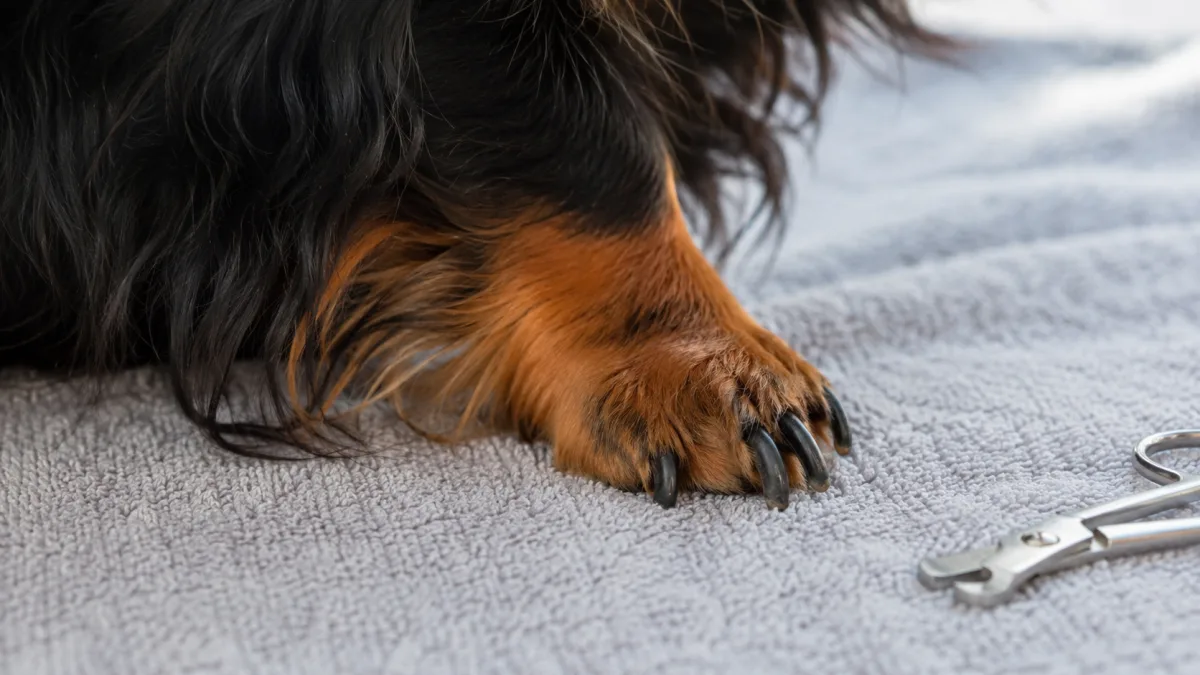
The quick is the soft vascular core running through each nail — a bundle of blood vessels and nerves that bleeds freely and hurts sharply if cut. On light-colored nails it shows as a pink shadow you can see from the side before you cut. Dark or black nails give you no such warning. The technique for dark nails is to trim in very small increments, 1 mm at a time, and watch the cut surface: while you are still in safe territory, the center of the cut nail looks white or chalky. As you approach the quick, the center shifts to a darker, slightly moist appearance — that is your signal to stop.
Always have styptic powder on the table before you start. If you do nick the quick, press a small pinch of the powder directly onto the nail tip and hold it there for five to ten seconds. The coagulant in styptic powder stops bleeding within seconds in most cases. Flour or cornstarch work as emergency substitutes, but neither is as fast or as reliable.
For dachshunds specifically, nail length matters beyond aesthetics. Overgrown nails change the angle at which the paw meets the ground, which shifts the gait and adds strain to the spine. Given that dachshunds are prone to back problems related to their long vertebral column, anything that distorts their posture during walking carries extra risk. Trim nails every three to four weeks.
How often should you bathe a long-haired dachshund?
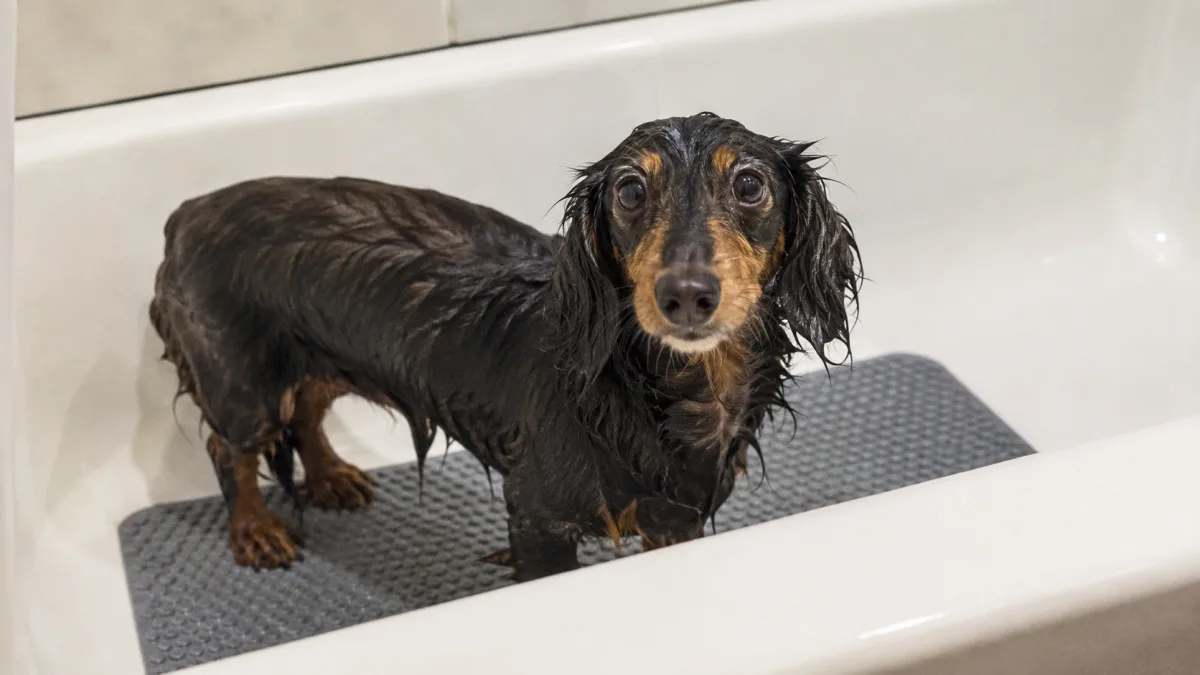
Every four to six weeks is the standard recommendation from most groomers and veterinarians. That frequency keeps the coat clean without disrupting the sebum layer — the thin film of natural oils produced by skin glands that coats each hair shaft, repels moisture, and prevents the skin from drying out. Bathing more than once a month strips this layer before it can regenerate, leaving the coat dull, the skin flaky, and the dog itchy.
Use a dog-specific, pH-balanced shampoo. Human shampoo, even mild varieties, is formulated for human skin pH (roughly 5.5) rather than canine skin pH (closer to 7.5), and that mismatch disrupts the skin barrier. Between baths, a damp microfiber cloth wiped along the belly and paws removes most of the daily grime without touching the coat's oil balance.
Water temperature matters. Lukewarm is correct — hot water can irritate sensitive skin and, in a dog already prone to back issues, prolonged heat can cause muscle soreness. Support the dachshund's spine during the bath by placing a non-slip mat under its paws so it is not twisting to maintain balance. Keep one hand under the belly if you are bathing in a tub. After rinsing, wrap the dog in a towel immediately and squeeze rather than rub — vigorous rubbing of a wet longhaired coat creates exactly the kind of friction that causes knots.
Do you need to trim the feathering on a longhaired dachshund?
The AKC breed standard for the longhaired dachshund describes feathering on the ears, forechest, belly, and behind the rear legs as a defining characteristic of the variety, so the goal is to maintain it — not remove it. That said, practical trimming in a few specific areas prevents ongoing problems.
Paw feathering is the most pressing. Hair that grows between the toes and over the top of the paw collects debris and moisture, and on a low-slung dog walking through wet grass it mats within days. Trim the hair level with the paw pad using straight scissors; this does not affect the appearance of the leg feathering, which starts above the paw. Belly feathering gets a light tidy with thinning shears to reduce the mat-prone ends without changing the silhouette. Ear feathering should be left alone cosmetically but kept tangle-free with daily brushing on the inner ear flap, where the hair is finest and mats fastest.
If you prefer a lower-maintenance trim overall, a professional groomer can cut a modified pet trim that shortens the feathering without eliminating it — something between show-dog length and a practical working clip. Most groomers suggest a session every eight to ten weeks for longhaired dachshunds.
How do you brush a dachshund's teeth?
Dachshunds are among the breeds with above-average susceptibility to periodontal disease. Their narrow jaws tend toward crowding, which creates pockets where plaque builds up faster than on a dog with more space between teeth. Plaque starts hardening into tartar within 24 hours, which is why daily brushing is the target frequency, though three to four times a week delivers meaningful protection if daily is not realistic.
Use a dog-specific enzymatic toothpaste — never human toothpaste, which contains fluoride and often xylitol, both toxic to dogs. Enzymatic formulas work by releasing compounds that break down plaque chemically even after brushing stops, which extends the cleaning effect. A finger brush or a small-headed angled toothbrush both work; the finger brush tends to feel less threatening to a dog being introduced to the routine for the first time.
Brush the outer surfaces of the back molars and the canine teeth most thoroughly — these are the surfaces where tartar accumulates fastest. The dog's tongue handles the inner surfaces reasonably well on its own. Rinse with fresh water when you finish, or let the dog drink. Annual professional dental cleanings by a vet remain necessary even with consistent home brushing, as the vet can reach under the gumline and check for early periodontal pockets. See related care considerations in our Lhasa Apso grooming questions for a comparable small-dog dental context.
A note on positioning during grooming
Intervertebral disc disease (IVDD) affects a significant portion of dachshunds during their lifetime due to the breed's abnormally long spine relative to its leg length. Grooming sessions can stress the back if the dog is left to twist, step sideways repeatedly, or hunches in an awkward posture on a slippery surface. Use a non-slip rubber mat on any raised grooming surface, keep the dog's body level, and support both the chest and the rump if you need to reposition the dog. Avoid picking the dog up by the front legs only — lift from underneath with both hands, keeping the spine horizontal. These precautions do not take extra time; they just require intentional handling from the start.
Keeping nails trimmed short is part of IVDD prevention too. When nails are too long, the dog compensates by shifting weight toward the rear, which changes spinal loading on every step. A trim every three to four weeks addresses this directly.
Frequently Asked Questions
Can I use a human brush on my longhaired dachshund?
No. Human brushes lack the pin spacing and cushion base designed for dog coat structure. A human paddle brush will tear the silky longhaired coat rather than separate it, and the bristles are too fine and dense for the job. A purpose-made pin brush or slicker brush costs roughly the same as a quality human brush and will last for years.
How do I stop my dachshund's coat from matting between grooming sessions?
The most effective prevention is frequency of brushing — every two days at minimum in areas prone to friction (chest, armpits, inner thighs). A leave-in conditioning spray designed for dogs applied after brushing reduces the coefficient of friction between hair shafts, which slows mat formation. Keep belly and paw hair trimmed short year-round.
Is it safe to use a hair dryer after bathing a dachshund?
Yes, on the low or cool setting. A warm (not hot) dryer speeds drying of the dense coat and prevents the chill that comes from staying wet too long. Hold the dryer at least 20 cm from the coat and keep it moving. High heat can burn sensitive skin or, in a dog with back pain, cause muscle spasms. Dry the ears last, then hold the flap up for a few minutes to let air circulate before it falls back down.
My dachshund hates having its paws touched. How do I trim the nails?
Desensitization over several weeks is more effective than forcing the issue. Touch each paw briefly, reward immediately, and gradually increase the contact duration before introducing the clippers. Trim one or two nails per session rather than all four paws at once. Many dachshund owners find that doing one paw a day while the dog is relaxed after a walk produces better results than a monthly full session that the dog dreads.
How do longhaired dachshund grooming needs compare with other small long-coated breeds?
The longhaired dachshund requires slightly less coat maintenance than a Maltese or Lhasa Apso because the coat is naturally silky rather than cottony, and cottony coats mat much faster. The dachshund's feathering is also less dense than the full body coat of a Maltese. That said, the dachshund's belly-to-ground clearance creates mat risk that those breeds do not face to the same degree.
Should I take my longhaired dachshund to a professional groomer?
Professional grooming every eight to ten weeks handles the trimming, nail grinding, ear cleaning, and anal gland check that are harder to do at home. Home maintenance between appointments — brushing three to four times a week, weekly ear checks, teeth brushing several times a week — is what determines whether the dog arrives at the groomer in good shape or needing an hour of dematting work first.
The single most impactful thing you can do for a longhaired dachshund's coat, ears, and overall comfort is to brush consistently on a schedule rather than reactively when mats become visible. By the time a mat is obvious, it has already been forming for days and will take considerably longer to remove than it would have taken to prevent.

Timothy Davidson
Edits step-by-step general-interest guides for clarity, realistic limits and source verification.
Leave a reply
Replying to