
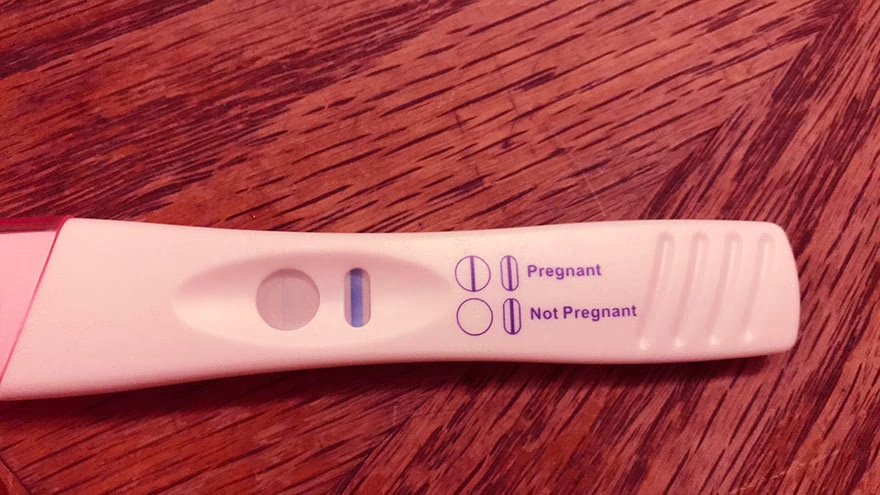
Evaporation lines on EPT results are frustrating because they show up at the exact place where your eye is looking for an answer. You take the test, wait, stare, walk away, come back, and suddenly there is a faint mark where a positive line would be. That mark may not mean pregnancy. It may be a drying artifact caused by urine evaporating on the strip after the official reading window has passed.
The safest way to read any home pregnancy test is the least dramatic one: follow the package instructions, use the stated time window, and ignore changes that appear later. If the result is unclear, retest with a fresh test rather than trying to interpret a dried strip under better lighting. EPT is a brand name, but the same timing problem applies to many line-based home pregnancy tests.
What Is An Evaporation Line?
An evaporation line is a faint mark that can appear as urine dries on a test strip. It is usually colorless, gray, or shadow-like rather than pink or blue. The key detail is timing. If the mark appears after the instructions say the result should be read, it should not be treated as a reliable positive.
Mayo Clinic notes that many home pregnancy tests claim 99 percent accuracy, but tests differ in their ability to detect pregnancy close to a missed period, and a negative result should be followed by another test or a clinician call if pregnancy is still suspected. That advice fits evaporation lines well: do not build a conclusion on a test read outside its window.
A real positive line on a dye test usually has color and appears within the test's stated reading time. A faint positive can still be faint, especially very early. That is what makes the situation hard. The difference is not only darkness; it is whether the line appeared on time, carried color, and repeated on a fresh test.
If you are testing because early symptoms feel different, keep the test in context. A missed or late period, breast tenderness, fatigue, nausea, or cramping can have more than one explanation. A guide to signs of pregnancy in the first week can help sort symptoms from certainty, but testing and follow-up still matter.
How To Read A Line Test Without Chasing Shadows
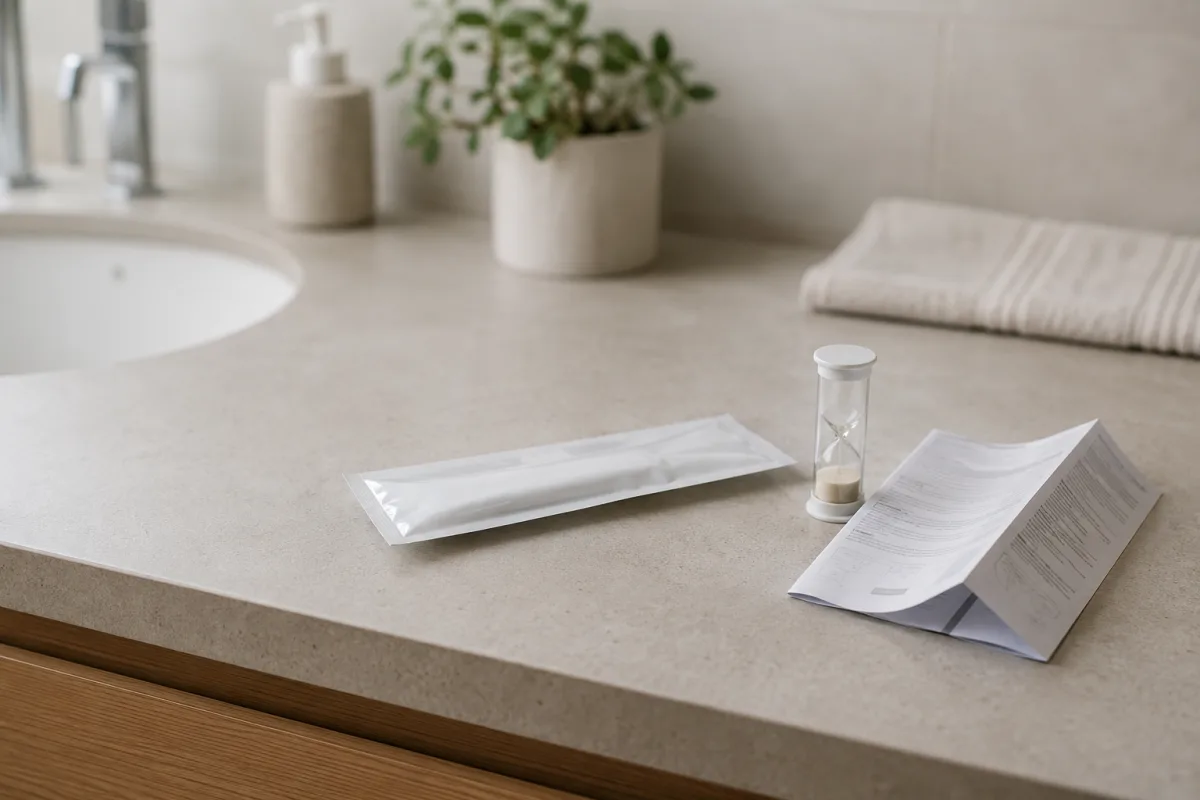
Before taking the test, check the expiration date and read the instructions. Use the amount of urine the test asks for. Set a timer for the exact reading window. Look at the control line first; if the control line does not work, the test is invalid. Then read the test line only during the official window.
Do not photograph the test, invert the image, hold it against a window, or check it an hour later as if it is still changing in a meaningful way. Those habits create more anxiety than information. If the line was not visible during the reading window, the later mark is not a dependable result.
MedlinePlus explains that home urine pregnancy tests are most accurate when done a week or two after a missed period and that instructions should be followed carefully. Testing too early is one reason people end up with faint, uncertain results.
If you are comparing multiple tests, use the same kind of test and similar timing, preferably first-morning urine. Switching brands, testing at night after drinking a lot of fluid, or reading some tests late makes the pattern harder to trust.
It also helps to decide what answer will change your next step. If you would call a clinician for confirmation either way, do that instead of buying five more tests. If you only need to know whether the result repeats, one fresh test taken correctly is more useful than a pile of dried strips.
When Should You Retest?
If the test looks negative but you still think you may be pregnant, retest in a few days or about one week after the missed period, depending on your cycle and the instructions. First-morning urine is often easier to interpret because it is usually more concentrated. Use a new test, not the old strip.
If a faint colored line appears within the correct reading window, treat it as possible pregnancy and retest to see whether the result repeats. You can also call a clinician for a urine or blood test. A blood test can measure hCG more directly and may be useful when urine tests are confusing.
Cleveland Clinic explains that home pregnancy tests detect hCG in urine, while blood testing can measure how much hCG is present. Clinicians may repeat hCG testing in two or three days when they need more information about a pregnancy pattern.
If a positive result eventually becomes clear, the next questions may shift quickly from testing to timing, appointment planning, and who to tell. A separate guide on telling family baby news later in pregnancy is for a different stage; early test confusion deserves privacy until you know more.
What Can Cause Confusing Pregnancy Test Results?
Confusion can come from reading the test too late, testing before hCG is high enough, using diluted urine, using an expired or damaged test, or misunderstanding an indent line. Some people also test repeatedly within the same day, which can make lighter and darker lines look like a medical pattern when they may only reflect urine concentration.
False positives are less common than false negatives, but they can happen. Recent pregnancy loss, certain fertility medications that contain hCG, and some medical conditions can complicate interpretation. A clinician can help when a result does not match bleeding, pain, cycle history, or other symptoms.
Watch for urgent symptoms. Severe one-sided pelvic pain, shoulder pain, fainting, heavy bleeding, or feeling very unwell after a positive or unclear test needs prompt medical attention. An article about evaporation lines cannot rule out ectopic pregnancy, miscarriage, or another condition.
Pregnancy testing can also carry emotional weight. If repeated uncertain results are increasing anxiety, take a break from strip-reading and call a healthcare professional. If pregnancy stress connects with low mood or worry, support resources like dealing with depression during pregnancy may be useful later, but immediate symptoms and test uncertainty should go to your care team.
How To Avoid Evaporation Line Confusion Next Time
Use a test close to or after the missed period, read it once during the official window, and throw it away after documenting the result if you need to. If you know you will keep checking it, set a rule before you test: no reading after the timer. A digital test can reduce line interpretation, though it is still subject to timing and sensitivity limits.
Keep a short note of test date, cycle day, time of day, and result. Do not turn the note into a full anxiety log. The purpose is to help a clinician understand the timeline if you need care.
If you are pregnant or might be pregnant and nausea is already affecting food choices, focus on simple care while you wait for clarity. A guide to bland diets for pregnancy can help with mild nausea, but any severe vomiting, dehydration, pain, or bleeding needs medical attention.
This article is general health information and is not medical advice. Contact an obstetrician, midwife, primary care clinician, urgent care service, or emergency service for symptoms, repeated unclear tests, severe pain, heavy bleeding, fainting, or questions about hCG results.
An evaporation line is a reminder that home tests are useful only inside their rules. Read the test on time, repeat with a fresh test if needed, and let a clinician step in when the result and your body are telling different stories.
Frequently Asked Questions
Does an evaporation line mean I am pregnant?
No. An evaporation line is usually a drying mark, especially if it appears after the reading window. Retest with a fresh test if you are unsure.
How can I tell an evaporation line from a faint positive?
Look at timing and color. A faint positive usually appears within the instructed time and has dye color. An evaporation line often appears later and looks gray or colorless.
Should I keep checking the test after the timer?
No. Once the reading window has passed, changes on the test are not reliable. Throw the test away and retest later if needed.
When is the best time to take another test?
Use first-morning urine and retest in a few days or after a missed period, following the instructions for that specific test.
When should I call a doctor?
Call if tests stay confusing, you have a positive result with pain or bleeding, you miss a period with repeated negative tests, or you need confirmation through blood hCG testing.

Linda Fehrman
Edits general wellness and relationship explainers. Health material is educational, avoids diagnosis and links to health-authority guidance.




Leave a reply
Replying to