

Handing your child to someone else for eight or nine hours a day is one of the heaviest decisions new parents make, and a glossy tour is designed to make it feel easy. It should not be. Underneath the friendly first impression sit four separate questions: is my child safe, will they be cared for warmly, does the program actually work with our schedule and budget, and can I trust what I am told. A good choice answers all four, and it usually takes more than one visit to get there.
The families who feel confident later are the ones who slow down at the start: they check licensing before they fall in love with a cheerful classroom, they observe instead of just listening, and they treat their own uneasy feelings as information rather than rudeness.
Start With Licensing And Inspection Records
Before anything else, confirm the program is licensed and look at its record. Licensing sets the legal floor for safety, staff background checks, and ratios, and most states publish inspection reports and any violations online. The federal ChildCare.gov site walks parents through checking licensing, availability, hours, cost, and financial assistance, and it links out to each state's licensing agency.
Ask directly how the program handles inspections, complaints, and background checks, and how it responds when a violation is found. A center that talks openly about a past citation and what it changed is often more trustworthy than one that insists nothing has ever gone wrong. Do this homework before you get attached to a particular room or teacher, because it is much harder to walk away once your heart is set.
Match The Format To Your Family

Daycare is not one thing. A large center offers backup staff, structured curriculum, and predictable hours, but bigger groups and more transitions. A small home-based program can feel intimate and flexible, with mixed ages and one or two consistent caregivers, though it may close when the provider is sick or on vacation. A nanny or nanny-share gives one-on-one attention in your own home but no built-in oversight or coverage.
None of these is automatically best. The right format depends on your work schedule, your commute, your budget, how your particular child handles noise and groups, and how much backup coverage you need when the unexpected happens. Write down which trade-offs you can live with before you tour, so a warm sales pitch does not quietly rewrite your priorities.
Watch The Caregiver-Child Fit

On a visit, spend most of your attention on the adults and how they interact with children who are already there. Do caregivers get down to a child's eye level, respond warmly to a tug on the sleeve, notice a child who has drifted to the edge of the room, and redirect behavior without shaming or sharp voices? Warmth and attentiveness are not soft extras; they are the daily texture of your child's life in that room.
A safe adult-to-child ratio matters enormously, but a good ratio staffed by distracted or harried adults still leaves children under-attended. Watch a real, unscripted stretch of time if you can, ideally during a messier moment like a transition to lunch or nap, when the difference between a calm, practiced team and an overwhelmed one becomes obvious.
Ask About Ratios, Group Size, And Turnover
Ratios and group size shape how much individual attention your child gets, and younger children need lower ratios. Ask how many children each caregiver is responsible for in your child's room, how large the total group is, and what happens to ratios at the start and end of the day when rooms are often combined and staff are thin.
Staff turnover is a quieter but telling signal. Babies and toddlers form attachments to specific caregivers, and a program where teachers leave every few months forces children to keep rebuilding trust with strangers. Ask how long the current staff have been there and how the program supports and retains its people. High turnover can hint at low pay, poor management, or burnout, all of which reach your child eventually.
Check Health And Safety Routines
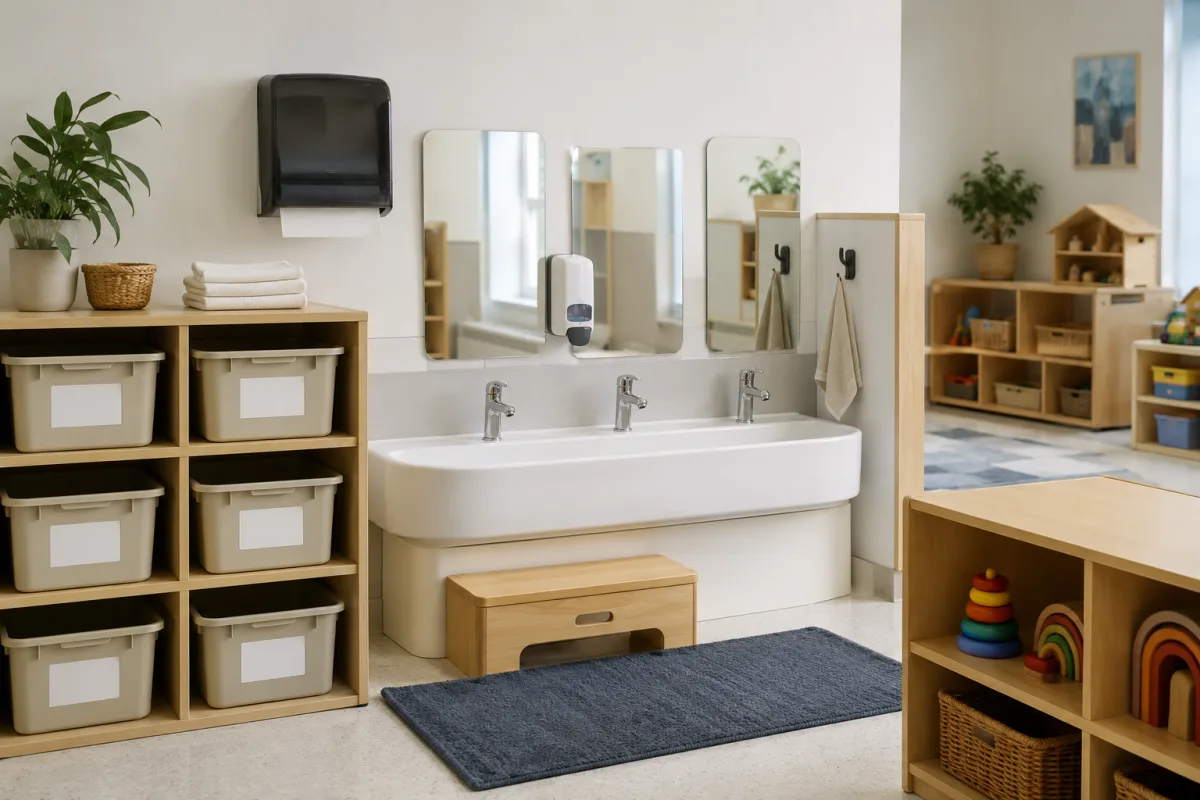
Look for the unglamorous habits that prevent illness and injury: consistent handwashing before food and after diapering, safe-sleep practices for infants with bare firm cribs, locked cabinets for cleaners and medicines, a secure sign-in and pickup system, and clear written rules for administering any medication. Ask what happens when a child spikes a fever, when there is an allergic reaction, and how the building is secured during the day.
If you are updating safety at home at the same time, our baby-proofing guide covers the same layered thinking room by room. The habits that keep a daycare safe and the habits that keep a home safe are largely the same, so a program that has thought carefully about hazards is easy to recognize once you know what to look for.
Understand How They Communicate
A program should be able to explain, without hesitation, how it keeps you informed: daily notes on eating, napping, and diapers for the youngest children; how and how quickly it reports injuries or behavior concerns; how it announces closures, billing, and staff changes; and who you contact when something feels urgent. Vague or defensive answers here tend to predict vague and defensive answers when a real problem arises.
Ask to see a sample daily report or the app they use, and ask how a parent raises a worry and what the response time usually is. You want a partner who tells you about the hard days too, not only the cute photos, because the honest reporting is what lets you catch problems early. Pay attention to tone as well as content: a director who welcomes questions and answers specifically, rather than deflecting or getting defensive, is showing you how future concerns will be handled long before any concern arises.
Add Up The Real Cost, Not Just Tuition
The advertised monthly rate is rarely the full number. Ask about registration and enrollment fees, deposits, charges for late pickup, whether meals and supplies are included, field-trip fees, and how many holidays and closure days you still pay for. A cheaper base tuition with a long list of add-ons and unpaid closure weeks can end up costing more than a higher all-inclusive rate.
Weigh the commute and hours against your actual workday, too. A slightly cheaper program that adds forty minutes of driving or closes before you can realistically arrive creates a daily strain that no discount makes up for, and a place that fits neatly into your route is worth paying a little more for. Ask, as well, about the waitlist and how spots open up, since the timing of an opening can matter as much as the price. If your child's temperament is part of the calculation, our guide to toddler tantrums can help you gauge how they might handle a busy, high-energy room versus a quieter setting.
Plan The Transition
Even the right daycare is a big adjustment, so plan the handoff rather than dropping into it cold. Short introductory visits, a familiar comfort object, labeled supplies, and sharing your child's soothing routines with the caregivers all smooth the first weeks. Expect an adjustment period with extra tears and clingier evenings, and try not to judge the whole placement by the first few days.
If your child was premature or has additional needs, prepare specific questions in advance; our guide to premature baby development can help you frame what to ask about pacing, feeding, and milestones. Share the practical plan with everyone involved, including a partner and emergency contacts, so no single parent is carrying every schedule and rule alone.
Trust Unease Enough To Investigate
If something feels off, treat that feeling as a prompt to look closer, not as an overreaction to apologize for. Ask more questions, schedule a second visit at a different time of day, and check the licensing records again. Parents sometimes talk themselves out of concerns because a spot is hard to find or a waitlist is long, but a scarce opening is never a reason to ignore a safety worry.
Turn a vague dread into something specific: name what you saw, when, and why it bothered you. A concrete concern is easier to raise with the director, easier to verify, and easier to act on. If the answers do not reassure you, keep looking, because the right fit protects your child and works with your family's real life at the same time.
Frequently Asked Questions
What should I check first when choosing daycare?
Start with licensing and inspection records, then availability, hours, cost, and whether there is space for your child.
What should I watch during a tour?
Watch caregiver warmth, supervision, cleanliness, safety routines, and how the children already there respond to the adults.
Should I ask about discipline?
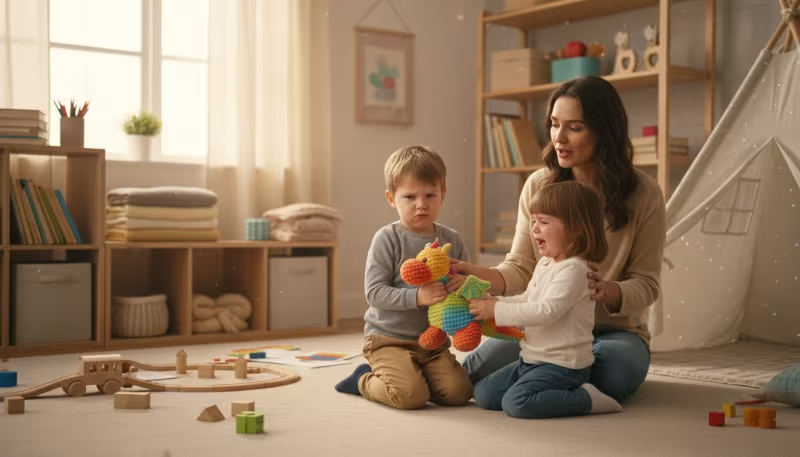
Yes. Ask specifically how caregivers handle biting, hitting, tantrums, and conflict, and listen for shaming versus calm redirection.
How do I compare costs fairly?
Add tuition, deposits, late fees, meals, supplies, and unpaid closure days, and factor in commute and hours against your workday.
What if I feel uneasy after visiting?
Ask more questions, revisit at a different time, check licensing records, and keep looking if safety concerns remain.
This article is for general information only and is not a substitute for medical, safety, or pediatric advice. Follow product instructions and ask a qualified professional when needed.

Alyssa Curlin
Edits general health, nutrition and education explainers. Medical topics are educational and link to public-health guidance.



Leave a reply
Replying to