

How to Get Maryland Land Records usually means using MDLandRec, Maryland's online land record repository, or contacting the land records department at the circuit court for the county or Baltimore City.
This is general legal information, not legal advice or title advice. Maryland clerks cannot perform title searches for you, and property questions can require a title company or lawyer.
Know What Land Records Are
Land records include deeds, mortgages, releases, liens, plats, and other recorded property documents. They show recorded documents, not every fact about a property.
Maryland Courts explains land records and liens on its land records help page.
Use MDLandRec
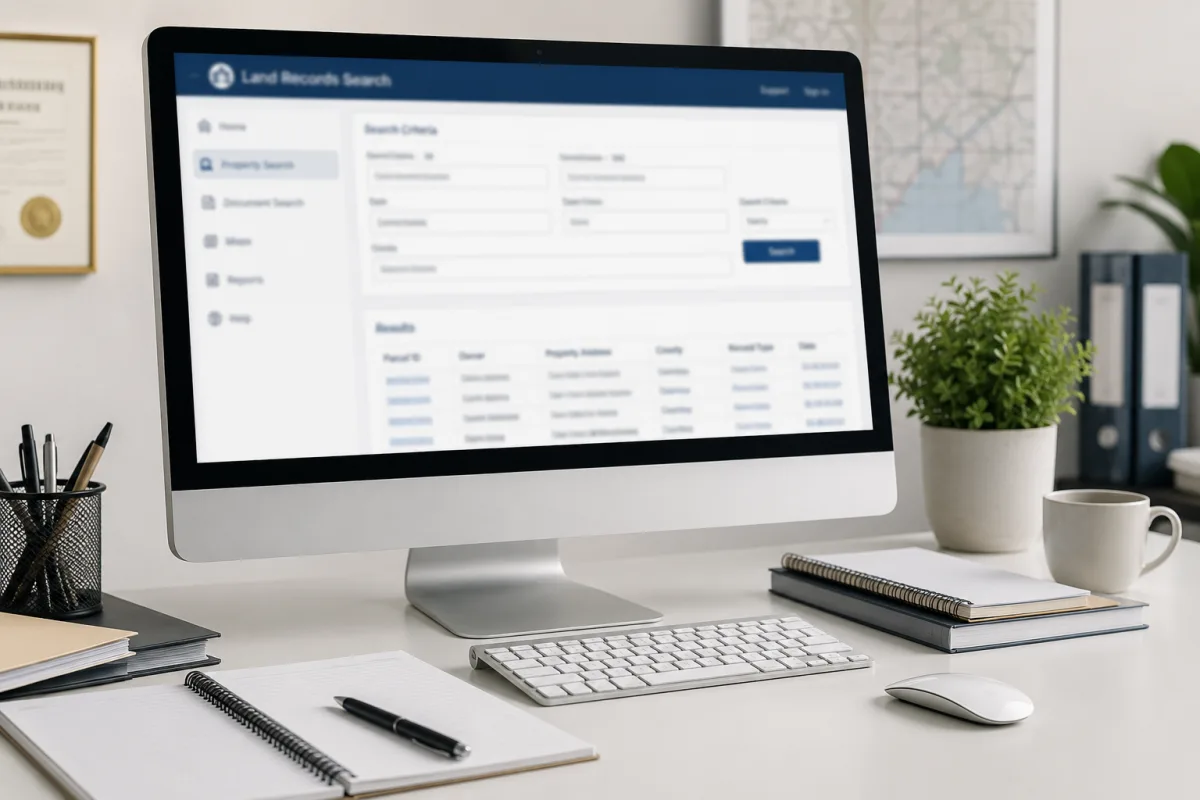
MDLandRec is Maryland's digital repository for land records, created and verified by Clerks of the Circuit Courts and presented by the Maryland State Archives. The site is at Maryland Land Records.
You generally need to create a free account to view documents online. The site can be searched by county, book and page, names, and other index information.
Pick The Right County
Land records are organized by county or Baltimore City. Start with the county where the property is located, not where the owner lives.
If you are unsure of the county, use the property address, tax record, or local assessment information to orient the search.
Search By Name
Name searches can be messy because people use initials, married names, misspellings, trusts, companies, or estates. Try variations and watch date ranges.
A name match is not proof by itself. Confirm property description, address, grantor, grantee, and related documents.
Search By Book And Page
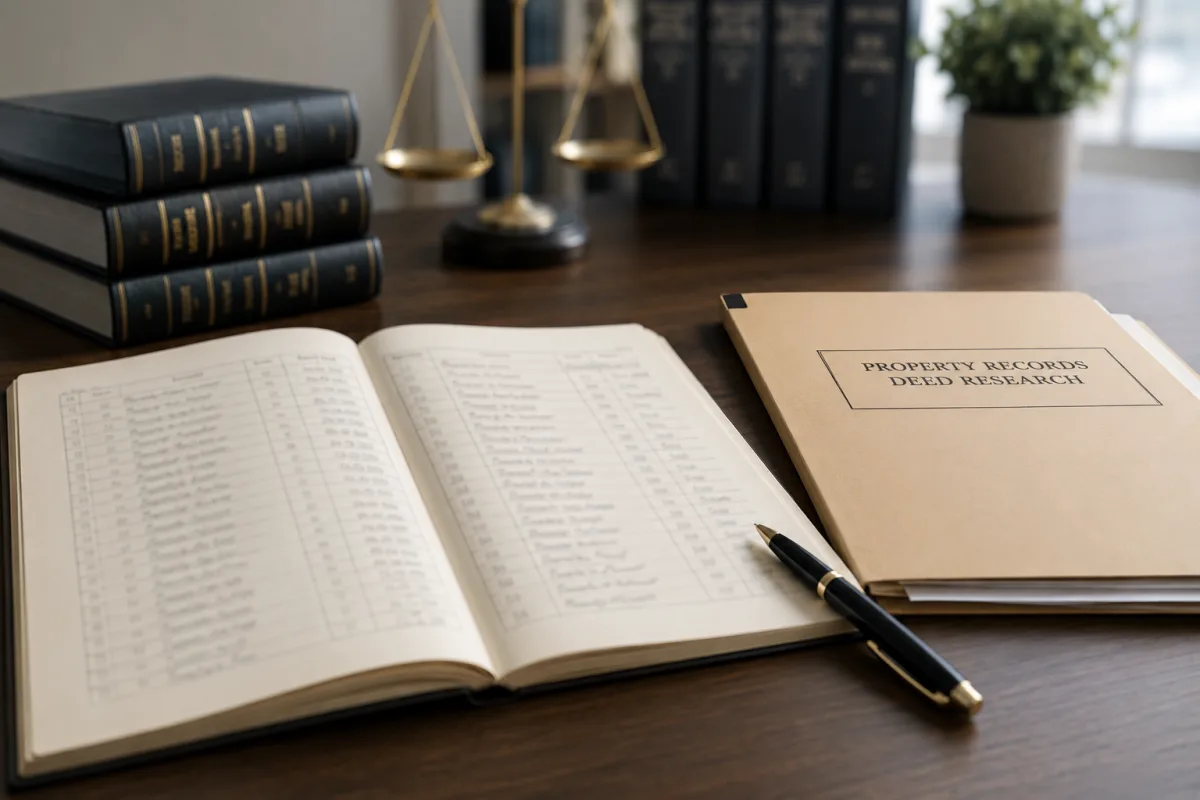
If you already have a deed reference, book and page can be faster than a name search. Those references often appear on later deeds, mortgages, and releases.
Older records may use different indexing patterns, so be patient and use the site's help pages.
Get A Copy Of A Deed
Once you find the document, view the image and save or print the copy if the site allows it. For certified copies, contact the land records office or clerk's office for that county.
Maryland Courts notes that MdLandRec provides online access to land record documents on its court records page.
Check Liens Carefully
Some liens are recorded in land records, but court judgments may need Maryland Case Search or other records. Do not assume one search covers every possible claim.
If a sale, refinance, estate, divorce, or dispute is involved, a title search may be needed.
Estate And Death Records
If the owner died, land records may connect to estate records, death certificates, or probate filings. The chain of title may not be clear from one deed.
Livecub's death certificate search guide and probate court article are related for estate context.
Trustee Transfers
Property held by a trust or transferred after a trustee's death can require trust documents, successor authority, and recorded deeds.
Livecub's property transfer after trustee death article covers a related legal path.
Ask Better Questions
Before calling the clerk, write down the county, names, approximate date, property address, and document type. A specific question gets better help than 'find my deed.'
Livecub's questions to ask an estate lawyer can help if the land record search is part of inheritance planning.
Understand Limits
Land records do not tell you whether a deed was legally valid in every respect, whether a title defect exists, or whether someone has an unrecorded claim.
The clerk can provide records, but cannot give legal advice or guarantee title.
Use Plats And Tax Records
Plats may help with lot boundaries, subdivisions, and recorded surveys. Tax assessment records can help confirm parcel identity before searching land records.
Do not rely on a map screenshot for legal boundaries. Boundary disputes need survey and legal help.
When To Get Professional Help
Get help if you are buying property, transferring inherited property, clearing a lien, resolving a name error, or dealing with fraud.
A title company, real estate lawyer, or estate lawyer can connect records into a legal conclusion.
Keep Your Search Notes
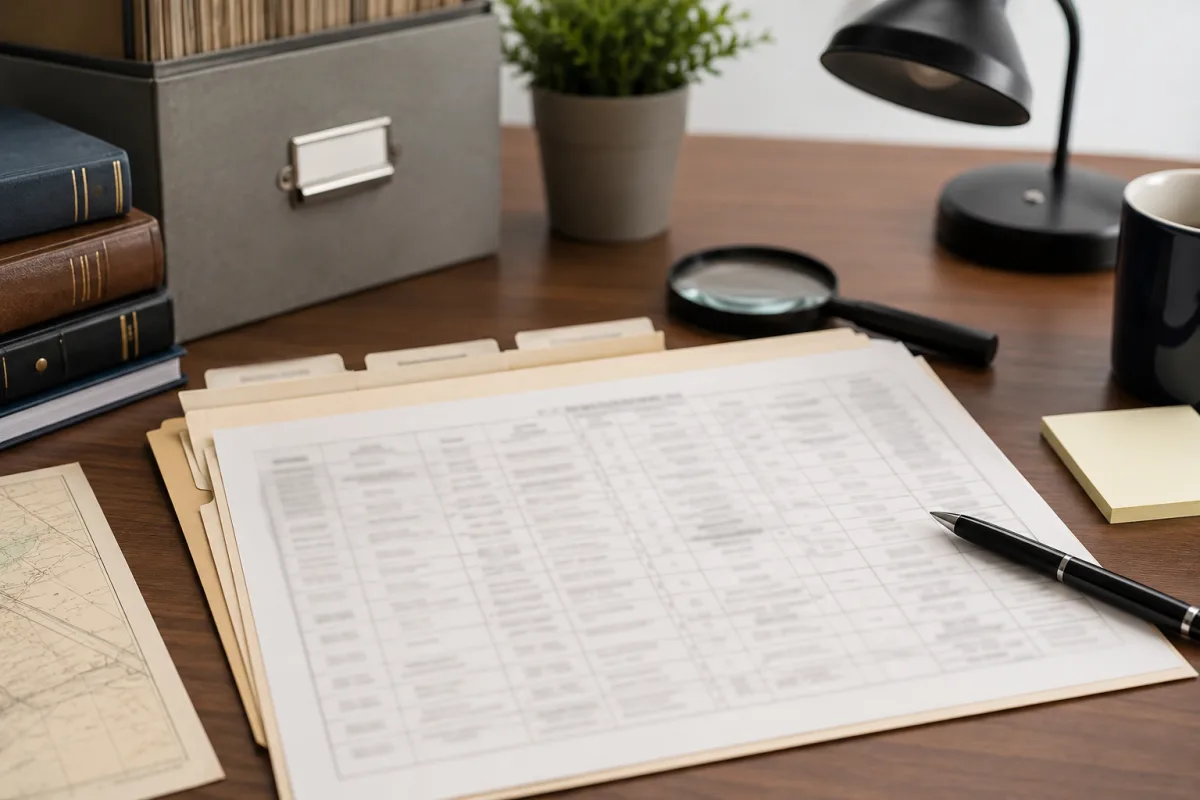
Write down every book, page, instrument number, date, grantor, grantee, and county searched. Save PDFs with clear file names.
Good notes keep you from repeating the same search and help a professional review your work later.
Common Search Mistakes
Common mistakes include searching the wrong county, using only one spelling, ignoring middle initials, or assuming a property address will appear exactly as expected.
If the first search fails, change one variable at a time. Keep notes so you know which combinations you already tried.
Fraud Concerns
If you suspect a fraudulent deed or unauthorized transfer, do not rely only on online searching. Contact the land records office and seek legal advice quickly.
Fraud concerns can involve deadlines, affidavits, police reports, title insurance, and court action.
Modern Versus Older Records
Modern records may be easier to search, while older records can require index work, older book systems, or name variations. Patience matters.
If a property has a long history, follow the chain backward deed by deed rather than jumping from one owner to another without proof.
Deed Names
The grantor is usually the person transferring property; the grantee is usually the person receiving it. Getting those roles backward can send the search in the wrong direction.
When you find a deed, write both names, date, book, page, and property description before moving to the next document.
Mortgage Releases
A deed may show ownership, but a mortgage or deed of trust may also appear. Look for releases or satisfactions showing paid-off loans.
Unreleased liens can create title questions even when the owner name looks correct.
Certified Copies
A printed online image may be enough for research, but court, title, immigration, estate, or legal matters may require certified copies.
Ask the county land records office what they charge, how long copies take, and whether mail or in-person pickup is required.
Privacy And Public Records
Land records are public, but that does not mean every use is wise or kind. Avoid publishing addresses, signatures, or personal details online without a clear reason.
Use the information for the legal or property purpose that brought you to the records.
Instrument Numbers
Some records use instrument numbers instead of only book and page references. Record the identifier exactly as shown.
A single wrong digit can send you to the wrong document or make a later copy request fail.
Owner Entities
Property may be owned by an LLC, trust, estate, or partnership rather than an individual. Search the entity name and any prior owner names shown in the chain.
If a trust or estate appears, legal authority may matter as much as the deed image.
Comparing Documents
Compare the legal description across deeds. Lot number, subdivision, liber, folio, and metes-and-bounds language can help confirm continuity.
Address changes and tax parcel changes can confuse a search, but the legal description often carries the chain.
In-Person Help
If the online search stalls, the circuit court land records department may explain how records are organized. They still cannot give legal advice or perform a title search.
Bring your notes, names, dates, and property address so the visit starts focused.
Copy Quality
Older scanned images can be faint, skewed, or hard to read. If the copy matters for a transaction, ask about a better copy or certified copy.
Do not guess at names or legal descriptions when the image is unclear.
Release And Refinance History
A property may show a chain of mortgages and releases as owners refinance. Those documents help explain why several lenders appear in the record.
Look for release documents tied to each old mortgage before assuming a lien still exists.
Professional Title Search
A title search is more than downloading deeds. It may include judgments, taxes, liens, easements, estates, name variations, and court records.
Paying for title work can be cheaper than discovering a defect after closing.
Frequently Asked Questions
Where can I search Maryland land records?
Use MDLandRec, Maryland's online land records repository.
Do I need an account?
You generally need a free MDLandRec account to view records online.
Can the clerk do a title search?
No. Clerks provide records but generally cannot perform title searches or give legal advice.
Can I get certified copies online?
Check the county clerk or land records office for certified-copy rules.
Are liens always in land records?
Some are, but court judgments and other claims may require additional searches.
To get Maryland land records, start with the right county, use MDLandRec, confirm names and property details, save document references, and get title or legal help when the record affects rights.

Patrick Harwood
Edits sports, consumer-finance and general legal explainers. Regulated or time-sensitive topics link to primary sources and are not professional advice.

Leave a reply
Replying to