

How to Handle Back Pain in Labor starts with knowing that back labor can feel different from ordinary pregnancy backache. It may be strongest in the lower back, tailbone, hips, or sacrum and may continue between contractions.
Back pain in labor can be exhausting, but there are many comfort options: position changes, counterpressure, heat, water, breathing, support, and medical pain relief when needed. Your care team should guide choices based on your labor, baby, and health history.
Know What Back Labor Feels Like
Back labor is often described as intense lower back pain during contractions, sometimes with pressure that does not fully fade between them. Some people feel it more than abdominal contraction pain.
ACOG defines back labor as intense lower back pain during labor and delivery. Its Ask ACOG back labor page gives a short, clinician-reviewed description.
Call For Guidance
If you are at home and the pain comes with regular contractions, leaking fluid, bleeding, decreased fetal movement, fever, severe headache, or concern that something is wrong, call your provider or labor unit.
Do not spend hours trying comfort tricks if your care team told you to call for specific signs. Back pain can be part of normal labor, but safety signs still matter.
Change Position Often
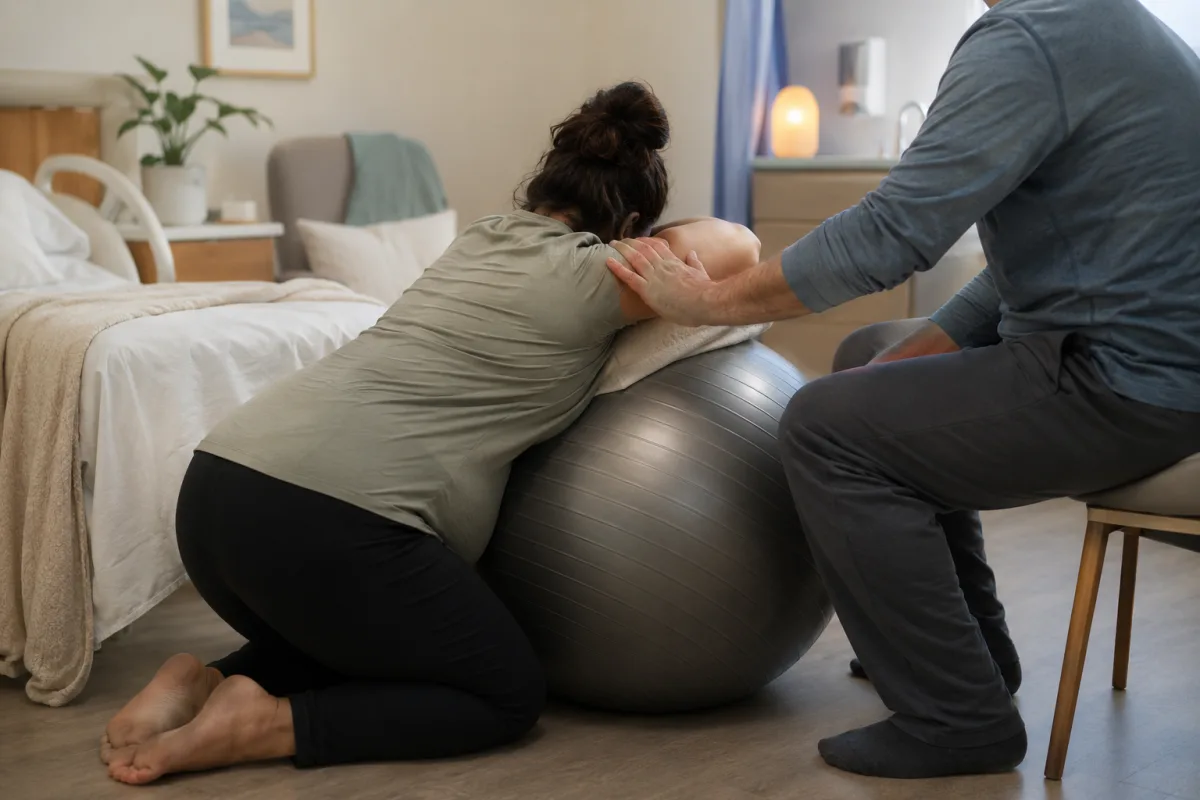
Hands and knees, side-lying, leaning over a bed, standing lunge, slow swaying, sitting forward on a birth ball, or supported kneeling may reduce pressure on the lower back.
Position changes also give the baby room to rotate. The right position is the one your body tolerates and your team approves in that stage of labor.
Use Counterpressure
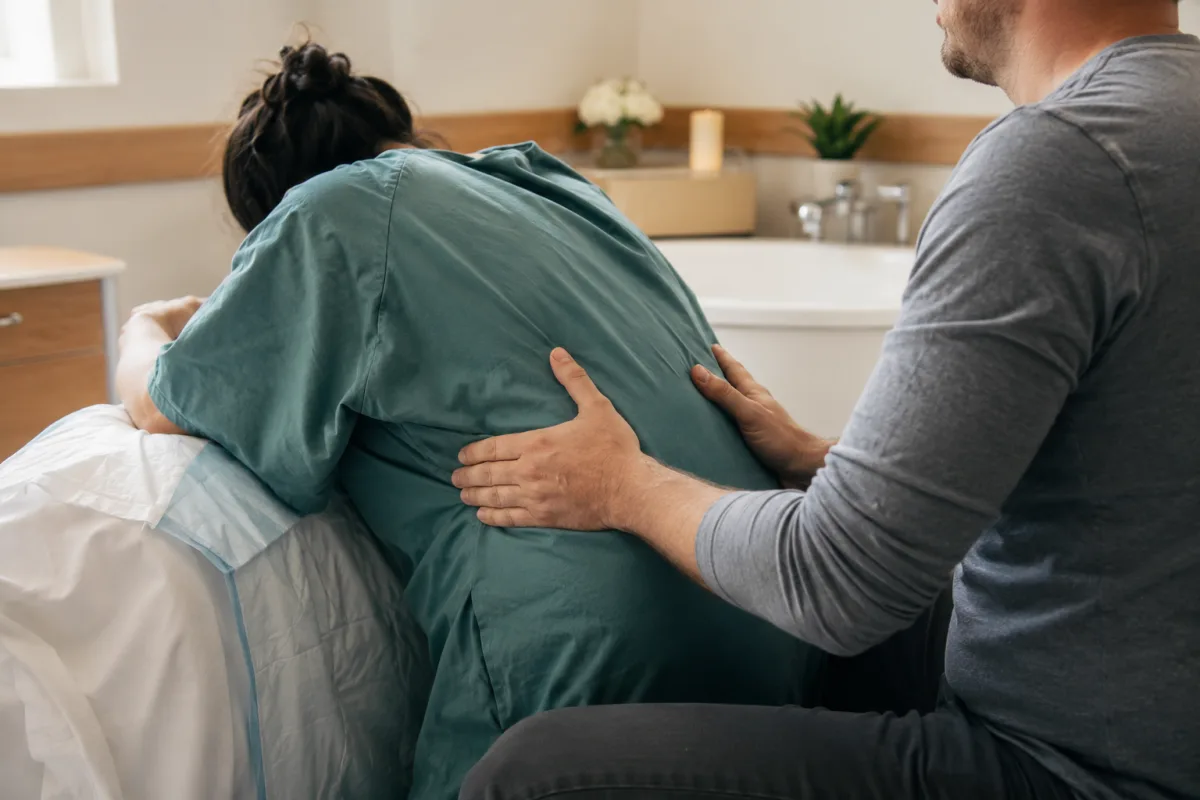
Counterpressure means firm steady pressure on the painful spot, often the sacrum. A partner, doula, or nurse can use the heel of the hand, both hands, or a firm tool if the hospital allows it.
Cleveland Clinic describes massage and counterpressure as options for back labor relief and notes that people can ask providers about other pain-reducing aids. Its back labor guide is practical and clear.
Try Heat Or Cold
A warm pack, warm shower, or bath may relax muscles and soften pain. A cold pack may feel better if the lower back feels hot, sharp, or inflamed.
Protect skin with a cloth layer and follow hospital rules. In labor, the best tool may change every few contractions, so keep both options available if allowed.
Use Water If Available
A shower can let warm water hit the lower back while you lean forward. A tub or birth pool may reduce weight on the pelvis and help the body release tension.
Water use depends on hospital policy, membrane status, monitoring needs, infection concerns, and provider guidance. Ask early so you know what is possible before pain peaks.
Breathe With The Pressure
Back labor can make people clench the jaw, hips, and shoulders. A simple pattern can help: soften face, drop shoulders, slow exhale, then ask for pressure where the pain lives.
ACOG lists massage, water therapy, breathing exercises, music, and calming smells among nonmedication coping options for labor pain. Its childbirth coping guide can help you prepare.
Give Your Support Person A Job
Back pain in labor is easier to handle when your partner knows exactly what to do: press here, stop now, switch to heat, call the nurse, offer water, remind me to unclench.
Livecub's emotional support in early labor guide is useful because support is not only kind words; it is practical timing and calm attention.
Pack For Back Labor

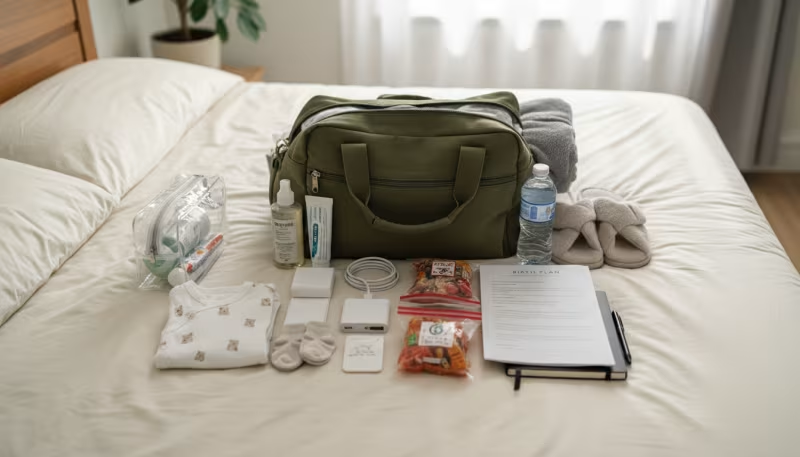
Add a tennis ball, small massage tool, heat pack if allowed, hair ties, socks, and a charger long enough to reach awkward positions. Ask your hospital which items are permitted.
Food also matters if you are home in early labor and allowed to eat. Livecub's bland pregnancy foods guide can help with gentle snack ideas, but labor eating rules should come from your provider.
Ask About Medical Pain Relief
Nonmedication tools are not a test of strength. If back pain becomes overwhelming, ask about nitrous oxide, IV medication, epidural, sterile water injections, TENS, or other options available where you give birth.
Each option has timing, benefits, limits, and side effects. The best choice is the one that fits your labor and medical situation.
When Pain Changes Suddenly
Tell the nurse or provider if pain becomes constant and severe, feels one-sided and unusual, comes with heavy bleeding, fever, dizziness, or if something simply feels wrong.
Labor pain can be intense without being dangerous, but a sudden change deserves attention. You do not need to diagnose it yourself.
After Birth
Back soreness after labor can come from positioning, pushing, muscle fatigue, epidural placement soreness, or the same pregnancy strain that existed before labor.
Ask what pain relief is safe postpartum, especially if breastfeeding, recovering from surgery, or taking other medication. Gentle movement and rest both matter.
Emotional Recovery
Back labor can feel frightening if the pain was worse than expected. After birth, talk through what happened with your partner, doula, nurse, or clinician if memories feel stuck.
If mood symptoms persist, Livecub's depression during pregnancy guide is related because perinatal emotional health deserves the same attention as physical recovery.
Hip Squeeze
A double hip squeeze may help some people with pelvic or back pressure. The support person presses inward on both sides of the hips during a contraction, then releases between contractions.
This should feel relieving, not painful. If it increases pain, stop and ask the nurse, doula, or midwife for another position.
Sterile Water Injections
Some hospitals offer sterile water injections for severe back labor. They can sting sharply at first, but some people get lower back pain relief afterward.
Availability varies, and the choice should be discussed with the care team. Ask before labor if you are interested so you know whether it is offered.
Baby Position Questions
Ask whether the baby's position may be contributing to back pain. The answer may guide movement, side-lying release, lunges, hands-and-knees, or rest positions.
No position guarantees rotation, but informed movement can feel better than random movement when pain is focused in the back.
Rest Between Contractions
Back labor can make people stay braced even after a contraction ends. A support person can remind you to loosen hands, drop shoulders, drink, and rest your eyes.
Those short rests add up. Labor is often handled one recovery window at a time.
After An Epidural
If you choose an epidural, position changes may still matter. Nurses may use a peanut ball, side-lying positions, or supported turns depending on monitoring and hospital policy.
Pain relief does not mean support stops. It simply changes what kind of support is useful.
Use The Bed Differently
A hospital bed can support many positions besides lying flat. Raise the head, lower the foot, kneel facing the back of the bed, or lean over pillows if staff says it is safe.
Ask the nurse to show what the bed can do. Small adjustments can reduce back pressure without needing extra equipment.
Protect The Support Person
Counterpressure can tire hands, wrists, and shoulders. The support person should switch hands, use body weight, and take breaks between contractions.
If two support people are present, rotate the job. Consistent pressure is easier when the helper is not exhausted.
Use Clear Feedback
During a contraction, long explanations are hard. Use short cues: harder, softer, lower, stop, heat, water, move, nurse.
Practice those cues before labor. Clear feedback helps support people adjust quickly instead of guessing while pain is rising.
Frequently Asked Questions
What causes back labor?
It is often linked to pressure from the baby's position, especially when the back of the baby's head presses toward the parent's spine, but other factors can contribute.
Can counterpressure really help?
Many people find firm pressure on the sacrum helpful during contractions. It may not remove pain, but it can make the pressure feel more manageable.
Is back labor dangerous?
Back labor itself is not always dangerous, but severe or unusual pain, bleeding, fever, decreased fetal movement, or concern about labor progress should be reported.
Will an epidural stop back labor?
An epidural may help a lot, but pain relief varies. Ask your anesthesia and labor team what to expect and what can be adjusted.
What should my partner do during back labor?
They can apply counterpressure, offer water, help with position changes, call staff, time contractions, and stop any touch that no longer helps.
Back pain in labor is handled best as a team problem. Change position, use pressure and warmth, ask early for help, and keep medical pain relief on the table without shame.

Alyssa Curlin
Edits general health, nutrition and education explainers. Medical topics are educational and link to public-health guidance.



Leave a reply
Replying to