

How to Protect Your Perineum From a Tear or Episiotomy needs careful wording: no method can promise a tear-free birth, but some choices may reduce risk or severity.
Perineal tears are common in vaginal birth. They range from small skin tears to deeper injuries involving muscle and the anal sphincter. Episiotomy is a surgical cut, and routine use is no longer the goal in many settings.
Know What You Can And Cannot Control
You cannot control baby size, tissue stretch, fetal position, speed of birth, use of instruments, or every medical need. You can influence preparation, communication, position options, pushing pace, and consent conversations.
RCOG's patient guidance says birth position, warm compresses, perineal massage, and controlled birth of the baby's head may help reduce severity for some people: RCOG reducing perineal tear risk.
Late pregnancy can also affect body confidence and intimacy. feeling attractive during pregnancy and staying intimate during pregnancy can help keep the conversation human.
Ask About Episiotomy Before Labor

Ask your clinician when they use episiotomy, how often, what situations make it necessary, and how they handle consent if labor is moving fast.
Mayo Clinic explains that episiotomies were once thought to prevent larger tears, but research no longer supports routine use for that purpose: Mayo Clinic episiotomy overview.
There are still situations where an episiotomy may be recommended, such as urgent delivery concerns or certain assisted births. The point is not never; the point is not routine without a reason.
Perineal Massage In Late Pregnancy
Some people start gentle perineal massage in the final weeks of pregnancy after asking their clinician. It may help a person become familiar with stretch sensations and may reduce some types of trauma for some groups.
Do not do perineal massage if your clinician has told you not to, if you have active genital infection, unexplained bleeding, ruptured membranes, placenta concerns, or pain that feels wrong.
Use clean hands, trimmed nails, and water-based lubricant. Stop if there is bleeding, burning, strong pain, or emotional distress. This should feel like preparation, not a test of endurance.
Warm Compresses During Pushing

A Cochrane review found that massage and warm compresses may reduce serious third- and fourth-degree tears, while evidence for other techniques is less certain: Cochrane perineal techniques review.
Warm compresses are usually applied by a clinician or midwife during crowning. Ask ahead whether your birth setting offers them and who is responsible for checking comfort and temperature.
This is a good example of modest evidence. It may help, it is usually low-risk when done correctly, and it is not a guarantee.
Pushing Pace And Position
Fast forceful pushing may be needed in some situations, but many births allow a slower approach as the head crowns. Your clinician may ask you to pant, pause, or give small pushes.
Side-lying, hands-and-knees, kneeling, squatting, or supported positions may change pressure. Not every position is available with every epidural, monitor, or medical situation, so ask what is realistic.
Support people can help you remember preferences without arguing with the team. early labor support is useful before the pushing stage too.
Reduce Constipation And Tissue Strain
Constipation before and after birth can make pelvic floor discomfort worse. Hydration, fiber, movement, and clinician-approved stool softeners may help.
If nausea or reflux has narrowed your food options, bland pregnancy meals can make it easier to keep fluids and fiber in the day.
Do not start herbs, oils, or vaginal products because someone online promised they prevent tearing. Ask your care team first.
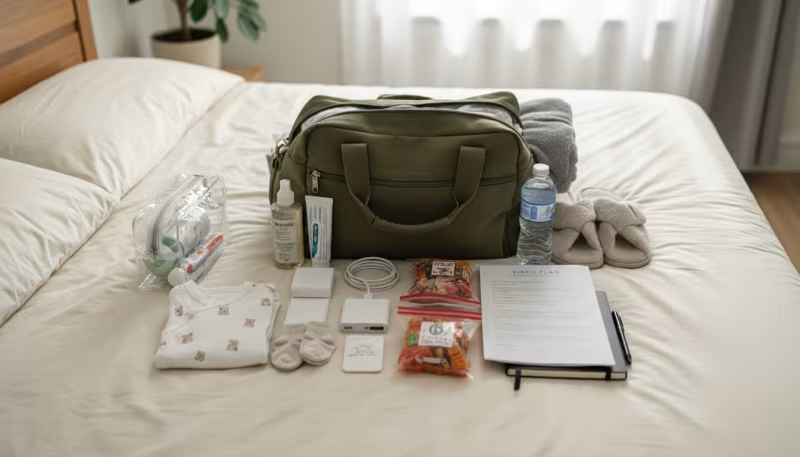
What To Say In A Birth Plan

Use plain requests. I would like to avoid episiotomy unless medically necessary. Please tell me before cutting unless there is an emergency. I am interested in warm compresses if appropriate. Please coach slow crowning when possible.
Also include trauma-informed needs: ask before touching, explain what is happening, use my chosen name, keep the room calm, and tell my support person how to help.
A birth plan cannot control every outcome, but it can make consent and communication clearer.
If A Tear Happens
A tear is not proof that you failed. Repair quality, pain control, bowel care, pelvic floor follow-up, and emotional support all matter.
Ask what degree the tear was, what was repaired, which stitches were used, what pain relief is safe, how to prevent constipation, and what symptoms should trigger a call.
If postpartum mood drops after a difficult birth, use care early. pregnancy and perinatal depression support can help you name the issue before it becomes private shame.
Risk Factors To Discuss
Ask about factors that may raise tear risk in your case: first vaginal birth, prior severe tear, suspected large baby, shoulder dystocia history, fetal position, assisted delivery, prolonged pushing, or very fast birth.
Risk does not mean destiny. It means the team can plan positioning, communication, repair readiness, and postpartum follow-up with more care.
If you have a prior severe tear, ask whether a pelvic floor specialist, urogynecologist, or birth aftercare plan makes sense before labor starts.
Postpartum Perineal Care Basics
After birth, use the pain plan your clinician gives you. Ice packs, peri bottles, sitz baths, stool softeners, and rest may be part of recovery, but instructions vary by tear and repair.
Call for fever, worsening pain, foul-smelling discharge, wound opening, heavy bleeding, trouble controlling stool or gas, severe constipation, or pain that prevents normal movement.
Sex should wait until healing and comfort are ready, not only until a calendar date. If pain persists, ask for pelvic floor therapy rather than forcing your way through it.
Emotional repair matters too. A difficult birth can leave fear, anger, grief, or numbness. Those feelings deserve care, not a quick dismissal.
How To Talk With Your Birth Team
Use concrete language at prenatal visits. I want to understand your episiotomy policy. I want to know how you support slow crowning. I want consent before procedures unless there is an emergency.
Ask who will be in the room during pushing and who repairs tears. In some hospitals, the person you see in prenatal care may not be the person at delivery. Knowing that ahead of time prevents surprise.
If you have a history of sexual trauma, pelvic pain, vaginismus, female genital cutting, prior birth trauma, or panic with exams, say so if you can. The team can plan language, consent pauses, fewer unnecessary exams, and extra support.
What Not To Believe
Do not believe anyone who promises one oil, tea, stretch, or device will prevent tearing. Tissue, labor, baby position, and clinical events are too variable for that kind of certainty.
Do not believe that a tear always ruins sex or pelvic function forever. Many people heal well, and people with ongoing symptoms deserve evaluation and treatment.
Do not believe pain is the price you have to pay quietly. Postpartum pain, leaking, scar sensitivity, or fear of bowel movements should be discussed, not hidden.
The honest goal is not perfect control. It is better preparation, clearer consent, and faster support if injury happens.
Write the questions before labor. During contractions, most people cannot remember a careful list, and that is exactly when a short written note helps.
Your support person should know the plan too. They can remind the team about warm compresses, consent preferences, and slow crowning if you are focused on pushing.
If language access is needed, ask for an interpreter before labor if possible. Perineal consent and repair explanations should not depend on rushed translation from a relative.
If you are using a doula, share the same preferences with the doula and clinician so the room hears one clear plan.
Clear repetition is helpful, not rude.
Frequently Asked Questions
Can I fully prevent tearing?
No method can promise that. Some techniques may reduce risk or severity for some people.
Is episiotomy always bad?
No. Routine use is not the goal, but it may be recommended for specific medical reasons.
Does perineal massage work?
Evidence is mixed but suggests possible benefit for some people. Ask your clinician before starting.
Are warm compresses safe?
They are commonly used when applied correctly and kept comfortable, but ask your birth team about their practice.
What should I ask after a tear?
Ask the degree, repair details, pain plan, bowel plan, warning signs, and whether pelvic floor therapy is recommended.
This article is for general information only and isn't a substitute for medical advice. Talk to a clinician who knows your full history before making changes.

Linda Fehrman
Edits general wellness and relationship explainers. Health material is educational, avoids diagnosis and links to health-authority guidance.



Leave a reply
Replying to