
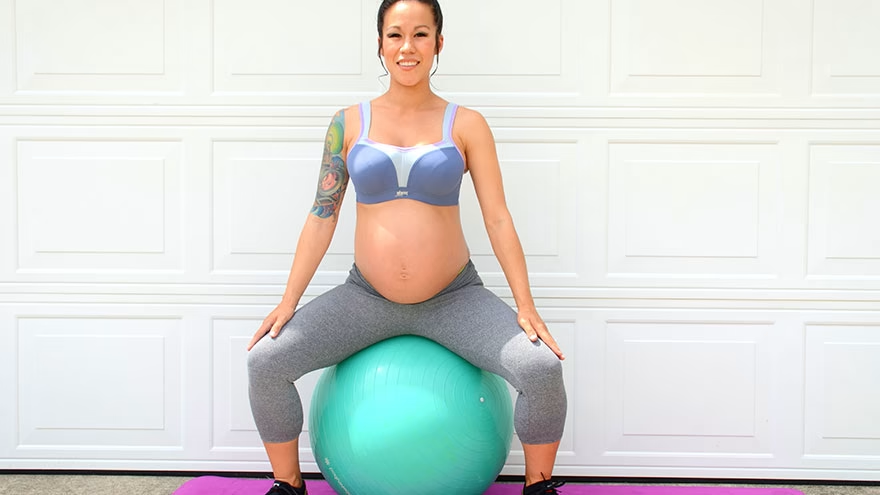
How to Use a Hanging Squat Position in Labor is really about support, timing, and consent. A hanging squat uses your arms, a support person, a squat bar, a rebozo, or another secure anchor so the pelvis can open while your upper body does not carry the whole load. It can feel powerful for some people and miserable for others.
This is general pregnancy education, not medical advice. Ask your OB, midwife, doula, or labor nurse before using any position, especially with an epidural, high blood pressure, fetal monitoring concerns, dizziness, bleeding, pelvic pain, or a high-risk pregnancy. Stop if you feel unsafe, numb, faint, or unable to get back up.
Understand The Position
In a hanging squat, the feet are usually apart, knees bend, hips lower, and the upper body leans back or down while the arms hold support. The support can be a partner's forearms, a bed sheet tied only by staff-approved methods, a squat bar on the hospital bed, or a stable birth-room tool.
ACOG's patient guidance on labor reminds patients to work with their care team about what is happening in labor. Positions should fit the clinical moment, not a preset plan.
Ask Before Labor Gets Intense
Do not wait until transition to learn whether the hospital has a squat bar or whether your birth center allows a hanging sheet. Ask during prenatal visits: Which supports are available? Can I squat with monitoring? What changes if I choose an epidural? Who helps me up?
If your support person is preparing for labor, Livecub's early labor emotional support guide can help them practice calm, specific help instead of vague encouragement.
Practice The Shape Safely
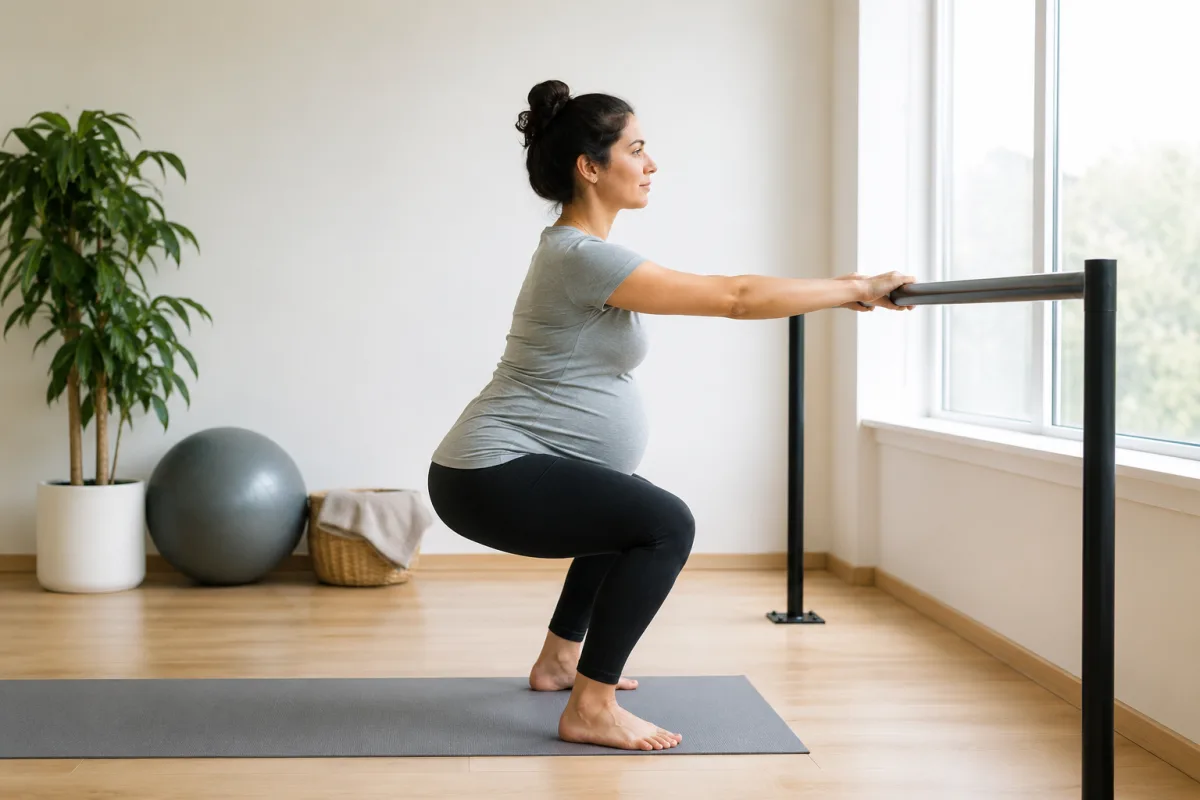
Practice during pregnancy only if your clinician says movement is safe. Use a counter, sturdy rail, or partner handhold. Keep the practice shallow. The goal is to learn foot spacing, breathing, and how to come back up, not to hold a deep squat until your legs shake.
A hanging squat should never rely on a loose chair, rolling furniture, towel bar, door handle, or person who cannot safely support you. Stability matters more than style.
Set Up The Room

Clear the floor. Put socks or bare feet where slipping is less likely. Keep the bed close enough that you can sit quickly. Ask the nurse or midwife to manage lines, monitors, IV tubing, and the fetal monitor before you move. A good setup keeps the position from becoming a scramble.
If you plan other comfort tools, Livecub's staying intimate during pregnancy article has a broader reminder: bodies change, and communication needs to get more direct.
Use It During Contractions
Many people use a hanging squat for a contraction, then rest upright, side-lying, hands-and-knees, or sitting. You do not have to stay in it between contractions. During the contraction, bend the knees, let the belly soften, keep the jaw loose, and use the support to lower only as far as feels stable.
The Cochrane review on positions in the second stage of labor discusses upright and other positions, with mixed benefits and risks depending on context. That is why one position should stay optional.
Protect The Pelvic Floor
A squat can create strong downward pressure. That pressure may help some people coordinate pushing, but it can also feel too intense. If your provider asks for panting, smaller pushes, or a position change to protect tissue or help the baby's heart rate, follow that real-time guidance.
Body confidence can drop quickly when labor feels exposed or physically intense. Livecub's feeling attractive during pregnancy article is not about labor technique, but it may help with the emotional side of living in a changing body.
Coordinate With Monitoring
Some births need continuous fetal monitoring, IV medication, epidural management, or frequent checks. That does not always rule out upright movement, but it changes the setup. Ask what range of movement is allowed and which position keeps the monitor tracing clear.
If the care team asks you to change positions because they cannot read the baby's heart rate, that is a clinical request, not a judgment of your plan.
Use A Partner Carefully
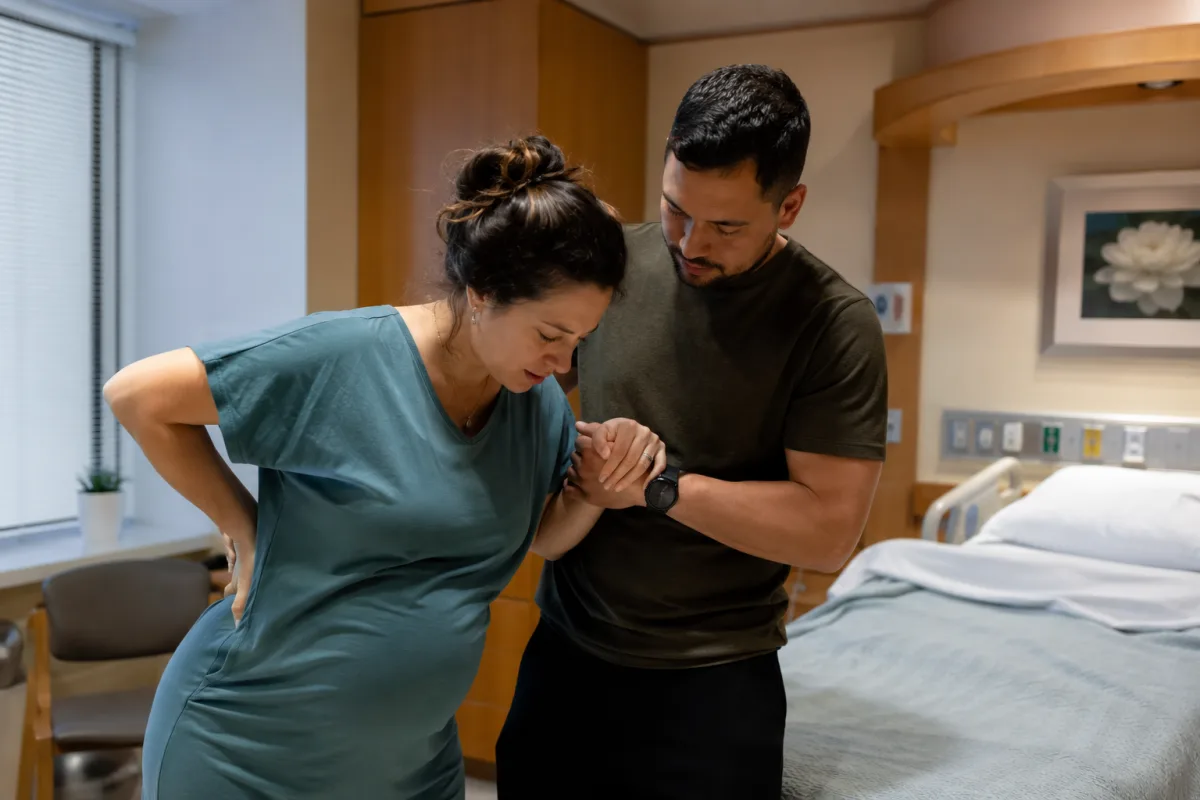
If a partner supports the hanging squat, they should plant their feet, bend their knees, keep their back safe, and avoid pulling your shoulders upward. They are a steady anchor, not a winch. Decide on a stop word or hand signal before labor gets loud.
The support person should also know when to call staff: dizziness, slipping, numb legs, sudden pain, heavy bleeding, or panic.
Consider An Epidural
A full hanging squat may not be safe with numb legs. Some hospitals allow modified supported squats or throne positions with staff help, but others will suggest side-lying, supported sitting, or a squat bar used only while staff are present. The key question is whether you can bear weight safely.
Never guess about leg strength after an epidural. Ask the nurse to assess movement before changing position.
Try Short Repeats
Think in short repeats: one contraction in the hanging squat, one rest position, then reassess. Labor changes quickly. A position that works at six centimeters may feel wrong during pushing. A position you disliked early may feel useful later.
Short repeats also reduce leg fatigue. Shaking legs can make fear rise, and fear can make contractions harder to ride.
Pair It With Breathing
A hanging squat can invite the body to bear down before the cervix is ready, especially when pressure feels sudden. Use slow exhales, loose lips, and relaxed shoulders unless your care team says it is time to push. If you are told not to push yet, come higher out of the squat or switch positions so the urge is easier to manage.
Breathing is not about being quiet. It is about keeping enough control to hear instructions, protect energy, and avoid turning every contraction into a full-body fight.
Know Who Should Avoid It
Some people should skip or modify a hanging squat: anyone with provider limits on movement, severe pelvic girdle pain, fainting, unstable blood pressure, heavy bleeding, numb legs, or a baby needing closer monitoring. Prior injuries to knees, hips, shoulders, or wrists can also matter because the arms and legs share the load.
If the position feels sharp, scary, or hard to exit, it is not the right position at that moment.
Watch The Baby's Position
Squatting may feel different depending on the baby's station and position. If there is back labor, an asynclitic head, or a slow descent, the team may suggest lunges, side-lying release, hands-and-knees, or rest instead. Hanging squat is one option, not the whole toolbox.
NHS guidance on labor stages describes how labor progresses and why the second stage can vary. Position choice should follow what your body and baby are doing.
After The Contraction
Come up slowly. Sit, breathe, sip water if allowed, and check your legs. If your hands, wrists, calves, or pelvic floor feel overloaded, switch positions. A good labor position gives more than it takes.
Do not treat stopping as failure. Changing positions is normal labor work.
Add It To A Flexible Birth Plan
A useful birth plan does not demand a hanging squat. It says you would like access to upright positions if labor and monitoring allow it, and that you want staff help with safe setup. That wording leaves room for medical judgment while still making your preference visible.
Ask your partner or doula to repeat the preference when you are tired: "She would like to try the squat bar if it is safe right now." Clear, respectful language is easier for a busy team to work with.
Frequently Asked Questions
Can everyone use a hanging squat in labor?
No. Epidural numbness, dizziness, high-risk concerns, monitoring needs, or provider guidance may make another position safer.
Does a hanging squat make labor faster?
It may help some people feel more effective, but labor speed depends on many factors. Use it only if it fits the clinical moment.
What can I hang from?
Only use approved stable supports, such as a squat bar, staff-approved sheet setup, or a trained support person. Avoid loose furniture.
Can I use it with an epidural?
Sometimes only in a modified way, and only with staff help if your legs are numb or weak.
When should I stop?
Stop for dizziness, slipping, numbness, sudden pain, fetal monitoring concerns, heavy bleeding, or if your care team says to change.
The Safe Version
Use a hanging squat in labor by planning ahead, getting staff approval, choosing a stable support, practicing the movement lightly, using short contraction-length attempts, and changing positions when your body, baby, or care team calls for it.

Linda Fehrman
Edits general wellness and relationship explainers. Health material is educational, avoids diagnosis and links to health-authority guidance.




Leave a reply
Replying to