
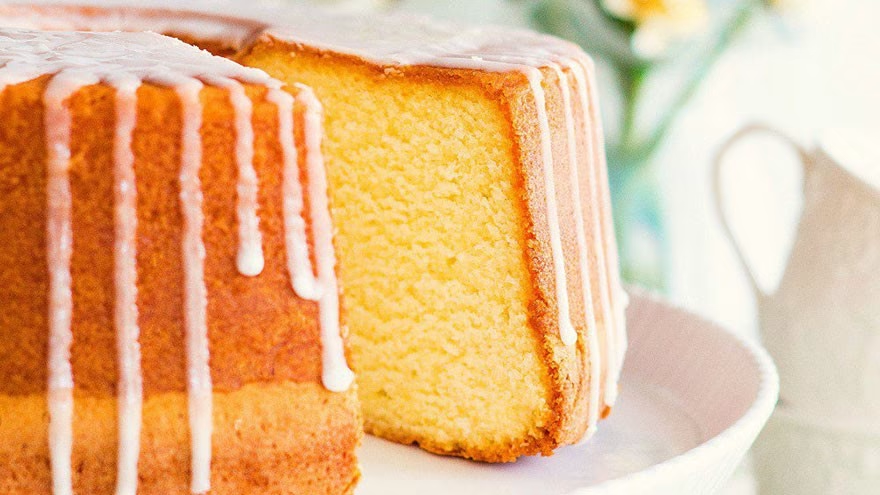
Mom's sour cream pound cake should cut cleanly, smell like butter before the knife hits it, and stay moist the next morning without tasting wet. The trick is not a secret ingredient. It is temperature, mixing, pan prep, and patience. Sour cream brings acidity and fat, but it cannot rescue cold butter, dumped-in eggs, or a cake yanked from the pan while the crumb is still fragile.
This version keeps the old-fashioned shape: butter, sugar, eggs, flour, sour cream, vanilla, and a slow bake in a tube or Bundt pan. The method does the heavy lifting. Cream the butter long enough to trap air, add eggs one at a time, mix the flour gently, bake until the center tests clean, then let the cake cool before slicing. Good pound cake is dense. Heavy is a mistake.
What Makes Sour Cream Pound Cake Different?
Sour cream changes the crumb in two ways. Its fat adds richness, and its acidity softens the flour's structure so the cake feels tender instead of bready. That is why sour cream pound cake can be close-grained and moist at the same time. The batter still needs enough air from creaming, though. Without that trapped air, the cake bakes up squat and gummy.
King Arthur Baking's sour cream pound cake method beats butter and sugar until light, adds eggs one at a time, folds in sour cream, and bakes until a tester comes out clean. That basic order is worth keeping because each step protects texture. If you like old-school dessert projects, pair this cake with Mom's Best Fudge Icing only after the cake has cooled; warm pound cake will melt a glaze into streaks.
Which Ingredients Should Be At Room Temperature?
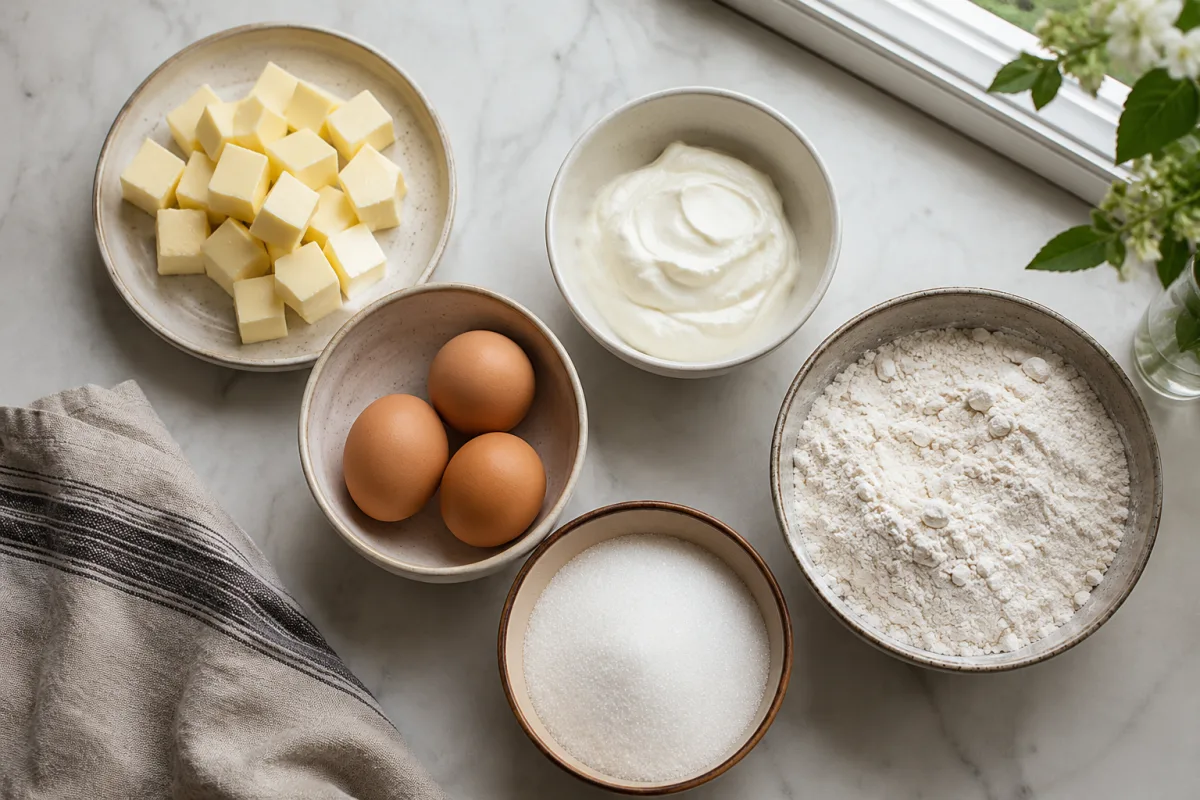
Butter, eggs, and sour cream should lose their refrigerator chill before mixing. Butter around soft room temperature bends under a finger but does not look greasy. Eggs that are too cold can make the butter firm up in little flakes, which breaks the emulsion and leaves tunnels in the crumb. Sour cream blends more evenly when it is cool, not icy.
Set the ingredients out about an hour before baking. If you are short on time, cut butter into small cubes and let it sit on a plate; do not melt it. Place eggs in a bowl of warm tap water for a few minutes, then dry them before cracking. Stir sour cream once so it is smooth before it goes into the batter. These small moves keep the mixture even.
Food safety still matters. The CDC warns that raw flour and raw eggs can carry germs, and raw cake batter should not be tasted. If children help measure flour or crack eggs, wash hands, bowls, utensils, and counters after the batter is in the pan. The cake is safe after baking, not because the batter smelled good on the spoon.
How Do You Cream Butter And Sugar Correctly?
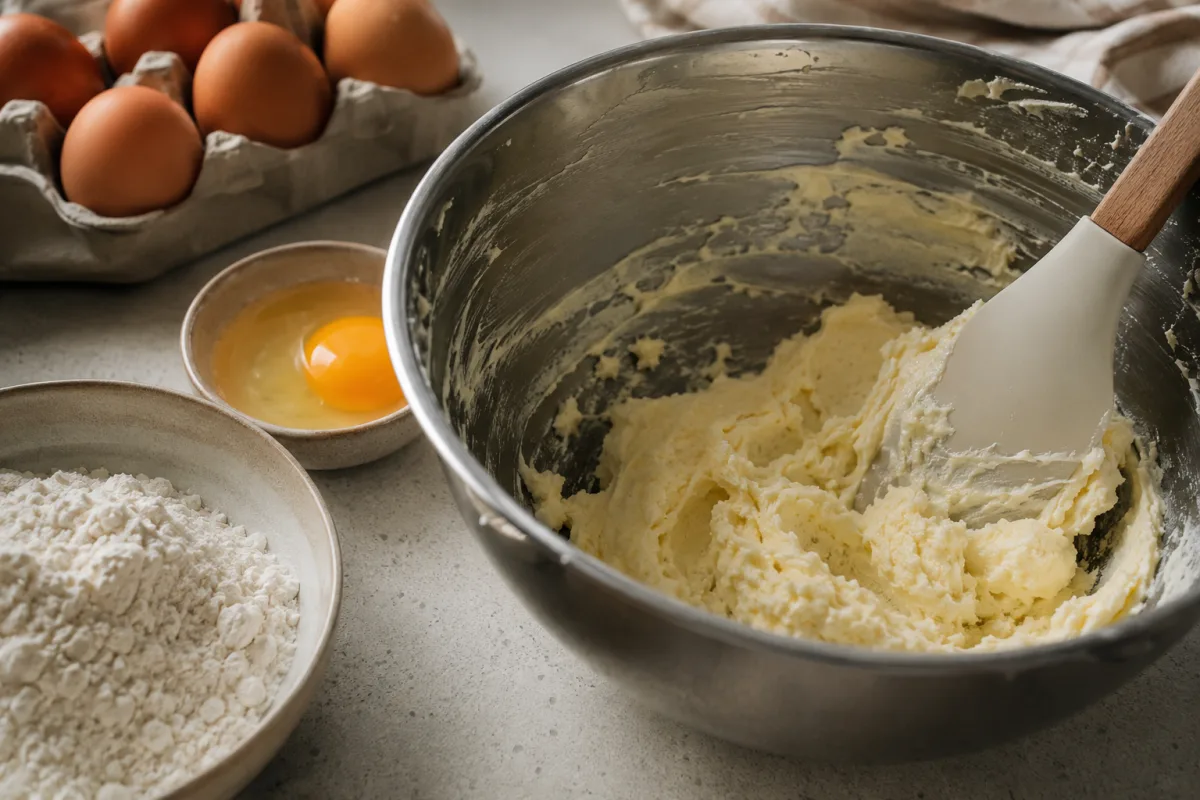
Creaming is where the cake gets lift. Beat softened butter and sugar on medium speed until the mixture lightens in color and looks fluffy around the bowl. Scrape the sides once or twice. You are not just mixing; sugar crystals cut tiny air pockets into the butter, and those pockets expand in the oven.
Add eggs one at a time. Let each egg disappear before the next one goes in. If the batter looks slightly curdled after the last egg, scrape the bowl and beat briefly; a spoonful of flour can help bring it back together. Dumping all the eggs at once is faster, but it often leaves a slick batter that bakes dense in the lower half.
Once the flour appears, change your attitude. Add dry ingredients in portions, alternating with sour cream if your recipe uses that order, and stop as soon as the batter is even. Overmixing after flour develops gluten, and gluten is why a pound cake turns chewy. For more display-friendly dessert ideas after this cake cools, Livecub's cookie display guide has useful layout thinking for trays and holiday tables.
What Is The Best Pan Prep?
A pound cake punishes casual pan prep. Use a tube pan or Bundt pan in the size your recipe expects, then grease every ridge, center tube, and corner. Butter tastes good but can leave milk solids that stick; baking spray with flour or shortening plus flour is more reliable for detailed pans. Tap out excess flour so the crust does not look dusty.
Fill the pan evenly and level the top with a spatula. Pound cake batter is thick, so air pockets can hide near the center tube. Tap the pan gently on the counter two or three times, not enough to deflate the batter, just enough to settle it. Put the pan on the oven rack with space around it so heat can move through the center and sides.
If your oven runs hot, the crust can set before the middle rises. An inexpensive oven thermometer is useful here. Most sour cream pound cakes bake better at a moderate temperature than at a blast of heat. The goal is a golden crust, not a hard shell.
How Do You Know The Pound Cake Is Done?
The tester should come out clean or with a few moist crumbs, not wet batter. Check near the center tube and halfway between the tube and outer wall. King Arthur notes a 55 to 60 minute bake for its brown sugar sour cream pound cake, but pan size, oven calibration, and batter volume change timing. Watch the cake, not the clock alone.
The surface should spring back gently when touched, and the edges may pull slightly from the pan. If the top browns too early, tent it loosely with foil for the last stretch. Do not lower the oven temperature late unless the recipe tells you to; a sudden change can stall the middle.
The FDA also reminds home bakers that cooking and baking are what kill bacteria in flour and raw eggs. That is another reason to bake until the center is actually done. A pretty crust cannot prove the middle is safe or set.
How Should You Cool, Glaze, And Store It?
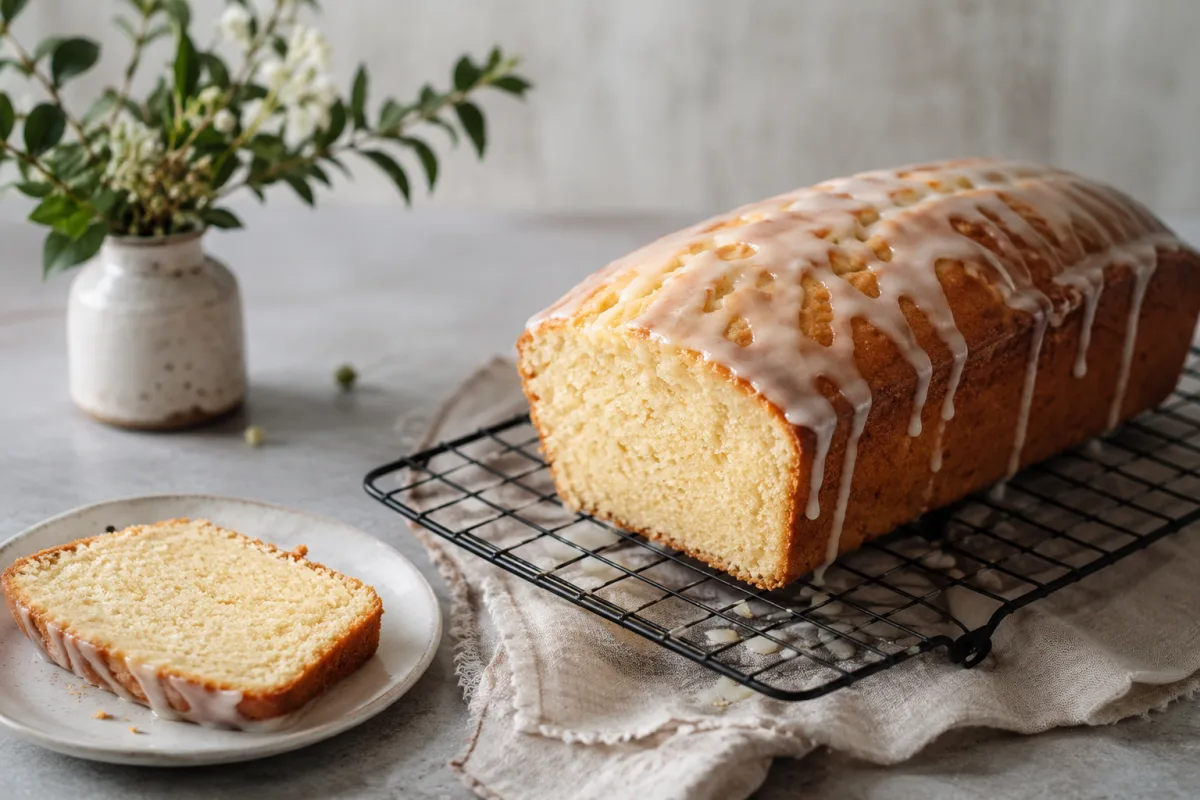
Cool the cake in the pan for about 15 minutes, then turn it onto a rack. Too soon, and the crumb can tear. Too late, and sugar in the crust may glue itself to the pan. Let the cake cool fully before slicing because steam inside the crumb is still redistributing moisture.
Glaze only when cool. A thin vanilla glaze works; so does lemon glaze, chocolate drizzle, macerated berries, or a dusting of powdered sugar. For holiday baking, this cake can sit next to Christmas cookie ornaments because it slices neatly and does not need refrigeration for a simple, unfilled version.
Store the cake wrapped at room temperature for a few days if it has no perishable filling. Freeze thick slices tightly wrapped if you want clean portions later. Refrigeration can dry out butter cakes, so use the refrigerator only when the topping or filling needs it. For a savory side dish that uses the oven differently, basic corn souffle is a helpful contrast in timing and texture.
Frequently Asked Questions
Can I use Greek yogurt instead of sour cream?
Full-fat Greek yogurt can work, but the flavor is tangier and the texture may be slightly lighter. Avoid watery yogurt unless you strain it first.
Why did my pound cake crack on top?
A top crack is normal in many pound cakes. The outside sets while the center keeps rising. A deep split with dry edges can mean the oven ran hot.
Why is the cake gummy near the bottom?
The batter may have been under-creamed, overmixed after flour, underbaked, or cooled too long in the pan. Cold ingredients can also break the batter.
Can sour cream pound cake be made a day ahead?
Yes. The flavor often improves overnight once the crumb settles. Wrap it well after it cools so the cut edges do not dry.
Do I need a Bundt pan?
A tube pan or Bundt pan helps the center bake evenly. Loaf pans can work only if the batter is divided and the baking time is adjusted.
What Should You Do Differently Next Time?
If the cake was dry, bake a little less and check your flour measuring. If it was heavy, cream longer and warm the eggs next time. If it stuck, change the pan prep before blaming the recipe. Sour cream pound cake rewards repeat baking because every batch leaves a clear clue: crumb, crust, release, and moisture tell you exactly where to improve.

Chiara Bradshaw
Covers education, culture and creative topics with an emphasis on readable explanations and verifiable references.




Leave a reply
Replying to