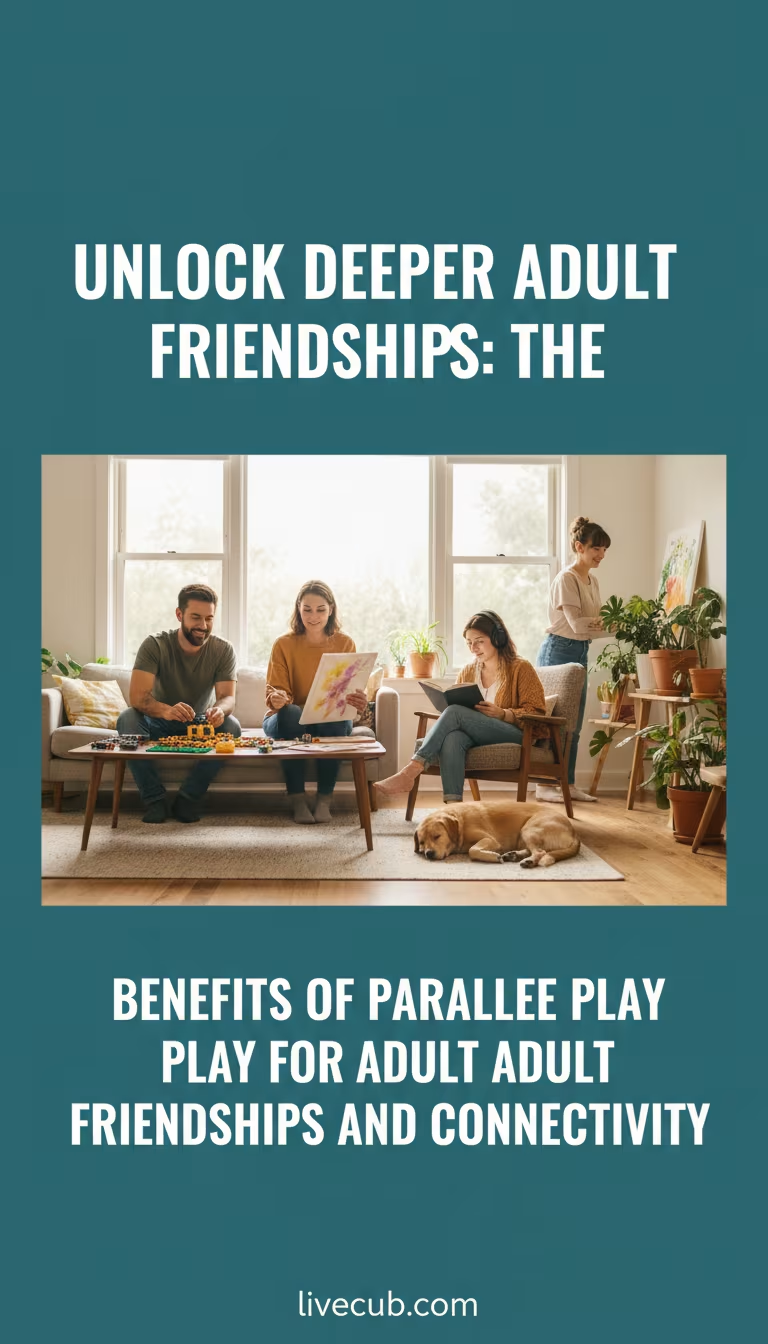
The Benefits of Parallel Play for Adult Friendships and Connectivity
Ever find yourself staring at your phone, scrolling through social media, and feeling a weird pang of loneliness even though you have a hundred "friends" online? Or maybe you've tried to plan that elusive "catch-up" with a friend, only for the conversation to feel forced, or the schedules to just never align.
You're not alone, believe me. It seems like the older we get, the harder it is to forge and maintain those deep, meaningful connections we crave. We're busy, we're tired, and sometimes, the idea of a high-pressure, intimate conversation just feels like another item on an already overflowing to-do list.
But what if I told you there's a simple, low-stakes way to reconnect, build intimacy, and strengthen your adult friendships, inspired by the way toddlers interact? Welcome to the wonderful world of parallel play for grown-ups.
Why This Matters
In our modern world, we're more "connected" than ever, yet often feel increasingly isolated. Our phones ping with notifications, our inboxes overflow, and our social feeds are a curated highlight reel of everyone else's seemingly perfect lives. It's a lot, right?
And it leaves little room for the kind of authentic, unhurried connection that truly nurtures our souls. Think back to your childhood friendships. You didn't always need to have deep, soul-baring conversations to feel close.
Sometimes, you just built sandcastles together, played make-believe, or drew side-by-side. That's parallel play in action, and it turns out, it's not just for kids. For adults, the pressure to "perform" in friendships – to always be interesting, to offer profound insights, to solve problems – can be exhausting.
This pressure can actually prevent us from reaching out, making us dread the effort rather than anticipate the joy. This is why parallel play is so important for adults; it offers a gentle, less intimidating pathway to intimacy. It allows us to simply exist in shared space with people we care about, fostering connection through presence rather than explicit conversation.
It's about building a foundation of comfortable companionship, a silent understanding that says, "I see you, and I enjoy being with you," without needing a single word. What could be more vital for our well-being than that?
What Even Is Parallel Play, Anyway? (And Why It's Not Just for Kids Anymore)
Okay, let's talk about what parallel play actually means. In developmental psychology, parallel play is when children play *alongside* each other, but not necessarily *with* each other. They might be in the same room, doing similar activities – one kid building a tower, another drawing a picture – occasionally glancing at each other, maybe even exchanging a few words, but primarily focused on their own activity.
There's no expectation of shared goals or collaborative effort. It’s about shared space and comfortable presence. Now, apply that to adult friendships.
For us grown-ups, parallel play isn't about ignoring your friend while you both stare at walls (though sometimes a quiet moment is nice!). It's about engaging in separate, yet complementary or similar, activities while occupying the same physical or even virtual space. It's a beautiful alternative to the high-stakes "let's grab coffee and have a deep talk" scenario that often feels too daunting when you're strapped for time or mental energy.
What I love about it is how it strips away the pressure. You don't need to entertain each other, fill every silence, or solve each other's life problems. You just get to be together, sharing a comfortable, low-pressure presence that allows connection to blossom organically.
It’s like saying, "Hey, I enjoy your company enough to just exist alongside you, doing our own thing, and that's more than enough." It fosters a sense of belonging and shared reality without the intense conversational demands. It's particularly fantastic for people who are introverted or socially anxious, but honestly, everyone can benefit from this softer approach to connection.
How Parallel Play Looks for Grown-Ups
- Shared Hobbies & Creative Pursuits: This is a classic. Think two friends reading separate books on the same couch, or perhaps one knitting while the other sketches, or both working on different puzzles at the same table. I've had some of my most wonderfully calm and connected evenings with friends where we're each pursuing our own creative projects – I'll be editing photos, and my friend will be writing. We'll chat occasionally, share a snack, but mostly, we're just enjoying the productive quiet company. It’s comforting and deeply connecting in its own way.
- Co-Working & Study Sessions: This has been a lifesaver for me, especially when I was working on big projects or even just managing my weekly to-do list. Instead of tackling your separate work tasks alone, why not do them in the same space? Head to a coffee shop, a library, or even each other's homes. You're both focused on your own work, but the shared presence provides accountability and a sense of camaraderie. You might take a coffee break together, bounce an idea off each other, or just appreciate the feeling of not being isolated. I find I'm often more productive when I have a "work buddy," even if we're not collaborating on the same thing.
- Low-Stakes Social Gatherings: Imagine a potluck where everyone brings their own craft project, or a board game night where some people are playing while others are just hanging out, listening to music, and chatting intermittently. These aren't rigidly structured events with a singular focus. Instead, they allow for multiple pockets of activity and interaction, letting people choose their level of engagement. I recently hosted a "book and craft night" where some friends read, others did puzzles, and a few worked on painting. We had music on, snacks out, and everyone felt comfortable doing their own thing while still being together.
The Silent Superpower: How Parallel Play Deepens Connection
The beauty of parallel play lies in its subtlety. It's not about grand gestures or profound declarations; it's about the quiet magic of shared space and comfortable presence. When you're engaging in separate activities alongside a friend, a few powerful things happen.
Firstly, it reduces the pressure for constant conversation. We all know that awkward feeling when you're with someone, and the silence stretches, and you feel compelled to fill it with anything, just to avoid the perceived discomfort. Parallel play eliminates that.
The activity itself becomes the primary focus, allowing conversation to flow naturally, or not at all, without judgment. Secondly, it cultivates "comfortable silence." This is, in my opinion, one of the hallmarks of a truly strong friendship. Being able to just exist in quietude with someone, each content in your own world but aware of the other's presence, is a profound form of intimacy.
It says, "I don't need you to entertain me; your presence is enough." It's a non-verbal affirmation of acceptance and trust. Thirdly, it fosters a sense of shared experience without shared obligation. You're both experiencing the same environment, the same background noise, the same ambient energy, but you're not obligated to perform or interact in a specific way.
This shared presence builds a deeper, more resilient bond over time. It's like planting a seed and letting it grow slowly and steadily, rather than trying to force it to bloom overnight. Over months and years, these small, consistent moments of parallel play can create a strong, unshakable foundation for your friendships, making them feel less like work and more like home.
Building Bonds Without the Pressure Cooker
- Focus on the Activity, Not Just the Talk: When you're engaged in parallel play, give yourself permission to truly focus on what you're doing. If you're reading, read. If you're drawing, draw. Don't feel like you need to constantly look up or initiate conversation. The shared activity is the point. When you do chat, it'll feel more organic and less forced because you're both relaxed and enjoying yourselves. I've found that when I'm focused on a task, my brain is less anxious about "what to say next," and often, more interesting conversations arise naturally during breaks or as topics related to our tasks.
- Embrace Comfortable Silence: This is a skill, especially for those of us who grew up in environments where silence was often interpreted as awkwardness or disagreement. With parallel play, silence isn't a void to be filled; it's a part of the experience. It signals trust and comfort. If you find yourself wanting to break it, try to resist and just lean into the quiet. Notice how your body relaxes. When I first started incorporating parallel play, I worried my friends would think I was bored, but after a few sessions, we all realized how peaceful and connecting it actually was.
- Observe and Learn: Even though you're doing your own thing, you're still in the same space. This gives you a chance to subtly observe your friend. Maybe you notice their focus when they're working, their little habits, or a new interest they're pursuing. These observations can provide gentle insights into their world, sparking natural curiosity and leading to genuine, unforced conversation later. It's a non-invasive way to learn more about someone, without the direct questioning that can sometimes feel like an interrogation.
Practical Ways to Incorporate Parallel Play into Your Adult Life
Okay, so you're sold on the idea. But how do you actually make this happen in your busy adult life? It's simpler than you might think!
The key is to shift your mindset from "we must have a serious conversation" to "let's just *be* together." You don't need a grand plan or a complicated setup. Sometimes, it's about tweaking existing routines or suggesting new, low-commitment activities. Think about what you already enjoy doing alone, and then consider if that activity could be enhanced by doing it *alongside* a friend.
It's about finding those natural intersections where your individual interests can coexist in a shared space. Don't overthink it; the magic is in the simplicity and the lack of pressure. The more you practice this, the more natural it becomes, and you'll start seeing opportunities for parallel play everywhere.
The goal isn't to replace deep conversations, but to supplement them, creating more frequent and less intimidating points of connection that build a robust friendship foundation. I've personally found that these low-key hangouts make me feel less drained and more genuinely connected, which makes me more likely to reach out for more catch-ups.
Ideas to Get You Started
- The "Book Club But We Don't Discuss the Book": Instead of picking a book to dissect, pick a time and place to simply read your *own* books together. Maybe it's at a quiet cafe, a park bench, or your living room. You're sharing the peaceful experience of reading, occasionally looking up to smile, share a sentence, or grab another tea. It's wonderfully calm and restorative, and you leave feeling refreshed and connected. After trying this for a few months with a friend, we actually started recommending books to each other organically, without the pressure of a formal discussion.
- Fitness Buddies: This is a fantastic way to blend self-care with social connection. Instead of going for a run or hitting the gym alone, invite a friend to do their own workout alongside you. You might be on different machines, listening to different music, or running at different paces. But you're in the same space, working towards your individual goals, and sharing the positive energy of physical activity. A quick chat before or after, or even a shared stretch, can make it feel like a mini-get-together. I've had gym buddies where we barely spoke for an hour, but the shared effort and the post-workout chat were incredibly bonding.
- Project Partners: Do you have a home improvement project? A side hustle? A creative endeavor? Why not work on it simultaneously with a friend who has their own project? One of you might be painting a dresser while the other is coding, or one is writing a blog post while the other is meal prepping. The shared focus and occasional breaks to chat or offer encouragement can make daunting tasks feel less solitary and more enjoyable. My friend Sarah and I often do this; she'll be researching for her novel, and I'll be designing graphics. We keep each other accountable and celebrate small wins.
- Culinary Adventures (Without Joint Cooking): Host a "make your own dinner" night. Each person brings ingredients for their personal meal or recipe, and you all cook in the same kitchen. One might be making pasta, another a salad, and another a stir-fry. You're sharing the space, the sounds, and the smells of cooking, perhaps offering tips or sharing a glass of wine, but you're not obligated to follow the same recipe or coordinate every step. It’s communal without being prescriptive. Or even simpler: bring your own lunch to a friend's house and eat it together while you both work.
Beyond Friendship: Parallel Play for Family & Relationships
While we've focused a lot on adult friendships, the principles of parallel play aren't just for your pals. They're incredibly effective for strengthening all sorts of relationships in your life – with your partner, siblings, parents, or even your own adult children. Think about it: how often do we feel the pressure to have "quality time" with our significant others, which often translates to a structured date night or a deep conversation?
While those are important, sometimes just *being* together, without an agenda, can be even more powerful. It’s about creating an atmosphere where genuine connection can flourish without the added weight of expectation. For family, especially, where histories and dynamics can sometimes make direct, intense conversations difficult, parallel play offers a gentle bridge.
It allows for presence and affection to be demonstrated in quieter ways, acknowledging that love and connection don't always need words to be felt. It cultivates a sense of relaxed togetherness that can deepen bonds in profound ways, particularly for those relationships that might feel a bit strained or distant.
This approach can be a true lifeline when life gets hectic and structured connection feels impossible.
Strengthening All Your Connections
- Date Night Redefined: Forget the fancy dinner and forced conversation if that's not what you're craving. For you and your partner, parallel play could look like tackling separate puzzles on the living room floor, both reading in bed, working on separate passion projects in the same space, or even playing different video games side-by-side. My husband and I often spend evenings side-by-side, he’s typically reading or playing a game, and I’m writing or sketching. We’ll chat intermittently, share a laugh over something we saw, or just appreciate the quiet company. It builds a beautiful sense of shared life and comfortable intimacy.
- Sibling Squad Goals: If you have adult siblings, parallel play can be a wonderful way to reconnect, especially if you live far apart. Consider having a video call where you're both doing separate tasks – one might be folding laundry, the other sorting mail, or both reading. It's like being in the same room, without the pressure of constant eye contact or conversation. It creates a casual, real-life connection that can feel more authentic than a purely conversational call.
- Bridging Generational Gaps: For parents and adult children, parallel play can be incredibly healing and bonding. Instead of interrogating your adult child about their life choices, invite them over to do something alongside you. Maybe you both garden, one planting flowers while the other weeds. Or you both listen to different podcasts while tidying the house. It provides a non-confrontational space for shared presence and can organically open doors for conversation that might otherwise feel forced or difficult. My mom and I often bake together; she’s usually making her specialty bread, and I’m doing cookies. We talk, laugh, and sometimes just enjoy the aroma and the quiet clatter of the kitchen.
Common Mistakes to Avoid
While parallel play is a fantastic tool for connection, it's not a magic bullet, and there are a few pitfalls to be aware of. Firstly, don't confuse parallel play with avoidance or disinterest. The whole point is to be *present* in the shared space, even if your focus is on your individual activity.
If you're both just staring at your phones, completely tuned out from each other, that's not parallel play; that's just two people ignoring each other. There's a subtle but important difference in intention and awareness. Secondly, don't force conversation or feel guilty if it doesn't happen.
The beauty is in the organic flow. If a conversation sparks, great! If it doesn't, that's okay too.
The goal isn't to *get* something out of the other person, but to simply share space and presence. Third, don't make every interaction parallel play. It's a fantastic *complement* to deeper conversations and more structured social interactions, not a replacement.
You still need those one-on-one heart-to-hearts and collaborative experiences to fully nourish a friendship. Consider it another tool in your relationship toolbox. Fourth, don't expect instant intimacy or profound breakthroughs.
Parallel play builds connection slowly, steadily, and subtly. It’s about consistent, low-pressure presence accumulating over time. It's a marathon, not a sprint.
If you go into it expecting a sudden epiphany about your friendship, you might be disappointed. Just enjoy the ride and trust the process. Finally, don't use it as an excuse to neglect your own needs or boundaries.
Ensure the activity genuinely feels good for both of you, and that you're choosing to be present, not just passively existing because you feel obligated. Authenticity is key.
Expert Tips
For those of you who are ready to fully embrace the power of parallel play, here are some advanced tips to maximize its benefits and truly integrate it into your lifestyle. Firstly, vary your parallel play activities. Don't get stuck in a rut.
Try different settings and different kinds of activities to keep things fresh and discover new ways to connect. One week it might be crafting, the next it's co-working at a cafe, the next it's a quiet walk together where you're both listening to your own podcasts but share a nod or a smile. This prevents the activity itself from becoming mundane.
Secondly, practice active awareness even when not conversing. Pay attention to the subtle cues – a sigh, a smile, a focused frown. These observations can deepen your understanding of your friend without needing words.
Sometimes, just knowing someone is having a good time or is deeply engrossed in their work can bring a sense of joy and connection to you. Thirdly, set a gentle intention before you start. It doesn't have to be a big declaration, just an internal thought like, "Today, I'm going to enjoy this quiet time with Sarah." This mindset helps you stay present and appreciate the moment for what it is.
Fourth, integrate "micro-interactions". These are brief, low-pressure exchanges that pepper your parallel play. A shared glance, a small comment about something you're working on, offering a snack, or just a simple, "How's that coming along?" They're gentle invitations to connect without demanding a full conversation.
I've found that these little moments are often the most delightful. Lastly, communicate clearly with your friends. Explain the concept of parallel play if they're unfamiliar.
Say something like, "Hey, I'd love to just hang out and work on our own things together. No pressure to chat constantly, just enjoy the company." This sets expectations and ensures everyone is on the same page, making the experience comfortable for all.
Final Thoughts
So, there you have it. Parallel play isn't just a quirky concept from childhood development; it's a powerful, often overlooked tool for building deeper, more authentic adult friendships and strengthening all your vital connections. In a world that constantly demands our attention and performance, the ability to simply exist in comfortable, shared presence with someone you care about is a true gift.
It’s a quiet rebellion against the pressure to always be "on." It allows for a more sustainable, less draining way to maintain and grow your relationships. I encourage you to try it. Start small, experiment with different activities, and just notice how it feels.
You might be surprised by the profound sense of connection and peace it brings into your life. So, go ahead, invite a friend to read a book on your couch, work on a project side-by-side, or just enjoy a quiet coffee together, each lost in your own thoughts. You’re not just passing time; you’re building a bridge of quiet understanding, one shared, comfortable moment at a time.
Your friendships (and your sanity) will thank you for it.
Save for later
Found this helpful?
Pin this article to your Pinterest board and come back to it whenever you need a reminder.
Save to Pinterest