
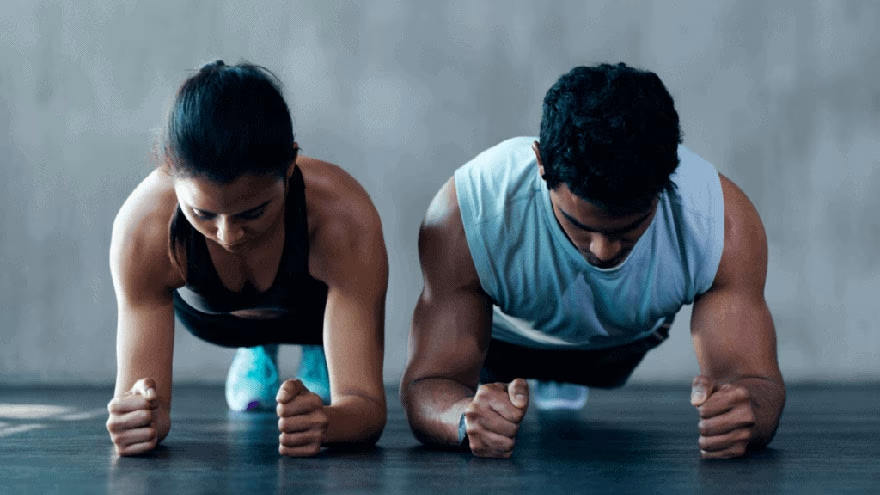
The Best P90X Workouts for Women's Thighs Need a Clear Goal
The best P90X workouts for women's thighs are not magic thigh-shrinking sessions. They are hard lower-body and full-body workouts that can build strength, stamina, coordination, and muscle endurance. If the goal is stronger legs, better conditioning, and more capable movement, P90X gives several useful options.
BODi's official P90X workouts page describes the program as a 90-day home fitness program with 12 intense workouts using resistance and body-weight training. That means the leg work sits inside a broader program, not a single thigh routine.
Set the expectation first: workouts can train thigh muscles, but they cannot choose exactly where body fat comes off. Train thighs for function, not spot promises.
What Thigh Training Means
The thigh is not one single muscle. The front of the thigh includes the quadriceps. The back includes the hamstrings. The inner thigh, outer hip, glutes, calves, and trunk all affect how squats, lunges, jumps, and holds feel.
A good P90X thigh plan should not only burn the quads. It should include knee bending, hip hinging, stepping, balance, landing, and recovery. That makes the legs stronger for real movement instead of only tired for one day.
If a workout creates knee pain, hip pinching, or sharp discomfort, modify the range or stop. Muscle fatigue is different from joint pain. Better form beats more reps.
Legs and Back
Legs and Back is the obvious P90X thigh pick because it includes repeated lower-body patterns. Squats, lunges, balance work, and pulling exercises create a long session that challenges quads, hamstrings, glutes, calves, and the trunk.
For thighs, pay attention to knee tracking, foot pressure, depth, and tempo. A shallow rushed lunge is less useful than a controlled one that keeps the front knee organized and the back leg active.
Use modifications if form breaks. Body weight is enough for many people. Add dumbbells only when the basic movement stays stable.
Livecub's Tae Bo weight loss guide is a related cardio article, but the same principle applies: the workout has to match the person's current capacity.
Form Cues for Squats and Lunges
For squats, keep the feet rooted and let knees track generally with the toes. Sit back and down only as far as you can control. Stand up by pressing through the whole foot, not by bouncing out of the bottom.
For lunges, step far enough that the front heel stays down. Keep the torso tall without forcing the back into an arch. If balance is the issue, use a chair or wall for light support.
Tempo changes the workout. A slower lowering phase can make body-weight leg work feel much more demanding without adding dumbbells or impact.
Plyometrics
Plyometrics can challenge the thighs through jumping, landing, and repeated athletic patterns. It is demanding because the muscles have to absorb force, produce force, and repeat that cycle while fatigue builds.
This workout is not the place to ignore joints. Land softly, keep knees tracking with toes, and reduce jump height if landings get loud. Step-out versions can still train the legs without as much impact.
Plyometrics may be a strong choice for conditioning and power, but it should not be done hard every day. Thighs, hips, feet, and calves need recovery after repeated jumping.
For another leg-conditioning comparison, Livecub's running bleachers article also shows how stairs and body weight can make legs work hard.
Modify Without Quitting the Workout
Modification is not failure. It is how the workout fits the body in front of it. Replace a jump with a step, shorten a lunge, use no weights, or pause the video long enough to reset form.
Choose one variable at a time. If impact is the problem, keep the movement but remove the jump. If balance is the problem, keep the range smaller. If fatigue is the problem, take longer rests.
Good modifications let the thighs keep working without turning the session into joint stress or sloppy repetition.
Core Synergistics
Core Synergistics is not only an abdominal workout. It uses full-body patterns where the thighs help stabilize, drive, and transfer force. That can be useful for women who want leg training that does not feel like endless squats.
The thigh muscles work during lunging, stepping, bracing, twisting, and floor-to-standing transitions. This kind of session can expose weak links in balance and hip control.
Use it when you want a leg challenge that also asks the trunk to organize. If your lower back or knees feel irritated, reduce range and slow down.
Livecub's basic aerobic steps article gives a lower-intensity way to think about coordination before harder conditioning sessions.
Yoga X
Yoga X can be surprisingly demanding for thighs because of long holds, transitions, and balance shapes. Warrior-style positions, lunges, chair-style positions, and standing balance work can ask the quads and hips to stay active without bouncing.
This is useful because not every thigh workout needs to be explosive. Isometric holds can build endurance and control, especially when breathing stays steady.
Use Yoga X for mobility, control, and recovery from impact, but do not treat it as effortless. Long holds can fatigue the thighs in a different way from jumping or weighted lunges.
For another slow-control comparison, Livecub's Pilates or tai chi article helps frame why slower training can still be serious work.
Spot Reduction and Thigh Expectations
ACE Fitness lists spot reducing as a common fitness myth in its fitness myths guidance. Training thighs can strengthen and shape the muscles, but fat loss patterns depend on overall energy balance, genetics, hormones, and consistency.
That does not make thigh training pointless. Stronger thighs help stairs, sports, lifting, balance, and daily movement. Muscle can change how the legs feel and perform even when the scale is not the main measure.
A better goal is measurable performance: better lunge control, softer landings, more stable squats, deeper range without pain, and better recovery between sessions.
Do not chase soreness as proof. Progress can look like cleaner form and better stamina.
How Often to Train
The CDC's adult activity guidance says adults need at least 150 minutes of moderate-intensity activity per week and two days of muscle-strengthening activity. P90X can fit that picture, but the intensity means recovery matters.
If Legs and Back leaves you sore, do not stack Plyometrics hard the next day unless the program schedule and your body both support it. Modify jumps, reduce weight, or take an extra recovery day when needed.
Women returning after injury, pregnancy, a long break, or joint pain should scale the program. A workout that looks good on paper is not better than one you can repeat with clean form.
A Smarter Weekly Thigh Focus
A thigh-focused week might place Legs and Back as the main strength day, Plyometrics as the power or conditioning day, Yoga X as the control and mobility day, and Core Synergistics as the full-body support day.
That does not mean doing all of them at full force in a row. Put recovery, stretching, walking, or lighter upper-body work between hard leg sessions if soreness changes form.
Track how the legs feel two days after the hardest session. If stairs are miserable and knees feel sloppy, the plan was too aggressive. Recovery is part of the workout.
How to Make the Thigh Work Better
Slow the lowering phase of squats and lunges. Pause briefly where control is hardest. Drive through the whole foot instead of collapsing into the toes.
Use a mirror or video for knee tracking. Knees do not need to be perfectly still, but they should not dive inward every repetition. If they do, reduce speed or range.
Balance quad work with glute and hamstring work. Thigh training feels better when hips and trunk participate. Good leg work is whole-leg work.
For younger athletes or family fitness planning, Livecub's endurance exercises for kids article is a reminder that intensity should fit age and readiness.
Frequently Asked Questions
Which P90X workout is best for thighs?
Legs and Back is the main lower-body choice, while Plyometrics and Yoga X challenge the thighs in different ways.
Can P90X reduce thigh fat?
P90X can support overall fitness and fat loss habits, but it cannot spot reduce fat from the thighs alone.
Is Plyometrics good for women's thighs?
It can be, if landings are controlled and recovery is adequate. Modify impact when joints or form need it.
Should I use weights for P90X leg work?
Use weights only when body-weight form is stable. Control and range matter more than holding heavy dumbbells too soon.

Cashie Evans
Covers parenting and practical household topics with clear steps, safety notes and links to current guidance.
Leave a reply
Replying to