
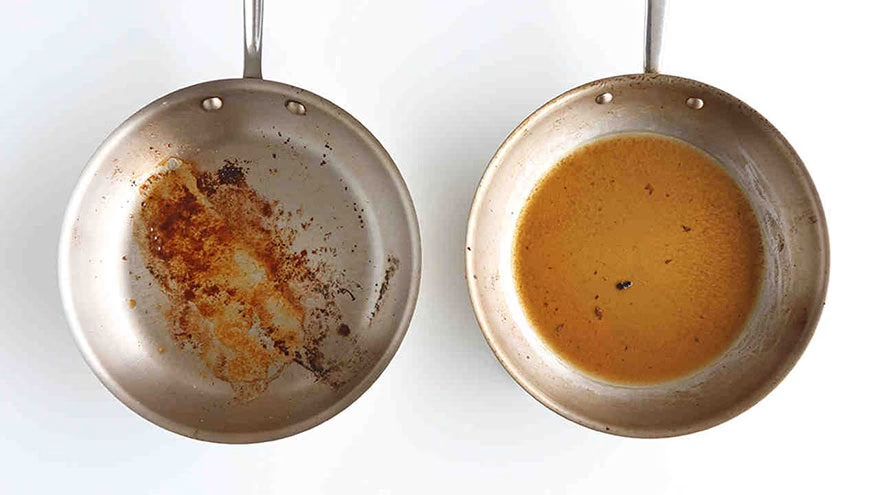
Deglazing is one of those kitchen moves that sounds like restaurant language until you do it once. You sear food in a pan, remove the food, add liquid, scrape up the browned bits, and suddenly the pan is not dirty; it is the start of sauce. The method works for chicken, steak, pork chops, mushrooms, onions, greens, sausage, fish, and even some roasted vegetables if the pan has enough browned material to loosen.
The key is knowing what you are looking at. Brown bits are fond, and they carry roasted flavor. Black, bitter, smoking residue is burnt food, and deglazing will not rescue it. A good deglaze tastes like the food you cooked, only deeper. A bad one tastes like scraped ash. This guide focuses on the small decisions that make the difference: pan choice, liquid choice, heat, scraping, reduction, and when to stop.
What does deglazing actually do?
When food browns in a hot pan, proteins and sugars react with heat and create new flavor compounds. That browning is part of the Maillard reaction. Serious Eats' explanation of the Maillard reaction lays out why high heat and reduced surface moisture matter for browned flavor. In everyday cooking, the result is simple: the browned layer stuck to the pan tastes good if it is not burned.
Deglazing uses liquid to dissolve and lift that browned layer. Water works. Stock works. Wine, beer, cider, vinegar, tomato juice, citrus juice, and even coffee can work in the right dish. The liquid loosens the stuck-on bits, the cook scrapes them into the liquid, and the liquid becomes the base of a sauce, braise, soup, or gravy.
This is why deglazing belongs in the same mental toolbox as stir-fry sauce, gravy, and stock. You are not adding a bottled sauce on top of food; you are using the pan's existing flavor. If you are already comfortable balancing sweet, salty, sour, and savory flavors in stir-fry sauces, deglazing will feel familiar after the first try.
Set up the pan before you add liquid
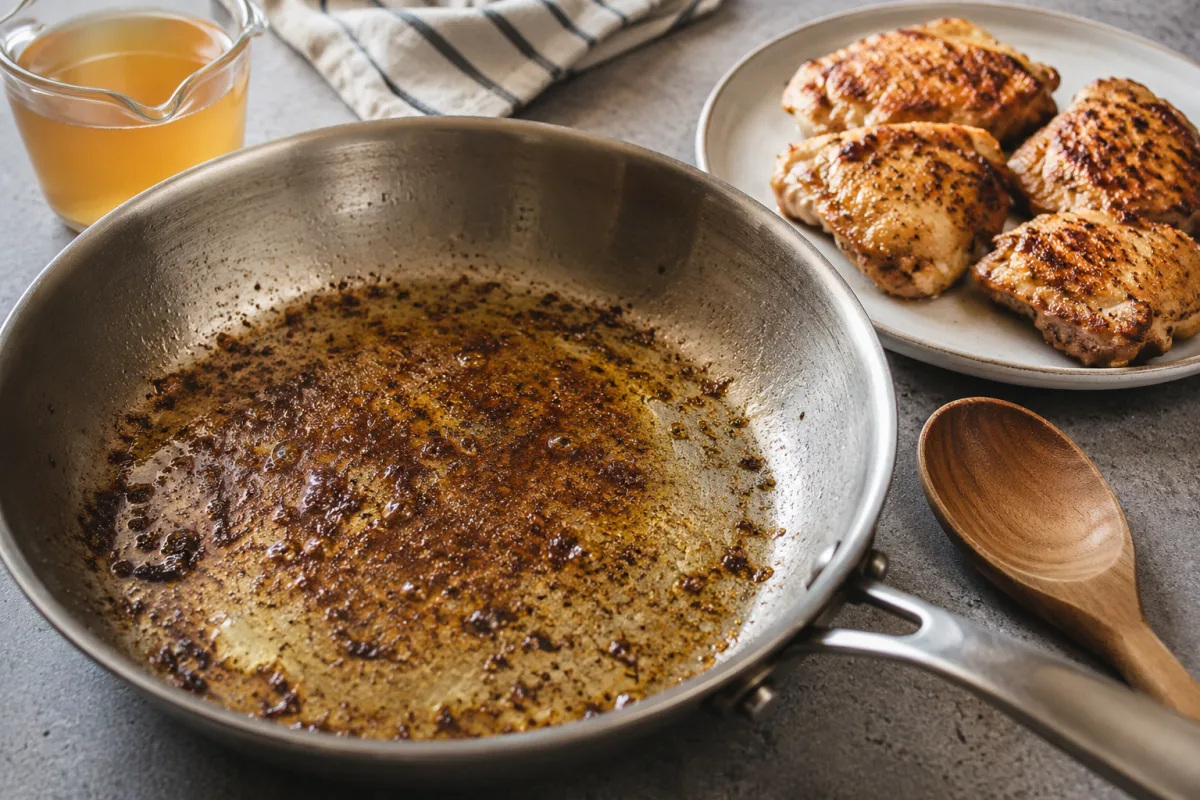
Use stainless steel, cast iron, carbon steel, or enameled cast iron when you want fond. Nonstick pans are designed to prevent sticking, which means they give you less browned material to deglaze. A little browning can still happen in nonstick, but it is not the best pan for learning the technique.
Dry the food before searing. Moisture keeps the surface temperature low and delays browning. If you drop wet chicken into a crowded pan, the food steams, the juices pool, and the fond turns pale. Pat meat or mushrooms dry, heat the pan properly, use enough oil to coat the surface, and avoid moving the food too early. It releases more easily once browning has formed.
After searing, remove the main food and pour off excess fat if there is a lot. Leave a thin layer because fat carries flavor and helps aromatics cook. If the pan has black spots, smell them. Bitter smoke or a harsh smell means you should wipe out those spots before building sauce. Brown is useful. Black is a warning.
This setup matters with rich foods. Goose, duck, and fatty cuts leave both fond and a large amount of fat. In a project like cooking goose, deglazing can be useful, but only after excess fat is poured away so the finished sauce does not taste greasy.
Which liquids work best for deglazing?
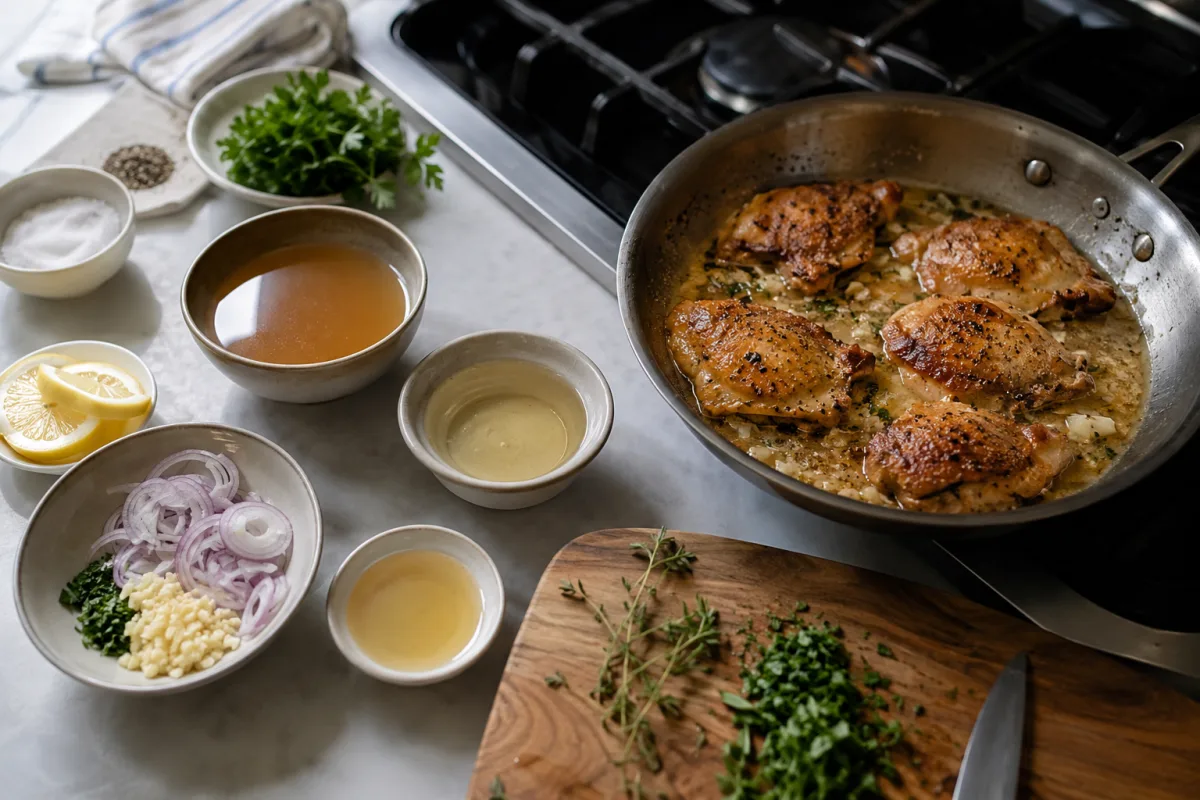
Choose the liquid based on the food and the sauce you want. Stock is the most forgiving. Chicken stock works with poultry, pork, mushrooms, greens, and pan-roasted vegetables. Beef stock works with steak, lamb, and deeply browned onions. Vegetable stock works when you want the sauce to stay light.
Wine adds acidity and aroma. White wine suits chicken, fish, mushrooms, and lighter vegetables. Red wine suits beef, lamb, and game. If you use wine, reduce it before adding stock or butter so the alcohol edge cooks off and the flavor concentrates. A small amount is usually enough; the pan should sizzle and steam, not flood.
Vinegar and citrus are sharper. Use them in splashes, especially for pork, chicken, greens, and rich sauces that need brightness. Beer works with sausages, onions, pork, and roasty flavors. Water is underrated when the fond is already strong. It lifts the browned bits without adding another flavor, then you can season from there.
Deglazing is not limited to meat. A pan used for mushrooms can be deglazed with stock and finished with herbs. Greens can be sauteed, then loosened with a spoonful of water or vinegar. That small move is useful in vegetable-heavy cooking, including the kind of skillet method used in cooking greens.
How to turn the liquid into a pan sauce
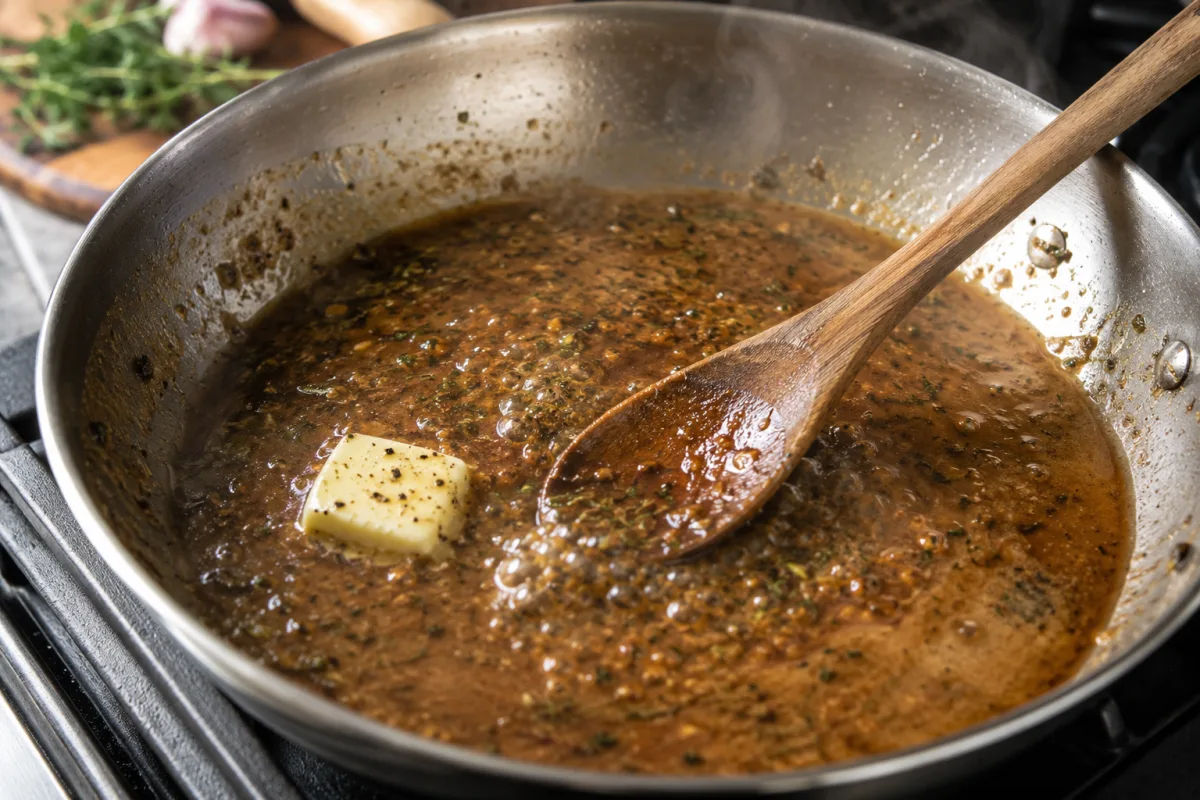
Once the food is removed and excess fat is poured off, add minced shallot, garlic, or spices if you want them. Cook briefly over medium heat. Then add the deglazing liquid and scrape with a wooden spoon or heatproof spatula. You should see the brown layer dissolve into the liquid.
Serious Eats' pan sauce guide explains that fond is the foundation of pan sauce and that even water can lift it. Once the fond is dissolved, reduce the liquid until it thickens slightly. Add stock if you need more volume. Finish with cold butter, cream, mustard, herbs, or lemon only after the sauce has enough flavor.
Butter should be added off the highest heat or at a gentle simmer. Swirl it in a little at a time. If the sauce looks greasy, it may have reduced too far. Add a spoonful of water and stir hard to bring it back together. If the sauce tastes flat, it may need salt or acid. If it tastes harsh, it may need more reduction or a small amount of fat.
Rich ingredients need restraint. Foie gras, for example, leaves intense fat and browned flavor, so a deglazed sauce should be sharp and small, not heavy. The same logic applies to serving foie gras: balance matters more than volume.
Common deglazing mistakes and fixes
The most common mistake is adding liquid before browning develops. If the food has only pale wet spots under it, there is little to deglaze. Keep cooking until the surface browns, or accept that the liquid will become a light cooking juice rather than a deep sauce.
The second mistake is scorching the pan. If the fond turns black, do not try to cover it with wine. Burnt residue will dissolve just as easily as good fond, and the whole sauce will taste bitter. Wipe out the burned areas, lower the heat, and start the sauce from what is still usable.
The third mistake is using too much liquid. A cup of liquid in a small skillet can dilute the fond and force a long reduction. Start with a splash, scrape, then decide whether to add more. For a quick sauce for two portions, a quarter cup may be enough before butter or stock enters the pan.
Food safety still matters. If the pan held poultry, meat, or seafood, cook the sauce thoroughly and serve it promptly. For leftovers, FoodSafety.gov reminds cooks to refrigerate perishable foods within two hours and reheat leftovers to 165 F. A good sauce is not a reason to leave the pan sitting out all evening.
How to use deglazing in everyday cooking
For chicken thighs, sear skin-side down, remove the chicken, pour off excess fat, cook shallot, then deglaze with white wine or stock. Reduce, add mustard or lemon, return the chicken to finish if needed. For pork chops, use apple cider, stock, or a splash of vinegar. For steak, use red wine, beef stock, or water plus butter and black pepper.
For mushrooms, use a hot pan and do not salt too early. Let them brown, then deglaze with stock, wine, or a splash of soy sauce and water. For onions, deglazing can happen several times during caramelizing; each splash loosens browned sugars and keeps them from burning. For fish, use a lighter hand because the fond is delicate and can turn harsh if scraped too aggressively.
Deglazing can also help with specialty proteins. Frog legs, for example, are mild and quick-cooking, so a small deglaze with white wine, lemon, and butter can pick up the browned flour or butter in the pan without overwhelming the meat. That same gentle approach fits the timing concerns in buying and cooking frog legs.
Once you get comfortable, you start seeing sauce before you wash the pan. Browned bits after seared chicken become dinner sauce. Roasted vegetables leave the start of a warm vinaigrette. A skillet of greens gets brighter with vinegar. The habit is small, but it makes home cooking taste less like separate parts and more like one finished dish.
Frequently Asked Questions
Can you deglaze with water?
Yes. Water is often enough when the pan has good browned bits. It lifts the fond without adding another flavor, and you can finish the sauce with butter, herbs, salt, or lemon.
Do you have to use wine to deglaze?
No. Stock, water, cider, beer, vinegar, citrus juice, tomato juice, or a mix of liquids can work. Wine is useful, but it is only one option.
Should the pan be hot when deglazing?
Yes, but it should not be smoking hard. A hot pan helps the liquid loosen fond quickly. Lower the heat if the browned bits are getting too dark.
Can you deglaze a nonstick pan?
You can add liquid to a nonstick pan, but there is usually less fond because the pan prevents sticking. Stainless steel or cast iron gives a stronger result.
What if my sauce tastes bitter?
The fond may have burned, or the pan may have been too hot after the food came out. Wipe out black spots before deglazing and use brown bits only.
Deglazing is a habit more than a recipe. Brown the food well, save the good bits, add the right splash of liquid, and reduce until the sauce tastes like the meal you meant to cook.

Tory Stearns
Edits practical household, travel and lifestyle explainers. Claims that can change are linked to current primary or subject-authority sources.




Leave a reply
Replying to