
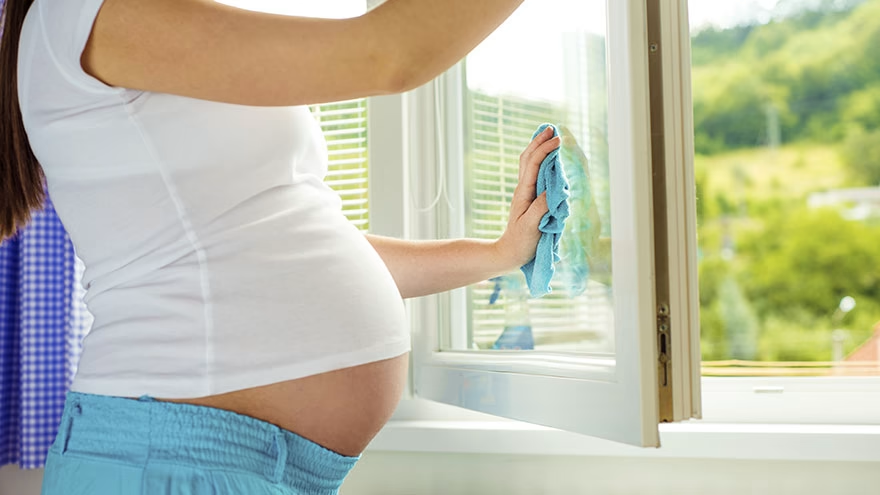
How to Use Cleaning Products Safely During Pregnancy is mostly about reducing fumes, skin contact, and risky mixing while still keeping the home clean enough for daily life.
This is general pregnancy education. If you work with disinfectants, solvents, pesticides, or heavy-duty cleaners, ask your OB-GYN, midwife, employer, or occupational health team about exposure limits.
Read The Label
Use the product exactly as the label says. Diluting, mixing, heating, or spraying more than directed can increase exposure without cleaning better.
Look for warnings about ventilation, gloves, eye protection, and contact time. If the label is hard to understand, choose a simpler product.
Ventilate
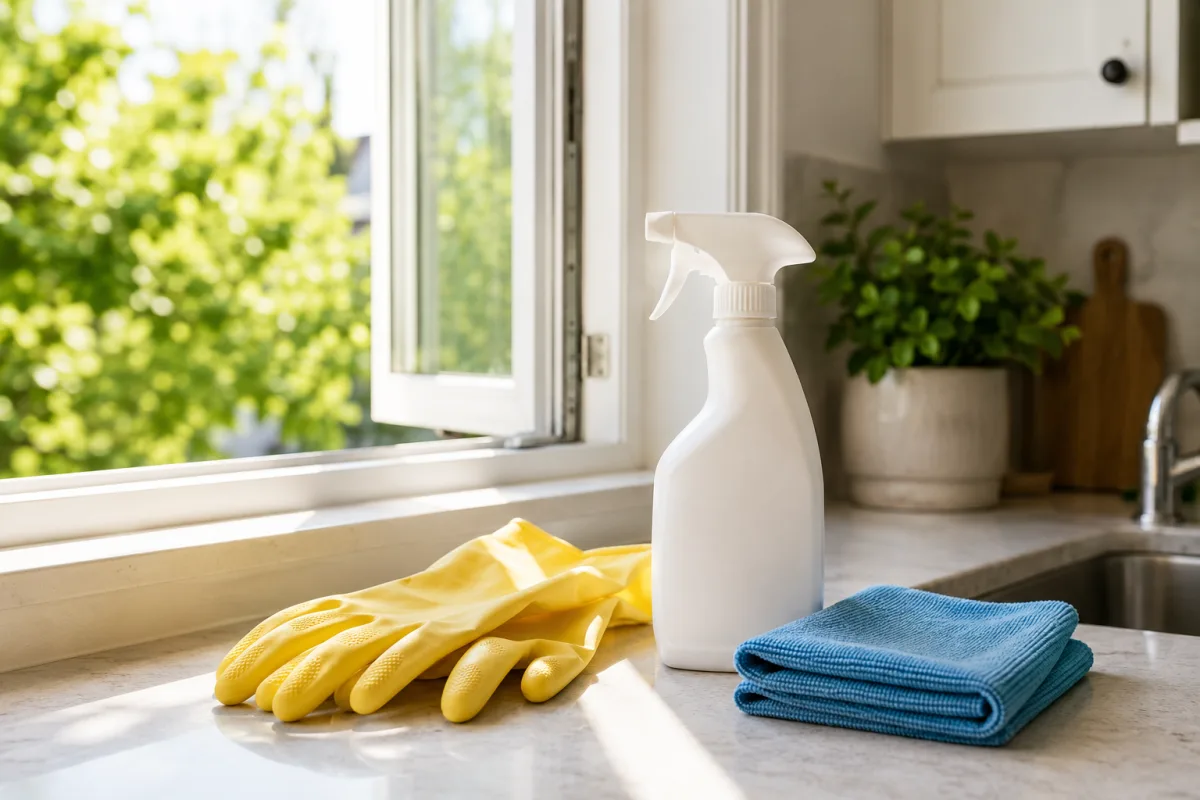
Open windows, run an exhaust fan, and leave the room if fumes build. Ventilation matters even with familiar household cleaners.
ACOG says pregnant people can take steps to reduce exposure to toxic chemicals before and during pregnancy in its toxic chemicals FAQ.
Never Mix Products
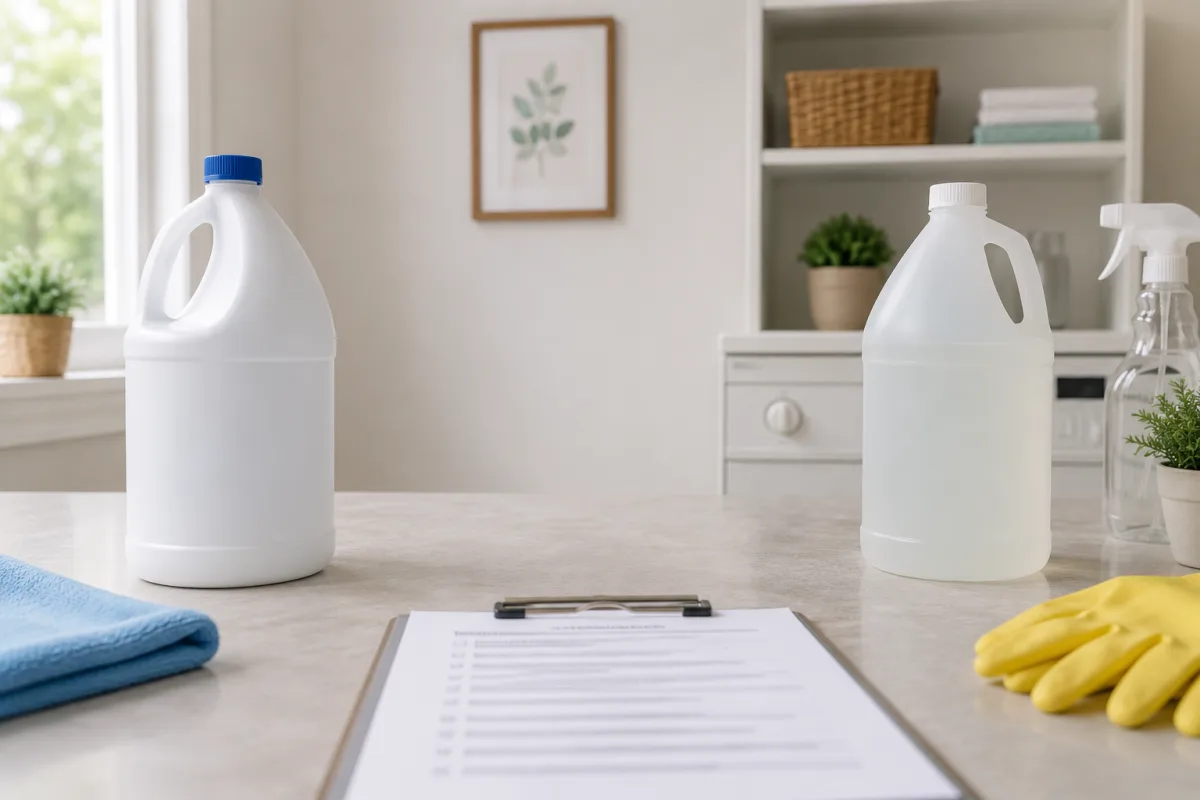
Never mix bleach with ammonia, acids, vinegar, toilet cleaners, or other products. Dangerous gases can form quickly.
If a strong odor appears, leave the area, get fresh air, and call poison control or emergency services if symptoms occur.
Use Gloves
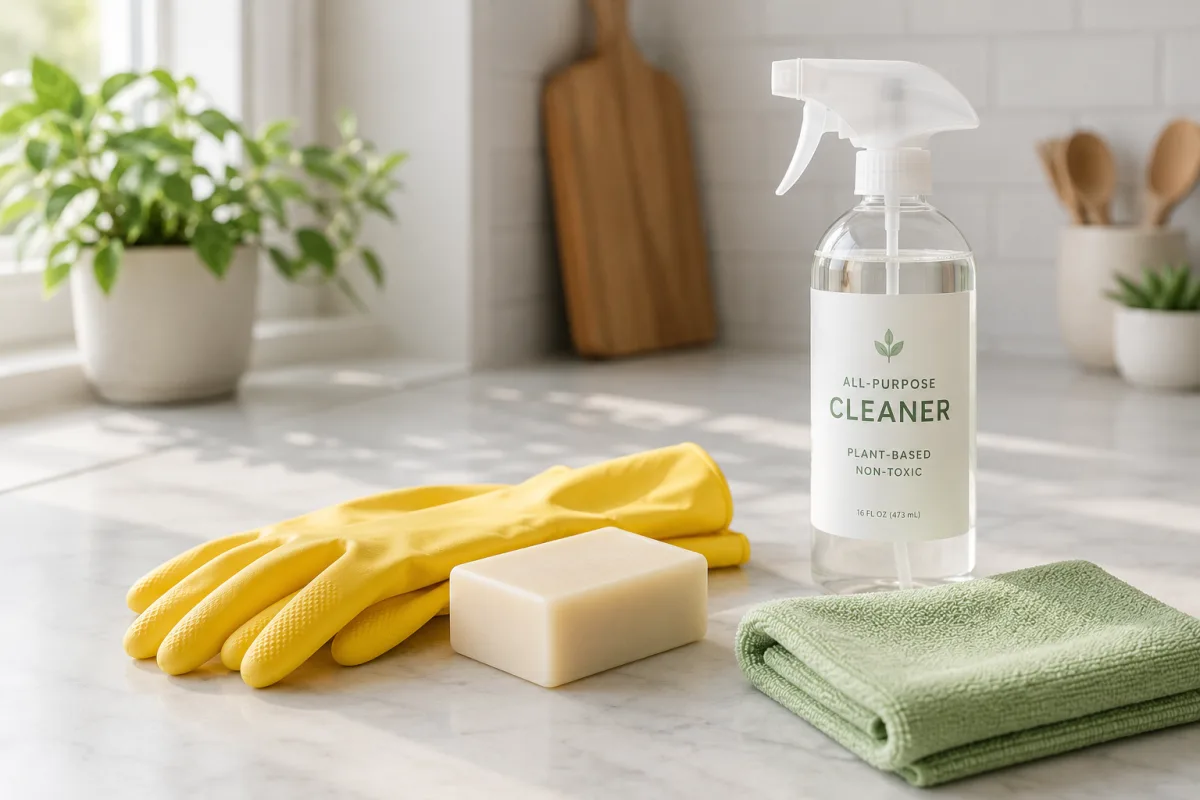
Gloves can reduce skin contact, especially with disinfectants, degreasers, bathroom cleaners, and products that irritate your hands.
Wash hands afterward, and avoid touching your face while cleaning. Replace gloves that are cracked or sticky.
Choose Simple Cleaners
Soap, water, microfiber cloths, baking soda for scrubbing, and fragrance-free products can handle many everyday jobs.
A stronger product is not always better. Match the cleaner to the task instead of using disinfectant everywhere.
Disinfect Only Where Needed
Disinfect high-touch surfaces when illness, raw meat, bathroom mess, or other contamination makes it necessary. Routine overuse can increase fumes and skin exposure.
Follow contact time and ventilation instructions, then store the product safely away from children.
Workplace Exposure
Healthcare, childcare, cleaning, salon, lab, and manufacturing jobs may involve stronger chemicals than home cleaning. CDC/NIOSH explains that high-level disinfectants are different from common household disinfectants on its disinfectants and reproductive health page.
Ask for the safety data sheet, ventilation controls, protective equipment, and task changes if exposure is heavy.
Fragrance
Fragrance can trigger nausea, headache, asthma symptoms, or irritation. Fragrance-free is often easier during pregnancy.
If smells worsen nausea, Livecub's bland diets for pregnancy article may help with food, but chemical fumes still need exposure control.
Avoid Pesticides
Pesticides, bug bombs, and strong solvents should be handled carefully. If pest treatment is needed, ask about lower-exposure options and leave the area as directed.
Do not stay in a recently treated room just because the smell seems mild. Follow reentry instructions.
Heavy Tasks
Oven cleaners, mold removers, drain cleaners, paint strippers, and renovation dust can involve stronger exposure. Consider asking someone else to handle these tasks.
PregnancyBirthBaby advises reading labels, using ventilation, washing hands, and asking someone else to do chemical-heavy tasks when possible in its household toxins guidance.
Safe Storage
Store products in original containers with caps closed. Do not pour cleaners into drink bottles or unmarked containers.
Keep products away from heat, children, pets, and food. A safer routine includes storage, not only cleaning technique.
When To Call
Call a clinician, poison control, or emergency services for trouble breathing, chest pain, fainting, severe headache, chemical burns, eye exposure, or accidental ingestion.
If anxiety about chemicals becomes constant, Livecub's pregnancy depression guide may help frame a conversation about support.
Pregnancy Context
Early pregnancy can make smells intense. Livecub's early pregnancy signs article is related for symptom context, but cleaning safety applies throughout pregnancy.
For household support during late pregnancy or labor, Livecub's early labor support guide may help partners take over tasks.
Laundry Products
Laundry fragrance boosters, dryer sheets, and strong detergents can irritate some people. Fragrance-free detergent is a practical default for baby clothes and sensitive pregnancy noses.
Wash new baby fabrics before use if the parents prefer, but follow their detergent choice.
After Cleaning
After using a stronger product, leave the area ventilated and let surfaces dry as directed. Wash hands and change gloves or clothes if product splashed.
If symptoms start after cleaning, note the product name and ingredients before calling for advice.
Renovation Dust
Renovation can involve paint, solvents, dust, mold, lead, and adhesives. Pregnant people should avoid sanding, stripping, and poorly ventilated chemical tasks.
If the home needs work, plan ventilation, containment, and someone else doing the highest-exposure jobs.
Bathroom Cleaning
Bathroom cleaners can be strong because they target mold, scale, and disinfecting. Use ventilation, gloves, and short sessions, or ask someone else to handle the strongest products.
Do not combine toilet cleaner with bleach or other disinfectants. The risk from mixed fumes is not worth it.
Kitchen Cleaning
In the kitchen, soap and hot water often handle counters, sinks, and dishes. Use disinfectant when food safety requires it, then follow label contact time.
Keep cleaners away from food prep areas until surfaces are rinsed or dried as directed.
Sprays Versus Wipes
Sprays can increase inhalation exposure, especially in small rooms. Wipes, cloth application, or pouring onto a cloth may reduce mist when the label allows it.
Never change application method if the product label forbids it. Some products need specific use for safety and effectiveness.
If You Have Asthma
Pregnancy can change breathing symptoms, and cleaning fumes may trigger asthma. Keep rescue medication available if prescribed and ask the clinician about cleaning triggers.
If wheezing, chest tightness, or shortness of breath follows cleaning, leave the area and seek medical advice.
Partner Task List
If a partner or housemate can help, assign high-fume tasks such as oven cleaning, drain treatment, pesticide use, or mold scrubbing.
The pregnant person should not have to justify avoiding tasks that create symptoms or require strong chemicals.
After Accidental Mixing
If products are accidentally mixed, do not lean in to inspect the smell. Leave the area, ventilate if safe from outside the room, and call poison control for instructions.
Bring the product names or labels when seeking help. That information matters.
Mold Concerns
Mold cleanup can involve spores, strong products, and hidden moisture. Small surface mildew may be manageable with ventilation and gloves, but larger mold problems should be handled carefully.
If mold covers a large area, keeps returning, or follows water damage, ask for professional guidance rather than scrubbing for hours.
Car Cleaning
Car cleaners, upholstery sprays, air fresheners, and detailing solvents can be strong in a small space. Open doors, avoid aerosols, and let the car air out before driving.
Skip hanging fragrances if smells trigger nausea or headaches.
Pet Messes
Pet urine, litter boxes, and disinfectants can create overlapping concerns. Pregnant people should follow clinician advice around litter and infection risk, and use gloves for unavoidable cleanup.
Wash hands well and keep cleaning products away from pet bowls, toys, and child areas.
Cleaning Schedule
A shorter schedule can reduce exposure: one room, one product, one ventilated session, then stop. Cleaning the whole home in one chemical-heavy day is rarely necessary.
Fatigue and dizziness also matter. Pregnancy safety includes avoiding falls and overexertion.
Air Fresheners
Air fresheners, plug-ins, incense, and heavy room sprays can add fragrance without solving a cleaning problem. If smells are already difficult, skip them.
Fresh air, trash removal, laundry, and cleaning the source of odor usually work better than covering the smell.
Reading Safety Data Sheets
For workplace products, ask for the safety data sheet and review exposure controls, pregnancy concerns, and protective equipment. You do not need to memorize chemistry to ask for safer procedures.
If the employer cannot provide the sheet or ventilation details, involve occupational health, a supervisor, or your clinician.
Hand Sanitizers
Hand sanitizer is useful when soap and water are not available, but it is not a replacement for washing chemical residue off skin.
Let sanitizer dry fully before touching food, flames, or a baby, and store it away from children.
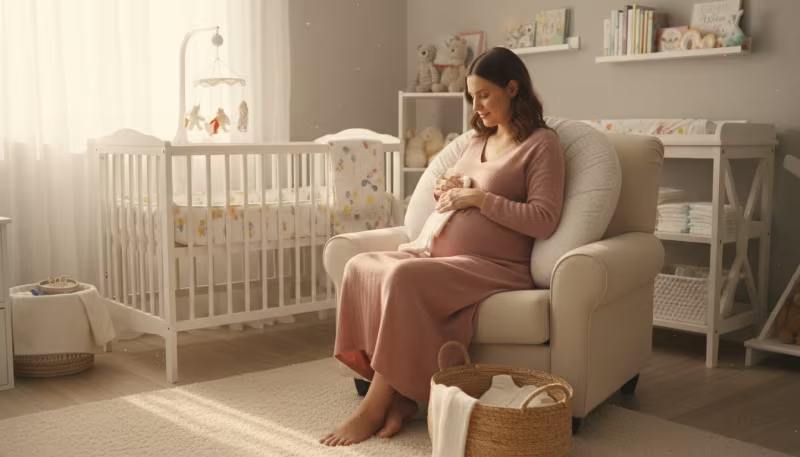
Scent-Free Nursery Prep
When preparing a nursery, use low-odor products, open windows, and give painted or newly assembled items time to air out.
If someone else can paint, assemble furniture, or handle adhesives, that is often the lower-exposure choice.
When Cleaning Feels Overwhelming
Pregnancy fatigue can make cleaning feel endless. Set a minimum standard: dishes, trash, bathroom basics, and safe walking paths.
The home does not need to look perfect to be healthy enough for a tired pregnant person.
Frequently Asked Questions
Can I clean while pregnant?
Often yes, but use ventilation, gloves, labels, and simpler products, and avoid risky exposure.
Can I use bleach while pregnant?
Use only as directed, with ventilation, and never mix it with ammonia, vinegar, acids, or other cleaners.
Which cleaning tasks should I avoid?
Avoid heavy fumes, pesticides, strong solvents, oven cleaners, drain cleaners, and workplace disinfectant exposure without guidance.
Are natural cleaners always safe?
No. Natural products can still irritate skin or lungs and should be used as directed.
When should I get medical help?
Seek help for breathing trouble, burns, eye exposure, ingestion, fainting, chest pain, or severe symptoms after exposure.
Cleaning during pregnancy is safest when products are simple, labels are followed, air moves well, skin is protected, and strong chemical tasks are limited.

Linda Fehrman
Edits general wellness and relationship explainers. Health material is educational, avoids diagnosis and links to health-authority guidance.

Leave a reply
Replying to