
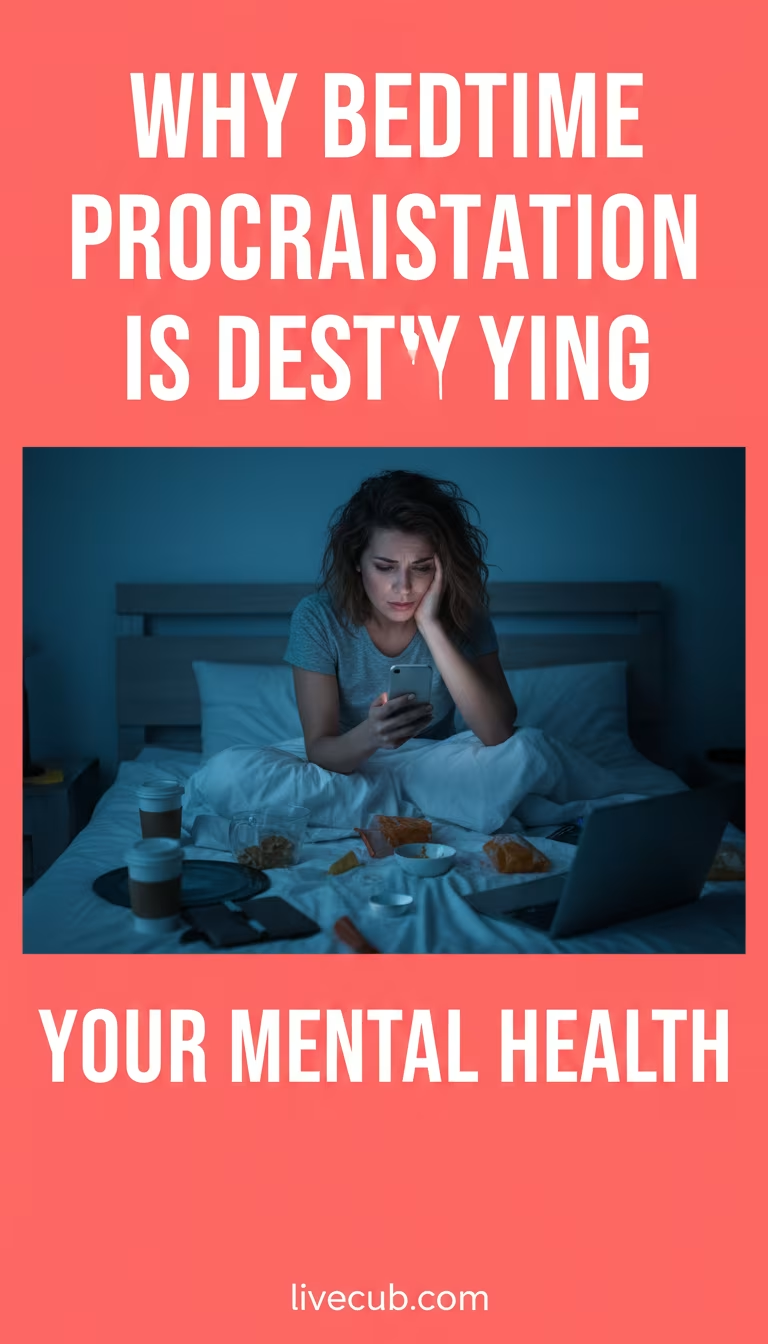
Staying up past the hour you meant to sleep, without any real reason to, is one of the most common ways people quietly run down their own reserves. It rarely feels like a problem in the moment. Late at night the house is finally quiet, no one needs anything, and the next episode or the next scroll feels like a small, deserved reward.
The bill comes the next morning, with interest. The more useful question is not "why can't I just go to bed," but "what am I actually trying to get at night." Once you can name what the late hours are giving you, whether that is control, quiet, entertainment, or simple avoidance, the pattern becomes far easier to interrupt.
What Bedtime Procrastination Really Is
Bedtime procrastination is delaying sleep even when nothing external is forcing you to stay up and you know the delay will cost you. That last part matters. It is not the same as being kept awake by a crying child, a late shift, or genuine insomnia where you lie down and cannot drift off. Here the bed is available, the body is tired, and the person chooses, again and again, to postpone.
Because it looks like a simple failure of discipline, it is often treated that way, which usually makes it worse. The behaviour tends to sit on top of stress, a lack of downtime, and a sense that the day belonged to everyone else. Seeing it clearly, as a coping pattern rather than a character defect, is the first practical step, because you cannot redesign a habit you are busy being ashamed of.
The Cost Of Borrowed Time

Sleep is not a luxury the body can indefinitely trade away. The Centers for Disease Control and Prevention's sleep basics tie adequate sleep directly to physical health and emotional well-being, and the shortfall shows up fast. Cut an hour or two repeatedly and mood gets shorter, attention frays, small stressors feel larger, and the capacity to regulate emotion, the very thing you need to make a calm decision about bedtime, is exactly what erodes first.
That creates a loop worth naming. Under-slept people are more reactive and more depleted, which makes the evening's pull toward "just a bit more time for me" stronger the next night, not weaker. The debt compounds. Understanding this is not meant to add pressure at 11 p.m.; it is meant to make clear that protecting sleep is protecting the resource that everything else in your day draws from.
Revenge Bedtime Procrastination And Control

A widely used term for the intense version of this is "revenge bedtime procrastination," the idea that people stay up to reclaim personal time that the day stole from them. Military and clinical health sources, including the Psychological Health Center of Excellence, describe bedtime procrastination as delaying sleep despite knowing the harm, and it shows up most in people whose days offer little autonomy or rest.
The revenge framing is useful because it points at the real driver. When every waking hour is spoken for by work, caregiving, or obligation, the late night becomes the only stretch that feels like your own. The problem is that the reward and the punishment land on the same person: you take the time back at night and pay for it at dawn. Recognising the fairness underneath the impulse lets you address it directly, by finding autonomy earlier in the day, instead of just scolding yourself for it.
Front-Load The Reward
If late night is the only window where you get something purely enjoyable, the body will fight hard to keep it. The counter-move is to stop making the evening carry all of the day's pleasure. Place a smaller, genuinely enjoyable thing earlier, ideally right after the last hard task of the day, so the mind is not saving up its entire quota of freedom for midnight.
This can be modest: ten minutes with a book after dinner, a short walk, a coffee that is yours and uninterrupted, a hobby you touch for a quarter of an hour. The mechanism is straightforward. When some reward has already been collected, the late-night grab loses part of its urgency, and the choice to close things down stops feeling like pure deprivation.
Put Friction Between You And The Phone
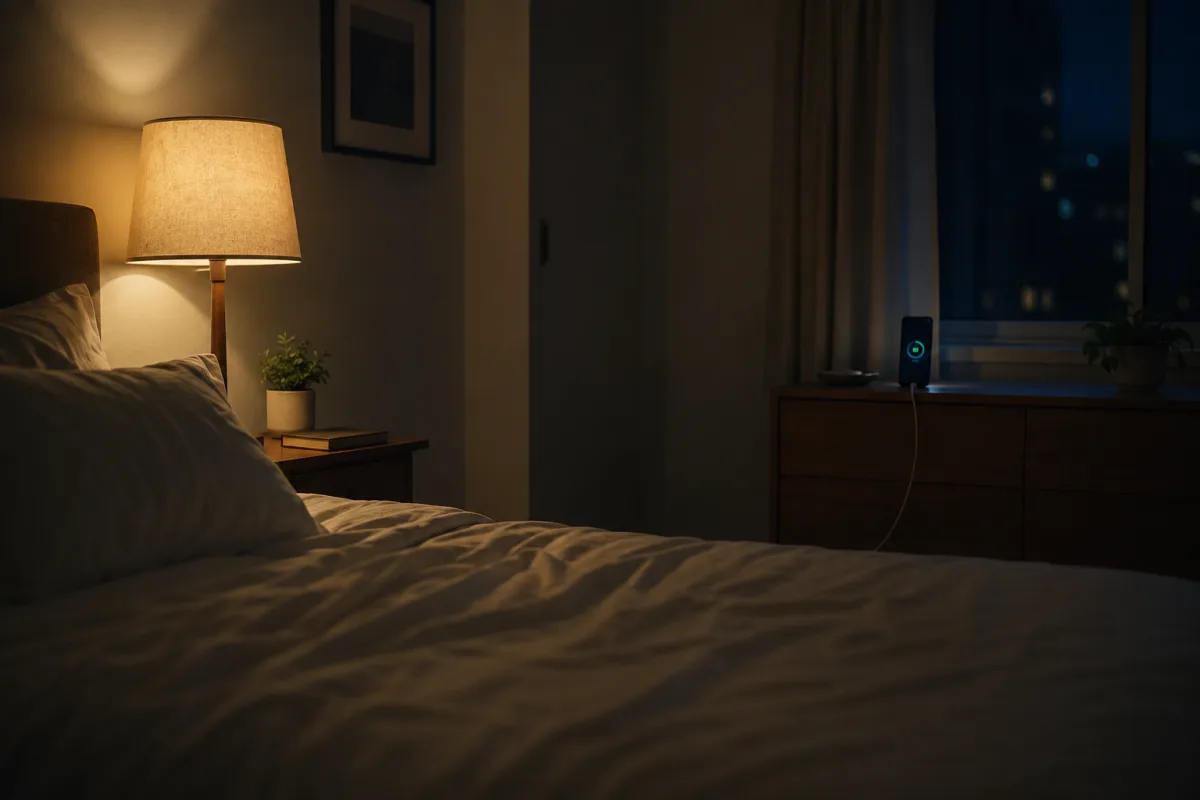
At midnight, willpower is a poor tool, because the very system that exercises restraint is tired. Environmental friction works far better than resolve. The single most effective change for most people is to charge the phone somewhere other than the bed, ideally in another room, so that continuing to scroll requires standing up rather than simply not stopping.
Layer a few more small barriers on top. Set a cutoff alarm that signals wind-down rather than a hard bedtime. Move the most magnetic apps off the first home screen so opening them takes deliberate effort. Switch on a grayscale or wind-down mode after a set hour to make the screen less rewarding. None of these relies on you being strong at your weakest moment; each simply makes the easy default a little less easy.
Build A Short Wind-Down Cue
One reason people postpone sleep is that there is no signal telling the body the day is closing. Work bleeds into scrolling, scrolling bleeds into more scrolling, and the transition never happens. A short, repeatable wind-down routine supplies that missing cue. It does not need to be elaborate or wellness-branded; it needs to be consistent.
Pick three or four small actions in the same order each night, such as dimming the lights, putting the phone on its charger across the room, brushing your teeth, and reading a couple of pages. Repeated nightly, the sequence itself starts to signal sleep, the way a routine settles a child. The consistency is what does the work, so keep it short enough that you will actually run it on a tired night rather than skip it.
Keep The Wake Time Fixed
It is tempting, after a late night, to sleep in and "catch up." Occasionally that is fine, but as a regular fix it backfires, because a drifting wake time pushes the body clock later and makes the next night's early sleep even harder. A steadier lever is to anchor the wake time, keeping it roughly the same every day, weekends included, and let bedtime gradually follow.
A consistent morning does two things. It builds real sleep pressure by evening, so the pull toward bed is biological rather than purely a matter of discipline, and it keeps your internal clock aligned to a schedule you can plan around. Change this one variable at a time so you can actually tell whether it is helping, rather than overhauling five habits at once and being unable to read the result.
Watch For The Avoidance Underneath
Sometimes the late hour is not really about entertainment or reclaimed time; it is about not wanting the next day to arrive. If mornings bring dread, a job you resent, a conflict you are avoiding, or a task you keep pushing, staying up can be a way to hold the day at bay. In that case, tightening phone rules treats the symptom and misses the cause.
Name the avoided thing without judging it, because avoidance is information: it points to the part of life that actually needs attention. A plain log kept for a couple of weeks can reveal the pattern, showing what precedes the worst nights and what a rare good night had in common. Livecub's guide to writing a food journal adapts easily into a sleep-and-mood log for exactly this kind of tracking.
When To Treat It As Insomnia
There is a line between a habit you can reshape and a sleep problem that needs care. If you routinely get into bed at a reasonable hour and still cannot fall or stay asleep, if fatigue is affecting your work, safety, or relationships, or if low mood and anxiety are riding alongside the sleep loss, that is worth raising with a clinician rather than managing alone.
Persistent difficulty may point to insomnia or an underlying condition, and effective treatments exist, including cognitive behavioural therapy for insomnia, which is a first-line approach for many people. Getting help is not an admission of failure; it is choosing the right tool for the actual problem. Before that point, protect the basics first, a fixed wake time, a phone parked out of reach, and one enjoyable thing earlier in the day, and give a single change enough nights to show whether it works.
Frequently Asked Questions
What is bedtime procrastination?
It is delaying sleep even when nothing is forcing you to stay up and you know you need rest. It differs from insomnia, where you try to sleep but cannot.
Why does it happen?
It is often tied to stress, a lack of personal time during the day, screen habits, or avoidance of the coming day. The late hours become the only stretch that feels like your own.
What helps most?
Move an enjoyable activity earlier, charge the phone out of reach, build a short wind-down routine, and keep your wake time steady so real sleep pressure builds by evening.
When should I get help?
Seek help if sleep problems persist despite these changes, or if fatigue is affecting your mood, work, safety, or daily function. Effective treatments for chronic sleep problems exist.
This article is for general information only and isn't a substitute for medical advice. Talk to a clinician who knows your full history before making changes.

Patrick Harwood
Edits sports, consumer-finance and general legal explainers. Regulated or time-sensitive topics link to primary sources and are not professional advice.




Leave a reply
Replying to