
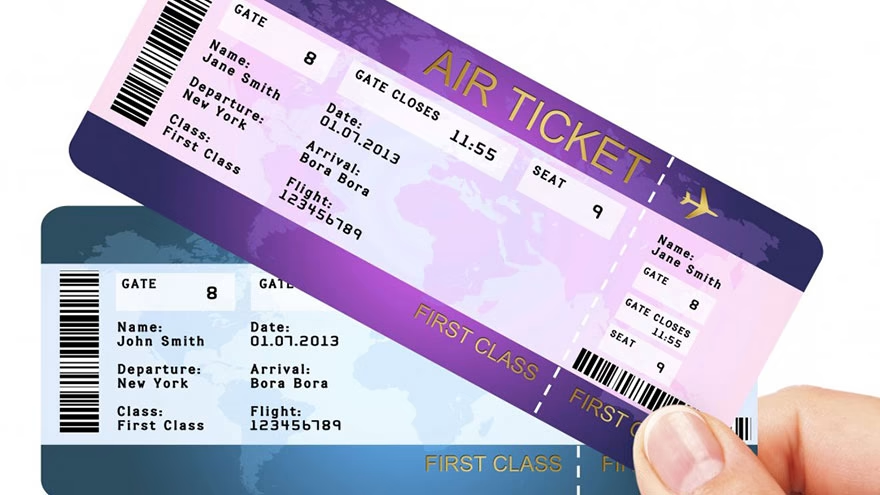
What Is the Definition of an Open-Ended Ticket? In travel language, it usually means a ticket built for flexibility rather than a fixed return date. In modern airline sales, the exact meaning depends on fare rules.
Some travelers use the phrase for a return ticket with a changeable date, a credit for future travel, or a flexible fare. Do not rely on the label alone; read the airline or agency conditions.
Basic Definition
An open-ended ticket is commonly understood as a ticket that lets the traveler set or change the return date later. It is associated with flexibility, uncertain schedules, and trips where the return date is not known at booking.
Many airlines no longer sell old-style open returns in the simple way travelers remember. The modern version may be a flexible fare, refundable ticket, changeable return, or unused ticket credit.
Fare Rules Control The Ticket

The U.S. Department of Transportation tells travelers to compare ticket restrictions and optional service costs before buying: DOT buying a ticket guidance.
For open-ended travel, the fare rules decide change fees, fare differences, refund rights, expiration, no-show treatment, and whether a return date must be set before departure.
Open Return Vs One-Way
A one-way ticket takes you in one direction and leaves the return separate. An open return usually means the return is connected to the original ticket but not fixed in the same way as a standard round trip.
A one-way ticket can be simpler, but some destinations, visas, schools, employers, or border officials may expect proof of onward or return travel.
Flexible Fare Vs Open Ticket
A flexible fare may allow changes with lower fees or no change fee, but you may still owe a fare difference. That is not the same as unlimited travel whenever you want.
Before paying extra, compare the flexible fare with separate one-way tickets. Livecub's financial calculator guide can help readers think in terms of total cost inputs.
Ticket Validity

Airline contracts set ticket validity rules. United's contract of carriage discusses unused tickets, exchanges, and validity rules that depend on fare and ticket conditions: United contract of carriage.
Do not assume a ticket credit lasts forever. Expiration can depend on issue date, travel date, exchange date, route, and airline policy.
Refundable Does Not Mean Open
A refundable ticket may allow money back under certain rules. An open-ended ticket may allow date flexibility. Those benefits can overlap, but they are not identical.
Ask two separate questions: Can I get my money back, and can I change the travel date? The answer may be different for each.
Sports And Event Travel
Open-ended tickets are often discussed for sports teams, tournaments, medical travel, standby family needs, and long visits where the end date is uncertain.
The risk is price. Flexibility usually costs more up front, or later through fare differences. For family budget planning, Livecub's kids and money guide can help compare need versus cost.
No-Show Rules
Some tickets lose value if you miss a flight without canceling or changing before departure. This can affect the remaining segments of a trip.
If your plans change, contact the airline before the scheduled flight. Do not assume you can simply skip one leg and keep the rest.
Agency Bookings
Travel agencies, online travel sites, schools, teams, and tour operators may add their own service rules. Airline rules and agency rules can both affect the traveler.
Get the fare basis, change process, after-hours contact, and fees in writing. A flexible ticket is less useful if no one can change it when plans shift.
Full Price Disclosure
DOT says airlines must disclose the full price to be paid, including government taxes and fees, in advertising and on websites: DOT airline rules and fares.
For flexible tickets, ask for the full price after optional services and any agency service charges.
Interest And Timing
Ticket prices can change while you wait to choose a date. A flexible ticket may protect part of the plan, but it may not protect you from a higher fare on the new flight.
For a separate finance example of timing and rate changes, Livecub's interest rate changes guide explains why timing can affect cost.
Questions Before Buying

Ask whether the return date must be chosen before outbound travel, whether changes are online or phone-only, what happens after a no-show, and when the ticket expires.
Also ask whether the ticket is refundable, transferable, usable on partner airlines, and subject to fare differences. Open-ended should mean clear, not vague.
Why The Term Causes Confusion
Travelers, agents, airlines, teams, and older relatives may use open-ended ticket to mean different things. One person may mean no return date, another may mean no change fee, and another may mean a credit.
Use the airline's wording in the final purchase. If the receipt says nonrefundable basic economy, the casual phrase open-ended will not protect you later.
Best Uses
Open-ended or highly flexible tickets make the most sense when uncertainty is real and expensive to solve later: tournaments, family illness, long research trips, relocations, or uncertain work assignments.
If uncertainty is small, a standard ticket plus a planned change fee may cost less. Flexibility should be bought for a reason, not out of habit.
Change Fee Vs Fare Difference
A ticket may advertise no change fee but still require the traveler to pay the fare difference. If the new flight is more expensive, the change can still cost money.
Ask both questions before buying. Is there a change fee, and will I owe any fare difference when I choose the return?
Return Window
Some flexible tickets allow a return within a set window rather than anytime in the future. The window may be measured from ticket issue, outbound travel, or original return date.
Write the last usable date in your calendar. Travelers often lose value because they remember flexibility but forget expiration.
International Entry Rules
Some countries, airlines, or visa situations may require proof of onward travel. A vague open return may or may not satisfy that requirement.
Before departure, check the destination rules and airline requirements. A flexible ticket still has to work at check-in and border control.
Name Changes
An open-ended ticket is usually flexible by date, not by passenger. Name changes are often restricted or not allowed.
If a team, group, or family is buying tickets before travelers are final, ask about name rules in writing.
Business And Student Travel
Students, researchers, contractors, and traveling workers often want open-ended travel because end dates move. The ticket should match the program letter, visa limit, or work assignment.
If the traveler must show a return plan, keep proof available offline. Check-in staff may not accept a vague explanation.
Credits Are Not Cash
An airline credit may feel like money, but it can have route limits, name limits, expiration, and fare difference rules. It may also be hard to use through a different agency.
Before accepting a credit instead of a refund, ask who can use it, where it can be used, and when it expires.
Book Direct Or Through An Agent
Booking direct can make changes simpler because the airline controls the ticket. A good agent can help with complex trips, but weak agency support can slow every change.
Choose based on the trip. The more uncertain the return, the more you need clear support after purchase.
Keep Proof Of Every Change
Each time the ticket is changed, save the confirmation, receipt, fare difference, and new validity date. The latest email may not show the full history.
That record helps if an agent later sees a different fare rule or cannot explain why a credit value changed.
Frequently Asked Questions
What is an open-ended ticket?
It is usually a flexible ticket that lets the traveler set or change the return date later, subject to fare rules.
Do airlines still sell open-ended tickets?
Some sell flexible or changeable fares rather than old-style open tickets. The exact option depends on the airline and route.
Is an open-ended ticket refundable?
Not automatically. Refundability and date flexibility are separate rules that must be checked before purchase.
Can I skip a flight and use the rest later?
Maybe not. No-show rules can cancel remaining segments or reduce ticket value, so contact the airline before departure.
Who should consider an open-ended ticket?
Travelers with uncertain return dates, tournament schedules, long visits, medical travel, or flexible work plans may consider one.
An open-ended ticket is only as flexible as its fare rules. Before buying, confirm change rights, expiration, no-show rules, refundability, and total price.

Tory Stearns
Edits practical household, travel and lifestyle explainers. Claims that can change are linked to current primary or subject-authority sources.




Leave a reply
Replying to