

Winter salads have to work harder than summer salads. Tomatoes are not carrying the bowl, herbs may be less abundant, and cold weather makes people want food with more weight. Good winter salads ideas use sturdy greens, cabbage, citrus, roasted vegetables, grains, nuts, cheese, and sharp dressings so the salad feels like part of the meal, not a garnish.
What makes a salad feel winter-ready?
A winter salad needs structure. Use ingredients that can handle dressing, travel, and time on the table: kale, cabbage, radicchio, endive, Brussels sprouts, carrots, beets, apples, pears, citrus, fennel, grains, lentils, nuts, and seeds.
The USDA SNAP-Ed seasonal produce guide helps cooks think about produce by season. The USDA seasonal produce guide is useful when building winter bowls around what is actually good.
For greens technique, Livecub's guide to cooking greens is a helpful companion.
Which greens hold up best?
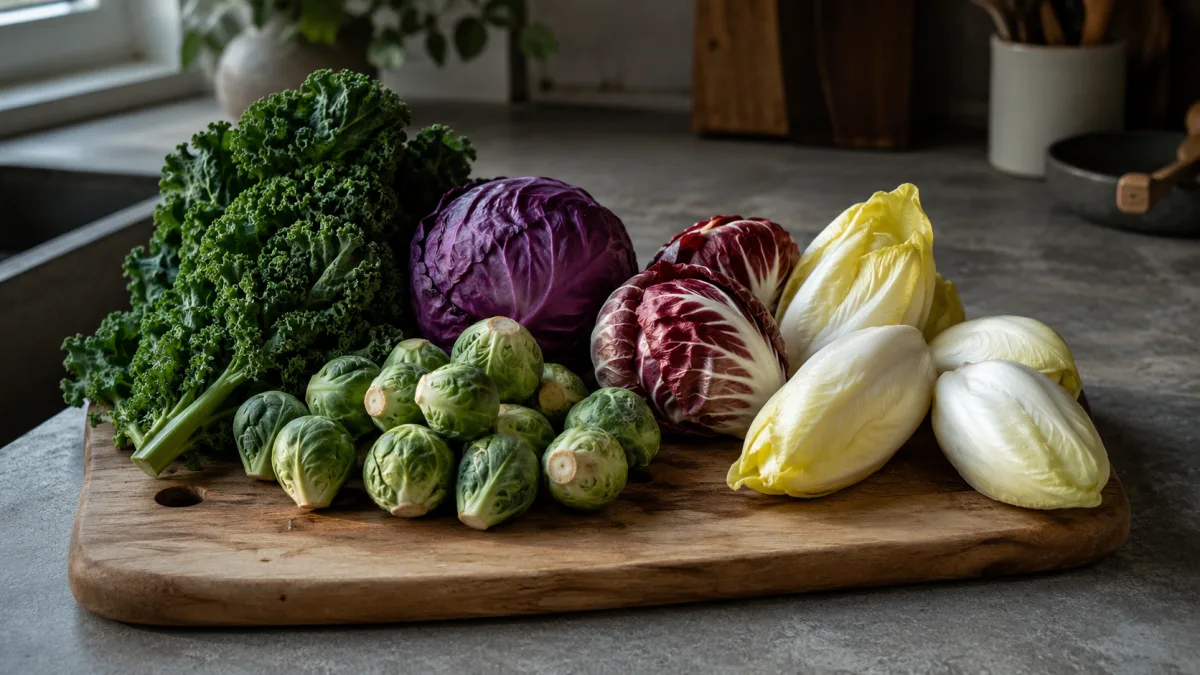
Kale, cabbage, radicchio, escarole, endive, and shredded Brussels sprouts hold dressing better than tender spring mix. They can sit longer without collapsing and often taste better after a short rest.
Kale
Remove tough stems, slice thinly, and massage with salt, oil, and acid for raw salads. Kale also works well with roasted squash, apples, nuts, and Parmesan.
Cabbage
Green, red, Napa, and savoy cabbage all make sturdy winter salads. Slice thinly and season early so the texture relaxes.
Bitter greens
Radicchio and endive bring color and bitterness. Pair them with citrus, honey, cheese, or nuts so the bite feels balanced.
How do roasted vegetables fit?
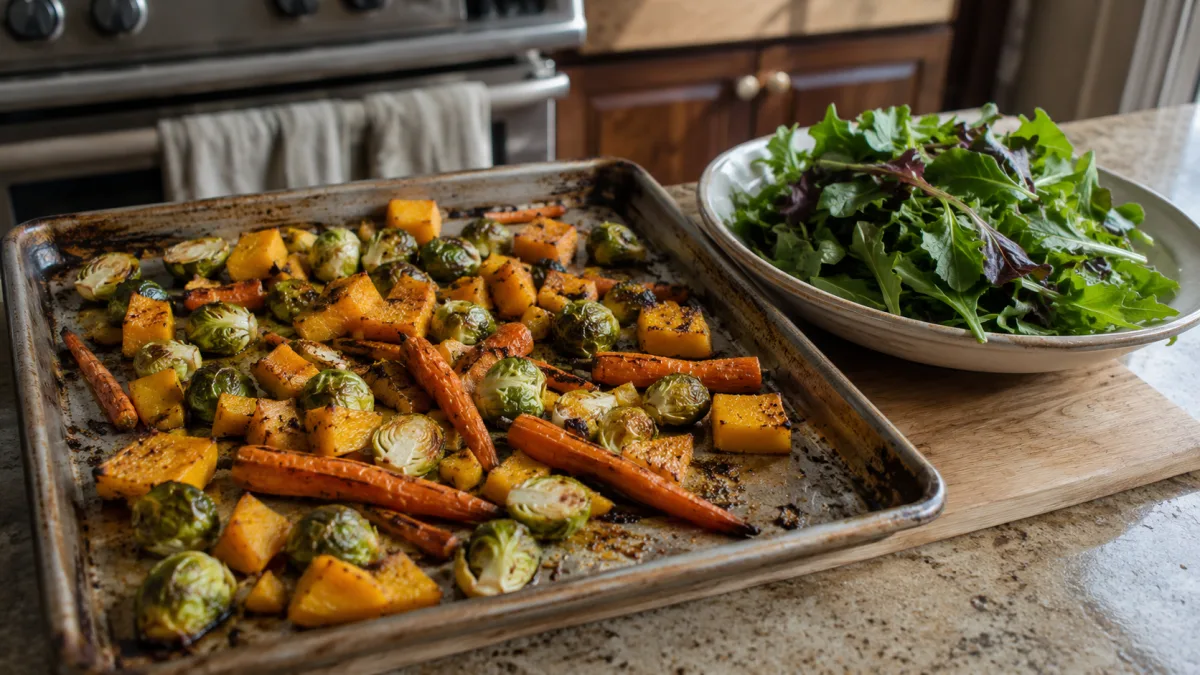
Roasted squash, carrots, beets, sweet potatoes, cauliflower, and Brussels sprouts bring warmth and sweetness. Let them cool slightly before tossing with greens so the salad does not wilt into a hot pile.
Use roasted vegetables as one layer, not the whole bowl. Add something crisp, something acidic, and something fresh. For a rich main-dish pairing, Livecub's guide to cooking goose shows why bright sides matter beside heavier food.
What dressings work in winter?
Winter dressings need acid. Lemon, orange, sherry vinegar, apple cider vinegar, red wine vinegar, and Dijon mustard all help wake up sturdy vegetables. Olive oil, walnut oil, yogurt, tahini, or a little honey can round the edges.
Taste dressing with the salad ingredients, not from a spoon alone. Cabbage, kale, citrus, and cheese change the balance.
For sauce-balance thinking, Livecub's stir-fry sauces guide is useful even though the cooking method is different.
How do you balance bitterness?
Bitter greens are useful in winter, but they need partners. Add orange segments, roasted squash, apples, honey, toasted nuts, cheese, or a creamy dressing. Salt also matters because bitterness can taste harsher when the salad is under-seasoned.
If the first bite feels sharp, do not add sugar automatically. Try acid, salt, fat, or crunch first. The goal is balance, not turning the salad into dessert.
How do grains and beans make salads more filling?
Farro, barley, quinoa, wild rice, lentils, chickpeas, and white beans turn a side salad into lunch. Cool cooked grains before mixing, and season them while they are still slightly warm so they absorb flavor.
Keep the ratio balanced. Too many grains make the salad heavy; too few make it feel like garnish. Add herbs, citrus, or pickled onion to keep the bowl lively.
What proteins fit winter salads?
Roast chicken, turkey, ham, boiled eggs, lentils, chickpeas, beans, salmon, and sharp cheese can all make a winter salad more satisfying. Choose protein that matches the dressing and the rest of the meal.
If the salad sits beside a heavy main dish, use beans, nuts, or cheese lightly. If the salad is lunch, add enough protein that it does not feel like a cold side pretending to be a meal.
Protein should support the bowl, not turn every winter salad into leftovers in disguise.
What fruit works in winter salads?
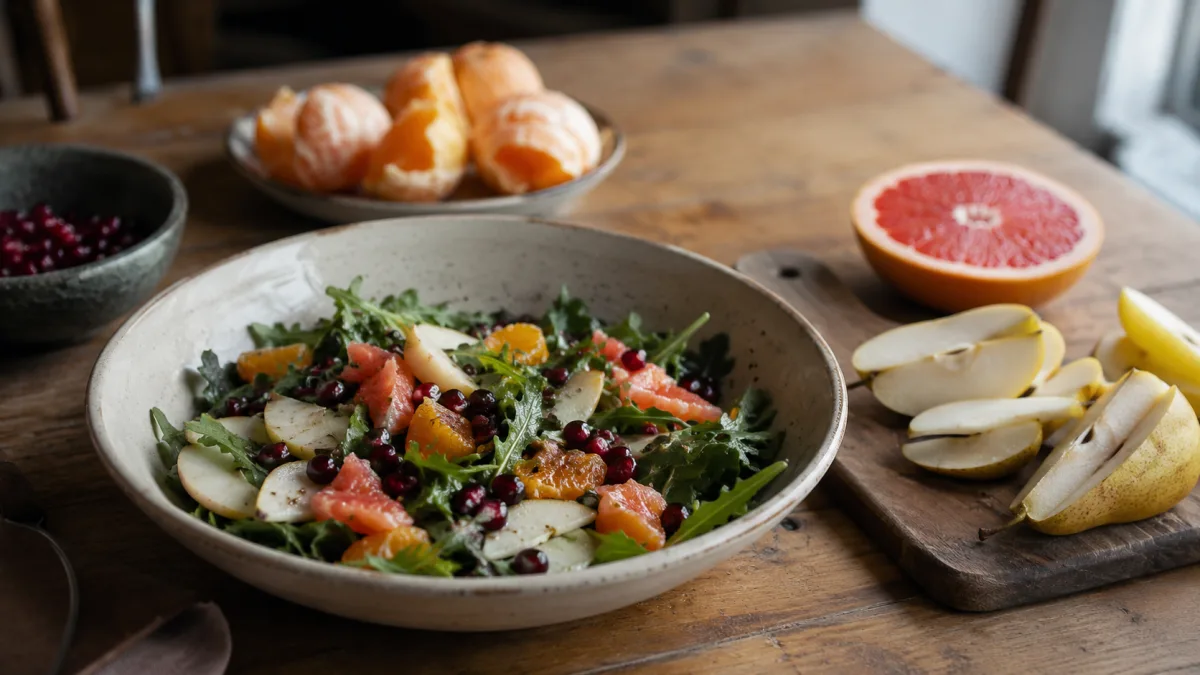
Citrus is the winter salad hero: oranges, grapefruit, mandarins, and blood oranges add juice and color. Apples, pears, pomegranate, dried cranberries, and dates also work, especially with bitter greens or salty cheese.
Cut fruit close to serving if it browns or leaks. If making ahead, keep juicy fruit separate and add it near the end.
What nuts, seeds, and cheese work best?
Walnuts, pecans, almonds, pistachios, pumpkin seeds, and sunflower seeds add crunch. Toast them briefly if you have time. Toasting wakes up flavor, but burned nuts can ruin the whole bowl.
Cheese should be used with intention. Parmesan, pecorino, feta, goat cheese, blue cheese, and aged cheddar all work, but not in the same salad. Salty cheese needs a dressing with enough acid to stay balanced.
What is a simple winter salad formula?
Use one sturdy base, one sweet ingredient, one crunchy ingredient, one rich ingredient, and one sharp dressing. For example: kale, roasted squash, walnuts, Parmesan, and lemon-Dijon dressing. Or cabbage, apple, pumpkin seeds, cheddar, and cider vinaigrette.
This formula keeps the bowl flexible. You can swap produce based on what is fresh, affordable, or already in the refrigerator.
A formula is not a rule. It is a way to stop staring at the produce drawer.
How should winter salads be stored?
Store sturdy greens separately from wet toppings when possible. Grains, roasted vegetables, and dressing can be prepared ahead, but final assembly should match the ingredient. Kale can handle dressing earlier; tender herbs cannot.
The FDA produce safety guide covers washing, storing, and separating fresh produce. Its FDA produce safety guide is a good reference for safe produce handling before salad assembly.
For freezing and prep planning, Livecub's fresh vegetable freezing guide can help with batch-cooking vegetables even though raw salads are best fresh.
How can winter salads be made ahead?
Prep the sturdy pieces early: wash greens, shred cabbage, cook grains, roast vegetables, toast nuts, and mix dressing. Keep wet, juicy, and crunchy pieces separate until the final toss.
Kale and cabbage can sit with dressing longer than tender greens. Citrus, pears, herbs, and nuts are usually better added near serving. If the salad includes meat, eggs, or dairy, keep it cold and follow food-safety guidance.
How do you pack winter salad for lunch?
Put dressing on the bottom of the container, then grains or beans, then sturdy vegetables, then greens, then nuts or cheese on top. Toss when ready to eat. This keeps crunch and prevents the leaves from drowning.
If using citrus or roasted vegetables, pack them in a separate small container when possible. A salad that survives the morning is more likely to be eaten instead of abandoned.
How do you serve winter salads for holidays?
Build contrast with the main dish. Serve bitter greens with rich poultry, citrus cabbage with ham, kale and grains with roasted vegetables, or radicchio with blue cheese and walnuts. Keep the salad bright enough to earn its place.
If the salad is part of a larger display, Livecub's cookie display guide has useful presentation lessons: height, spacing, serving tools, and keeping the table tidy.
Use a wide shallow bowl for holiday salads. It shows off color, keeps heavy toppings from sinking, and makes serving easier than a deep narrow bowl. Add the crunch last so it stays crisp through dinner and second servings at the table with guests nearby.
What mistakes make winter salads dull?
The common mistakes are using weak greens, skipping acid, adding too many sweet toppings, forgetting salt, and dressing the salad too early when delicate pieces are involved. Another mistake is serving a cold salad with no texture contrast.
Winter salads need crunch, brightness, and a little richness. Without those, they can taste like a bowl of obligation. Add toasted nuts, citrus, pickled onion, cheese, or roasted vegetables until the bowl feels intentional.
Frequently Asked Questions
Can winter salads be made ahead?
Yes, especially with kale, cabbage, grains, and roasted vegetables. Keep juicy fruit and delicate herbs separate until serving.
What is the best green for winter salad?
There is no single best green. Kale, cabbage, radicchio, endive, and escarole all work well depending on dressing and toppings.
How do you make winter salad less bitter?
Add acid, sweetness, fat, salt, or creamy cheese. Citrus, apples, honey, nuts, and Parmesan can soften bitter greens.
Can winter salad be a meal?
Yes. Add grains, beans, eggs, chicken, cheese, nuts, or roasted vegetables so it has enough substance.
Winter salad works when it has weight and brightness. Start with sturdy ingredients, add acid, build texture, and save delicate pieces for the final toss.

Timothy Davidson
Edits step-by-step general-interest guides for clarity, realistic limits and source verification.




Leave a reply
Replying to