

Here is a fact most home cooks find surprising: the leaves you throw away when cooking beets — those crimson-veined tops headed straight for the compost bin — are more nutritious than the root itself. Beet greens contain roughly 6,326 IU of vitamin A and around 400 micrograms of vitamin K per 100 grams, while the root contains relatively little of either. That is the paradox at the center of cooking greens: the edible leaves we overlook are often the most densely nourishing part of the vegetable. Collards, spinach, kale, Swiss chard, mustard greens, arugula, and dandelion greens each bring a distinct nutritional signature and flavor profile — and each responds differently to heat, acid, fat, and time.
What are the most common types of cooking greens and how do they differ?
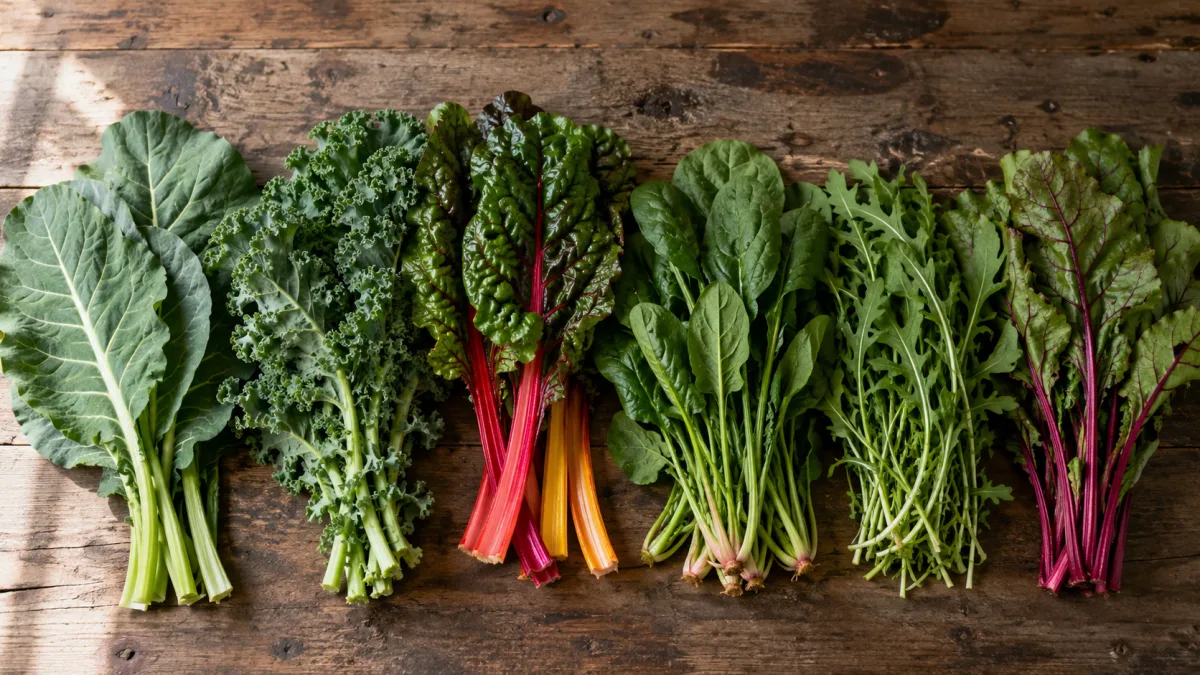
Cooking greens divide roughly into two families: cruciferous and non-cruciferous. The cruciferous group — kale, collards, mustard greens, arugula — gets its bitterness from glucosinolates, sulfur-containing compounds that convert to pungent isothiocyanates when the leaf is damaged or chewed. Arugula carries the highest concentration of erucin (a type of isothiocyanate), which explains why raw arugula bites back like black pepper. Mustard greens run hot with allyl isothiocyanate, the same compound responsible for the burn in prepared mustard.
Non-cruciferous greens tend toward earthiness rather than heat. Spinach is rich in iron but binds much of it with oxalic acid, a crystal-forming compound that also latches onto calcium. One cup of cooked collard greens delivers around 268 mg of calcium with relatively low oxalate levels — and an impressive 883% of the daily value for vitamin K, according to nutrition data reviewed by registered dietitians. The same serving of cooked spinach technically contains calcium but studies show humans absorb only about 5% of it, compared with 27% from dairy, because oxalates sequester it in the gut. Swiss chard contains betalains and betaine — pigments and a methyl donor that supports liver and cardiovascular function — plus nearly 27% of the daily value for potassium per cooked cup. Dandelion greens, sharp and a little bitter, provide liver-supportive sesquiterpene lactones and more calcium per gram than milk.
Beet greens deserve their own mention. They cook exactly like chard (they are close botanical relatives), have a mild, slightly earthy taste, and cost nothing extra when you buy a bunch of beets. Save them.
How do you select and store cooking greens?
At the market, look for leaves that are uniformly dark, crisp at the edges, and free of yellowing or slimy patches. Yellowing signals chlorophyll breakdown; sliminess means bacterial colonization has started. Smaller, younger leaves are generally less fibrous and less bitter than oversized, mature ones — though with collards and kale, a bit of maturity is fine because you will be cooking the bitterness down anyway.
Storage is where ethylene chemistry matters. Apples, pears, ripe bananas, and peaches all emit ethylene gas, a natural ripening hormone. Leafy greens are ethylene-sensitive: exposure to even low concentrations causes them to yellow, wilt, and turn soggy within a day or two. Store your greens in a sealed bag in the crisper drawer, physically separated from those high-ethylene fruits. Do not wash them first — moisture accelerates rot. A dry, sealed bag can hold most greens for up to a week.
For longer storage, blanching is the right move. Drop washed, trimmed leaves into heavily salted boiling water for 1 to 2 minutes, then immediately transfer them to a bowl of ice water. Press out the water firmly, portion into freezer bags, and freeze. Blanched greens hold their quality for up to 12 months. The ice bath is not optional — see the blanching section below for why.
For related tips on freezing vegetables, see our guide to freezing fresh vegetables and our full rundown on grilling vegetables for another preservation-friendly approach.
Why do greens reduce so much when cooked?
A medium head of escarole that fills a salad bowl will compress to about three-quarters of a cup once sautéed. A one-pound bag of spinach — enough to crowd a skillet — yields roughly one cup cooked. This shrinkage catches first-time green cooks off guard every time.
The explanation is cellular. Plant cells hold their shape via turgor pressure: water pushing outward against the rigid cellulose cell wall. Heat disrupts two things simultaneously. First, it breaks down pectin in the cell walls, causing structural collapse. Second, it denatures the proteins in cell membranes, making them permeable, so the water that was locked inside the cell rushes out. Steam escapes, and the leaf compresses dramatically. A green with 90% water content will lose most of that volume in the pan.
The practical upshot: for a side dish that serves four people, start with at least one to two pounds of raw hearty greens (collards, kale) or two to three pounds of tender ones (spinach, arugula). Until you have cooked greens a dozen times and calibrated your instincts, default to cooking twice the amount you think you need.
How do you remove bitterness from greens?
Bitterness in cruciferous greens comes primarily from glucosinolates and their breakdown products. When the leaf tissue is cut or bruised, an enzyme called myrosinase converts glucosinolates into isothiocyanates — the sharp, often sulfurous compounds that register as bitter on your tongue. Three techniques attack this at different stages.
Blanching first. Boiling removes a meaningful portion of water-soluble glucosinolates; studies on Chinese cabbage found blanching reduced glucosinolate content detectably within the first two minutes. The catch is that long blanching also washes out other nutrients, so keep it brief — 60 to 90 seconds for tender leaves, 2 minutes for hearty ones — then shock in ice water and proceed to your recipe.
Fat coats the receptors. Bitter compounds interact with taste receptors (TAS2R family) on the tongue. Coating the greens in fat — olive oil, bacon grease, butter — physically blocks receptor access, softening the perceived bitterness without removing the compounds themselves. This is the mechanism behind the classic Southern technique of cooking collards with a ham hock: the fat from the pork does double duty as flavoring and bitterness buffer.
Salt at the right moment. Sodium ions compete with bitter compounds for the same taste receptor binding sites. Adding salt to the cooking water, or seasoning the hot oil before adding greens, allows sodium to penetrate cell walls and work intracellularly. Salting after cooking is less effective.
Lemon juice, often recommended as a bitterness cure, works differently: citric acid does not reduce bitterness but it brightens the overall flavor profile by contrast, making the dish taste more balanced. Add it at the end, off heat — acid added during long braises can actually hydrolyze glucosinolates into more bitter intermediates.
How do you blanch and freeze greens?
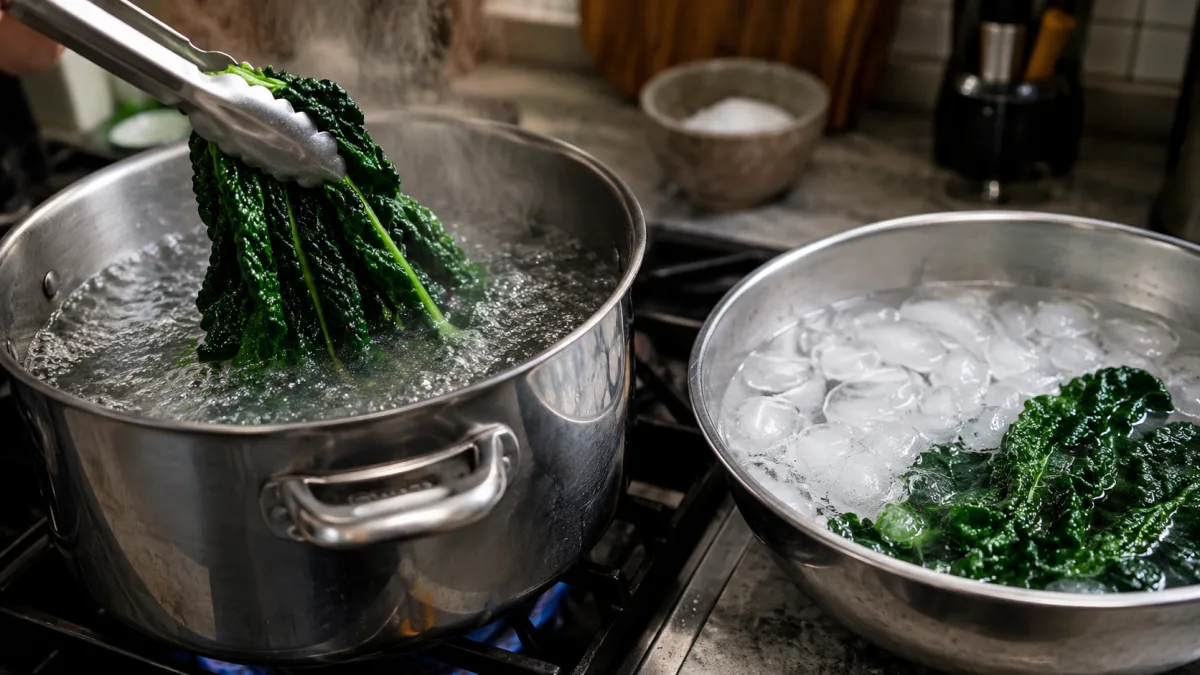
Blanching works by pushing vegetable tissue through a narrow heat window quickly enough to deactivate degradation enzymes without cooking the leaf to mush. The key enzyme for color is chlorophyllase, which normally converts bright chlorophyll into a duller, brownish compound called pheophytin. Chlorophyllase is most active at around 30°C — warm-but-not-hot temperatures. The moment you drop greens into a rolling boil (100°C), you overshoot the enzyme's optimal range so fast that it denatures before it can do much damage. The brilliant green color stabilizes.
The ice bath is what locks the result in. Without it, residual heat continues cooking the leaf on the way from pot to plate, passing back through that 30–75°C danger zone where chlorophyllase and other enzymes regain activity for a few seconds. A bowl of ice water — at least half ice, not just cold tap water — stops the process in under 30 seconds. Skipping this step means blanched greens will gray within an hour.
Blanching times for common greens: spinach and arugula, 60 seconds; Swiss chard and beet greens, 90 seconds to 2 minutes; kale and mustard greens, 2 minutes; collard greens, 3 minutes. After the ice bath, press firmly to remove as much water as possible before freezing — excess water forms ice crystals that damage cell walls and turn greens to mush on thawing.
What is the basic method for sautéing any green?
The core technique works across virtually every cooking green. Wash the leaves in two changes of cool water — grit sinks, leaves float — then shake dry. Remove tough stems by folding each leaf in half lengthwise and pulling the stem away with a firm yank. For older, more fibrous leaves, strip the entire central rib. Stack cleaned leaves, roll into a cylinder, and slice crosswise into ribbons no wider than a quarter inch; narrower cuts wilt more evenly.
Heat two tablespoons of olive oil in a wide skillet over medium-high until it shimmers but does not smoke. Add three to five minced garlic cloves and half a teaspoon of salt directly to the oil. Let the garlic soften for 30 to 45 seconds — it should sizzle, not brown. Add the greens all at once. They will mound above the rim of the pan. Stir and fold continuously for the first 60 seconds to coat every leaf in oil. As the leaves wilt, the volume will drop sharply. Continue stirring every 30 seconds or so. Tender greens (spinach, arugula, beet greens) are done in 3 to 5 minutes total. Heartier ones (Swiss chard, kale) take 7 to 12 minutes. Taste for salt, squeeze over a little lemon juice, and serve immediately.
For a completely different flavor direction, try this same base technique with the 6 stir-fry sauces we have covered — most of them pair exceptionally well with wilted greens.
What are the best ways to cook specific greens — collards, kale, spinach, chard?
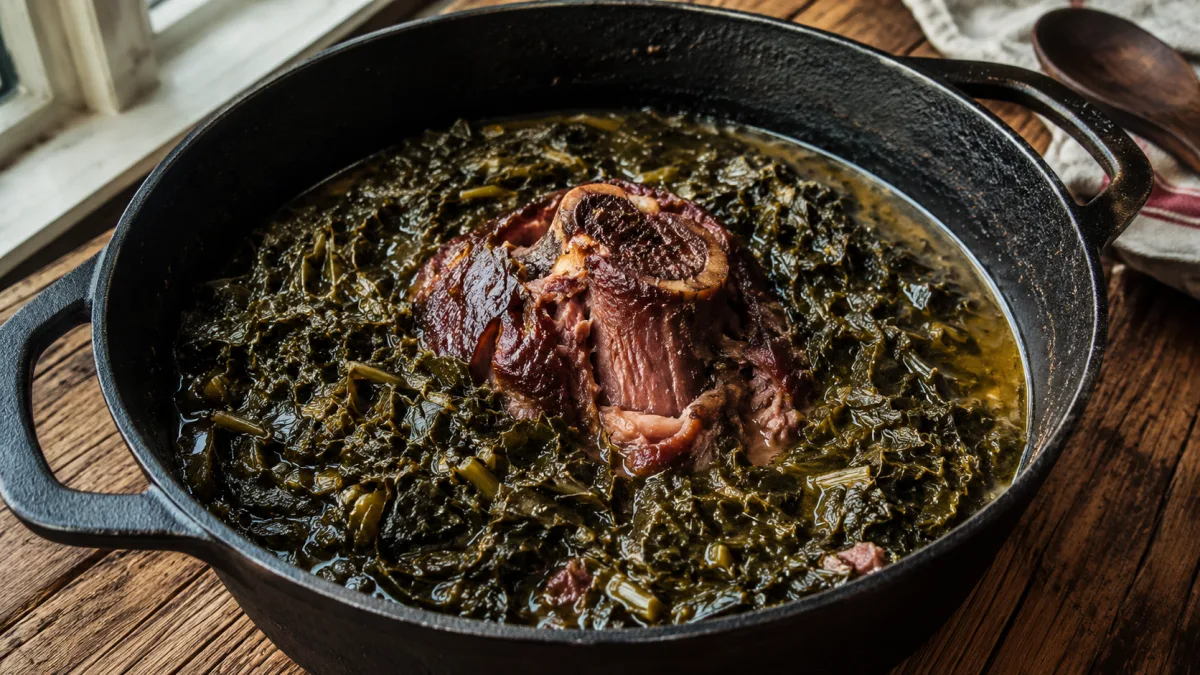
Collard greens are built for braising, not quick sautéing. Their leaves are thick, their stems fibrous, and their glucosinolate-driven bitterness survives a short cook. The Southern tradition of simmering collards for 45 minutes to 2 hours with smoked ham hocks is not culinary nostalgia — it is chemistry. Prolonged heat in a liquid medium breaks down tannins and other polyphenols that contribute astringency, while the collagen from the ham hock slowly dissolves into gelatin, enriching the braising liquid (called potlikker) with body and fat. A splash of apple cider vinegar added at the end cuts through the richness and brightens the finished dish. Collards braised this way will be silky and mellow, not the aggressive bitterness you get from a quick sauté.
Kale sits between collards and chard in cooking flexibility. It handles a quick sauté (8 to 12 minutes over medium-high) but also holds up well in a 20-minute braise. Raw kale works in salads if massaged with a pinch of salt and a tablespoon of oil for 2 to 3 minutes — the physical pressure breaks down cell walls and the salt draws out moisture, tenderizing the leaf. Kale's glucosinolates are present but in lower concentrations than arugula or mustard greens, so the bitterness is manageable without long cooking.
Spinach is the most delicate cooking green and the most prone to overcooking. It wilts in 60 to 90 seconds in a hot pan and will turn to an unappetizing gray-green sludge after 4 or 5 minutes. If you are adding spinach to a soup or stew, stir it in off the heat or in the final 90 seconds of cooking. One nutritional note: spinach's iron is largely non-heme iron, and its oxalic acid binds calcium in the gut. Boiling spinach and discarding the cooking water reduces soluble oxalate content by 30 to 87% (per USDA FoodData Central research), making the remaining calcium somewhat more accessible — though spinach will never rival low-oxalate sources like collards or kale for calcium bioavailability.
Swiss chard has two edible parts that need different treatment: the leaf, which wilts in 3 to 4 minutes, and the stalk, which needs 5 to 7 minutes. Cut the stems away from the leaves, chop them into half-inch pieces, and start them in the pan first. Add the torn leaves after the stems have softened. Chard's betalain pigments — the same compounds that make beets red — can bleed into the cooking liquid; this is normal and harmless. Season with a little nutmeg or lemon zest along with the garlic; chard's mild sweetness benefits from a counterpoint note.
Planning a richer dinner? Greens pair surprisingly well with braised proteins — check how technique translates to other ingredients in our guide to cooking goose, where the same low-and-slow logic applies.
What flavors pair best with cooking greens?
Garlic and olive oil are the universal baseline — nearly every green improves with them. Beyond that, the flavor affinities shift by leaf type. Bitter greens (kale, dandelion, mustard) are balanced by fat (pork, cheese, nuts), acid (lemon juice, sherry vinegar, pickled chilies), or a touch of sweetness from dried fruit or caramelized onions. Earthy greens (spinach, chard, beet greens) go well with warm spice: nutmeg, a pinch of red pepper flakes, or smoked paprika. Peppery greens (arugula, watercress, mustard) are best left minimally cooked — a 60-second wilt in a hot pan preserves the volatile isothiocyanates that give them their character.
Stock as a cooking liquid transforms sautéed greens into something more substantial. Substitute half the olive oil with chicken or vegetable stock and let it reduce into the leaves — the result is silkier and more savory than oil alone. Bacon grease is the classic Southern alternative; the rendered fat coats bitter receptors and the smoky flavor threads through the finished dish in a way neutral oil cannot replicate. Crumble crispy bacon back in before serving for texture contrast.
Greens also work as supporting players in more complex dishes: folded into stuffings, stirred through soups and stews in the last few minutes, added to stir-fries just before the sauce goes in. Carrot tops and dandelion greens, pungent enough to overwhelm on their own, are best used the way you would use herbs — chopped fine and scattered over a finished dish. Almost every green benefits from a little acidity at the end; a squeeze of orange juice works particularly well with collards and kale, cutting through fat without the sharpness of lemon.
Frequently Asked Questions
Can you eat cooking greens raw?
Yes, with some qualifications. Tender greens — spinach, arugula, beet greens, young kale — are well suited to raw applications. Mature collard greens are too tough and bitter to enjoy raw. Young kale works in salads when massaged first. Older, more fibrous leaves from any variety are better cooked.
Why do cooked greens sometimes turn an unappealing gray-green color?
Heat degrades chlorophyll into pheophytin, a duller brownish-green compound, when exposure is prolonged or the temperature climbs too slowly. Quick cooking at high heat — or blanching followed by an ice bath — locks in the bright color by deactivating chlorophyllase before it can convert chlorophyll at scale. Acid (lemon juice, vinegar) added during cooking also accelerates this color shift, which is why you should always add acid at the very end.
Should you salt the water when blanching greens?
Yes. A well-salted blanching water (about one tablespoon of kosher salt per quart) seasons the leaf from the inside and helps maintain the vivid green color by slightly raising the pH of the water. The salt also draws out some water-soluble bitter compounds, which is a secondary benefit.
Do cooking greens lose their nutrients when cooked?
Some water-soluble vitamins — vitamin C and folate — do decrease with heat and water exposure. However, cooking increases the bioavailability of other nutrients: carotenoids and fat-soluble vitamins (A, K) become more accessible when the cell wall breaks down and when fat is present in the dish. Boiling spinach specifically reduces its oxalate content by up to 87%, making the remaining calcium more absorbable than in the raw leaf.
How do you cook greens so they are not stringy?
Remove the stems and central ribs from any leaf thicker than Swiss chard. For older collard or kale leaves, fold the leaf in half lengthwise, grip it firmly, and strip the stem away with one motion. Slice the cleaned leaves into thin ribbons — no more than a quarter inch wide — so they cook evenly without long fibrous strands in the finished dish.
What is potlikker and is it worth saving?
Potlikker is the dark, savory braising liquid left behind after cooking Southern-style collard greens. It concentrates the water-soluble vitamins, minerals, and flavor compounds that leach from the leaves during the long braise. In Southern cooking it is served alongside cornbread as a dipping sauce or drunk as a side. If you are braising collards, save every drop.

Alyssa Curlin
Edits general health, nutrition and education explainers. Medical topics are educational and link to public-health guidance.




Leave a reply
Replying to