
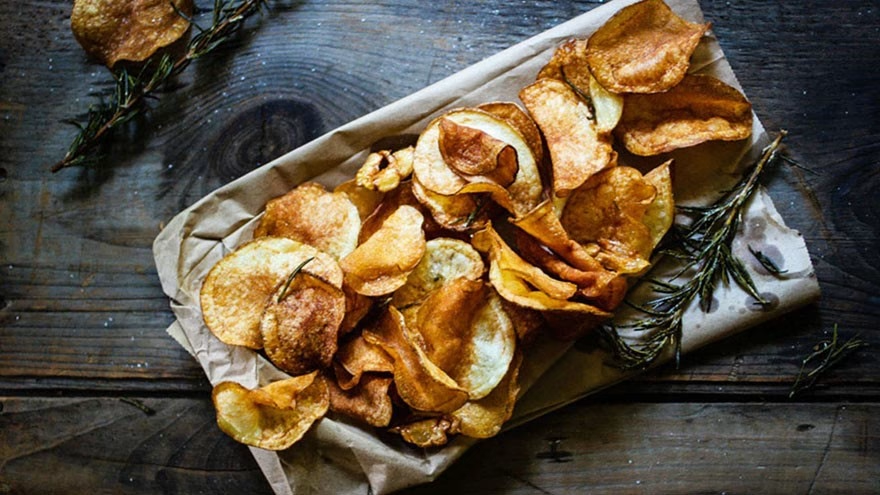
Home made chips are not automatically healthy, but they do give you control over slice thickness, oil, salt, and portion size. That control is the real advantage. A bag of chips is engineered for repeat handfuls; a tray of home made chips can be thin, crisp, warm, and served in a bowl that actually ends. The method matters more than the health label.
What makes homemade chips lighter than store-bought chips?
The difference is control. You decide how much oil touches the potatoes, how much salt lands on the finished chips, and how big the serving is. Baking or air-frying can reduce oil compared with deep frying, though the result will not be identical to a commercial chip.
FDA guidance on acrylamide notes that frying causes the highest acrylamide formation among common potato cooking methods, followed by roasting, while boiling and microwaving whole potatoes with skin do not produce acrylamide in the same way. The same FDA acrylamide guidance recommends cooking cut potato products to golden yellow rather than brown.
That does not mean chips are a vegetable serving. It means a homemade version can be a more intentional snack. If you want a fuller meal, pair the chips with protein or a dip instead of treating them as dinner.
The portion decision should happen before the tray goes into the oven. Count the potatoes, choose the serving bowl, and put the rest away before everyone starts standing near the pan. Warm chips disappear quickly because they feel lighter than packaged chips, even when the oil and starch still add up.
What potatoes work best for home made chips?
Russet potatoes crisp well because they are starchy. Yukon Golds make slightly richer, more tender chips. Red potatoes can work, but they usually stay a little softer. Sweet potatoes are tasty, but they need patience because their sugars brown quickly.
Choose firm potatoes with no soft spots, heavy sprouting, or green areas. FDA says potatoes should be stored outside the refrigerator, preferably in a dark, cool place, because refrigeration can increase acrylamide formation during cooking. Use a pantry or cool cupboard rather than the fridge.
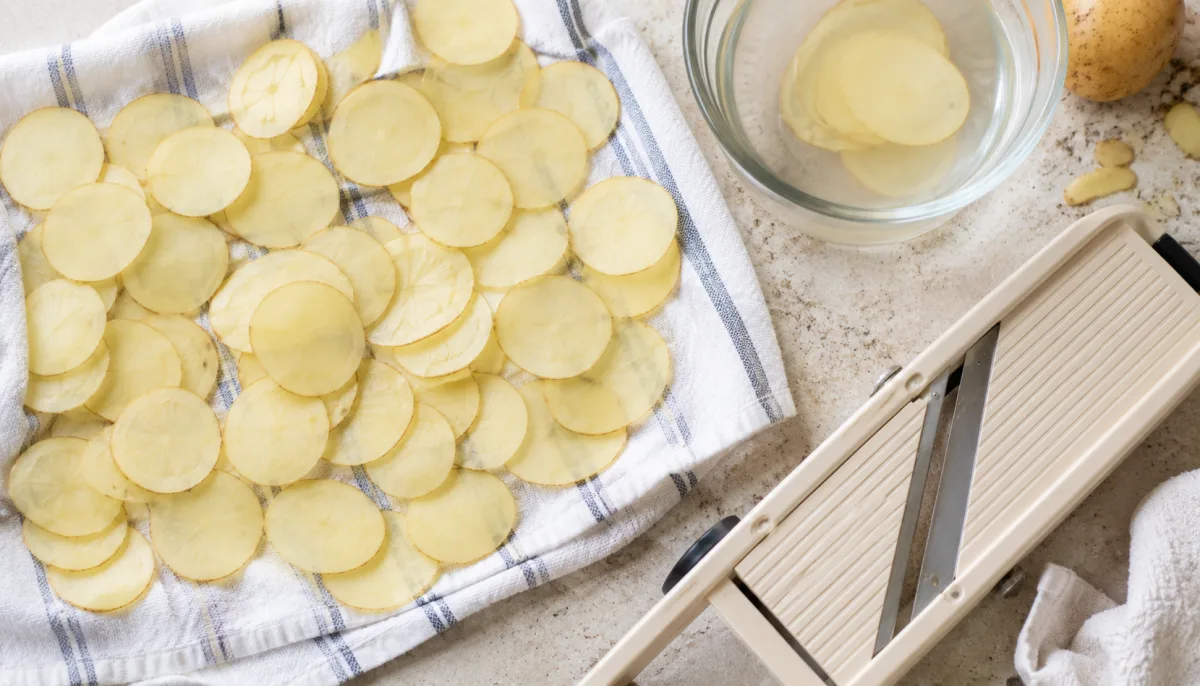
Even slicing matters more than potato variety. A mandoline gives the most consistent chips, but a sharp knife works if you go slowly. Uneven slices leave you with some pale, floppy pieces and some bitter brown edges.
How do you make baked potato chips?
Slice the potatoes about 1/16 inch thick. Soak the slices in cold water for 15 to 30 minutes, then rinse until the water looks clearer. FDA notes that soaking raw potato slices before frying or roasting helps reduce acrylamide formation. Drain and dry the slices thoroughly.
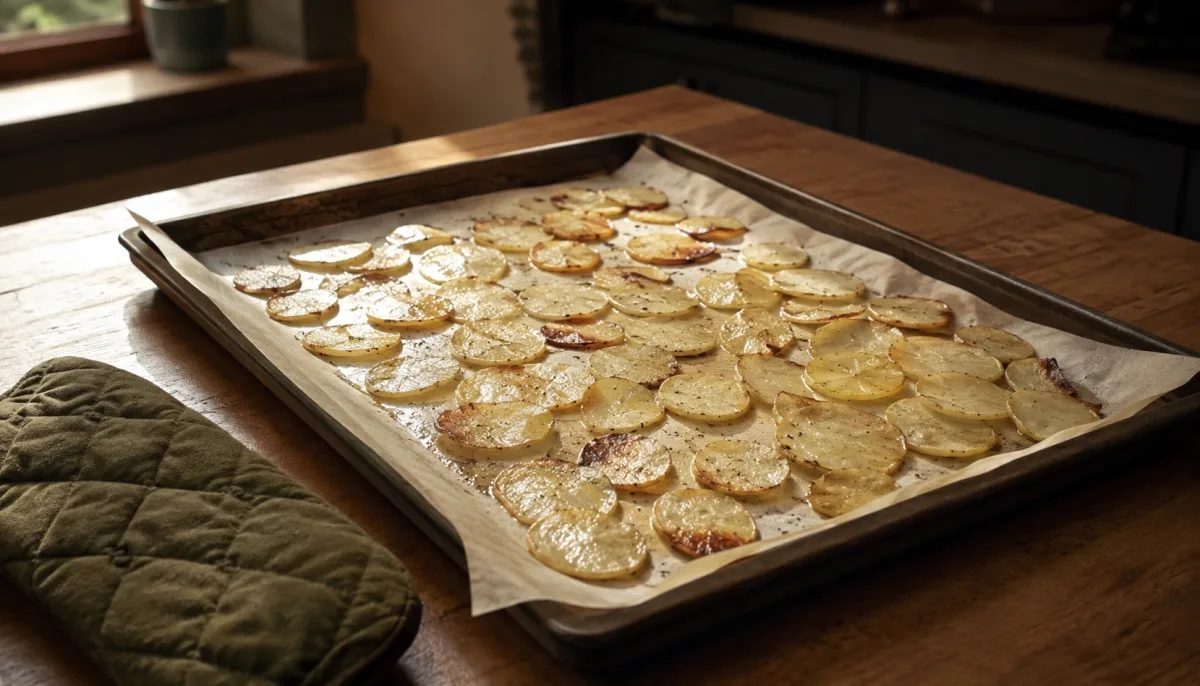
Toss the dry slices with a small amount of oil and spread them in a single layer on parchment-lined pans. Bake at 400 degrees Fahrenheit, flipping once, until the chips are golden and crisp at the edges. Pull chips as they finish because the thinnest pieces will be ready first.
Salt after baking. Salt draws moisture if added too early, and moisture is the enemy of crispness. Add pepper, smoked paprika, garlic powder, vinegar powder, or chili only after the chips are dry and hot.
Drying is not optional. A towel-damp potato slice steams before it browns, which gives you chewy centers and dark edges. Spread the slices on a clean towel, blot the top, and wait a few minutes before oiling if the surface still looks shiny.
Use two pans if the slices do not fit. A single layer is not a suggestion for neatness; it is how hot air reaches both sides of each chip. Rotate the pans halfway through baking if your oven has a hotter back corner.
Can you air-fry home made chips?
Yes, but the same rules apply: thin slices, soak, dry, light oil, and space. Air fryers move hot air fast, but crowded baskets still steam food. Cook in batches and shake gently so the pieces do not weld together.
Watch color closely. Air fryers can go from golden to dark at the edges quickly. Aim for crisp and light brown, not deeply browned. If the center stays soft while edges burn, the slices are too thick or the basket is too crowded.
Batch discipline is annoying but necessary. One crowded basket saves time only until the whole batch comes out leathery.
For air fryers, start checking a few minutes earlier than the recipe says the first time you make them. Basket size, fan strength, and slice thickness change timing. Once you know your machine, write the timing down instead of relearning it every batch.
What vegetables can become chips?
Potatoes are easiest, but other vegetables can work. Beets, carrots, parsnips, sweet potatoes, zucchini, kale, and plantains all need slightly different handling. Watery vegetables must be sliced thin, salted lightly, and dried well before baking.
Root vegetables are the most forgiving because they contain enough starch and structure. If you like root-vegetable cooking, Livecub's asparagus rolls recipe and corn souffle recipe are different dishes, but they show how texture changes when vegetables meet dry heat or custard.
Do not expect every vegetable chip to taste like a potato chip. A beet chip tastes earthy, a kale chip shatters, and a carrot chip turns sweet. Treat each one as its own snack.
Zucchini and kale need the most restraint. Zucchini carries so much water that thick slices collapse before they crisp. Kale burns if oil pools on the leaves. For both, use less oil than you think, spread the pieces loosely, and pull small pieces from the pan before larger pieces finish.
How do you season chips without overdoing salt?
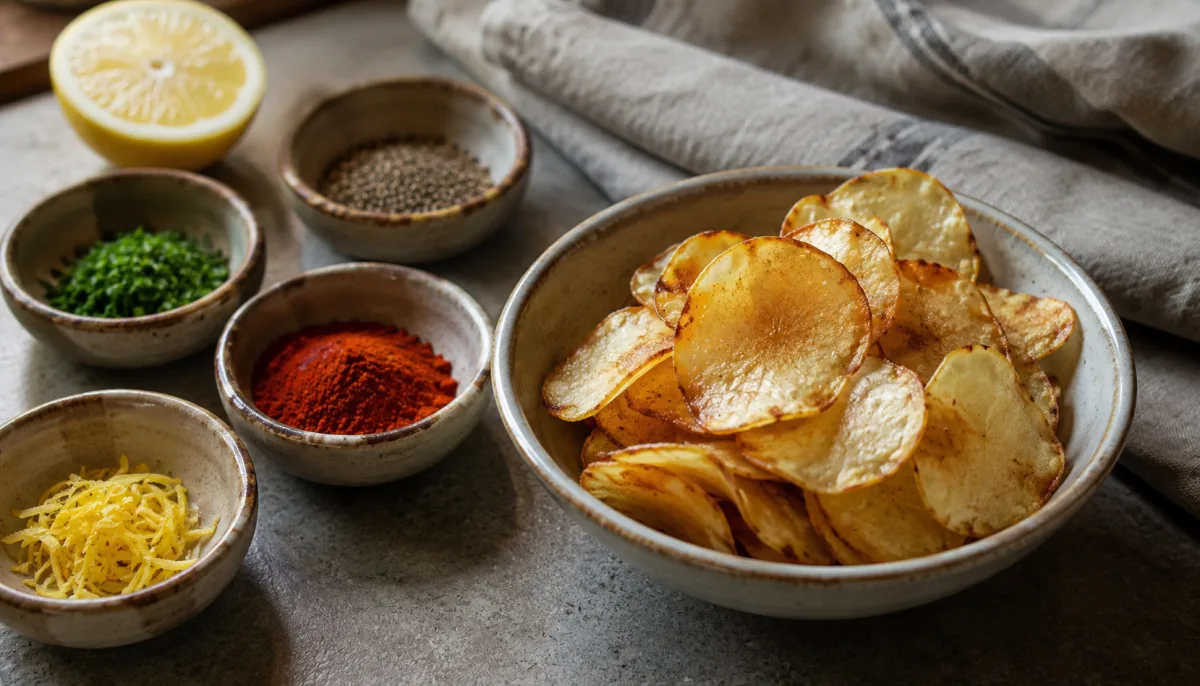
Use strong flavors in small amounts. Smoked paprika, black pepper, cumin, nutritional yeast, dried dill, garlic powder, onion powder, chile-lime seasoning, or a tiny dusting of parmesan can make less salt feel fuller. Add acid with vinegar powder or lemon zest rather than pouring liquid on the finished chips.
If you already use spice blends, check their salt content. Livecub's Asian seasoning mix guide is useful because homemade blends let you control salt separately from aroma and heat.
Portion first, season second. Put one serving in a bowl, season that bowl, and leave the rest plain until needed. It is much easier to control salt and snacking pace that way.
How should homemade chips be stored?
Homemade chips are best the day they are made. Let them cool completely before storing, then place them in an airtight container with a paper towel to absorb extra moisture. If they soften, re-crisp them briefly in a low oven or air fryer.
Do not store warm chips in a sealed container. Steam will soften them. Do not assume homemade means shelf-stable for days. Because oil and moisture vary by batch, treat them as a short-life snack.
The USDA FoodData Central database is useful if you want to estimate nutrition, but exact numbers depend on potato weight, oil absorbed, and portion size. Weighing the potatoes and oil gives a better estimate than guessing.
Re-crisp chips in dry heat, not the microwave. A low oven or a short air-fryer cycle drives off surface moisture. The microwave warms the potato starch and usually leaves the chips flexible.
If you are packing chips for later, keep seasoning dry and simple. Fresh herbs, wet sauces, and lemon juice belong on the side, not in the container. Moisture is the reason most homemade chips lose their edge by the next day.
Frequently Asked Questions
Are baked homemade chips healthy?
They can be lighter than deep-fried chips, but they are still chips. The benefit is control over oil, salt, and serving size, not a free pass to eat the whole tray.
Why are my homemade chips soggy?
The slices were likely too thick, too wet, too crowded, or sealed while warm. Dry them well, use a single layer, and cool before storing.
Do I have to soak potato slices?
Soaking helps remove surface starch and FDA says it can help reduce acrylamide formation before frying or roasting. Dry the slices thoroughly after soaking.
Can I make chips without oil?
You can, but texture is usually drier and less crisp. A very small amount of oil helps browning, flavor, and crunch while still keeping the snack lighter than deep frying.
The best home made chips come from restraint: thin slices, dry surfaces, light oil, golden color, and a bowl small enough that the snack ends before it becomes a meal.

Cashie Evans
Covers parenting and practical household topics with clear steps, safety notes and links to current guidance.


Leave a reply
Replying to