
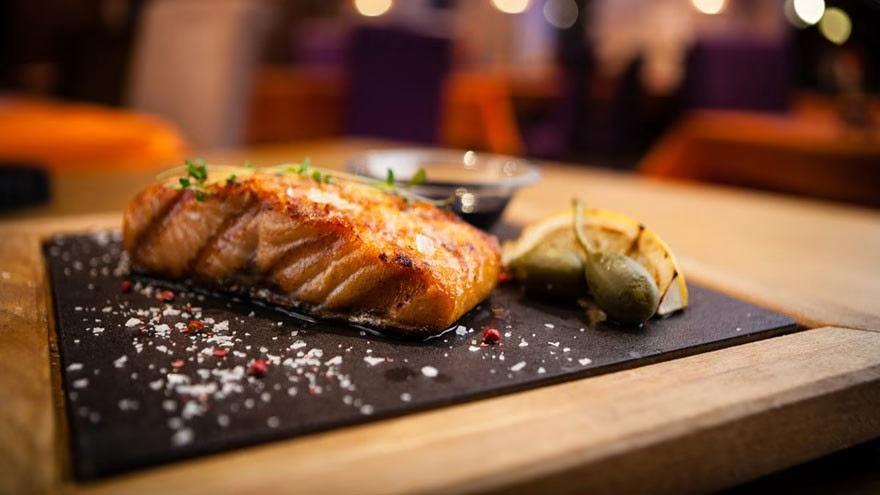
Sharing gourmet recipes videos can be useful, fun, and budget-friendly when the group treats videos as starting points rather than orders. A cooking video can show texture, timing, knife size, sauce thickness, and plating in a way a written recipe may not. It can also hide steps, skip food safety, or make a costly dish look easier than it is. The best way to share recipe videos is to pair the excitement with notes: who will cook it, what it costs, what substitutions are allowed, and what safety steps the video may have skipped.
Why recipe videos help home cooks
Videos show motion. You can see how onions look after sweating, how dough should feel, how thick a sauce becomes, or how a cook holds a knife. That visual context helps people who struggle with written recipe language.
Harvard Health says home-cooked meals are linked with better diet quality in research and can feel hard more because of planning and habits than lack of skill. That supports the idea that cooking confidence grows through practical starts.
Watch for technique, not only the finished plate. The most useful part of a recipe video may be the thirty seconds that show how a sauce changes in the pan.
Share videos with useful notes
YouTube Help explains that users can share videos and channels by copying the URL or using the share options. Its share videos page covers the basic mechanics.
The better habit is to add a note when sharing: why you are sending it, what minute matters, what ingredient may be expensive, and what part you want the group to test. A bare link often gets ignored. A useful note turns the video into a plan.
If you are inviting friends by email, a guide like making an email stand out fits the same problem. Clear subject lines and specific asks help people respond.
Use a group test system
If five friends each test one recipe, the group learns faster than one person cooking through a long saved playlist. Assign one person the main dish, one a side, one a dessert, one a sauce, and one a budget version.
Ask testers to report the same details: cost, time, equipment, substitutions, taste, leftovers, and whether the video left anything unclear. This keeps the conversation grounded instead of turning into vague praise.
Shared testing saves money. It helps the group find recipes worth repeating before everyone buys the same expensive ingredients.
Plan budget-friendly gourmet nights
Gourmet food does not have to mean rare ingredients. It can mean attention to texture, temperature, plating, and balance. A bowl of beans, a good sauce, crisp vegetables, and one thoughtful garnish can feel special without costing much.
USDA's healthy eating on a budget page discusses planning and using food benefits to help families afford food. For a recipe-video night, the same budget thinking applies: plan the menu before shopping, split costs, and avoid five people buying duplicate pantry items.
A sauce-focused night can be cheaper than a steak-focused night. For example, testing stir fry sauces lets people compare flavor with rice, vegetables, tofu, chicken, or leftovers.
Check food safety in videos
Some videos skip handwashing, thermometer checks, safe thawing, or cross-contamination because those steps slow the edit. That does not mean viewers should skip them. USDA FSIS defines cross-contamination as harmful bacteria transferring from foods, boards, and utensils when they are not handled correctly. Its cross-contamination page is a useful reminder.
If a video moves from raw chicken to salad with the same board or hand, pause and correct the method at home. If meat doneness is judged only by color, use a thermometer. If leftovers sit on camera for hours, follow safe storage rules instead.
Do not copy unsafe shortcuts. A video can teach flavor and still be weak on safety.
Turn videos into a small event
A recipe-video night works well as a potluck with structure. Each person picks one video, makes the dish, and brings the notes. The group tastes, compares, and decides what is worth keeping.
Presentation still matters. A resource like the ultimate guide to cookie displays can help even outside cookies because it teaches table flow, spacing, and small-serving logic.
Keep the event practical. The point is not to impress people with the most expensive dish. The point is to learn recipes that real households can repeat.
Build a shared recipe archive
After testing, save only recipes the group would actually cook again. Use a shared document with the video link, ingredient changes, timing corrections, cost notes, and safety reminders. Add photos only if they help identify texture or plating.
Good archives are short. A folder with 20 tested recipes beats a playlist with 400 unwatched videos. The shared notes should tell a future cook what the video did not.
For dessert tests, a simple known recipe like Mom's best fudge icing can be used as a baseline. People learn faster when one familiar recipe anchors the comparison.
Choose videos that are easy to repeat
A beautiful video may still be a poor home recipe if it uses hard-to-find ingredients, special equipment, or vague measurements. Before sending it to a group, ask whether a normal kitchen can repeat it on a normal night.
Look for videos that show ingredient amounts, pan size, heat level, texture, timing, and what the dish looks like before serving. If the video cuts from raw ingredients to a finished plate with no middle, treat it as inspiration rather than instruction.
Repeatability matters. A recipe people can cook again is more useful than a video people only admire once.
Make substitutions visible
When the group tests a recipe, write down substitutions. If one person uses chicken instead of shrimp, yogurt instead of cream, or frozen vegetables instead of fresh, the final review should say so. Otherwise the group may blame the video for a change it never made.
Substitutions are not bad. They are how recipes become affordable and personal. They only become confusing when no one records them.
Notes protect the recipe. They let the next cook decide whether to follow the video or the tested variation.
Keep the technology simple
Use tools people already check: a group chat, shared document, email thread, or private playlist. A complicated archive will be abandoned. The best system is the one people update after cooking while the details are still fresh.
Save the video link, the dish name, the date tested, the cost estimate, changes made, and a one-sentence verdict. That is enough for most households.
Short records get used. Long reviews sound nice but often stay unwritten.
Separate inspiration from instructions
Some videos are made to teach. Others are made to entertain. A teaching video usually names amounts, heat levels, pan size, and texture cues. An entertainment video may show fast cuts, dramatic plating, and little detail.
Both can be enjoyable, but they should not be used the same way. Save entertainment videos for ideas and teaching videos for cooking night. If a video skips the middle steps, look for a written recipe before shopping.
Purpose changes trust. The prettier video is not always the better guide.
Use video to learn plating without overspending
Gourmet style often comes from small choices: wiping the rim, slicing neatly, adding herbs at the end, warming plates, and leaving space on the platter. These are free or cheap skills that videos can show well.
Practice plating on ordinary food before buying luxury ingredients. Rice, vegetables, eggs, beans, and a good sauce can teach shape, color, height, and contrast.
Technique is the bargain. Learning how to finish a plate costs less than chasing rare ingredients.
Frequently Asked Questions
Is a recipe video better than a written recipe?
Not always. Video helps with texture and motion, while written recipes are easier to scan, print, and check while cooking.
How should I share a cooking video with friends?
Send the link with a short note about why it matters, which minute to watch, and what you want the group to test.
Can gourmet cooking be budget-friendly?
Yes. Focus on technique, sauces, seasonal ingredients, and shared costs rather than rare ingredients.
What if a video shows unsafe food handling?
Do not copy that part. Follow food safety guidance for handwashing, separate boards, thermometer checks, chilling, and leftovers.
Recipe videos are best when they lead to real cooking. Share them with context, test them with friends, protect food safety, and save only the versions that deserve a place in your kitchen.

Linda Fehrman
Edits general wellness and relationship explainers. Health material is educational, avoids diagnosis and links to health-authority guidance.

Leave a reply
Replying to