

Importance of Vitamins During Pregnancy is really about covering the nutrients that support blood volume, fetal development, bones, brain and spine development, and the parent's own health.
Food still matters. A prenatal vitamin is a safety net, not a replacement for meals. The best plan combines a balanced diet, a prenatal vitamin, and targeted supplements only when your clinician recommends them.
Why Prenatal Vitamins Matter
Pregnancy raises demand for folic acid, iron, iodine, vitamin D, calcium, choline, B vitamins, vitamin C, and other nutrients. Some are hard to cover reliably with food alone.
ACOG's healthy eating guidance discusses folic acid, iron, calcium, vitamin D, choline, omega-3 fatty acids, B vitamins, and vitamin C as nutrients to plan around during pregnancy: ACOG healthy eating during pregnancy.
That does not mean every person needs every supplement sold on the shelf. The point is matching nutrients to your diet, labs, symptoms, and pregnancy history.
Folic Acid Comes First
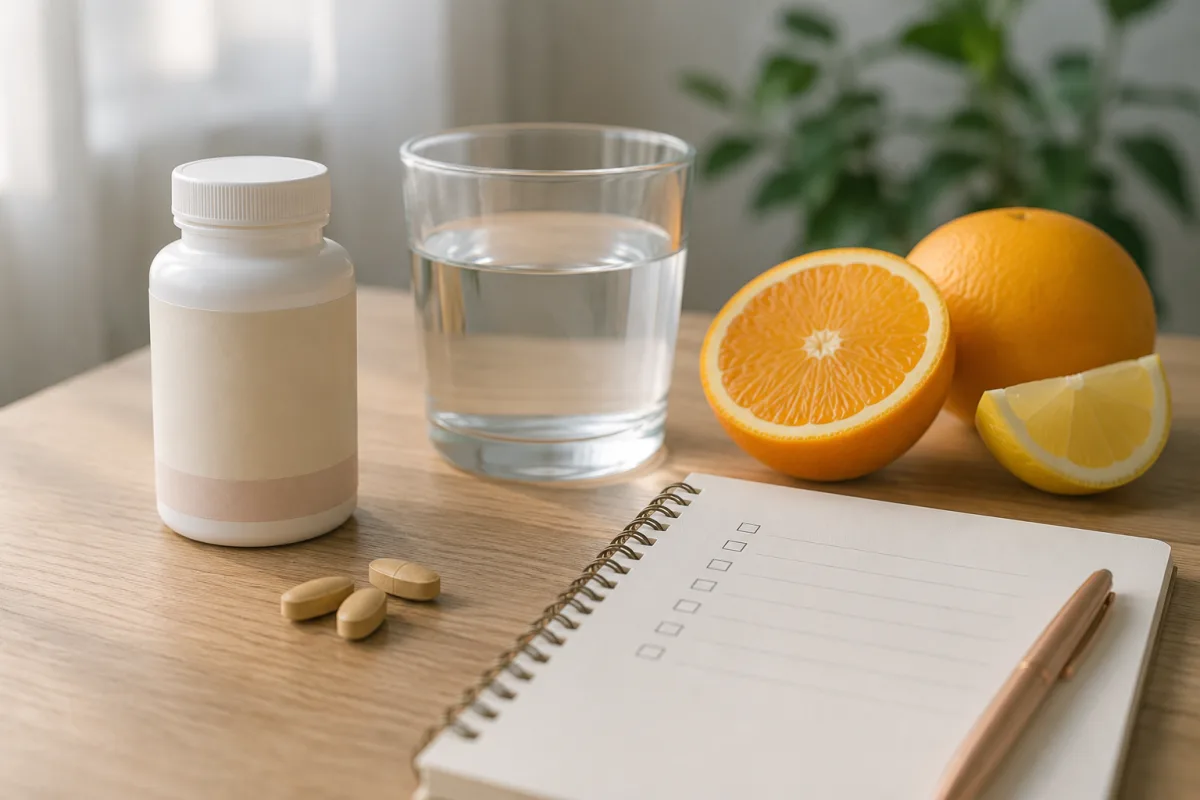
Folic acid helps reduce the risk of neural tube defects when taken before and during early pregnancy. This is why many clinicians recommend it before a positive test, not only after a first appointment.
CDC says all women capable of becoming pregnant should get 400 micrograms of folic acid every day: CDC folic acid guidance.
If you already take a prenatal vitamin, check the label. If you have a prior neural tube defect pregnancy, seizure medication use, or another risk factor, your clinician may recommend a different dose.
Iron Supports Blood Volume
Blood volume increases during pregnancy, and iron helps the body make hemoglobin. Low iron can contribute to anemia, fatigue, shortness of breath, dizziness, and poor tolerance of blood loss at delivery.
Iron can also cause constipation or nausea. If your prenatal vitamin makes you feel worse, ask about timing, formulation, stool-softening habits, or lab-guided dosing.
If nausea is making iron-rich foods difficult, bland pregnancy foods may help you keep meals gentler while you ask for medical advice.
Vitamin D, Calcium, And Bones

Calcium supports bones, teeth, muscles, and nerves. Vitamin D helps the body absorb calcium. A prenatal vitamin may not contain enough calcium to cover the whole day.
ACOG's vitamin D guidance says that when deficiency is identified during pregnancy, most experts agree 1,000 to 2,000 IU per day of vitamin D is safe: ACOG vitamin D pregnancy guidance.
Do not take high-dose vitamin D without testing and guidance. More is not automatically better.
Iodine, Choline, And Omega-3 Fats
Iodine supports thyroid function. Choline and omega-3 fats are often discussed for fetal brain development. These nutrients can be missed if the diet is limited or the prenatal label is weak.
People who avoid fish, eggs, dairy, or iodized salt should ask more detailed questions. A vegetarian or vegan pattern can work, but it needs planning.
If you are considering a vegetarian pregnancy plan, the internal guide on bland pregnancy foods is not enough by itself; ask a dietitian or clinician about B12, iodine, DHA, and iron.
Do Not Double Up Blindly
Taking two prenatal vitamins or stacking multivitamins can push some nutrients too high. Vitamin A, iron, iodine, and other ingredients can create problems in excessive amounts.
Bring every supplement bottle to prenatal visits: prenatal vitamin, gummies, iron, vitamin D, magnesium, herbs, protein powders, and hair or skin vitamins.
Gummy prenatal vitamins may be easier to tolerate but often lack iron. That may be fine for some people and wrong for others.
Timing And Tolerance
Some people tolerate prenatal vitamins better at night or with food. Others need a smaller pill, liquid, chewable, or separate iron plan.
If vomiting is severe or you cannot keep vitamins down, call your clinician. Do not quietly stop for weeks without a backup plan.
If early pregnancy timing is still unclear, early pregnancy signs may help with symptom context, but supplement dosing should come from care guidance.
Food Still Does Work
Vitamins fill gaps; food gives protein, calories, fiber, fluid, and many compounds not captured in a pill. Think eggs if eaten, beans, lentils, fortified cereals, dairy or fortified alternatives, fruits, vegetables, nuts, seeds, and whole grains.
If appetite or body image is making meals stressful, feeling attractive during pregnancy may help emotionally, while the clinician helps with nutrition.
If depression or anxiety is affecting eating, depression during pregnancy is worth reading alongside medical support.
Questions To Ask At The First Visit
Ask which prenatal vitamin fits your diet, whether you need extra iron, vitamin D, iodine, B12, DHA, or calcium, and which supplements to avoid.
Ask whether lab testing is planned. Hemoglobin, ferritin, vitamin D, thyroid markers, or B12 may matter depending on your history and diet.
Ask what to do if the vitamin worsens nausea, constipation, reflux, or headaches. A plan you can actually take is better than a perfect label left in the cabinet.
How To Read A Prenatal Label
Look for folic acid or folate, iron, iodine, vitamin D, B12, and other nutrients your clinician cares about. Also check serving size; some products require two or three pills per day.
Gummies can be easier to swallow but may leave out iron or calcium. Large tablets may be more complete but harder to tolerate during nausea.
Ignore vague marketing and read the amounts. A pretty bottle does not tell you whether the dose fits your pregnancy.
When A Regular Multivitamin Is Not Enough
Regular adult multivitamins may not have the right folic acid, iodine, iron, or vitamin A form for pregnancy. They also may include ingredients not chosen for pregnancy needs.
If you became pregnant while taking a regular multivitamin, do not panic. Bring the bottle to your clinician and ask what to switch to.
Avoid separate hair, nail, energy, or immune supplements unless the care team has reviewed them. Overlap is easy to miss.
Food Pairing Helps Absorption
Iron pairs well with vitamin C foods, while calcium can interfere with iron absorption when taken at the same time. Your clinician or pharmacist can help with timing.
If iron causes nausea, taking it with a small snack may help, though some foods reduce absorption. The best plan balances absorption with actually keeping it down.
Keep the routine simple enough to repeat: one time of day, one place for the bottle, and one backup plan for bad nausea days.
Do Not Chase Every Deficiency Online
Hair shedding, fatigue, cravings, leg cramps, and mood changes can have many causes in pregnancy. Do not assume each symptom means one vitamin is missing.
Ask about labs when symptoms persist. Guessing can lead to taking supplements you do not need while missing the actual problem.
This matters especially for iron, vitamin D, B12, thyroid-related symptoms, and severe fatigue.
Special Diets Need Special Questions
People who eat vegan, vegetarian, gluten-free, dairy-free, low-carb, or very limited diets may need a more detailed plan than a standard prenatal vitamin.
Ask about B12, iodine, calcium, vitamin D, iron, DHA, and choline. Bring a sample day of food so advice fits real eating, not a perfect menu.
If food aversions are strong, ask for short-term strategies rather than waiting until weight gain or lab results become a concern.
When Nausea Makes Vitamins Hard
Nausea can make a large prenatal pill feel impossible. Tell your clinician exactly what is happening: gagging on the pill, vomiting after taking it, constipation from iron, or reflux after swallowing it.
A short-term plan may use a smaller pill, a different brand, a chewable, separate folic acid, or a different time of day. The goal is not to win a toughness contest; it is to keep nutrients coming in.
If you miss a dose, do not double up without advice. Restart the routine and ask what matters most if you can only tolerate part of the plan for a few days.
Frequently Asked Questions
When should I start prenatal vitamins?
Ideally before pregnancy or as soon as pregnancy is possible, especially for folic acid.
Is food enough without a prenatal vitamin?
Sometimes diets are strong, but many clinicians still recommend a prenatal vitamin to cover common gaps.
Can I take two prenatal vitamins?
Do not double up unless your clinician tells you to. Too much of some nutrients can be harmful.
What if my prenatal vitamin makes me sick?
Ask about timing, formulation, gummies, separate iron, or prescription options.
Do vegans need special supplements?
They often need careful B12, iodine, iron, calcium, vitamin D, and DHA planning with a clinician.
This article is for general information only and isn't a substitute for medical advice. Talk to a clinician who knows your full history before making changes.

Chiara Bradshaw
Covers education, culture and creative topics with an emphasis on readable explanations and verifiable references.




Leave a reply
Replying to