

Activities to Enhance Self Esteem work best when they create evidence, not slogans. A person needs repeated proof that they can try, learn, repair, contribute, and speak to themselves more fairly.
Self-esteem activities should be small enough to repeat and honest enough to believe. Forced positivity often fails because the mind rejects praise that does not match lived experience.
Start With A Fair Thought
Write one harsh thought and one fairer thought. Not fake praise, just accuracy. I made a mistake becomes I made a mistake and I can repair it.
NHS recommends challenging unkind thoughts and noticing what you are good at in its low self-esteem self-help guide.
Keep One Small Promise
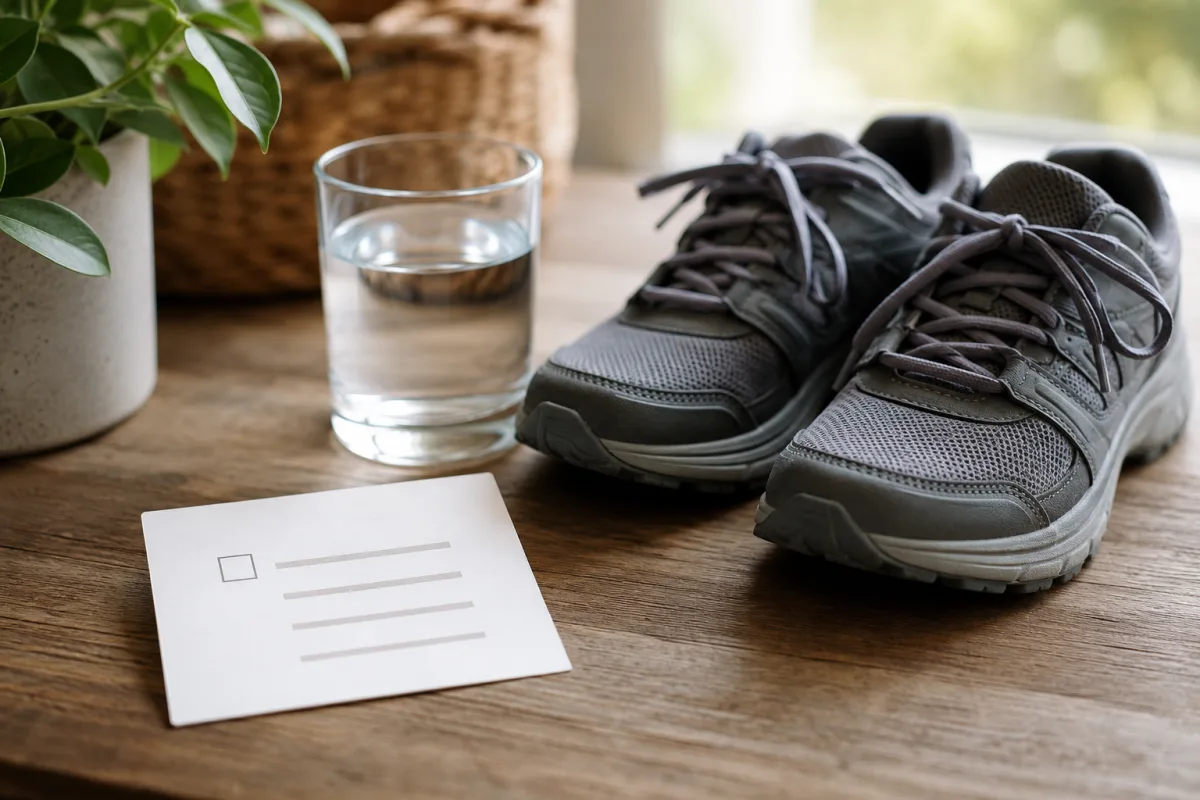
Choose one promise you can keep daily for a week: make the bed, walk five minutes, send one email, practice a skill, or drink water at lunch.
Self-esteem grows when your word to yourself becomes believable. Keep the promise small enough for a bad day.
Skill Practice

Pick a skill and track practice, not talent. Drawing, cooking, budgeting, lifting weights, coding, reading aloud, or gardening can all work.
Skill confidence is concrete. You can see what changed from week one to week four.
Contribution Activity
Do one useful thing for someone else without overextending: carry groceries, write a thank-you note, clean a shared space, or volunteer for a defined task.
Contribution fights the belief that you have nothing to offer. Keep the task bounded so helping does not become people-pleasing.
Body Neutral Care
If body image is part of self-esteem, start with care rather than admiration. Eat, rest, stretch, shower, wear clothes that fit, and stop insulting the body out loud.
Food tracking can help some people and hurt others. Livecub's food journal guide is useful only if tracking stays neutral and safe.
Practice Speaking
Self-esteem often rises when people practice being heard. Read aloud, ask one question, make one phone call, or speak first in a low-risk setting.
If performance fear blocks this, Livecub's stage fright guide gives quick tools for the body.
Try A Physical Challenge
A walk, beginner class, stretching plan, or gentle strength routine can help because the body records effort. The challenge should match your health and ability.
For competitive settings, Livecub's sports tryout nerves guide may help keep pressure from swallowing the activity.
Reduce Comparison Inputs
Choose one comparison trigger to reduce: an account, a group chat, a mirror check, a shopping habit, or a person who comments on your flaws.
Mayo Clinic's self-esteem steps includes identifying troubling thoughts and challenging negative or inaccurate thinking.
Make A Strengths List
Write strengths as behaviors, not labels: I show up on time, I notice details, I help younger siblings, I learn songs by ear, I can calm a room.
Behavior-based strengths are harder for the inner critic to dismiss. They are attached to real evidence.
Use Repair Practice

Low self-esteem often treats mistakes as identity proof. Practice repair: apologize, correct, ask for feedback, or try again.
A repaired mistake teaches more than a perfect day. It proves the self can survive imperfection.
Social Step
Choose one manageable social step: reply to a message, sit with a group for ten minutes, say hello, or join a low-pressure club.
If silence or social fear is severe, Livecub's selective mutism guide may fit better than ordinary confidence exercises.
Get Support
APA's self-esteem primer for schools emphasizes realistic support and confidence-building experiences: APA self-esteem primer.
If self-esteem problems are tied to depression, trauma, eating disorder symptoms, self-harm, or panic, activities are not enough. Professional help matters.
Use A Weekly Review
Once a week, write what you kept, what you avoided, what helped, and what you want to try next. Keep the review short.
The goal is attention, not self-punishment. A review should point to the next action.
Ask For Specific Feedback
Ask a trusted person for specific feedback on one behavior. General praise can feel slippery, but specific feedback gives the mind something to hold.
Choose people who can be honest without being cruel.
Create A Done List
At the end of the day, write three things you did, not three things you failed to do. Keep them ordinary: made lunch, answered a message, stretched, showed up.
A done list trains attention toward evidence. It is not bragging; it is recordkeeping.
Practice Saying No
Say no to one small thing that does not fit your time, health, or values. Low self-esteem often makes every request feel like a test of worth.
A respectful no can build self-trust. Start with low-risk situations before harder boundaries.
Make A Competence Shelf
Keep visible proof of things you have learned or finished: a recipe card, certificate, drawing, repaired item, book list, or small project.
The shelf is not for showing off. It is for reminding the brain that effort has a history.
Use Movement As Evidence
Movement can be framed as care rather than punishment. Walk, stretch, dance, clean, garden, or practice balance for a few minutes.
The aim is to feel capable in the body, not to change the body as fast as possible.
Repair Self-Talk Out Loud
When you catch a harsh sentence, repair it out loud if safe: That was too harsh. A fairer version is this.
Hearing the correction can make it more real. It also interrupts the habit before it runs all day.
Help Someone With A Limit
Helping can build self-esteem, but only if it has a boundary. Offer one clear task, one time slot, or one small favor.
People-pleasing drains self-esteem when it becomes proof that your needs do not count.
Plan For Bad Days
A self-esteem plan should include bad days. Pick a minimum version of each habit: one line written, one minute outside, one message answered.
Bad-day versions protect continuity. They keep a missed day from becoming a dropped identity.
Morning Anchor
Start the day with one anchor behavior: open curtains, drink water, make the bed, stretch, or write the first task.
A small anchor gives the day a beginning that is not based on mood.
Comparison Pause
When comparison starts, pause and name it: I am comparing. Then ask what action would help my own life for the next ten minutes.
This shifts attention from another person's image to your own next step.
Repair A Space
Clean or repair one small space: a drawer, desk corner, sink, bag, or phone folder. Visible order can give quick evidence of agency.
Keep the space small. The goal is one completed area, not a whole-life overhaul.
Learn In Public
Try one beginner activity where being new is expected. A class, tutorial, or group lesson can normalize not knowing yet.
Self-esteem grows when the person survives being a beginner without quitting immediately.
End With Evidence
Before sleep, name one piece of evidence from the day: I kept a promise, I asked, I rested, I repaired, or I tried.
Evidence-based review is more useful than judging the whole day as good or bad.
Choose A Practice Partner
Some activities work better with a partner: walking, studying, practicing a speech, cooking, or checking in on a habit.
Choose someone steady, not someone who turns the activity into competition or criticism.
Limit The List
Too many self-esteem exercises can become another way to fail. Pick two activities for the week and ignore the rest.
A short list creates follow-through. Follow-through creates evidence.
Notice Avoidance Kindly
Avoidance is information. Instead of saying I am lazy, ask what felt too hard, too public, too confusing, or too risky.
That question points to a smaller next step.
Frequently Asked Questions
What activity improves self-esteem fastest?
A small promise kept daily can help quickly because it creates evidence that you can rely on yourself.
Do affirmations work for self-esteem?
They can help some people, but fair and specific thoughts usually work better than praise the mind rejects.
Can exercise improve self-esteem?
Gentle, safe physical challenges can help by building evidence and body trust, but exercise should not become punishment.
How can I improve self-esteem socially?
Start with small social steps: one message, one question, one short visit, or one group where the role is clear.
When should I seek help?
Seek help if low self-esteem comes with depression, eating disorder symptoms, self-harm thoughts, panic, or major isolation.
The best self-esteem activities are repeatable and honest. Build evidence through small promises, skill practice, contribution, repair, and support when the pattern is too heavy.

Olivia Prete
Edits culture and personal-development articles, distinguishing opinion and experience from verifiable claims.




Leave a reply
Replying to