

Health & airline travel insurance is easy to blur because airlines sell coverage during checkout. The health side and the airline side solve different problems.
A clean comparison looks at medical care, evacuation, ticket refunds, baggage delay, trip interruption, and what the airline already owes under refund rules.
Separate The Airline Ticket From Medical Risk
NAIC lists many travel insurance benefits, including cancellation, interruption, medical, evacuation, baggage, and accidental death: NAIC travel insurance overview. Airline checkout coverage may include only some of them.
Do not let a quick box at checkout decide the whole trip. Read whether the product is ticket protection, a broader travel policy, or a narrow accident benefit.
Know DOT Refund Rights

The U.S. Department of Transportation explains when passengers are entitled to airline refunds for cancellations and significant changes: U.S. DOT airline refund rules. Refund rights are not the same as travel insurance.
If the airline owes a refund, insurance may not be the first place to look. If you cancel for a personal medical reason, the policy language matters.
Check Health Care And Evacuation
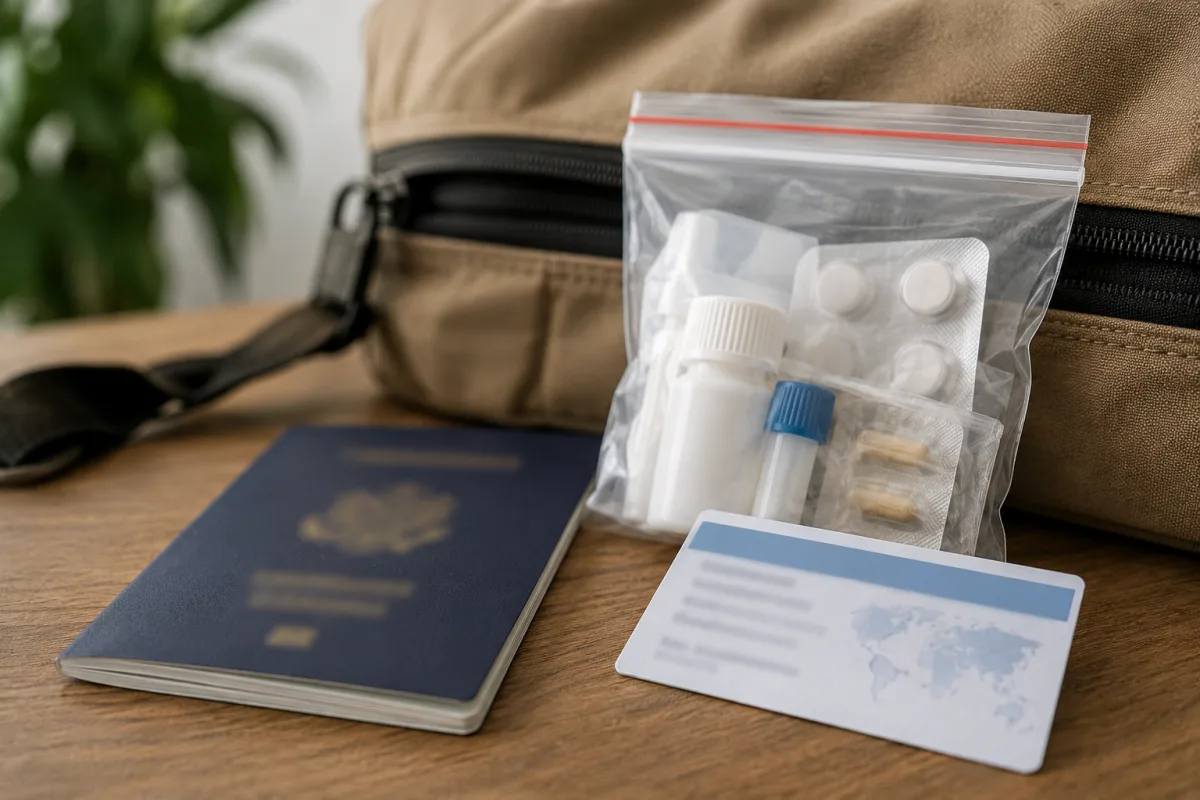
The CDC recommends reviewing health insurance and evacuation before travel: CDC travel insurance guidance. A flight policy may not pay a foreign hospital or move you to suitable care.
For international trips, this section can matter more than a baggage benefit. Ask about preapproval, hospital payment, and assistance calls.
Look At Baggage And Delay Benefits

Airline responsibility, credit card benefits, and travel insurance can overlap. Read each one so you know which proof to keep.
Delay benefits often require a minimum number of hours and receipts for needed items. Baggage loss may require airline reports before an insurer pays.
Buy Early For Time-Sensitive Benefits
Some upgrades and waivers require buying soon after the first trip deposit. Waiting until the week of travel may remove options.
If health history, cancel-for-any-reason, or large prepaid costs matter, compare policies before final payment.
Keep Coverage Separate From Savings
Health and airline travel insurance is bought to handle defined risk, not to act like an investment account. Keep premiums, deductibles, and policy limits in one file and long-term savings in another.
If you are checking reserves before a trip or purchase, Livecub's guide to find out how much savings bonds are worth belongs with the money records, not the claim packet.
Use A Budget Before The Quote
Air travelers should know the amount they can lose without coverage, the amount they can pay as a deductible, and the amount that would force a hard decision.
Families can make that conversation less tense with Livecub's age-by-age money guide, especially when travel or car costs affect more than one person.
Read Payment Rules Before Paying
A policy or loan can change depending on how and when it is paid. For health and airline travel insurance, check whether the card, bank account, travel deposit, or dealer paperwork affects benefits or proof.
Livecub's guide to buy savings bonds with a credit card is a useful reminder that payment method should not be treated as a small detail.
Do Not Confuse Insurance With Annuities
Some products carry insurance language but solve different problems. A travel policy, auto club membership, car loan, and annuity do not answer the same question.
If that distinction is blurry, Livecub's guide to the difference between fixed and fixed index annuities can help keep product types straight.
Save The Version You Relied On
Save the policy, quote, benefit guide, loan estimate, membership terms, and receipt that existed when you made the health and airline travel insurance decision. Web pages and portals change.
If you are also studying low-risk assets, keep that file separate from Livecub's guide to invest in U.S. Treasury bonds. Mixing purposes makes later review harder.
Ask What Would Make The Answer No
The best question for health and airline travel insurance is often the negative one: what would make the claim, refund, membership call, or loan approval fail? Ask before the event, not after.
Common answers include missing receipts, excluded reasons, late notice, wrong names, unpaid premiums, undisclosed medical history, mileage limits, or a loan term that does not fit the vehicle.
Keep One Contact Log
Write down dates, names, claim numbers, quote numbers, complaint numbers, and what each person said. Air travelers should not rely on memory after a stressful delay, breakdown, illness, or dealership meeting.
Short notes can make a second call much easier. They also help if the case moves from a front-line representative to a supervisor, adjuster, lender, or regulator.
Review Again Before The Risk Changes
Health and airline travel insurance can become stale when dates, travelers, health, mileage, vehicle use, loan terms, or destination plans change.
A five-minute review before departure, renewal, signing, or payment can catch a gap while there is still time to fix it.
Turn The Advice Into A Short Checklist
After reading about health and airline travel insurance, write a short checklist with the names, dates, documents, phone numbers, and decisions that apply to your situation.
A checklist keeps the next step from getting buried under side questions. It also makes it easier for another adult to help without guessing.
Mark The Deadline
Most health and airline travel insurance problems get worse when deadlines are missed. Put claim dates, court dates, renewal dates, appointment times, filing dates, and payment dates on a calendar.
If there is no formal deadline, create a review date anyway. Waiting without a review date is how small gaps become expensive.
Keep The Human Part Visible
Health and airline travel insurance can involve money, safety, grief, feeding, travel stress, or a tired family. The practical answer should reduce confusion for the people living with it.
Use plain words in notes. A plan that only makes sense to the person who wrote it will not help much during a hard day.
Choose The Source Of Truth
Pick the document or professional source that should settle questions about health and airline travel insurance: a policy certificate, court instruction, clinician guidance, loan contract, safe sleep guidance, or written quote.
If a website, salesperson, relative, and old memory disagree, go back to that source before acting. That habit prevents confident but wrong decisions.
Write Down What Changed
The answer for health and airline travel insurance can change when dates, symptoms, travelers, vehicle use, estate assets, feeding patterns, or payment terms change.
Put the changed fact in writing. A small update can explain why yesterday's good plan is no longer the right plan today.
Keep Proof With The Decision
Save the record that supports your health and airline travel insurance decision: receipt, policy page, court form, discharge note, feeding note, loan quote, or official guidance page.
Proof is easier to save at the start than to rebuild after a claim, appointment, dispute, or family conversation.
Ask For Plain Language
If an answer about health and airline travel insurance uses terms you cannot repeat back clearly, ask for plain language before you rely on it.
This is especially useful with exclusions, court authority, medical warning signs, loan fees, and safe sleep instructions. Clear wording reduces mistakes.
Know The Backup Plan
A good plan for health and airline travel insurance includes what to do if the first call, feed, claim, quote, court filing, or travel arrangement fails.
Write the backup contact, next deadline, or second option in the same note. Stress is lower when the second step is already visible.
Close The Loop
After the main step for health and airline travel insurance is handled, record what was done, who confirmed it, what remains open, and when it should be checked again.
Closing the loop keeps the same problem from returning as a surprise later.
Avoid Solving Side Problems At Once
Health and airline travel insurance often pulls in related worries. Park those side worries on a separate list so they do not derail the main task.
Finishing one clear step is better than opening five related questions and finishing none of them.
Frequently Asked Questions
Is airline travel insurance enough?
Only if the coverage matches the risk. Airline checkout products can be narrow.
Do DOT refunds replace travel insurance?
No. DOT refund rules and insurance claims answer different problems.
Should medical coverage be separate?
Often yes for international trips, cruises, or remote travel.
What proof should I save?
Save airline notices, receipts, medical records, baggage reports, and the policy certificate.
This article is for general information only and is not financial, legal, insurance, medical, or tax advice. Policy terms, prices, eligibility, and laws change; read the policy and ask a licensed professional.

Tory Stearns
Edits practical household, travel and lifestyle explainers. Claims that can change are linked to current primary or subject-authority sources.




Leave a reply
Replying to