
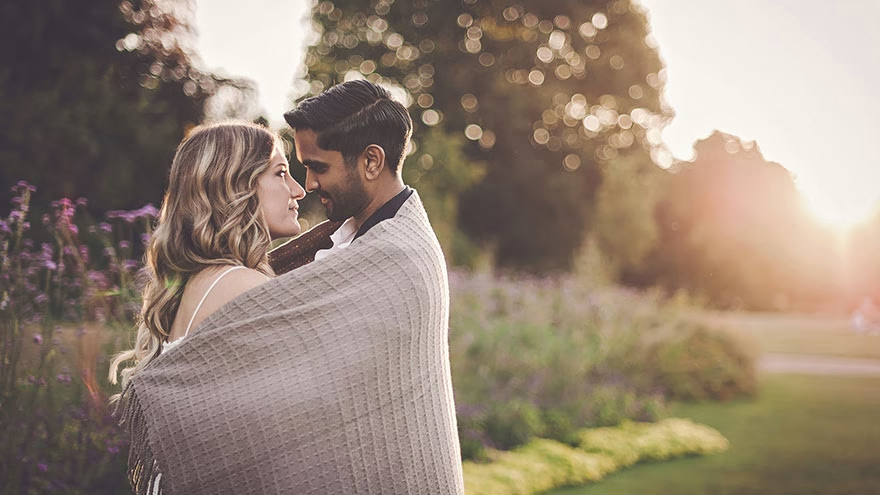
Ten years is a specific weight. It is the first decade during which you have filed taxes together, argued about something silly and laughed about it later, watched each other change in ways neither of you expected, and built something that has no clean name other than a life. The 10 year anniversary sits at a genuine inflection point — not just a number on a calendar but the end of the period when most marriages either deepen or dissolve. Celebrating it well means doing more than marking the date. It means actually stopping to look at what you have built.
What does the 10-year anniversary symbolize?
The 10th anniversary holds a particular place in Western marriage tradition, and the symbolism runs deeper than most people realize. Relationship researchers and therapists consistently point to the decade mark as one of the most significant transitions in a long-term partnership. The first ten years absorb the heaviest load: career pivots, financial stress, possible children, shifts in identity, and the slow renegotiation of who each person is becoming. Divorce rates are highest in this window. The couples who arrive at year ten with their friendship intact have, in a real sense, proven something.
The traditional name for this anniversary — the Tin or Aluminum Anniversary — captures that meaning in material form. Tin and aluminum are metals that bend without breaking. They resist corrosion. Under pressure, they flex rather than shatter. The choice of these materials as a symbol for the 10th anniversary dates to at least the 19th century, and the logic holds: a marriage that has navigated a full decade has demonstrated exactly that quality — the capacity to adapt, absorb difficulty, and come back to shape.
Traditional and modern 10th anniversary gifts
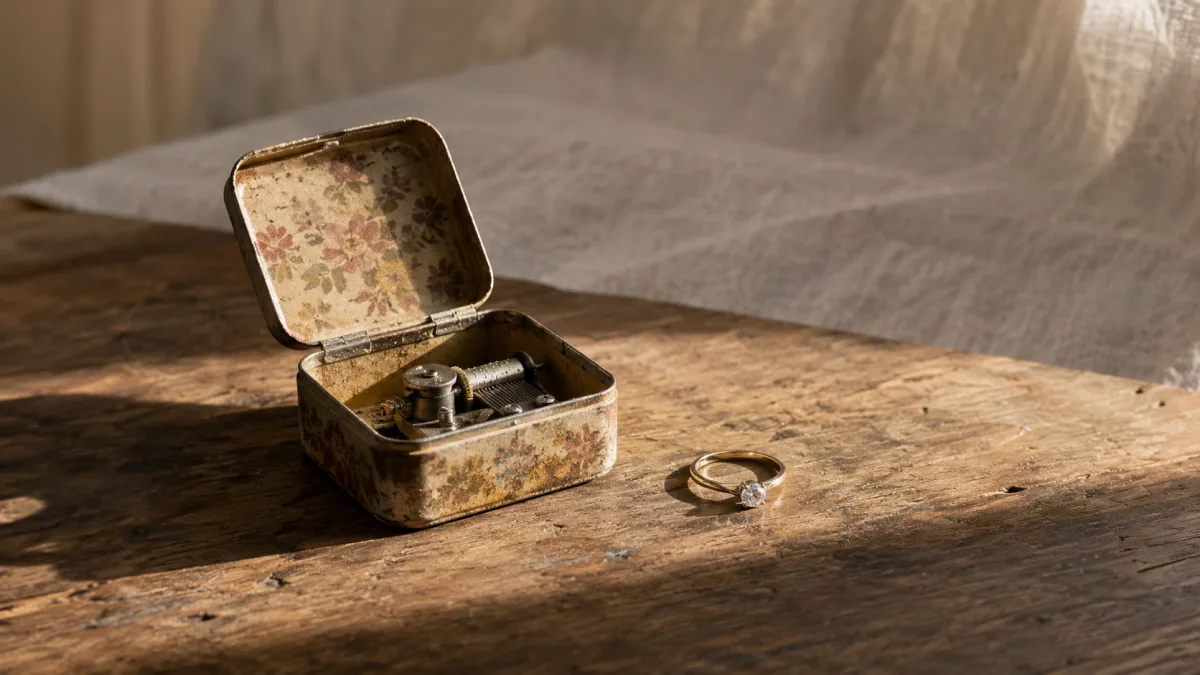
The traditional gift theme — tin in the United States, aluminum in the UK — opens up more creative possibilities than you might expect. At the straightforward end: a custom tin sign printed with a line from your wedding vows, a personalized tin music box, or a camping kit in aluminum for a couple who loves the outdoors. At the more personal end: a custom aluminum map print of the city where you first met, or a framed aluminum panel engraved with coordinates of somewhere that matters. The flexibility of both metals means you can shape them into something that fits your actual story rather than a generic idea of romance.
The modern gift for the 10th anniversary is diamond jewelry — a significant upgrade from tin, and deliberately so. The 10th anniversary is the first time diamonds appear on the modern gift list, a recognition established by the American National Retail Jewelers in 1937. The symbolism is straightforward: diamonds form under extreme pressure, and so do lasting marriages. A diamond eternity ring, stacking band, or pendant can serve as a wearable record of the decade — something chosen now, with full knowledge of who you are to each other, rather than in the heady optimism of early courtship.
If you are giving a gift rather than receiving one, consider pairing something small and handmade in tin with something lasting in diamond. The contrast itself is the story.
Recreate your honeymoon — or create a better one

Returning to your honeymoon destination is one of those ideas that sounds sentimental and turns out to be genuinely moving. You walk the same streets, eat in the same neighborhood, stay near the same beach — and the person beside you is both completely familiar and different in ways you can only see across a decade. That contrast is the whole point.
The logistics require some thought. If you stayed at a specific hotel, book the same room type if you can, or at least the same property. Try to recreate a meal from the trip — even an approximation of one dish can anchor a memory with surprising force. If you did a specific activity — a boat trip, a hike, a cooking class — do it again and notice what has changed in how you move through it together.
What if the original destination is no longer accessible? A resort that closed, a city that feels too fraught to revisit, a budget that no longer fits the place you chose in your twenties — none of these rule out the spirit of the exercise. The real goal is not geographic precision but the recreation of a feeling: unstructured time, novelty, the two of you attending to each other without the ordinary architecture of daily life. A destination with a similar character — the same coastline, the same kind of mountain town, the same continental cuisine — can carry the intention forward. Some couples use the occasion to take the honeymoon they originally compromised on: the trip that was always on the list but never quite happened.
Plan a trip that is just yours
The honeymoon recreation carries meaning precisely because it looks backward. But ten years is also a good moment to look forward — to plan a trip that represents who you are now rather than who you were when you married. A place neither of you has been. An activity you have both been saving for some vague future. That future is now.
The specific destination matters less than the structure: a trip where your attention is genuinely on each other, not on logistics or extended family or a packed itinerary. Some couples find that an active trip — hiking, cycling, sailing — pulls them back into easy companionship faster than a resort does. Others need precisely the nothing of a quiet beach. The point is to choose based on who you actually are at ten years, not on who you thought you were supposed to be at the start.
For a more romantic touch when you return home, plan something small for the evening you arrive back — a reminder that the celebration does not end when the trip does.
Host a celebration with the people who were there
A dinner party with the friends and family who attended your wedding is a different kind of anniversary ritual than a trip for two. It is outward-facing rather than private. And for many couples, it turns out to be deeply satisfying in ways they did not anticipate — partly because it gives the people who love you a chance to actually say what they have watched you build together.
The best version of this party is specific rather than generic. Pull out photographs from your wedding and place one at each table setting. Ask two or three close friends to prepare short toasts — not roasts, but actual accounts of something they have watched you do well together. Create a photo timeline across one wall: one image per year, labeled with nothing but the year. Guests will stand in front of it for longer than you expect.
If you have children, build a role for them in the event. They can help arrange the flowers, introduce guests, or simply be the visible proof of the decade. A celebration with both generations present has a different quality than a party among peers — a sense of accumulated time that is its own kind of joy.
You might also consider pairing the dinner with a session of romantic card games later in the evening — something to move the conversation from reminiscing into genuine playfulness.
Renewing your vows — what it means and how to do it
A vow renewal at ten years is a fundamentally different act than the original ceremony, and understanding that difference is what makes it land. You are not redoing your wedding. The legal paperwork is done, the family politics have long since settled, and the big day pressure is absent. What you are doing is choosing each other again — with full knowledge, not hope.
Because there are no legal requirements, a vow renewal can take almost any form. Some couples do it privately, exchanging handwritten words at a place that matters to them — the spot where you got engaged, the restaurant where you had your first date, a stretch of beach where no one else is present. Others gather close friends and make a small ceremony of it, with someone meaningful officiating and a celebration afterward. A destination renewal — perhaps at the same location as the original ceremony, or somewhere entirely new — combines the intimacy of the vows with the travel idea.
The most meaningful part is writing what you want to say. Original wedding vows are written in the future tense, full of intentions and promises. Renewal vows can be written in the past and present tense: I have watched you do this. I know now what this means. I choose it again. That specificity — naming what you have actually been through — is what makes a renewal feel different from a ceremony and more like a truth.
If your marriage has been through genuinely hard seasons, the renewal can acknowledge that directly. It does not need to be a performance of perfection. The couples who find renewal vows most powerful are often the ones who are willing to name what the decade actually contained.
Experience-based ideas: classes, retreats, and shared firsts
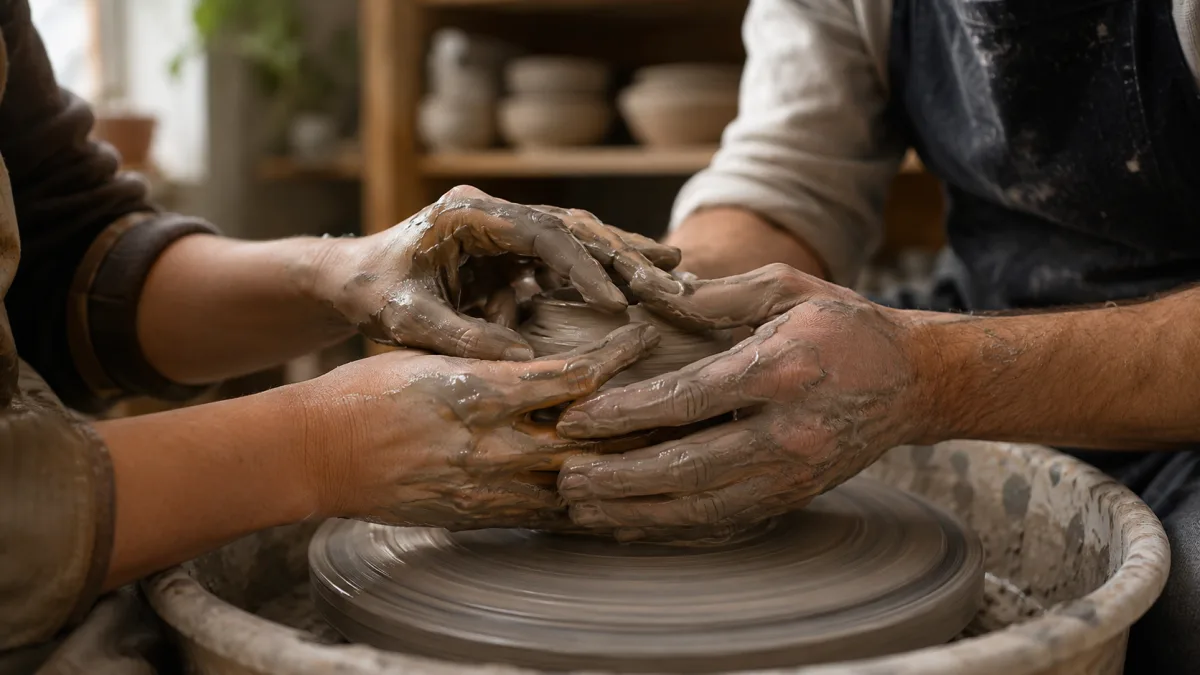
There is good reason why shared experiences leave more of a mark than objects. Learning something together — something where neither of you is the expert — returns you briefly to the early vulnerability of not yet knowing each other, and it is surprisingly bonding. A pottery class is the obvious cultural reference point (and yes, it remains genuinely fun regardless of the Ghost film associations). A cooking class with a cuisine you have never attempted, a dance style neither of you has tried, a sailing lesson on a lake — all of these create a shared memory anchored in laughter and mild incompetence, which turns out to be a reliable path to intimacy.
A time capsule is a quieter option with lasting weight. Seal a box together on your anniversary with photographs, a letter each of you writes to the other about what this decade has meant, a few small objects that represent your life right now, and predictions about where you will be in another ten years. Set a date to open it — your 20th anniversary, or an arbitrary Sunday a decade from now. The act of making it is already the ritual; the opening will be its own.
Marriage enrichment retreats offer a more structured version of intentional reconnection. These are not crisis interventions — they are workshops designed for couples whose marriages are essentially healthy but who want to invest deliberately in the next decade. Many are weekend-long, often held at conference centers or retreat properties, and they combine practical communication tools with protected time to actually use them.
If you want to keep things closer to home, recreating your first date — not your honeymoon, but the actual first time — has a particular charm. The restaurant may have closed; the movie may be available on streaming. The point is the deliberate reconstruction: dressing up, arriving separately if you want to, ordering what you ordered then. You will have a very different conversation over the same pasta.
You might also consider booking a relaxation massage as part of the day — or learning the skill together. It is a genuinely intimate thing to do well for another person, and the technique is learnable with a little attention.
What relationship research says about the 10-year mark
Dr. John Gottman spent more than forty years observing couples in his research lab at the University of Washington, and what he found is both sobering and genuinely useful. By tracking specific communication behaviors, he was able to predict with over 90% accuracy which couples would divorce — based not on whether they argued, but on how they argued. The four communication patterns he identified as most destructive are criticism (attacking a partner's character rather than addressing a specific complaint), contempt (treating a partner with disdain, mockery, or eye-rolling), defensiveness (deflecting responsibility by turning complaints back on the other person), and stonewalling (shutting down entirely during conflict). Of these, contempt is the single greatest predictor of divorce, according to the Gottman Institute's research.
The counter to all four is not the absence of conflict — it is what Gottman calls turning toward your partner's bids for connection. These bids are small: a comment about the weather, a touch on the shoulder, a question about your day. In couples who eventually divorced, partners turned toward these bids only about 33% of the time. In couples who stayed together happily, the number was 86%. The math of a lasting marriage, it turns out, is less about grand gestures than about showing up to the small ones.
What this means practically at the 10-year mark: the anniversary celebration is meaningful, but it is also, in a sense, a single day. The research suggests that what actually moves the needle is the quality of attention on ordinary Tuesdays. Continuing to invest in your relationship actively — through conversations, learning, and genuine curiosity about who your partner is becoming — is what carries the decade's momentum into the next one.
Frequently Asked Questions
What is the traditional gift for a 10 year anniversary?
The traditional gift for a 10th anniversary is tin in the United States, or aluminum in the UK — both chosen for their symbolism of flexibility and durability. The modern gift, added to the official list by the American National Retail Jewelers in 1937, is diamond jewelry. Many couples honor both: something personal in tin or aluminum alongside a lasting piece in diamond.
What is a 10 year anniversary called?
The 10th wedding anniversary is commonly called the Tin Anniversary (in the US) or the Aluminum Anniversary (in the UK and much of the international English-speaking world). The name refers to the traditional gift material — both metals chosen to symbolize a marriage that has proven its resilience and flexibility over a decade.
Is a vow renewal at 10 years appropriate?
Absolutely. A vow renewal at 10 years has no legal requirements or formal etiquette to navigate — it can be as private or as celebratory as you want. Many couples find it more meaningful than the original ceremony precisely because they are choosing each other with ten years of actual knowledge behind the words. Unlike the original wedding, you can write vows in the past and present tense: naming what you have been through and why you are choosing it again.
How do you celebrate a 10th anniversary if you have a limited budget?
Some of the most meaningful options cost very little. Writing renewal vows and exchanging them privately somewhere that matters to you is free. Making a time capsule together takes an afternoon and a box. Recreating your first date — or cooking the meal from your honeymoon at home — is inexpensive and often more emotionally resonant than an expensive restaurant. A handmade tin gift with a handwritten letter carries more weight than most things you can purchase.
What should I include in a 10th anniversary celebration?
The best 10th anniversary celebrations tend to combine three things: time set aside specifically for the two of you, some form of reflection on the decade (whether through photographs, renewal vows, or a shared conversation), and at least one thing that is genuinely new — a destination you have not been, a class you have not taken, an experience that belongs to this year rather than to the past. The balance between looking back and looking forward is what makes the milestone feel complete rather than just commemorative.
At ten years, the single most meaningful thing a couple can do is sit down — without phones, without a plan for the next hour — and each take a turn answering one question: What has the last decade taught you about me? Not about marriage in general, not about love as a concept, but about the specific person sitting across from you. The answers will be more revealing, and more tender, than almost anything you could plan.
Sources and verification
Check current details with these primary or subject-authority sources before acting on the information.

Linda Fehrman
Edits general wellness and relationship explainers. Health material is educational, avoids diagnosis and links to health-authority guidance.


Leave a reply
Replying to