
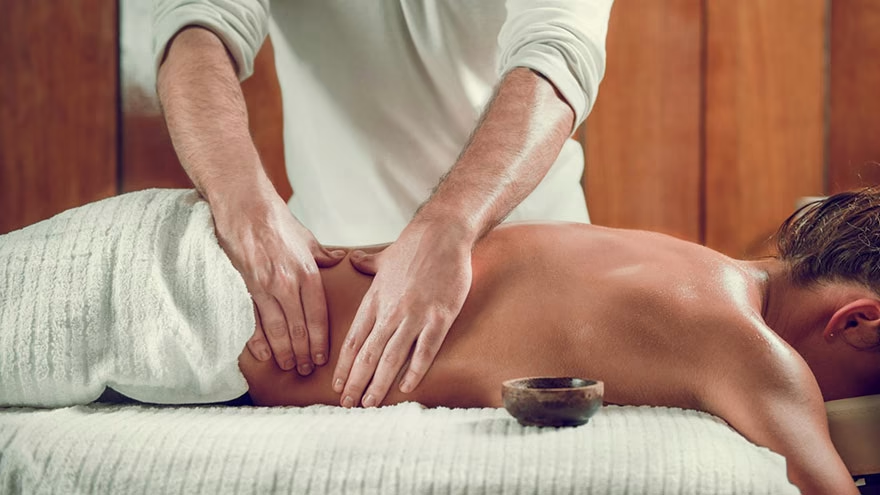
A single 45-minute massage can cut cortisol levels by up to 31 percent — that is the stress hormone responsible for tight shoulders, disrupted sleep, and the low-grade tension that accumulates across a busy week. Knowing how to massage your wife is not about mimicking a spa treatment; it is about understanding which strokes work on which muscles, and why they work, so the experience lands instead of feeling like an awkward rubdown. The steps below are grounded in Swedish massage fundamentals and adapted for a home setting, giving you a repeatable approach that builds trust through technique.
Why Touch Works: The Physiology Behind a Partner Massage
Skin pressure triggers the release of oxytocin, often called the bonding hormone, while simultaneously suppressing cortisol production. Research cited by the American Massage Therapy Association confirms that therapeutic touch activates the parasympathetic nervous system — the body's rest-and-digest mode — slowing heart rate and dropping blood pressure within minutes. For a partner giving the massage, the act of focused, intentional touch also triggers a mild oxytocin response. That bidirectional effect is what makes couples massage different from a solo spa appointment; both people feel the shift. Knowing this mechanism matters because it changes how you approach the session — slower, more deliberate strokes outperform frantic kneading every time.
What to Gather Before You Start
Having everything within arm's reach prevents the cold interruption of hunting for supplies mid-session. You need a carrier oil (sweet almond and jojoba are both non-greasy and widely available), a few drops of lavender or ylang-ylang essential oil to add to the carrier, at least two thick bath towels, and a flat surface — a firm mattress, a yoga mat over carpet, or a folding massage table if you want to invest in one. Essential oils must always be diluted: roughly 5 to 6 drops per 30 ml (one ounce) of carrier oil is the standard safe ratio for adults.
Temperature matters more than most people expect. The room should sit between 21 and 23 degrees Celsius (70 to 73 degrees Fahrenheit). A person lying still, partially uncovered, gets cold quickly, and muscle tension returns the moment she shivers. Warm two bath towels in the clothes dryer for 10 minutes before the session begins so you can cover areas you have finished working on.
How to Set the Atmosphere Without Overdoing It
Dim lighting does more than set a mood — it signals the brain that no alertness is needed, nudging her nervous system toward relaxation before the first stroke lands. Candles work well, but even a simple lamp with a warm-toned bulb handles the job. Keep background music instrumental and at conversational volume; lyrics pull cognitive attention away from physical sensation, which is the opposite of what you want. Soft jazz, acoustic guitar, or nature sounds all perform well in this context.
The biggest atmospheric mistake is leaving a phone in the room. A single notification ping at the wrong moment can snap her out of a relaxed state that took 15 minutes to build. For couples with children, creating a genuinely private window — whether kids are asleep or with a sitter — is not optional; it is the foundation everything else rests on. Trying to give a meaningful massage while she is half-listening for a child to wake up produces an experience that is pleasant at best and frustrating at worst.
The Five Swedish Strokes Every Partner Should Know
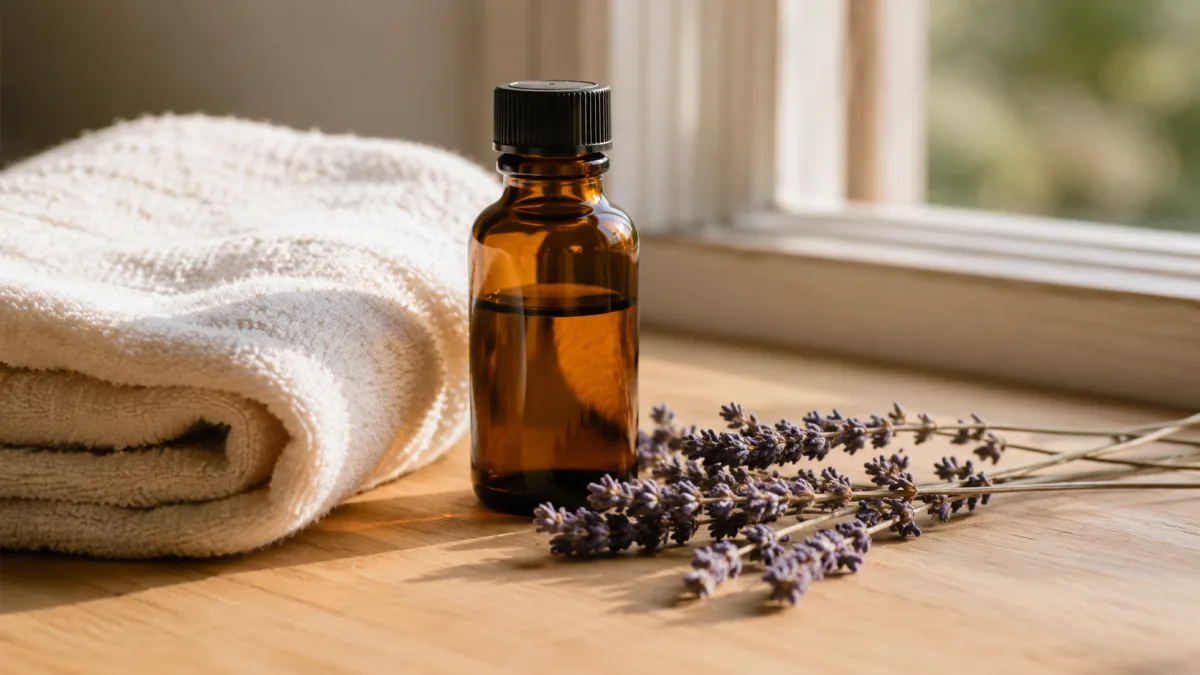
Swedish massage uses five core techniques, and three of them are immediately learnable by a non-professional. Understanding what each one does physiologically helps you sequence them correctly rather than applying them randomly.
- Effleurage — long, gliding strokes moving toward the heart. This is how you start and end every section of the massage. The heart-directed pressure gently assists venous blood return, which is why these strokes produce an almost immediate sense of warmth and heaviness in the muscles.
- Petrissage — rhythmic kneading and squeezing of the muscle belly. Use your full palm and thumb to pick up and roll the trapezius muscles across the top of the shoulders. This reaches deeper layers than effleurage and physically loosens adhesions in overworked tissue.
- Friction — small, deep circular movements using the thumbs or fingertips. Ideal for specific knots along the erector muscles beside the spine, but keep the pressure moderate until you know her tolerance.
- Tapotement — rhythmic tapping or light cupping. Skip this for a relaxation session; it is stimulating rather than calming and belongs in sports massage, not a wind-down at the end of a hard day.
- Vibration — gentle trembling pressure through the palm. Useful for the upper trapezius and the base of the skull, where tension headaches often originate.
For a home relaxation massage, lead with effleurage, layer in petrissage on the shoulders and mid-back, use friction sparingly on specific knots, and close each area with effleurage again. That four-step loop — warm, knead, target, soothe — is the reliable skeleton of a session that feels professional.
Which Areas to Focus On and Which to Avoid
The upper back, shoulders, and the base of the neck respond best to home massage and carry the most tension for people who spend time at desks or caring for children. The trapezius muscle — the large diamond-shaped muscle running from the base of the skull down to the mid-back and across to both shoulders — is the most rewarding place to spend your time. The GB21 acupressure point sits at the highest point of the trapezius, directly between the neck and shoulder tip; steady thumb pressure there for 20 to 30 seconds releases referred tension that people often feel as headaches.
Two areas require real caution. First, never apply direct downward pressure onto the spine itself — the vertebrae, discs, and surrounding nerves are not built for that kind of load. Always work the muscles running parallel to the spine, not on top of it. Second, avoid the front and sides of the neck where the carotid arteries and jugular veins run close to the surface. Aggressive pressure in that zone has been linked in case reports to vertebral artery dissection, a serious vascular event. Stick to the back and sides of the neck, using only light effleurage strokes, not deep pressure. If she reports any numbness, tingling in her arms, or dizziness during the session, stop immediately.
For a guide to technique specifically on the head and scalp, see this walkthrough on how to give a great head massage, which covers pressure points that pair well with the back routine described here.
What Massage Oil Works Best for a Partner Session?
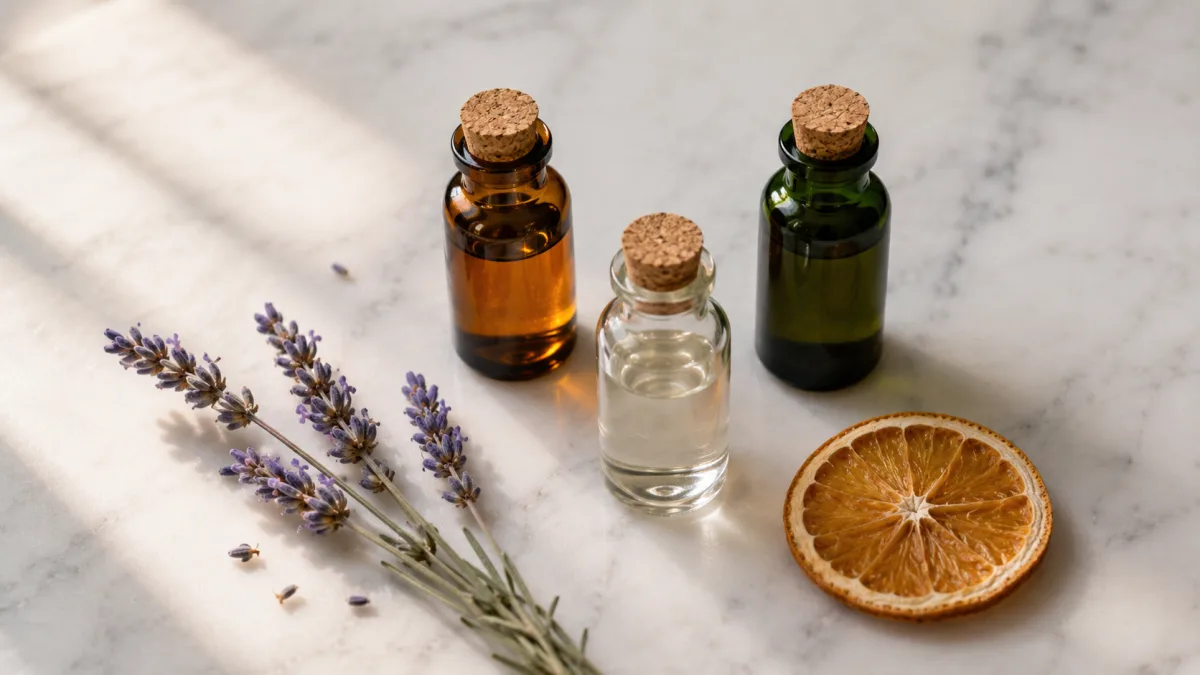
The oil choice shapes the entire tactile experience. Sweet almond oil is the most forgiving starting point — it absorbs slowly enough to give you adequate glide without leaving her skin feeling coated, and it carries essential oils well. Jojoba is technically a liquid wax rather than an oil, which means it closely mimics skin's natural sebum and is the best pick for anyone with sensitive or acne-prone skin. Coconut oil delivers deep moisture and has a mild, pleasant scent on its own, but it absorbs quickly and may need reapplication during a longer session.
Fragrance amplifies the relaxation response through a direct pathway: scent signals processed by the olfactory bulb connect immediately to the limbic system, which governs emotional memory and stress response. Lavender essential oil is the most studied option; a diluted blend can lower cortisol measurably within a single session, according to Healthline's review of massage types and their documented benefits. Ylang-ylang is a stronger, more floral choice with a similar calming profile. Warm the blended oil between your palms for 10 to 15 seconds before every application — cold oil on warm skin contracts muscles involuntarily, undoing five minutes of work.
A Step-by-Step Sequence for a 30-Minute Session
Thirty minutes is enough time to cover the back, shoulders, neck, and legs with genuine thoroughness, provided you stay focused and do not rush through the opening strokes to get to the deeper work.
- Minutes 1–5: Warm-up effleurage on the full back. Start at the lower back with both palms flat, thumbs alongside the spine, and glide upward to the shoulders. Fan your hands outward across the top of the shoulders, draw them back down the sides of the torso, and repeat. This establishes contact, distributes oil evenly, and signals to her nervous system that the session has begun.
- Minutes 6–12: Petrissage on the shoulders and upper back. Shift to the trapezius. Use your thumb and the base of your palm to knead across the top of each shoulder, spending extra time on any areas where she reports tightness. A firm but not painful squeeze held for 3 to 4 seconds, then released, is the most effective unit of petrissage for this area.
- Minutes 13–18: Friction on the mid-back. Use your thumbs in small, overlapping circles alongside each side of the spine from the shoulder blades down to the lower back. Keep both thumbs working simultaneously and maintain moderate, consistent pressure rather than occasional hard presses.
- Minutes 19–24: Neck and base of skull. Use light effleurage strokes only — do not attempt deep work on the neck without training. Gentle circular movements at the base of the skull with your fingertips can release the suboccipital muscles, the ones most responsible for tension headaches.
- Minutes 25–30: Cool-down effleurage and wrap. Return to the long, whole-back gliding strokes from the opening. Gradually reduce pressure over the final two minutes until your hands are barely skimming the surface. Cover her with the warm towel from the dryer and let her rest for at least five minutes before encouraging her to move.
Couples who make massage a regular part of their connection often find it opens other conversations. If you are looking for more ways to invest in your relationship's intimacy, interactive marriage seminar activities can complement the physical reconnection that massage creates.
How to Read Her Feedback During the Session
Verbal communication during a massage tends to collapse after the first five minutes — that is a good sign, not a problem. Learn to read physical cues instead. If her breathing deepens and slows, you have found the right pressure. If she holds her breath or her shoulder blades pull together, you have gone too hard or hit a sensitive spot; back off immediately without waiting for her to say so. Muscles that are about to cramp will often tighten slightly before the spasm — reduce pressure at the first sign of involuntary contraction.
Ask one direct question before you begin: on a scale of one to ten, what pressure does she usually prefer? A seven means you can lean into petrissage; a four means effleurage and light friction are your tools. Rechecking verbally once at the ten-minute mark — just a brief "too much, too little?" — is enough. Checking in every two minutes interrupts her ability to drift into the parasympathetic state you are trying to create.
If she enjoys the sessions and you want to deepen your shared practice, a dedicated guide to relaxation massage technique covers breathing coordination and rhythm in more detail.
Turning the Massage Into a Broader Romantic Evening
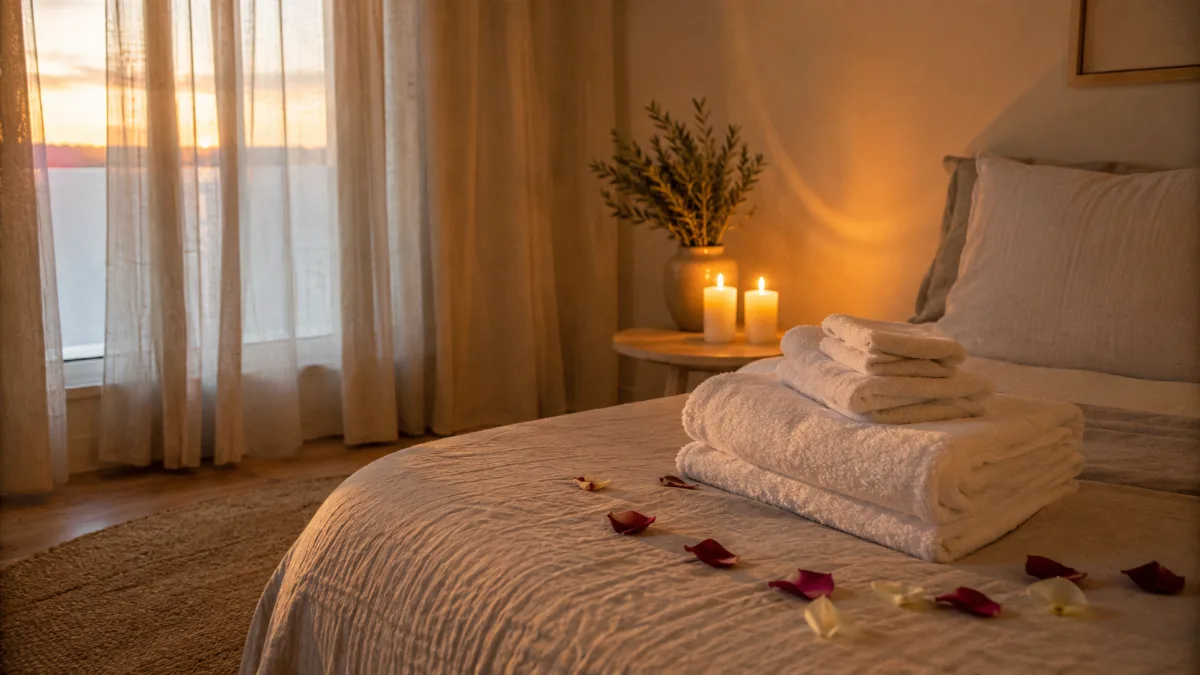
The session itself is one piece. What surrounds it matters almost as much. A bath drawn with Epsom salts 20 minutes before the massage loosens muscles that would otherwise require double the work to relax, and it signals to her that the whole evening has been considered rather than improvised. Rose petals in the water are a cliché for good reason — sensory novelty increases attentional engagement, which means she arrives at the massage table already partially present rather than still mentally running the day's to-do list.
Pairing the evening with something small but unexpected — a handwritten note, her favorite playlist already queued, a drink she likes set on the nightstand — compounds the effect. The massage communicates care through physical action; the surrounding gestures communicate that care through intention. For more ideas that extend the evening's mood, romantic card games can bridge the time between the massage and winding down together, keeping the connection without rushing into anything.
Frequently Asked Questions
How long should a home massage last to be effective?
Studies from the Touch Research Institute show that even 15-minute sessions produce measurable reductions in stress biomarkers. For a full-back relaxation massage at home, 25 to 40 minutes is the practical sweet spot — long enough to work through all the major muscle groups without your hands fatiguing or her comfort declining from lying still.
Can I give a massage without professional training?
Yes, with realistic expectations. Swedish massage's surface-level techniques — effleurage and petrissage — are learnable without formal training and carry minimal risk when applied to the back and shoulders with moderate pressure. Deep-tissue work, spinal mobilization, and any technique near the front of the neck should be left to licensed therapists.
What is the best time of day to give a partner massage?
Evening works best for relaxation goals because the body's core temperature is already beginning to drop and melatonin production is ramping up, making the parasympathetic response easier to trigger. Avoid scheduling it within 30 minutes of a heavy meal, as the digestive process competes with the relaxation response and lying prone can be uncomfortable.
Should I use lotion or oil for a couples massage?
Oil provides better glide than lotion for longer sessions because it does not absorb as quickly. Lotion is acceptable for shorter, more targeted work — like a 10-minute shoulder rub — but will require frequent reapplication during a 30-minute full-back session, which interrupts rhythm and causes temperature drops on exposed skin.
What if she falls asleep during the massage?
That is the best possible outcome and a reliable indicator that you hit the right pressure and pace. Let her sleep. Cover her fully with the warm towel, turn off any music, and leave her to rest. A massage-induced nap of even 20 minutes produces sleep-quality rest because the parasympathetic activation during the session primes the nervous system for deeper sleep stages.
How often should couples do at-home massage?
Once a week is the threshold at which stress reduction compounds across sessions rather than resetting. Even a shorter 15-minute shoulder and neck routine on weeknights maintains the cumulative cortisol-lowering effect better than a thorough monthly session. Consistency matters more than duration. For anniversary or milestone occasions, creative anniversary ideas can frame a massage session inside a larger romantic gesture.
Are there situations where I should not give a massage?
Skip massage if she has a fever, an active skin infection, undiagnosed lumps, unexplained bruising, varicose veins in the area you intend to work, or if she is in the first trimester of pregnancy. Any of these require medical clearance before therapeutic touch is appropriate.

Cashie Evans
Covers parenting and practical household topics with clear steps, safety notes and links to current guidance.

Leave a reply
Replying to