
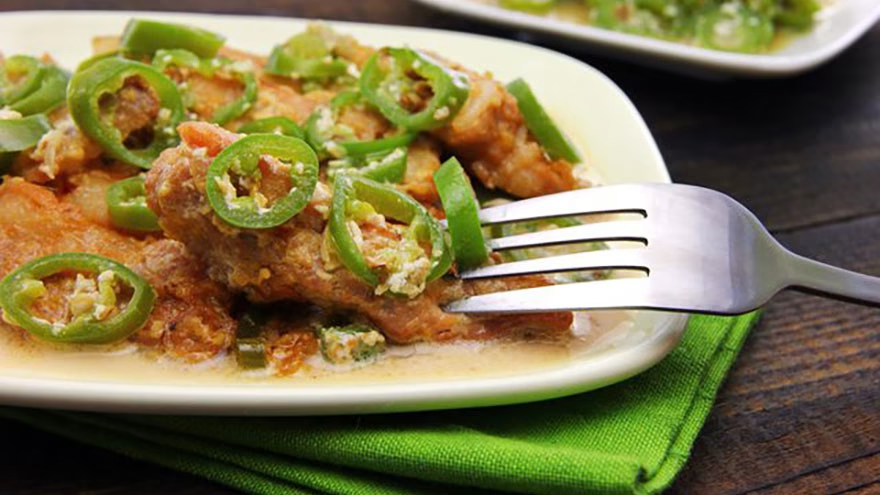
How to cook a Bicol Express starts with understanding the dish: pork simmered in coconut milk with shrimp paste, garlic, ginger, onion, and plenty of chili. It should be creamy, salty, spicy, and rich enough that plain rice feels like part of the recipe, not an afterthought.
Bicol Express is forgiving in some ways and strict in others. You can adjust the heat, cut the pork differently, and choose coconut milk or coconut cream. But you cannot rush the simmer or dump in chilies without thinking about who is eating.
What Is Bicol Express?
Panlasang Pinoy describes Bicol Express as a Filipino dish of pork simmered in coconut milk, with a creamy, savory, spicy profile. Many versions use pork belly, shrimp paste, long green chilies, smaller hot chilies, garlic, ginger, and onion.
The dish is associated with the Bicol region's love of coconut and chili, though modern versions vary by household. Some are fiery, some are gentler, some are saucier, and some cook down until the coconut fat separates slightly and the pork is coated.
What Ingredients Do You Need?
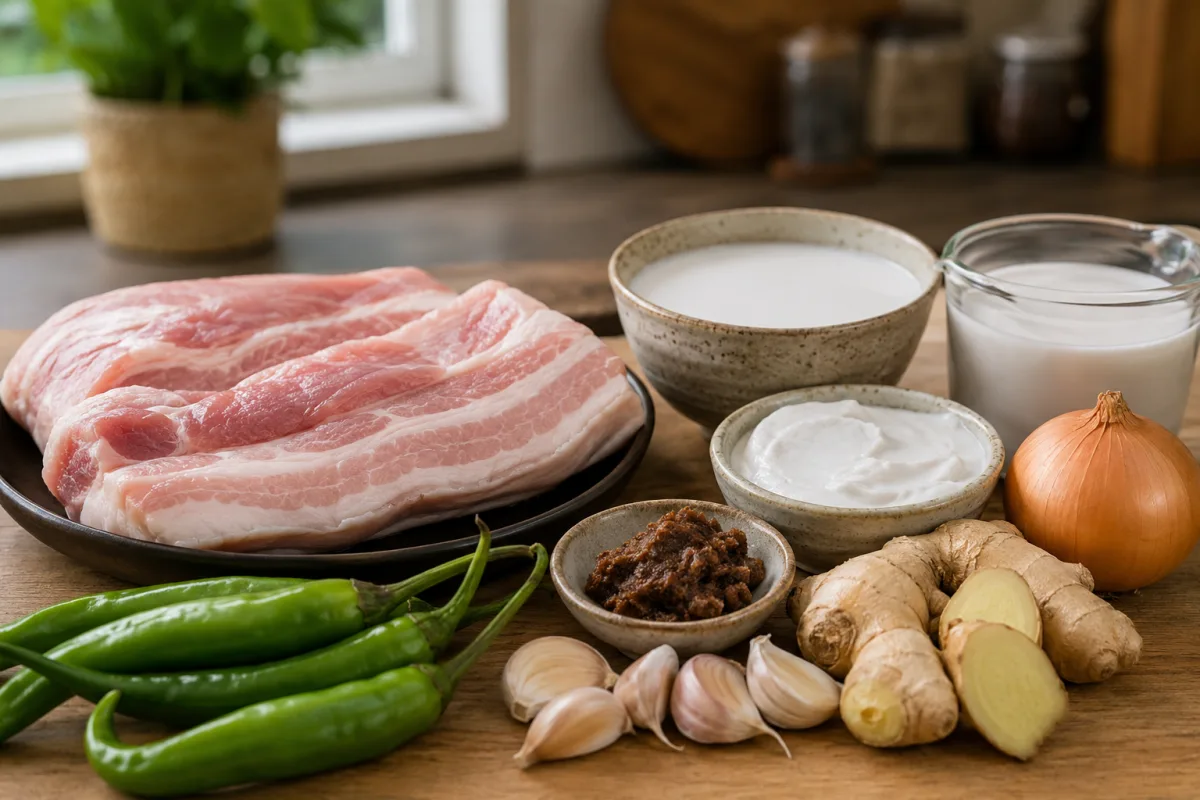
For a home batch, use 1 1/2 pounds pork belly or pork shoulder, 1 tablespoon oil if needed, 1 small onion, 4 cloves garlic, 1 thumb ginger, 3 tablespoons bagoong alamang or sauteed shrimp paste, 1 can coconut milk, 1 cup coconut cream, 4 to 6 long green chilies, 1 to 3 bird's eye chilies, black pepper, and salt only if needed.
Bagoong is salty, so taste before adding salt. If you like Filipino pantry flavors, Livecub's Philippines corned beef recipe can sit beside this as a simpler weeknight option.
Which Pork Cut Works Best?
Pork belly gives the richest result because the fat melts into the coconut sauce. Pork shoulder is meatier and still works well if cooked long enough. Lean pork loin can dry out unless handled gently, so it is not the first choice.
Cut pork into bite-size strips or cubes. Smaller pieces cook faster and absorb sauce better. If using very fatty belly, you can render it first and spoon off excess fat before adding aromatics.
How Do You Cook The Aromatics?
Start with a wide pan or pot over medium heat. Brown or render the pork lightly, then add onion, garlic, and ginger. Cook until fragrant, not burnt. Add shrimp paste and let it cook briefly so the raw edge softens and the flavor spreads through the fat.
This step builds the base. If the garlic burns, the sauce can turn bitter. If the shrimp paste is not cooked at all, the final flavor may feel harsh. Slow down here and the rest of the dish becomes easier.
When Do You Add Coconut Milk?
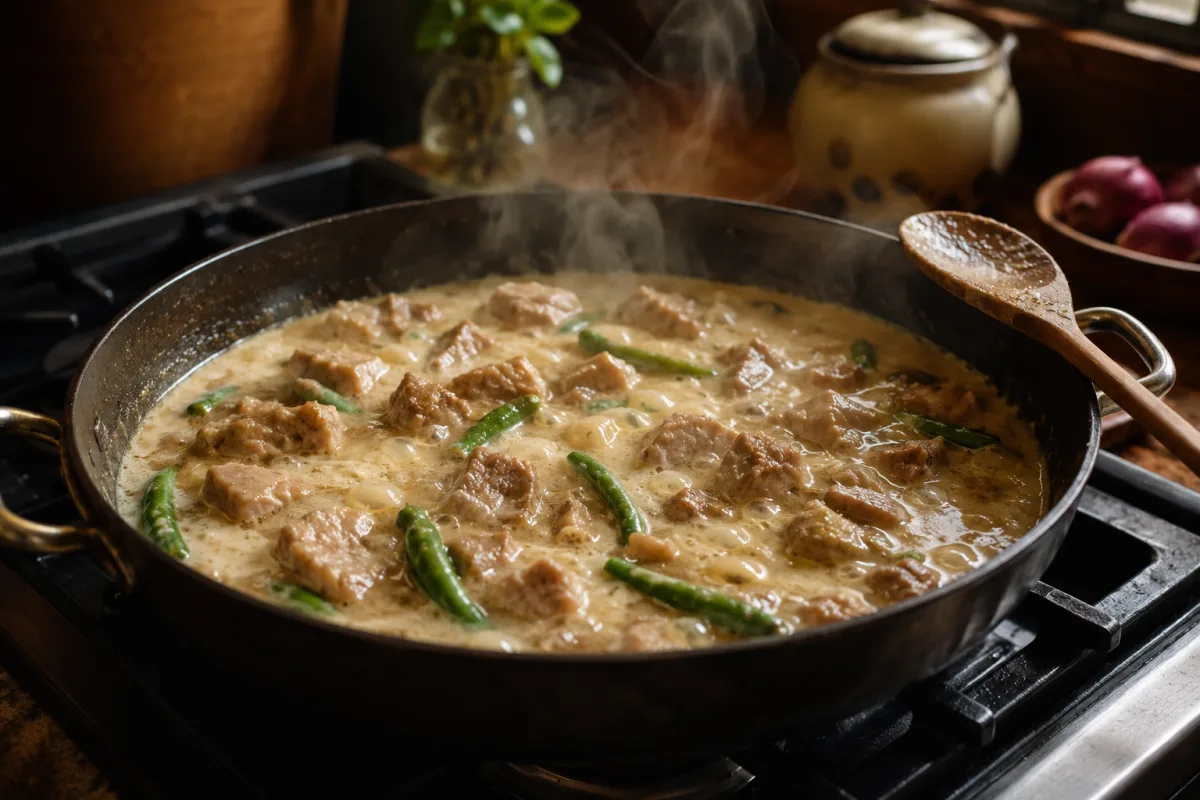
Add coconut milk after the pork, aromatics, and shrimp paste have started working together. Simmer gently until the pork is tender. Do not boil violently. Coconut milk can separate or look grainy when handled too roughly, especially if the pan is very hot.
Kawaling Pinoy's Bicol Express recipe also builds the dish around pork, coconut milk, chili peppers, and shrimp paste, with attention to cooking process and serving. That basic structure is the heart of the recipe.
How Spicy Should It Be?
Traditional versions can be hot, but home cooking should fit the table. Long green chilies give flavor and moderate heat. Bird's eye chilies bring sharper heat. Remove seeds, use fewer hot chilies, or add them later if you are cooking for mixed spice tolerance.
Do not make the dish mild by removing all chili character. Better to keep long chilies and reduce only the small hot ones. If you like building flavor through spice balance, Livecub's Asian seasoning mix guide can help you think in layers.
How Do You Make The Sauce Thick?
Once the pork is tender, add coconut cream and simmer until the sauce reduces. Stir often enough to prevent sticking, but not so hard that the pork breaks apart. The sauce should cling to the pork and rice without becoming dry.
If the sauce is too thin, keep simmering uncovered. If it is too salty, add more coconut milk or a little unsalted pork stock. If it is too hot, more coconut cream and rice help, but they cannot erase every chili decision.
How Do You Cook It Safely?
Use clean tools, keep raw pork separate from ready-to-eat foods, and cook pork thoroughly. FoodSafety.gov's safe temperature chart lists 145 degrees Fahrenheit with a 3-minute rest for pork steaks, roasts, and chops, and 160 degrees for ground pork. Stewed pork should be fully cooked and tender.
Shrimp paste contains shellfish, a major allergen. Tell guests before serving if allergies are possible. Coconut milk leftovers should be cooled and refrigerated promptly.
What Do You Serve With Bicol Express?
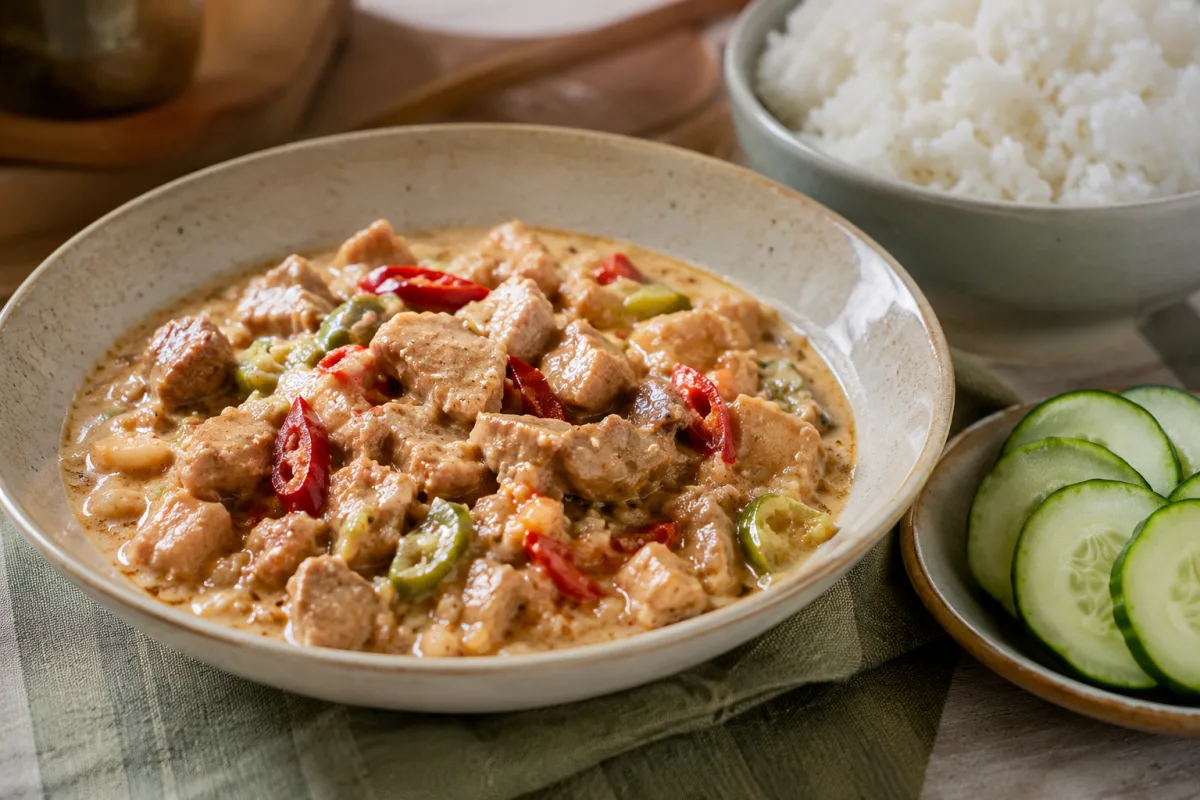
Serve it with steamed white rice. That is the simple answer. The rice balances salt, fat, and heat. You can add sliced cucumber, tomatoes, sauteed greens, or a mild vegetable dish if you want contrast.
For a bigger Filipino-inspired table, Livecub's Chinese fried chicken wings or Yugoslavian chicken recipe are not the same cuisine, but they show how richer mains need simple sides and timing.
How Do You Store Leftovers?
Cool leftovers quickly, refrigerate in a covered container, and reheat gently. Coconut sauces can thicken after chilling. Add a splash of water or coconut milk when reheating if the sauce tightens too much.
Bicol Express often tastes stronger the next day because the sauce settles into the pork. Reheat only what you plan to eat so the coconut sauce is not heated and cooled repeatedly.
Can You Make It Ahead?
Yes. Bicol Express holds well because the pork and coconut sauce deepen after resting. Cook it fully, cool it quickly, and refrigerate it in a shallow container. Reheat gently over low heat so the coconut sauce does not scorch or split.
If making it for guests, cook the base with moderate chili, then offer sliced chilies or chili oil on the side. That keeps the dish friendly for more people without removing its identity.
What Substitutions Work?
Pork shoulder can replace pork belly for a meatier version. Chicken thighs can work if you adjust the cooking time. Coconut cream can make the sauce richer, while coconut milk keeps it lighter. If shrimp paste is too strong, reduce it slightly rather than removing it completely.
For a vegetable-heavy version, add long beans, eggplant, or leafy greens near the end so they do not collapse. If you like vegetable sides, Livecub's asparagus rolls recipe can help round out a table without adding more heat. Keep side dishes mild so the coconut, pork, and chili stay in focus at dinner time.
How Do You Balance Salt, Fat, And Heat?
Taste after the pork has simmered, not right after adding shrimp paste. The sauce changes as coconut milk reduces. If it is salty, add coconut milk or a small amount of water and simmer gently. If it is flat, add a little more shrimp paste or a few extra chilies.
If it feels heavy, serve it with rice, cucumber, tomato, or a simple bitter green. Bicol Express is supposed to be rich, but the plate still needs balance. A squeeze of calamansi or a small spoon of vinegar on the side can brighten the meal without changing the pot for everyone.
Frequently Asked Questions
Can I use chicken instead of pork?
Yes, but the cooking time will change. Chicken thighs work better than breast because they stay juicier.
Can I make Bicol Express less spicy?
Yes. Use more long green chilies and fewer bird's eye chilies, or add hot chilies at the end.
Is bagoong required?
It is a signature flavor. You can reduce it, but leaving it out changes the dish a lot.
Can I use coconut cream only?
You can, but the dish may become very rich. Coconut milk plus cream gives better control.
Why did my coconut sauce split?
The heat may have been too high, or the sauce may have boiled too hard. Simmer gently.
What Is The Best Method?
Brown or render the pork, cook the aromatics and shrimp paste, simmer gently in coconut milk, control the chilies, then finish with coconut cream until the sauce clings. Serve with rice and do not rush the pot. That is how Bicol Express becomes rich instead of greasy and spicy instead of reckless.

Chiara Bradshaw
Covers education, culture and creative topics with an emphasis on readable explanations and verifiable references.




Leave a reply
Replying to