
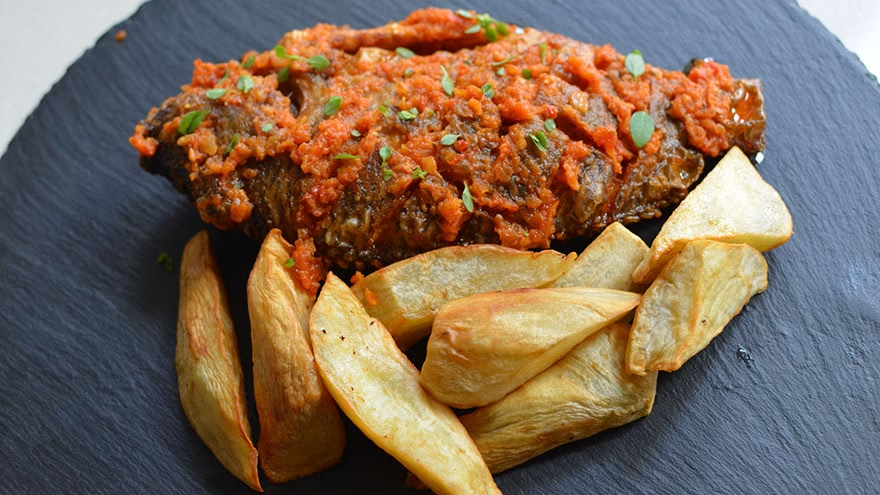
Fried African yam should be crisp at the edges, soft in the center, and not greasy. The trick is not complicated, but it does require the right tuber, even cutting, dry surfaces, enough oil, and patience with temperature. This guide to how to fry African yams focuses on whole yam tubers, not orange sweet potatoes sold as "yams" in many U.S. grocery stores.
What is African yam?
African yam usually refers to starchy tubers from the Dioscorea genus, widely used in West African cooking. The flesh is firm and pale, the skin is rough, and the texture is starchier and drier than many sweet potatoes. It can be boiled, pounded, roasted, or fried.
IITA describes yam as a major staple crop in West Africa and notes its importance in food systems there. The IITA yam crop page is useful because it grounds the ingredient in its agricultural context.
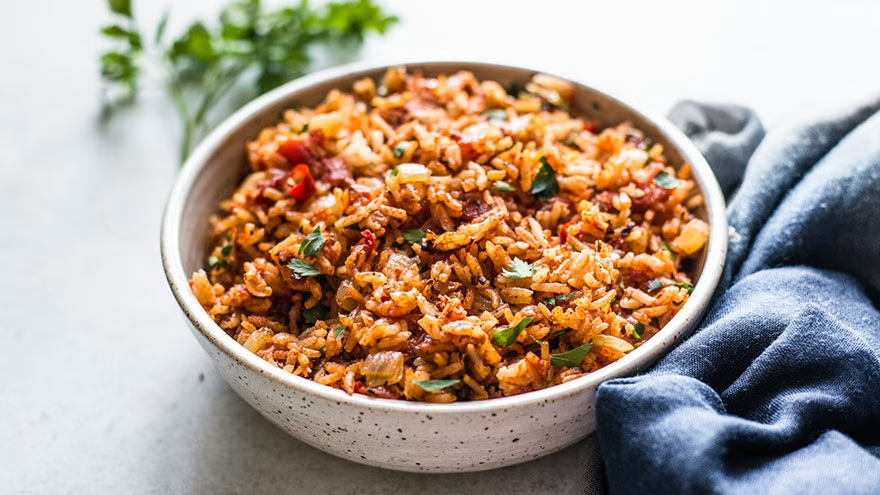
If you are cooking a broader West African meal, Livecub's African-style rice pilaf guide can help plan the plate around starch, seasoning, and sides.
How do you choose a yam for frying?
Choose a firm section with no mold, wet soft spots, sour smell, or deep cracks. A cut yam should look dry and dense inside, not slimy. If buying a large cut piece, cook it soon because exposed yam dries and spoils faster than a whole tuber.
Do not confuse true yam with sweet potato unless the recipe is designed for substitution. Sweet potatoes have more moisture and sugar, so they brown and soften differently. A sweet potato can be delicious fried, but it is not the same dish.
Good frying starts at the market. A watery or damaged piece will not turn into clean, crisp fried yam just because the oil is hot.
How should you peel and cut African yam?
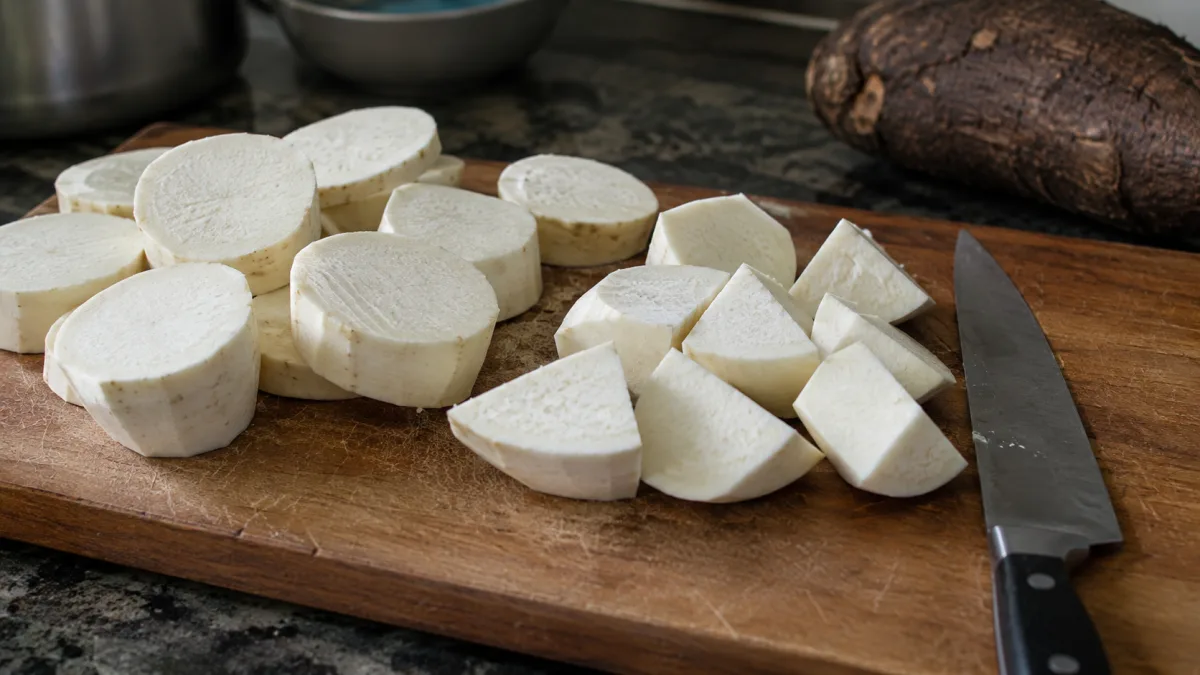
Use a sturdy knife and a stable cutting board. Cut the yam into manageable rounds, stand each round flat, and slice away the thick skin. Some raw yams can irritate skin, so wash your hands and consider gloves if you are sensitive.
Cut pieces evenly so they cook at the same rate. Thick wedges are more tender inside; thinner batons fry faster and get more edge. Rinse or soak the pieces in cool water to reduce surface starch, then dry them well before they go near oil.
Water and hot oil do not cooperate. Wet yam pieces can splatter and make the surface steam instead of fry.
Should you parboil yam before frying?
Parboiling is optional. Some cooks fry raw yam pieces directly, while others briefly boil them in salted water first. Parboiling can help thick pieces cook through and create a softer interior, but overboiling makes the pieces break in the oil.
If you parboil, keep it brief and drain well. Let the pieces steam-dry on a tray before frying. The surface should look dry, not shiny with water.
For another West African food pairing, Livecub's Senegalese dried and salted fish guide shows how strong savory sides can balance a starchy base.
Raw frying gives a firmer, drier result and can be excellent when pieces are cut evenly. Parboiling is more forgiving for thick wedges or older yam that seems very dense. Choose one method for the whole batch so pieces finish together.
What oil temperature works best?
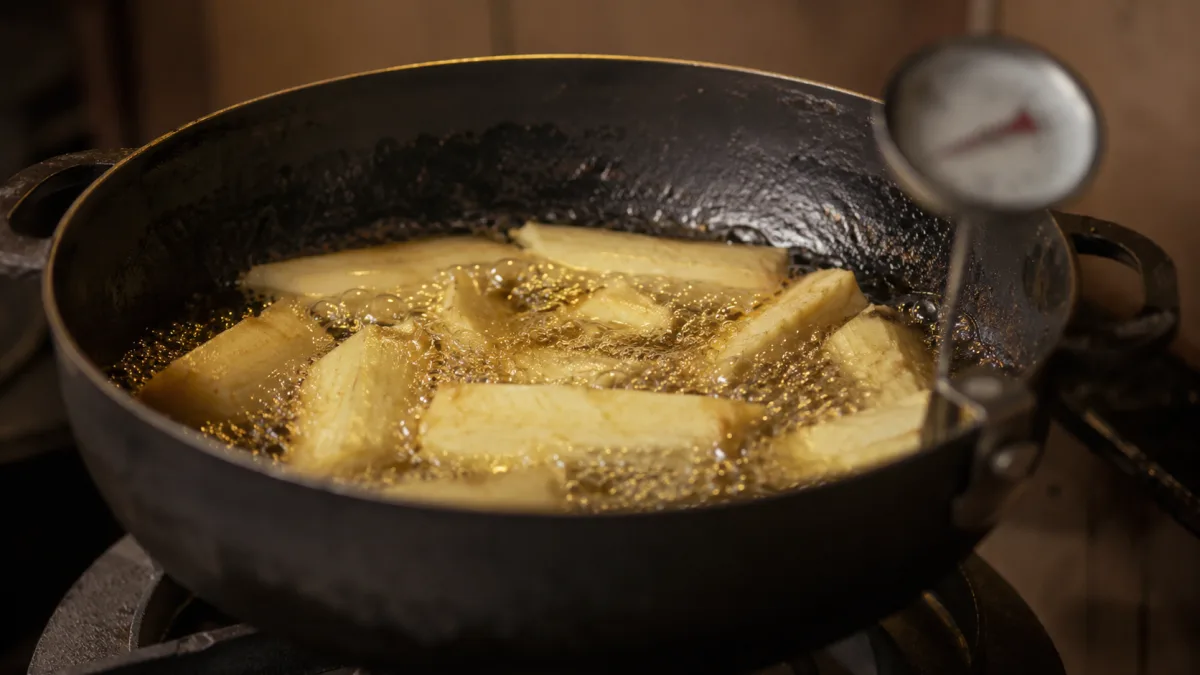
Use enough neutral oil for the pieces to fry without crowding. Many home cooks aim around 350 F to 365 F for starchy fried foods, adjusting as pieces are added. If the oil is too cool, the yam absorbs oil. If it is too hot, the outside browns before the center softens.
Clemson Extension advises safe deep-fat frying practices, including not overfilling, using proper equipment, and controlling oil temperature. The Clemson deep-fat frying guide is a practical safety reference for home frying.
Do not crowd the pot. Crowding drops oil temperature and makes the pieces steam against each other.
How do you fry African yams step by step?
Heat oil in a heavy pot, leaving room at the top. Dry the yam pieces, then add a small batch carefully. Fry until the pieces are golden and tender when pierced. Move them to a rack or paper towel, then season while hot.
Salt is classic, but you can add chili powder, black pepper, garlic powder, suya-style spice, paprika, or a small squeeze of lime depending on the meal. Keep spices dry if you want the surface to stay crisp.
For rice-based meals, Livecub's jollof rice guide fits the same table: fried yam can sit beside sauces, stews, beans, fish, or rice without needing a complicated garnish.
Use a rack if you have one. Paper towels absorb oil, but a rack lets steam escape so the crust stays cleaner. If you stack hot yam pieces in a bowl too soon, the bottom pieces soften.
What mistakes make fried yam greasy or tough?
Greasy yam usually comes from cool oil, wet pieces, crowding, or pieces left in the pot too long. Tough yam can come from pieces that are too thick, old dry yam, or oil so hot that the outside browns before the middle softens.
Fix greasy results by frying smaller batches and waiting for the oil to recover between batches. Fix tough results by cutting smaller pieces or briefly parboiling next time. Do not chase color alone; tenderness matters too.
If the first batch is wrong, adjust before frying the rest. One test piece can save the whole plate.
What should you serve with fried yam?
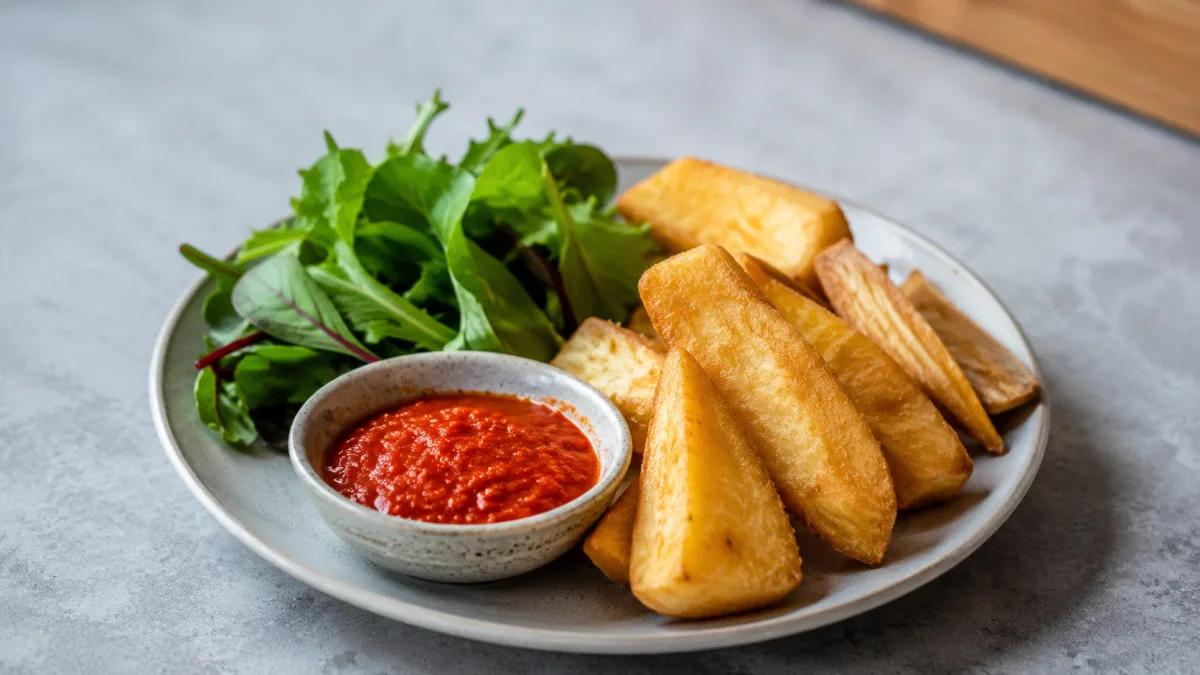
Fried yam is often served with pepper sauce, tomato stew, egg sauce, beans, fish, or grilled meat. The best side adds moisture and flavor because the yam itself is dense and starchy. A hot pepper sauce can make a simple plate feel complete.
Seasoning can move in different directions. Livecub's common Asian spices guide is not a West African source, but it is a reminder that spice families change a dish quickly. For fried yam, stay intentional and do not bury the tuber.
A simple pepper sauce can be made with blended peppers, onion, tomato, salt, and a little oil, cooked down until the raw edge is gone. Keep the sauce loose enough to dip. Fried yam is better with contrast than with a heavy coating.
Can you use an air fryer?
You can use an air fryer for a lighter version, but the result is different. Toss dry yam pieces with a small amount of oil, spread them in one layer, and shake or turn them during cooking. Parboiling may help thicker pieces soften before they dry out.
Do not call it the same as deep-fried yam. The texture will be drier and less evenly rich, but it can still work for a weeknight plate.
How do you store and reheat fried yam?
Fried yam is best fresh. If you have leftovers, cool them, refrigerate in a covered container, and reheat in an oven or air fryer so the surface can crisp again. Microwaving is convenient but often turns the texture soft.
FoodSafety.gov says leftovers should be refrigerated within two hours, or within one hour when temperatures are above 90 F. The FoodSafety.gov food safety chart is broader than yam, but it supports the time-and-temperature habit.
Do not save oil indefinitely. Strain only clean oil, store it properly, and discard it if it smells rancid, foams heavily, smokes too early, or carries burnt bits.
If serving guests, fry close to mealtime. Yam cools and firms quickly, so keep sauce ready and season each batch as it leaves the pot.
Frequently Asked Questions
Is African yam the same as sweet potato?
No. True yam is a different tuber with a starchier texture. U.S. labeling can make the names confusing.
Do you have to soak yam before frying?
You do not have to, but rinsing or soaking can remove surface starch. Dry the pieces well afterward.
Can you fry yam without parboiling?
Yes, especially if pieces are not too thick. Parboiling helps thicker pieces but can make them fragile if overdone.
Why is my fried yam oily?
The oil may be too cool, the pot may be crowded, or the pieces may be wet. Fry in smaller batches at steady heat.
Fried yam rewards patience. Cut evenly, dry well, control the oil, and season while the pieces are still hot and crisp at the table with sauce nearby for easy dipping.

Linda Fehrman
Edits general wellness and relationship explainers. Health material is educational, avoids diagnosis and links to health-authority guidance.
Leave a reply
Replying to