
Start With the Kind of Party You Are Hosting
How to Play Hanukkah Party Games depends on the room. A family dinner with grandparents, toddlers, and cousins needs different pacing than a classroom party, youth group night, or adults-only gathering.
Choose games that help people join the celebration instead of making them feel tested. A few simple games with clear rules are better than a packed schedule that leaves no time to eat, light candles, or talk.
The best Hanukkah game night feels warm before it feels competitive.
Make Dreidel the Anchor Game
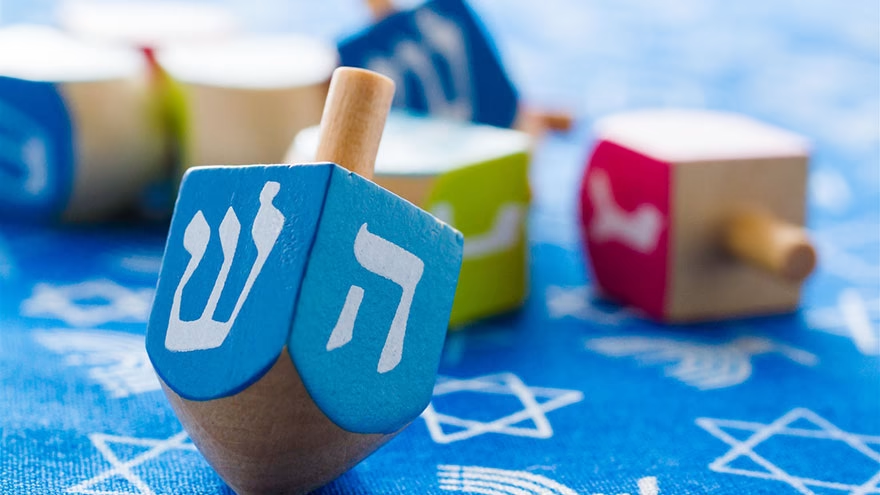
Dreidel is the easiest place to start because many guests already recognize it, and new players can learn quickly. You need dreidels, a small pile of game pieces for each player, and a shared pot in the middle.
My Jewish Learning's guide to how to play dreidel explains the basic setup: players begin with an equal number of pieces, put one piece into the pot, then spin and follow the letter that lands face up.
Keep the stakes tiny so the game stays playful.
Use Gelt, Nuts, or Tokens
Chocolate gelt is traditional and fun, but it is not the only option. Pennies, buttons, wrapped candy, dried fruit, small crackers, or craft tokens can work if the group agrees.
For young children, avoid small choking hazards and choose larger tokens. For mixed ages, give everyone the same starting number so the game feels fair.
Livecub's first night of Hanukkah guide can help hosts keep the game connected to the evening rather than turning the whole party into random activities.
Teach the Dreidel Letters Simply
Outside Israel, many dreidels show nun, gimel, hey, and shin. In a basic party game, nun means do nothing, gimel means take all, hey means take half, and shin means put one in.
Chabad's dreidel rules also describe players adding one piece to the pot and taking turns spinning. Rules vary by family, so say your version before the game begins.
Clear rules prevent half the table from arguing over one spin.
Speed Up Dreidel for a Party
Dreidel can run long if everyone starts with too many pieces. For a party, use five to ten pieces per person, set a timer, or play until one player wins the pot twice.
If a child loses all their pieces early, let them rejoin with a small refill. The goal is participation, not elimination before the latkes are served.
For a larger group, create several small tables instead of one crowded circle where people wait too long between turns.
Try a Dreidel Tournament
A tournament works well for school-age kids, teens, or adults who like friendly competition. Give each table a dreidel, equal tokens, and a ten-minute round.
The winner from each table moves to a final table. If you want a shorter version, award prizes for longest spin, funniest spin, or most dramatic comeback instead of tracking every token.
Party prizes should be small enough that nobody takes the result too seriously.
Add Hanukkah Trivia
Trivia gives guests who do not love spinning games another way to join. Keep questions short and mix easy, medium, and harder ones.
Ask about the number of nights, the shamash, fried foods, dreidel letters, candles, and family traditions. If children are playing, let teams answer together instead of putting one child on the spot.
Reform Judaism's dreidel page explains the phrase often connected with the letters and can help with simple background for a question round.
Use Teams for Mixed Ages
Mixed-age parties can be hard because a game that fits a seven-year-old may bore a teen and confuse a preschooler. Teams solve some of that problem.
Pair younger children with older cousins, adults, or grandparents. Give each team a small role: spinner, token keeper, reader, scorekeeper, or helper.
Team play also keeps the party from becoming a race between the loudest guests. Quiet children can still contribute without being pushed into the center of the room.
Play Match the Tradition
Write Hanukkah items on cards: menorah, candles, oil, latkes, sufganiyot, dreidel, gelt, songs, and family recipes. On a second set of cards, write short descriptions.
Teams match the item to the description. Let families add their own cards, such as a grandparent's recipe, a favorite song, or the story behind a decoration.
Livecub's Beyond the Blue and White Home can help hosts think about Hanukkah decor beyond the most expected colors.
Use Crafts as Quiet Games
Not every party game needs winners. A dreidel decorating table, paper candle collage, paper chain, or build-a-menorah activity gives children a calm place to land between louder games.
Set clear boundaries for glue, markers, glitter, scissors, and food tables. Put supplies in small trays so the craft does not take over the whole room.
For mixed ages, pair older children with younger ones so adults can keep the rest of the party moving.
Try a Song or Guessing Round
Play a short clip of a Hanukkah song or hum a melody and let teams guess. Keep the clips short so the round moves quickly.
If your family sings after candle lighting, use songs everyone already knows. If guests have different backgrounds, choose familiar tunes and offer hints.
This kind of game works well after food because people can stay seated and still participate.
Plan a Gelt Hunt
A gelt hunt works like a small treasure hunt. Hide wrapped chocolate coins or paper coins around one room, then give children a basket or cup.
Set limits before starting: how many coins each person may collect, which rooms are off-limits, and whether adults can help. For fairness, color-code coins by age group or create separate hunt times.
Hide nothing near candles, hot food, breakable Judaica, stairs, or places children should not climb.
Set Up a Candle Count Relay
Use paper candles, craft sticks, or felt pieces, not real candles. Teams race to place the correct number of candles for a given night, including the shamash if that is part of the prompt.
After each round, pause and name the answer. This turns the game into gentle practice without making it feel like school.
Use pretend candles for games and save real candles for supervised ritual use.
Keep Food and Games From Competing
Games work better when people are not holding hot plates or sticky desserts. Choose one game before the meal, one after candles, and one after dessert if guests still have energy.
For dessert tables, Livecub's cookie display guide can help hosts arrange sweets so kids are not reaching through game pieces and adults are not cleaning crumbs from the dreidel pot.
Keep drinks away from cards, crafts, and small tokens. A tiny setup choice can save the table.
Prepare Prizes That Do Not Create Drama
Use small prizes such as stickers, pencils, gelt, bookmarks, glow sticks, or first choice of dessert. Avoid prizes so large that children feel crushed when they do not win.
Give out some non-competitive awards too: best helper, funniest spin, kind teammate, neatest craft, or most patient player.
When prizes are modest, the party stays focused on the holiday instead of the scoreboard.
Keep Candle Safety Separate
Do not run games near lit candles. If candle lighting is part of the party, pause the games, clear the table, and let adults manage matches, lighters, and placement.
After candle lighting, restart with a seated or quieter game. That transition helps children understand that some moments are playful and some need stillness.
Use paper candles or felt pieces for relays, sorting games, and crafts.
Make Room for Family Customs
Some families use slightly different dreidel rules, songs, foods, pronunciations, or party traditions. Ask before correcting someone else's custom.
If guests come from different Jewish backgrounds or interfaith families, keep explanations clear and kind. A party should make the holiday easier to enter, not turn tradition into a quiz with traps.
Let elders share one memory if they want to, then return to the game before children lose focus.
Frequently Asked Questions
What is the easiest Hanukkah party game?
Dreidel is usually the easiest because it needs only a dreidel, game pieces, and a quick explanation of each letter.
How do you make dreidel faster for a party?
Use fewer starting pieces, set a timer, play in small groups, or end after one or two pot wins.
What can kids use instead of chocolate gelt?
Use large tokens, stickers, craft coins, dried fruit, wrapped candy, or buttons for older children. Avoid small choking hazards for young kids.
How many Hanukkah games should a party have?
Two or three planned games are usually enough. Leave space for food, candles, conversation, songs, and family customs.

Cashie Evans
Covers parenting and practical household topics with clear steps, safety notes and links to current guidance.
Leave a reply
Replying to