
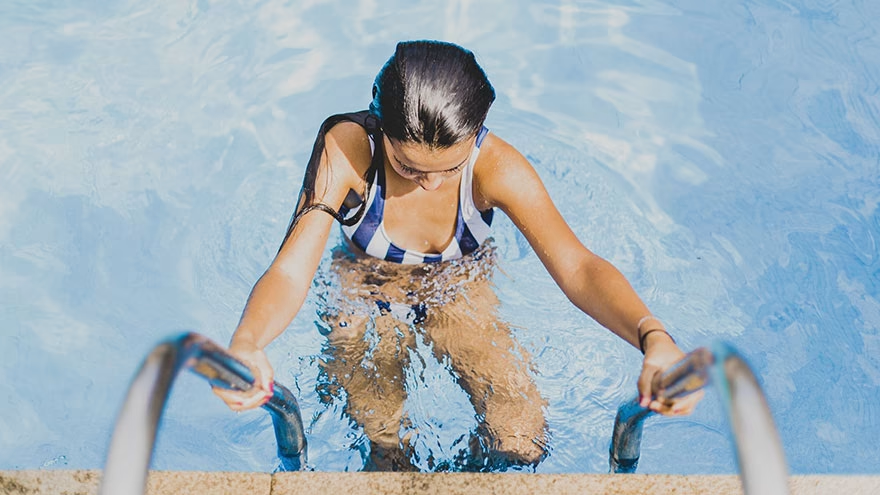
How to Swim to Trim My Waistline needs a realistic start: swimming can help with fat loss, fitness, posture, and core strength, but it cannot choose where fat leaves your body. Waist size changes when total body fat, bloating, posture, muscle tone, stress, sleep, and food habits move in the right direction over time.
This guide is educational and not medical advice. If you have heart disease, uncontrolled blood pressure, chest pain, dizziness, severe joint problems, pregnancy restrictions, or a long break from exercise, ask a clinician before starting hard pool workouts.
What Swimming Can And Cannot Do
Swimming is low impact, uses large muscle groups, and can raise heart rate without pounding the joints. The CDC's adult activity guidelines recommend weekly aerobic activity plus muscle-strengthening work. Swimming can cover part of that aerobic work if it is done often enough and hard enough for your current fitness.
What swimming cannot do is melt fat only from the waist. Spot reduction is a common fitness promise, but bodies do not work that neatly. Swim for total fitness, use food habits to support a calorie balance, and measure progress with more than the mirror.
Start With A Safe Baseline
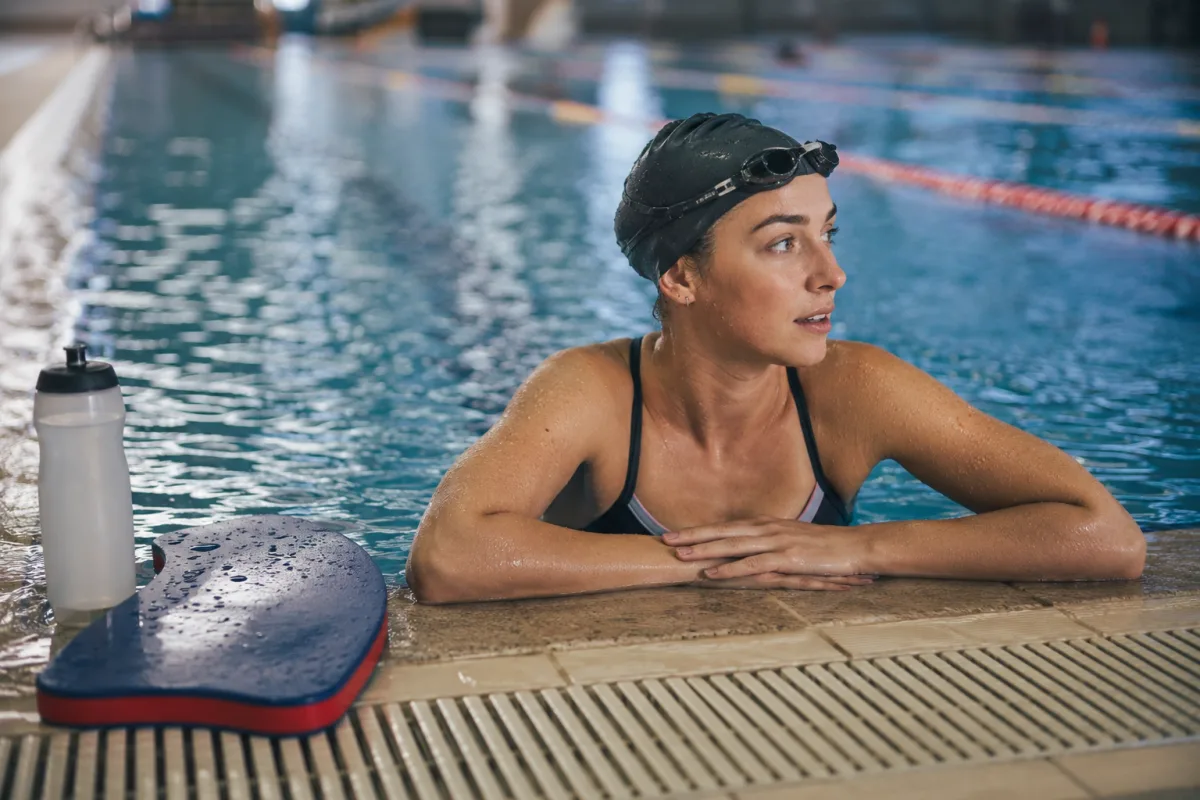
Before chasing speed, find your starting point. Swim or water-walk for 10 minutes at an easy pace. Notice breathing, shoulder comfort, knee and back comfort, and how you feel later that day. If 10 minutes is too much, start with 5.
The CDC's healthy weight and physical activity guidance frames activity as one part of weight management, along with eating patterns and daily habits. That is the right mindset. Swimming helps, but it is not the whole plan.
Build A Beginner Swim Plan
Try this three-day plan for the first two weeks. Day one: 10 rounds of 30 seconds easy swimming or water walking, 30 seconds rest. Day two: 15 to 20 minutes continuous easy movement in the water. Day three: 8 rounds of one length easy, one length very easy or walking.
Keep the first sessions comfortable. You should leave the pool feeling worked, not destroyed. The body adapts through repeated practice. Soreness that changes your stroke or makes stairs miserable is a sign to reduce volume.
After two weeks, add time before adding intensity. A simple next step is 20 to 30 minutes in the pool, three times a week, with rests as needed. If you can talk in short sentences during most of the session, the pace is probably controlled enough for building a base.
Keep one day easy. Not every swim has to be a challenge. Easy movement helps you practice breathing, turns, and body position without making recovery harder.
Use Intervals Without Sprinting
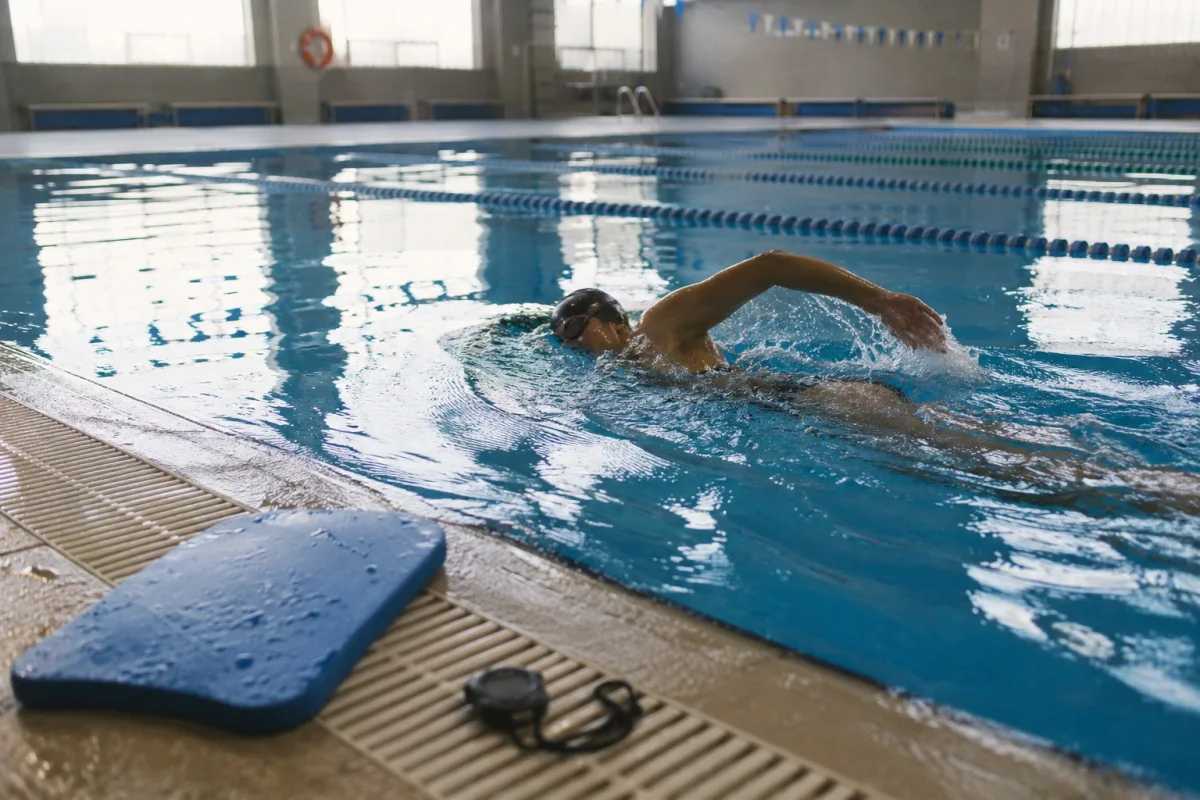
Intervals do not have to mean all-out racing. A useful pool interval might be 25 yards moderate, rest 20 seconds, repeat 8 times. Another option is 1 minute steady water jogging, 30 seconds easy, repeated 10 times. Moderate effort is enough for many beginners.
As fitness improves, shorten the rest, add a few rounds, or increase distance. Change one variable at a time. If you add speed, extra laps, and less rest on the same day, you will not know what caused fatigue.
A four-week rhythm can stay simple: two easy swims and one interval swim each week. On easy days, practice relaxed breathing and smooth strokes. On interval day, use short repeats with full control. At the end of week four, repeat your first baseline swim and compare how it feels.
Train The Core In The Water
Swimming asks the trunk to resist twisting and keep the body long. Freestyle, backstroke, kickboard drills, water jogging, and side kicking all challenge the midsection. That does not mean they burn waist fat directly, but they can improve posture and control.
Use fins carefully. Short fins can help beginners feel propulsion and give the legs more work, but they can also overload calves or feet. Start with short sets and stop if ankles or arches complain.
Dry-land strength helps too. Two short sessions a week with squats to a chair, wall pushups, dead bugs, side planks, and hip bridges can support swimming posture. Keep the work simple and pain-free. Strength training does not need to be fancy to help your body handle pool volume.
Choose Strokes That Fit Your Body
Freestyle is efficient for many people, but not everyone has the shoulder mobility for long freestyle sets at first. Backstroke may feel easier on breathing. Breaststroke can bother knees for some swimmers. Water walking and aqua jogging are valid starting points.
If a stroke causes sharp pain, do not push through it. Ask a swim coach, physical therapist, or qualified instructor to look at technique. A small form change can make the pool more comfortable.
Track Food Without Obsessing

Waistline change usually needs food awareness. That does not require a harsh diet. Start by tracking meals, snacks, drinks, hunger, and fullness for a week. Livecub's food journal guide is useful here because records reveal habits that memory edits out.
Look for liquid calories, large evening snacks, missed protein, low fiber, and portions that grew because swimming made you hungry. If pasta is a frequent meal, Livecub's pasta substitutes guide can help you think about lighter swaps without turning dinner into punishment.
Measure Progress In Several Ways
Use waist measurement, resting heart rate, swim distance, energy, sleep, clothes fit, and consistency. Measure the waist at the same place, under the same conditions, no more than once a week. Daily measurements can jump because of salt, digestion, hormones, and stress.
If you are nervous in public sports spaces, Livecub's sports tryout nerves guide and stage fright guide can help with the performance side. A pool can feel exposed at first, but most swimmers are focused on their own lane.
Take progress photos only if they help you stay calm and objective. If photos make you harsher toward yourself, skip them. A waistline goal should improve health habits, not turn every swim into a judgment. Consistency should feel measurable, not punishing. The aim is a pool habit you can keep through busy weeks.
Older Adults And Joint-Friendly Training
Swimming can be a good option for older adults because water reduces impact. That does not mean every pool workout is gentle. Cold water, slippery decks, ladders, deep water, and fatigue still need respect. Start near a lifeguard and use classes designed for your level if needed.
For families supporting an older relative, Livecub's guide to motivating elderly relatives has a useful theme: support works better than pressure. A pool habit should feel doable enough to repeat.
Recovery And Safety
Warm up with easy laps or water walking. Cool down slowly. Drink water even though you are in a pool. Stop for chest pain, severe shortness of breath, dizziness, confusion, new weakness, or pain that changes your movement.
Harvard Health's calorie chart shows that swimming calorie burn changes with body weight and intensity. Treat calorie charts as rough estimates, not permission to ignore hunger, fatigue, or recovery.
Sleep and stress affect waist goals as well. Poor sleep can make appetite harder to manage, and high stress can push snacking or missed workouts. If the pool plan is sound but progress stalls, look at the full week: meals, movement outside the pool, sleep, alcohol, stress, and consistency.
Frequently Asked Questions
Can swimming trim only my waist?
No. Swimming can help reduce total body fat and improve fitness, but it cannot choose fat loss from one body area.
How often should I swim for waistline goals?
Many beginners do well with 2 to 3 pool sessions weekly, then progress as fitness and recovery improve.
Is swimming better than running for weight loss?
It depends on consistency, intensity, food habits, and injury history. Swimming is lower impact and may be easier to repeat.
Should I use fins?
Short fins can help technique and leg work, but start with short sets and stop if feet, calves, or ankles hurt.
Why am I hungrier after swimming?
Cold water, effort, and habit can increase appetite. Plan a balanced meal or snack instead of grazing without noticing.
A Practical Pool Routine
Swim to trim your waistline by building repeatable pool time, tracking food honestly, adding intervals slowly, and measuring progress beyond scale weight. A steady plan beats a punishing plan because the workout that gets repeated is the one that changes the body.

Linda Fehrman
Edits general wellness and relationship explainers. Health material is educational, avoids diagnosis and links to health-authority guidance.




Leave a reply
Replying to