
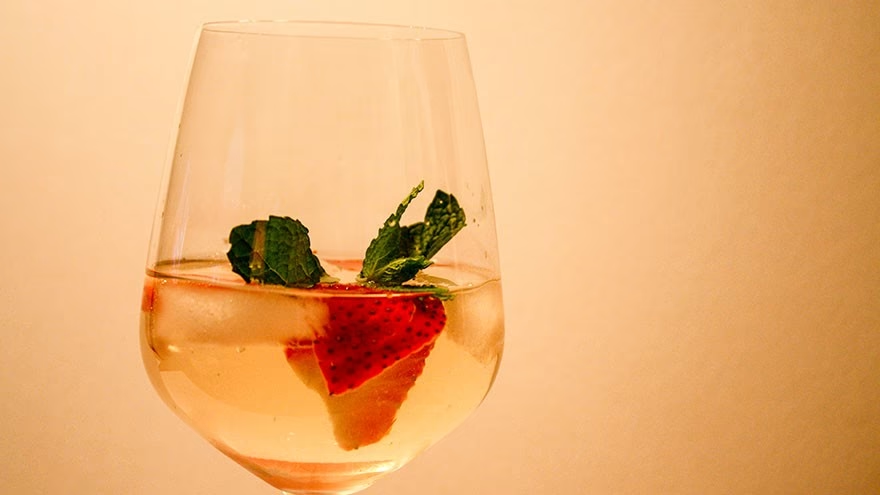
Lavender white sangria should taste like chilled white wine, ripe fruit, citrus, and the lightest floral edge, not perfume poured into a punch bowl. A good lavender white sangria recipe starts with culinary lavender, a gentle syrup, dry white wine, fresh fruit, and enough chill time for the flavors to settle. It is easy to make, but easy to overdo.
This is an alcoholic drink for adults of legal drinking age. Serve it responsibly, label it clearly at parties, keep it away from children, and offer a nonalcoholic drink beside it. Because sangria contains cut fruit, it should also be kept cold and not left on a warm table for hours.
What Makes Lavender Work In Sangria?
Lavender works when it is used as a background note. Bon Appetit advises using culinary lavender and avoiding lavender essential oil in food. That matters here because wine and fruit will magnify strong flavors. Too much lavender turns a clean drink bitter and soapy.
Use dried culinary lavender buds or clean fresh culinary lavender from a food-safe source. Do not cut ornamental lavender from a roadside or sprayed garden and drop it into drinks. If you are planning a party table, Livecub's cookie display guide pairs well with the same idea: presentation is better when the food itself is handled carefully.
What Ingredients Do You Need?
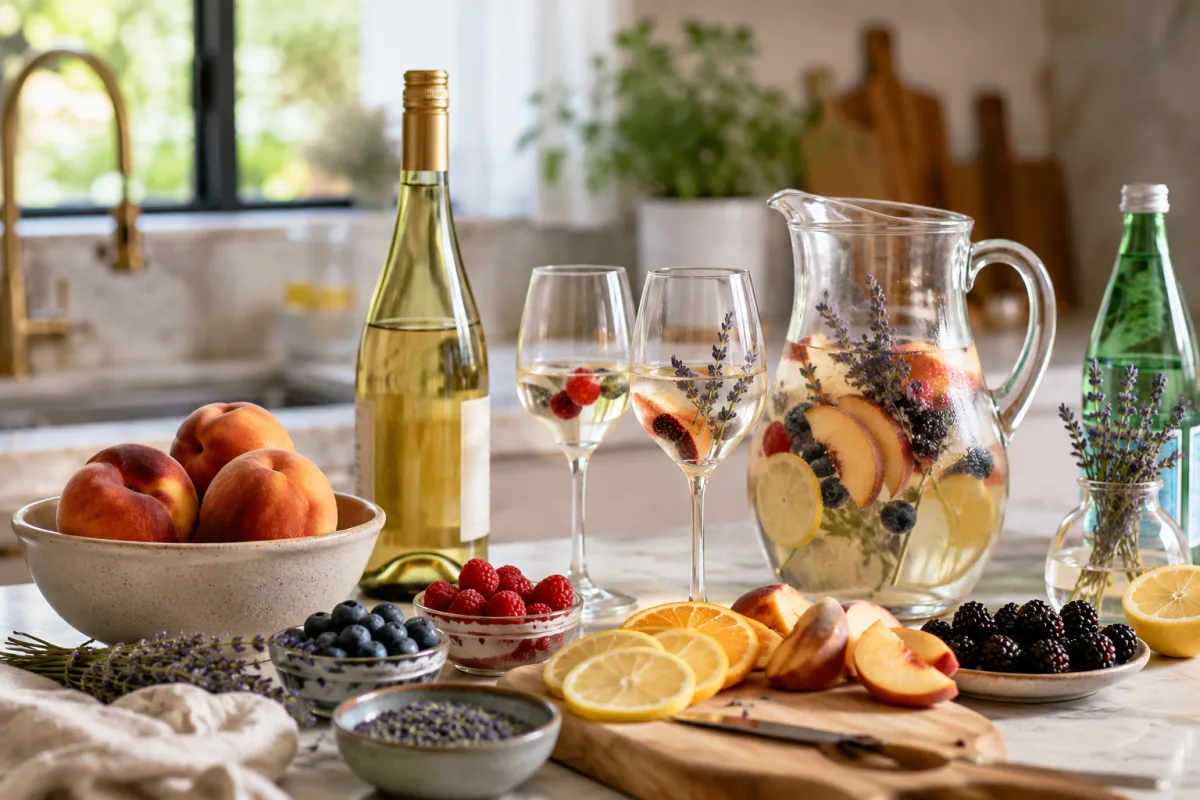
For a large pitcher, use one bottle of dry white wine, one-third to one-half cup lavender simple syrup, one-quarter cup orange liqueur or brandy if desired, one sliced peach or nectarine, one cup berries, one sliced lemon, one sliced orange, one cup chilled white grape juice or peach nectar, and sparkling water to finish. Use ice in glasses rather than watering down the pitcher too early.
The wine should be crisp rather than heavy. Sauvignon blanc, pinot grigio, vinho verde, dry riesling, or an unoaked white blend can work. Avoid expensive bottles because fruit and syrup change the wine. Avoid very sweet wine unless you plan to reduce the syrup. If dessert is on the same table, Livecub's Mom's fudge icing gives the richer side of the menu, while this drink should stay light.
How Do You Make Lavender Simple Syrup?
Combine one cup water and one cup sugar in a small saucepan. Warm until the sugar dissolves, then remove from heat and stir in one to two teaspoons dried culinary lavender. Steep for five to ten minutes, tasting carefully. Strain through a fine sieve and cool completely before adding it to wine.
Start with less syrup than you think you need. You can add more after the fruit and wine sit together, but you cannot remove sweetness or perfume once it takes over the pitcher. Store extra syrup in the refrigerator in a clean container. It can also sweeten lemonade, iced tea, or a fruit dessert in small amounts.
If you are testing the recipe for an event, make a small glass first instead of committing the whole bottle. Add one tablespoon syrup to a splash of wine and fruit, then taste after ten minutes. This tells you whether the lavender is gentle enough and whether the wine needs more citrus. A tiny test batch saves a full pitcher from becoming too sweet.
How Do You Mix The Sangria?
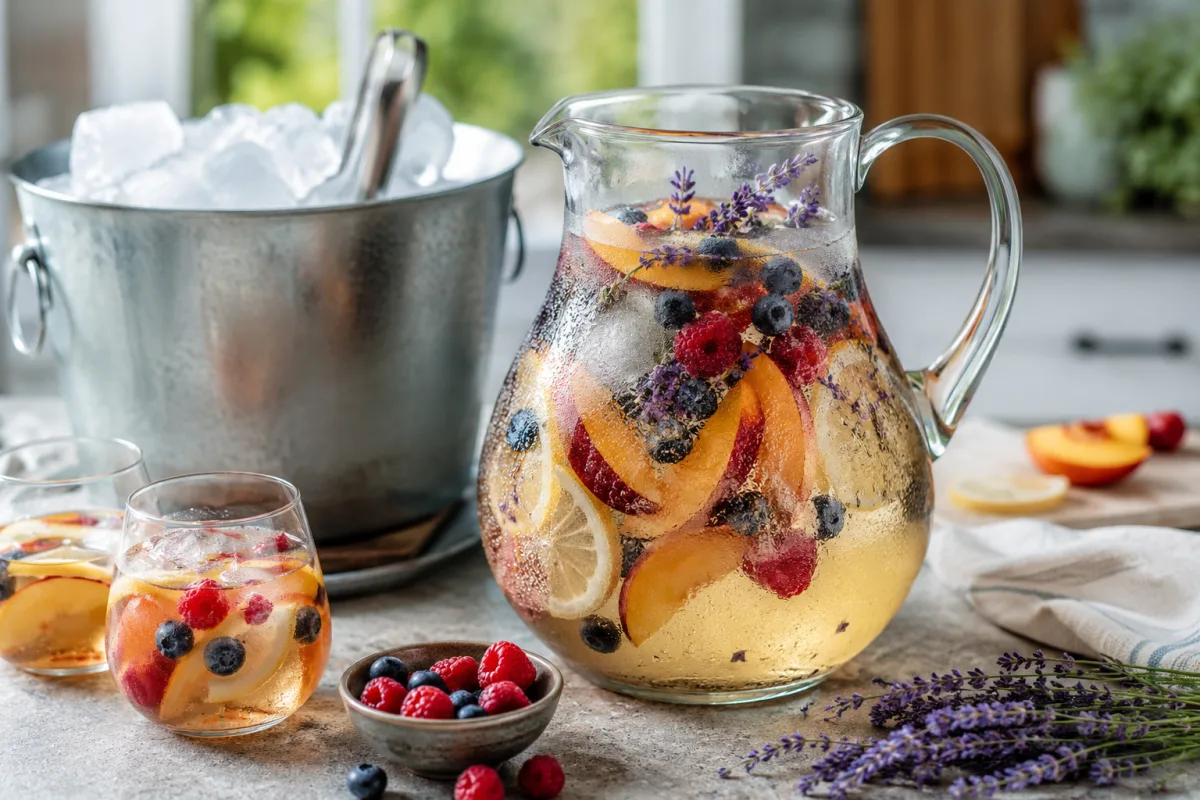
Add sliced fruit to a large pitcher, then pour in wine, lavender syrup, juice, and liqueur if using. Stir gently and refrigerate for at least two hours. Edible Austin's lavender sangria also uses a chilled steeping approach, which is the right idea: let the fruit flavor the wine without bruising everything into mush.
Before serving, taste and adjust. Add more syrup for sweetness, more citrus for brightness, or sparkling water for lift. Do not add sparkling water hours ahead, because it will go flat. Keep a spoon or small ladle in the pitcher so guests get fruit as well as liquid.
For a crowd, mix the base in two pitchers instead of one overloaded container. Smaller pitchers chill faster, pour cleaner, and let you keep a backup in the refrigerator. Refill the serving pitcher when it gets low rather than leaving the whole batch in a warm room.
Which Fruits Work Best?
Peaches, nectarines, strawberries, raspberries, blueberries, oranges, lemons, grapes, and mango can work. Bananas soften quickly and can make the pitcher look tired, so skip them unless you are serving immediately. Apples and pears are better for fall versions. Keep fruit pieces large enough that they look fresh after chilling.
Fruit choice should match the wine. Citrus sharpens sweet syrup. Berries add color and acidity. Stone fruit gives perfume without making the drink heavy. For a savory side at a summer table, Livecub's asparagus rolls recipe can balance the sweet fruit and wine.
Cut fruit with serving in mind. Thin citrus wheels look good but can bend around the ladle. Peach wedges give better bites than tiny cubes. Berries should be rinsed and dried so they do not water down the pitcher. If the fruit looks tired before it reaches the wine, it will look worse after chilling.
How Should You Keep It Safe For A Party?
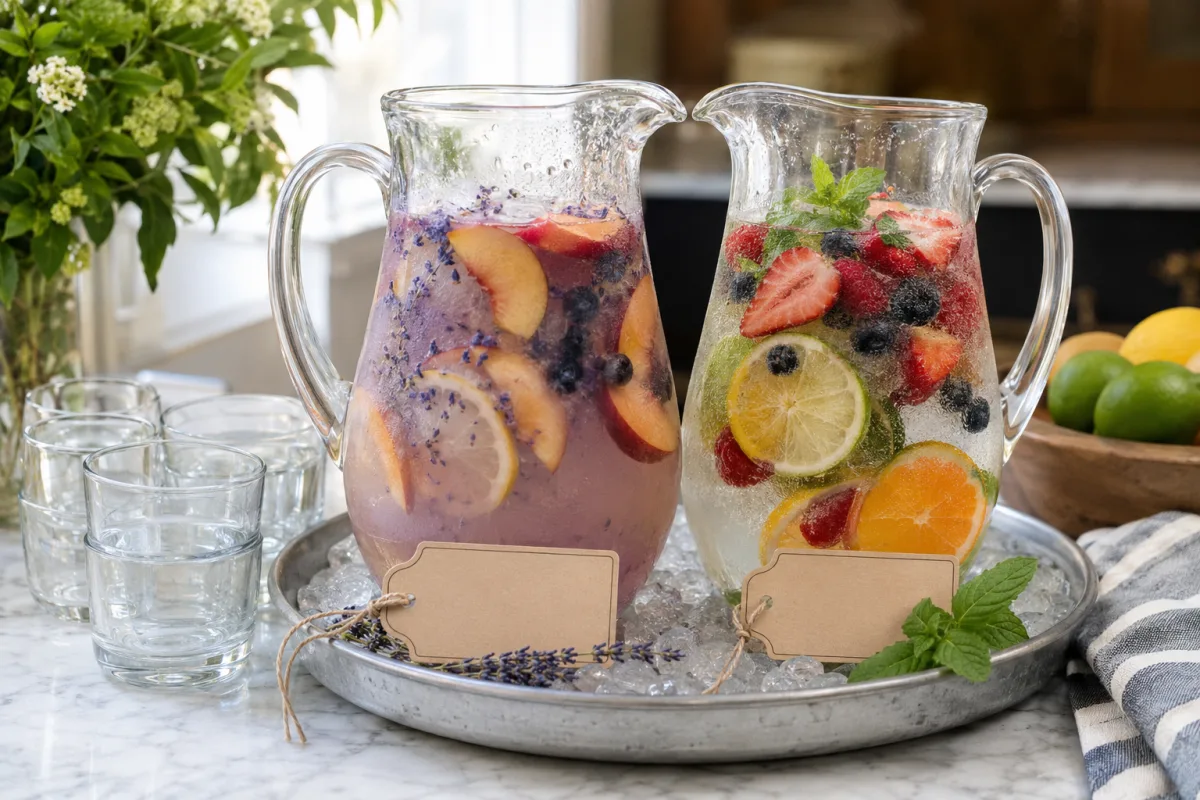
FoodSafety.gov reminds hosts to keep perishable foods chilled and avoid the temperature range where bacteria grow fastest. Sangria is not just wine; it contains cut fruit and sometimes juice. Keep the pitcher refrigerated until serving, use a chilled dispenser or ice bath for longer events, and discard fruit that has sat out too long.
Label the pitcher as alcoholic. A lavender fruit drink can look harmless to guests who are not expecting wine. Provide water and a nonalcoholic lavender lemonade or fruit spritzer. If guests will serve themselves, use smaller glasses. That helps the drink stay cold and keeps portions reasonable.
Keep the garnish simple. A few berries, a citrus slice, and one tiny lavender sprig are enough. Do not pack glasses with loose buds; they can stick to lips and make the drink feel gritty. The floral note belongs mostly in the syrup, not floating across the surface.
How Can You Make It Ahead?
Make the syrup up to several days ahead. Slice sturdy fruit the morning of the event, but add delicate berries closer to mixing time. Combine wine, syrup, juice, liqueur, and sturdy fruit two to six hours before serving. Add sparkling water at the table.
If you need a holiday version, use pear, apple, orange, cranberry, and a small rosemary sprig instead of summer berries. Keep lavender light. It can fight with strong spices. For another make-ahead party recipe, Livecub's Christmas cookie ornaments can sit on the dessert side while the sangria stays in the drinks area.
Transport the components separately if the drink is going to another house. Bring the chilled base in a sealed pitcher, the sparkling water unopened, and the delicate berries in a small container. Assemble after arrival so the drink still looks fresh. If the host's refrigerator is crowded, ask ahead about space or bring a cooler with ice packs.
Do not chase a darker color with more berries if the flavor is already balanced. A pale drink can still be elegant. If color matters, use raspberries, strawberries, or a few blueberries in the glass. The pitcher should taste clean first and look pretty second. Guests notice balance more than color. A cold glass also helps the first sip.
Frequently Asked Questions
Can I use lavender essential oil?
No. Use culinary lavender buds or a food-safe lavender syrup. Essential oil is too concentrated and not appropriate for this recipe.
What white wine is best?
Choose a dry, crisp white wine such as sauvignon blanc, pinot grigio, vinho verde, or an unoaked white blend.
Can I make lavender sangria nonalcoholic?
Yes. Use white grape juice, peach nectar, lemon juice, lavender syrup, fruit, and sparkling water. Label both versions clearly.
How long should sangria chill?
Two to six hours is a good range. Overnight can work with sturdy fruit, but berries may soften.
Why does my lavender drink taste like soap?
Too much lavender or non-culinary lavender is usually the reason. Use less, steep briefly, and balance with citrus.
What Is The Best Serving Habit?
Serve lavender white sangria cold, light, and clearly labeled. Use culinary lavender, taste the syrup before mixing, let the fruit steep, and finish with bubbles right before serving. The drink should feel fresh and floral, not heavy or perfumed.

Cashie Evans
Covers parenting and practical household topics with clear steps, safety notes and links to current guidance.


Leave a reply
Replying to