
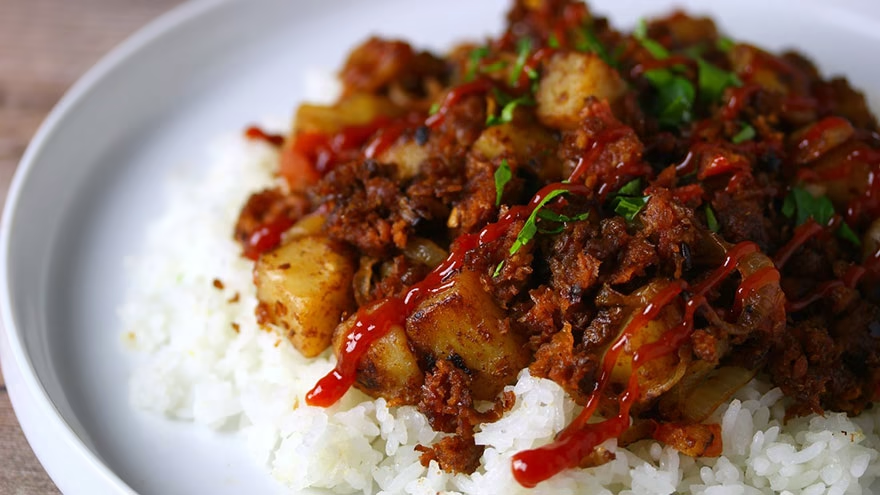
What is Filipino corned beef and where did it come from?
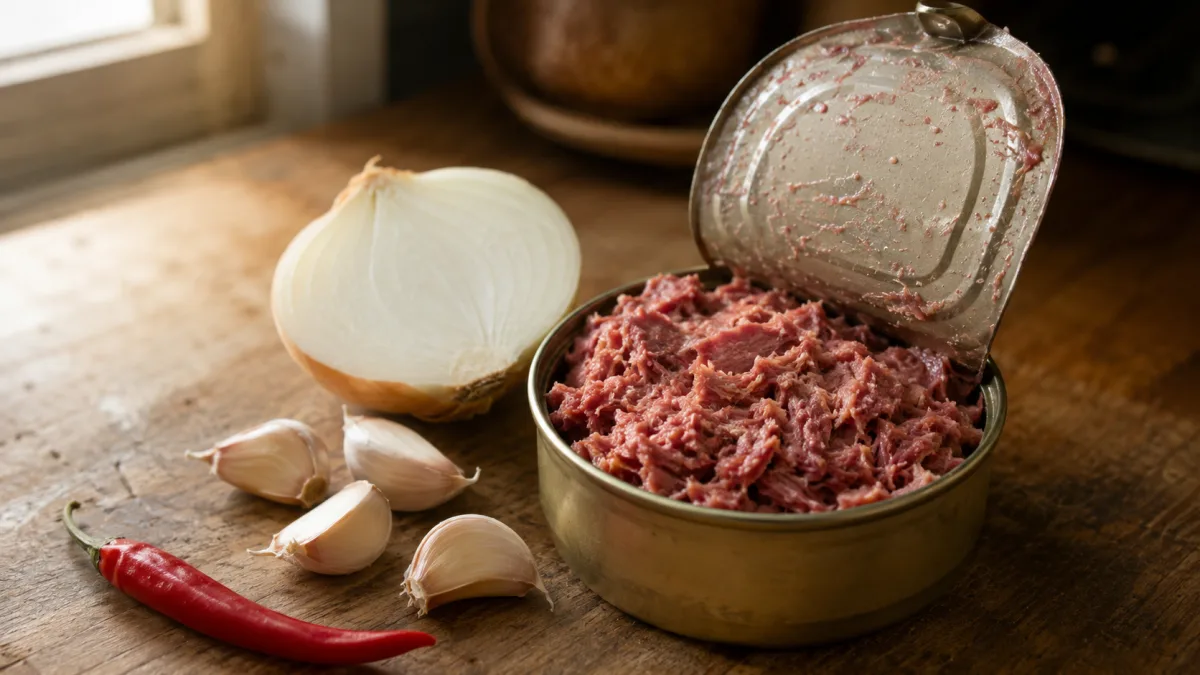
The Filipino corned beef recipe — known as ginisang corned beef or corned beef guisado — traces its origins directly to American colonial rule and the chaos of World War II. Canned corned beef first arrived in the Philippines during the American occupation (1901–1941), when it came ashore as part of military rations and imports meant for colonial personnel. Wealthy Filipino households treated it as a novelty, a luxury import from the norteamericanos — the name Filipinos gave to Americans, which also gives the dish one of its local names: carne norte, literally "northern meat." Then the Japanese occupation cut off food supplies. Between 1942 and 1945, American soldiers airdropped canned goods from the sky, and corned beef shifted from status symbol to survival food. After liberation, the dish stuck. By the 1950s it had settled permanently into the Filipino breakfast table, no longer foreign, no longer fancy — just ulam, the everyday protein that goes with rice.
Today the Philippines is one of the world's largest consumers of canned corned beef per capita. Local manufacturers including CDO Foodsphere, Century Pacific Food (makers of the Argentina and Ox & Palm brands), and San Miguel Food and Beverage produce versions tailored specifically to Filipino taste: softer, moister, and more loosely shredded than the dense, dry South American canned corned beef that dominates international markets. Premium brand Delimondo, widely regarded as the top-shelf option in the Philippines, uses chunkier cuts and a richer brine. When Filipinos make ginisang corned beef, they almost always reach for one of these local cans rather than the firmer, drier US-style brick — and that choice is not arbitrary. Filipino canned corned beef carries enough natural fat and moisture that the meat practically bastes itself in the pan.
What ingredients do you need for ginisang corned beef?
The ingredient list is short by design. Ginisa means "sautéed" in Filipino, and the dish is built around that single technique: aromatics cooked in hot oil until fragrant, then the beef added and crisped or simmered depending on which version you want. Everything on the list below earns its place.
- 2 tablespoons vegetable oil
- 1 cup white onion, chopped
- 4 cloves garlic, minced
- 1 Thai red chili pepper, minced (optional but traditional)
- 1 can (roughly 11–12 oz) corned beef — Filipino brands preferred
- 1 cup all-purpose or waxy potato, peeled and cut into ½-inch pieces
- ⅛ to 1 cup beef or vegetable broth (amount depends on fried vs. stewed method)
- Salt and ground black or white pepper
- Chopped fresh cilantro, to finish
- Banana ketchup, to serve
- Sambal oelek, to serve
A note on the potato: use an all-purpose or waxy variety — something like Yukon Gold or a red-skinned potato — not a floury baking potato. Waxy potatoes hold their shape after browning. A russet will turn to mush the moment you add liquid, which ruins both the texture and the visual distinction between potato and beef. The chili pepper is optional at the ingredient stage but strongly recommended; it adds background heat without making the dish aggressively spicy. If you want real fire, simply add more.
How to make pan-fried Filipino corned beef (fried version step by step)
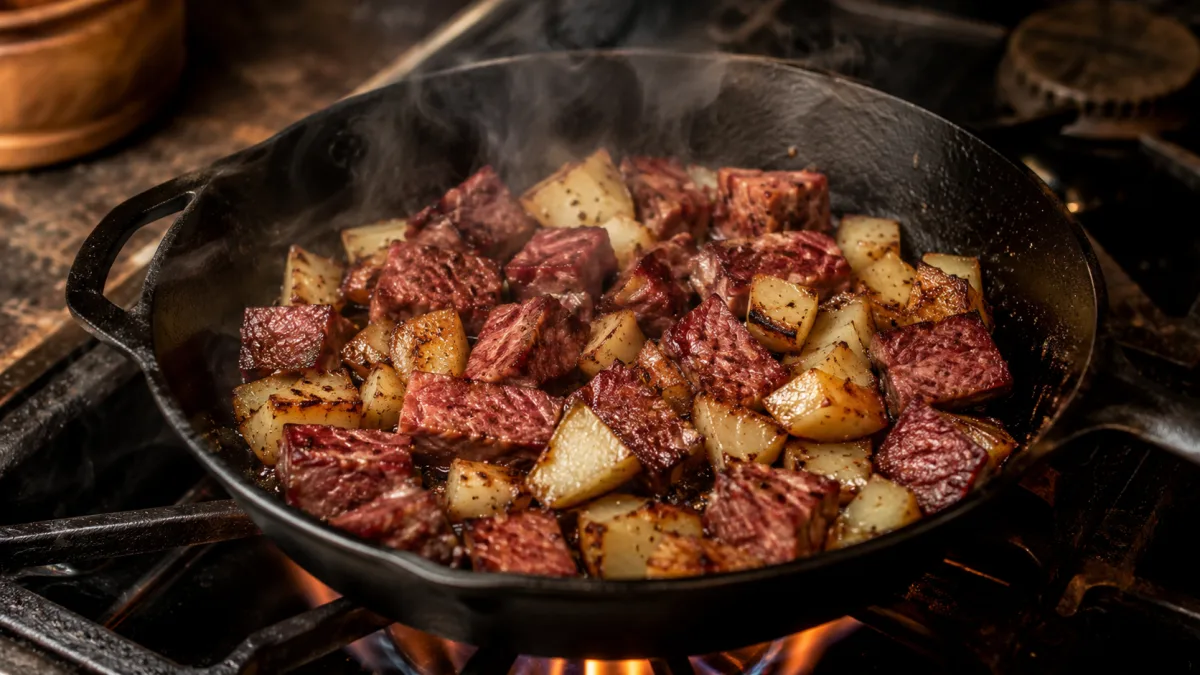
The fried version — sometimes called corned beef guisado in its crispier form — produces browned edges and concentrated flavor. The trick is getting the potato cooked and caramelized before the beef ever touches the pan. Raw potato needs about 8 to 10 minutes over medium-high heat to turn golden on the outside and cooked through inside. If you add the corned beef too early, the moisture from the meat steams the potato instead of browning it, and you lose the textural contrast that makes this version worth making. High heat and patience at the potato stage are the difference between a crispy guisado and a pale, soft one.
- Heat the oil in a heavy-bottomed skillet over medium-high heat. Add the chopped onions and cook for 3 to 5 minutes, until softened and starting to turn translucent.
- Add the potato pieces. Cook, stirring regularly, until the potato is browned on the outside and just cooked through — about 8 to 10 minutes. The onions will be golden by this point.
- Stir in the garlic and chili pepper. Cook for about 1 minute, until the garlic smells fragrant. Do not let it burn; burnt garlic turns bitter very quickly.
- Chop or break the corned beef into pieces no larger than ¼ inch. Add it to the pan. Cook, pressing the beef occasionally against the hot surface, until it is warmed through and the edges are starting to crisp and brown — about 4 to 6 minutes.
- Pour in ⅛ cup of stock and raise the heat to high. Let the liquid boil hard until almost completely evaporated, about 2 minutes. This step deglazes any stuck bits and adds one last layer of savory depth without making the dish soupy.
- Season with salt and ground pepper. Scatter fresh cilantro over the top and serve immediately alongside banana ketchup and sambal oelek.
How to make corned beef guisado (stewed version step by step)
The stewed version produces a softer, saucier dish that works equally well spooned over rice or scooped up with a piece of pandesal. The stewing liquid — whether broth or water — keeps the potatoes tender throughout and gives the whole pan a slightly saucy consistency. Unlike the fried version, there is no need to brown the potato separately; it cooks directly in the liquid. The trade-off is less crust and more body — a comfort food quality that holds up well to reheating, making it a practical choice for weekday meal prep.
- Heat a medium-sized pot over medium-high heat until the oil shimmers. Add the onions and cook for 3 minutes, until softened.
- Add the garlic and chili pepper. Cook for another 2 to 3 minutes, until fragrant.
- Chop the corned beef into ¼- to ½-inch pieces. Add it to the pot along with the potato and up to 1 cup of stock. Start with ½ cup if you want something between stewed and fried — you can always add more liquid but cannot take it back.
- Bring the mixture to a boil, then reduce the heat to medium and cover the pot. Simmer for about 20 minutes, or until the potato is just cooked through and easily pierced with a fork.
- Season with salt and pepper. Serve hot, dressed with fresh cilantro, with banana ketchup and sambal oelek on the side.
What is banana ketchup and how does it differ from tomato ketchup?
Banana ketchup is not a quirky substitute — it is the original condiment in this context, and it has a specific creator. María Ylagan Orosa, a Filipina food chemist and war heroine born in Taal, Batangas in 1893, invented banana ketchup during the 1930s as part of a broader mission to make the Philippines food self-sufficient. Imported American tomato ketchup had become popular after the Spanish-American War, but tomatoes do not thrive in the Philippine climate, making the condiment expensive and difficult to source locally. Orosa formulated a ketchup using bananas — which grow abundantly across the archipelago — combined with sugar, vinegar, and spices, with red food coloring added to make it visually resemble its American counterpart. By 1942, the Universal Food Corporation had begun distributing the first mass-produced banana ketchup, and the condiment has been a pantry fixture ever since. Orosa herself died on February 13, 1945, struck by shrapnel during the Battle of Manila while refusing to abandon her post — a loss that ended one of the most prolific food science careers in Philippine history. Her story is documented by the US National Park Service and covered by the New York Times in its Overlooked No More series.
Taste-wise, banana ketchup is sweeter and less acidic than tomato ketchup, with a fruity undertone that complements the salty intensity of canned corned beef without competing with it. It does not taste strongly of banana; the fermentation, vinegar, and spicing round it out considerably. UFC and Jufran are the two most widely available commercial brands outside the Philippines. Tomato ketchup can substitute, but the dish loses something specific — a calibrated sweetness developed over decades alongside this exact dish.
Sambal oelek (spelled with an "e," not sambal olek) is an Indonesian chili paste made from ground red chilies, vinegar, and salt. The word oelek is the old Dutch-Indonesian spelling, a legacy of colonial-era orthography; the modern Indonesian spelling is ulek. Unlike sriracha, which is cooked and sweetened, sambal oelek is raw and sharp, adding heat without sweetness — which is why it pairs well with the fruit-forward banana ketchup rather than clashing with it.
For a deeper look at Asian condiments and seasonings, see our guide to making your own Asian seasoning mix.
What are the best variations and add-ins for Filipino corned beef?
The base recipe is a template. Filipino cooks across different regions add ingredients based on what is available and what their family prefers, and no single version is more "authentic" than another. Here are the most common additions and what each one does to the dish.
Tomatoes. Diced roma tomatoes, added after the garlic, soften into the fat and give the dish a mild acidity that cuts through the saltiness of the canned beef. This is probably the most common variation across the Philippines — many cooks consider tomatoes nearly standard rather than optional, particularly in Visayan and Mindanao households.
Bell pepper. Sliced red or green bell pepper adds color and a mild sweetness. Add it with the garlic and onions so it has time to soften. Green bell pepper has a slightly grassy, bitter note; red bell pepper is sweeter and works particularly well in the stewed version.
Fish sauce (patis). A splash of patis in place of — or alongside — salt deepens the savory character of the dish considerably. It adds umami without making the corned beef taste fishy. Use it carefully; the canned beef is already salty, so taste before adding more seasoning of any kind.
Cabbage or sweet peas. Add shredded cabbage or a handful of frozen peas in the last 2 to 3 minutes of cooking. They add bulk, color, and a slight sweetness that stretches the dish further without changing its essential character — a practical variation in households cooking for larger families.
Extra chili. For real heat, add extra Thai peppers during cooking or a pinch of cayenne powder. The dish handles chili well because the fat from the canned beef tempers the burn.
Fresh corned beef. You can use freshly brined corned beef brisket, but the result will not be the same dish. Fresh corned beef has a different fat-to-lean ratio, a much firmer texture after cooking, and lacks the specific seasoning of the canned product. Filipino canned corned beef is pre-cooked and carries a particular fat content that makes the pan-fried version crisp in a way fresh beef cannot replicate. Use fresh if you prefer, but treat it as a related but different recipe. See our Chinese fried chicken wings recipe for another example of the same high-heat, aromatics-first technique applied to a different protein.
What do you serve with Filipino corned beef?
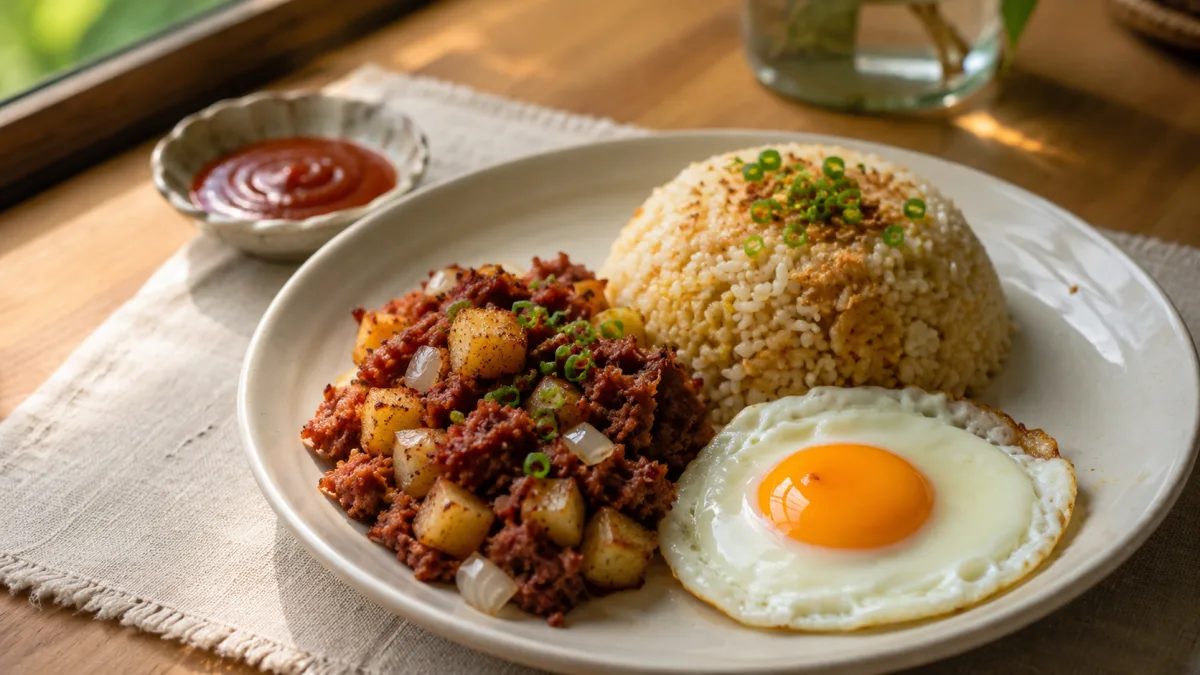
The canonical pairing is sinangag — Filipino garlic fried rice — and a fried egg. Put those three on one plate and you have cornsilog: corned beef + sinangag + itlog (egg). Silog meals are a defining feature of Filipino breakfast culture, built around a protein, garlic rice, and a fried egg with the name constructed by contracting all three components. Tapsilog uses beef tapa; longsilog uses longganiza sausage; cornsilog uses corned beef. The format appears everywhere from home kitchens to roadside carinderias to hotel buffets offering a traditional Filipino breakfast spread.
Beyond the silog setup, Filipino corned beef works well with freshly baked pandesal — soft, slightly sweet Filipino bread rolls — as a filling or side. The stewed version is particularly good reheated the next day, when the flavors have had time to settle and deepen. For a more elaborate weekend meal, the corned beef stew pairs well alongside dishes that share garlic rice as a base, like the Easy Yugoslavian Chicken Recipe or the Grilled Whole Duck Recipe.
One practical tip worth knowing: if you want the crispiest pan-fried result, let the corned beef sit undisturbed in the pan for 90 seconds between stirs. That contact time with the hot surface is what builds the browned crust. Stirring too often just steams the meat.
Frequently Asked Questions
What is the difference between ginisang corned beef and corned beef guisado?
None, in practice. Both names describe the same dish: canned corned beef sautéed with aromatics. Ginisang comes from the Tagalog word ginisa (to sauté), while guisado comes from the Spanish word for the same technique. The two terms are used interchangeably across the Philippines, with guisado slightly more common in areas with stronger Spanish culinary vocabulary and ginisang more common in everyday Tagalog conversation. The dish is also sometimes called carne norte guisado after its older local name for canned corned beef.
Can I use a non-Filipino brand of canned corned beef?
Yes, but the result will differ noticeably. South American canned corned beef — the most common type in US and European supermarkets — is much drier and more densely compressed than Filipino varieties. It will not crisp the same way in the pan-fried version and produces a drier stew. If Filipino brands such as CDO, Argentina by Century Pacific, Ox & Palm, or Palm are available at an Asian grocery, they are worth seeking out. Delimondo is the premium option and is available through some online retailers outside the Philippines. Kawaling Pinoy also recommends the Martin Purefoods and Palm brands for their chunky texture.
What potato works best in this dish?
Use a waxy or all-purpose potato — Yukon Gold, red-skinned, or any variety labeled "boiling potato." These hold their shape when cooked, which gives the finished dish distinct potato pieces rather than a starchy blur. A floury baking potato like a russet will absorb the liquid and break down into a paste that muddles both the texture and the appearance of the dish.
Is banana ketchup sweet?
Sweeter than tomato ketchup, yes, but not candy-sweet. It has a fruity, slightly tangy quality that comes from ripe bananas, vinegar, and spices. The red food coloring in commercial versions is purely cosmetic — the natural color of banana ketchup is a yellowish-brown, which manufacturers dye red to match the familiar appearance of tomato ketchup. UFC and Jufran are the two most widely available brands outside the Philippines.
Can I make this dish ahead of time?
The stewed version reheats well and can be made up to two days ahead; store it covered in the refrigerator and reheat over medium heat with a splash of water or broth to loosen it. The fried version is best eaten immediately — the crispy edges soften as the dish sits, and reheating only partially restores the crust. If you need to prep ahead but want the fried version's texture, cook the potatoes and aromatics in advance and add the corned beef to a hot pan right before serving.
What does cornsilog mean?
Cornsilog is shorthand for corned beef + sinangag (garlic fried rice) + itlog (fried egg). It is a meal format rather than a separate dish — the same corned beef guisado served alongside garlic rice and a sunny-side-up or over-easy egg. The silog naming convention applies across dozens of Filipino breakfast proteins: tapsilog (beef tapa), longsilog (longganiza), spamsilog (Spam). Cornsilog is one of the most popular configurations, sold widely at Filipino fast food chains and breakfast spots throughout the country.

Chiara Bradshaw
Covers education, culture and creative topics with an emphasis on readable explanations and verifiable references.




Leave a reply
Replying to